• Video
  • Shop
  • Culture
  • Family
  • Wellness
  • Food
  • Living
  • Style
  • Travel
  • News
  • Book Club
  • Newsletter
  • Privacy Policy
  • Your US State Privacy Rights
  • Children's Online Privacy Policy
  • Interest-Based Ads
  • Terms of Use
  • Do Not Sell My Info
  • Contact Us
  • © 2026 ABC News
ABC News

Climate and environment updates: 7 key measures of Earth's health in danger, report warns

PHOTO: Reef fishes swim over a reef affected by coral bleaching from high water temperature on May 08, 2024 in Trat, Thailand.
1:54
Sirachai Arunrugstichai/Getty Images
Summer temperatures stretching later into the season
By ABC Climate Unit
Last Updated: December 18, 2024, 9:48 PM

The climate crisis is not a distant threat; it's happening right now and affecting what matters most to us. Hurricanes intensified by a warming planet and drought-fueled wildfires are destroying our communities. Rising seas and flooding are swallowing our homes. And record-breaking heat waves are reshaping our way of life.

The good news is we know how to turn the tide and avoid the worst possible outcomes. However, understanding what needs to be done can be confusing due to a constant stream of climate updates, scientific findings and critical decisions that are shaping our future.

That's why the ABC News Climate and Weather Unit is cutting through the noise by curating what you need to know to keep the people and places you care about safe. We are dedicated to providing clarity amid the chaos, giving you the facts and insights necessary to navigate the climate realities of today -- and tomorrow.
Key Headlines

  • 7 key measures of the Earth's health are in now in danger: Report
  • Earth's oceans face 'triple planetary crisis,' new report warns
  • Climate change is straining America's health care system: Study
Here's how the news is developing.

Dec 18, 2024 9:48 PM

Senate committee says insurance is getting more expensive because of climate change

Climate change is making it more expensive for many Americans to insure and protect their homes and property. That's the finding of a two-year investigation by the Senate Budget Committee.

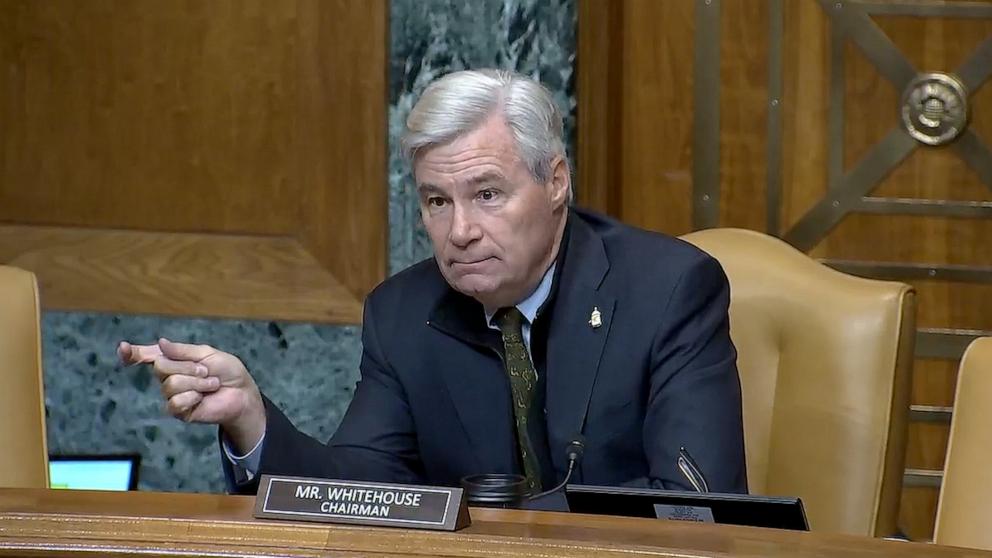
"Climate change is no longer just an environmental problem, is our conclusion here — it is an economic threat," Sen. Sheldon Whitehouse (D-R.I.), chairman of the Senate Budget Committee, said during a hearing on Wednesday. "And it is an affordability issue that we should not ignore."

The final hearing coincided with the release of a report from the committee detailing how extreme weather events made more severe by climate change is driving increasing both insurance policy non-renewal rates and premium costs across the country.

PHOTO: Sen. Sheldon Whitehouse, Chairman of the Committee on the Budget, speaks at a hearing on "Next to Fall: The Climate-Driven Insurance Crisis is Here – And Getting Worse" in Washington, D.C., Dec. 18, 2024.
Senate.gov
Sen. Sheldon Whitehouse, Chairman of the Committee on the Budget, speaks at a hearing on "Next to Fall: The Climate-Driven Insurance Crisis is Here – And Getting Worse" in Washington, D.C., Dec. 18, 2024.
Senate.gov

"The data released with this report demonstrate climate change beginning to upend insurance markets around the country," the report reads.

Benjamin Keys, a real estate and finance professor at the University of Pennsylvania's Wharton School, testified before the committee, saying, "Both affordability and accessibility issues have reached a crisis point in many communities around the country."

He explained that the data shows the rate of policy non-renewals have almost doubled since 2020.

"The most striking pattern from the data is that both premiums and non-renewal rates are higher in markets with more disaster risk," Keyes said.

"Insurers are responding to larger realized disaster losses, better data and risk models and growing reinsurance costs," Keys explained. "Some of the largest insurance companies have exited markets, deciding that they cannot charge premiums that adequately reflect this growing risk."

Ranking member Sen. Chuck Grassley (R-Iowa) expressed disappointment that the committee spent so much time on this issue. However, he said he agrees that "climate change is a serious issue meriting discussion."

"I remain convinced that the budget committee should be focused on the immediate fiscal problems facing our country," Grassley said.

"The climate crisis that is coming our way is not just about polar bears. It's not just about green jobs. It actually is coming through your mail slot in the form of insurance cancellations, insurance non-renewals and dramatic increases in insurance costs," Whitehouse said while closing the hearing.

-ABC News Climate Unit's Kelly Livingston


Dec 17, 2024 8:19 PM

DOE liquid natural gas report finds future production a risk to US climate goals

A new United States Department of Energy analysis on liquefied natural gas exports finds that continued production increases are inconsistent with U.S. climate goals, could increase energy costs and present community health concerns.

“Over the past five years, the U.S. has dramatically accelerated the pace of its LNG exports. The stocks that the department has already approved are more than sufficient to meet global demand for decades,” Energy Secretary Jennifer Granholm said Tuesday. “Further increasing exports, unconstrained, would surely generate more wealth for the LNG industry, but American consumers and communities and our climate would pay the price.”

Liquified natural gas, or LNG, is a natural gas that has been cooled into its liquid state so that it can be more easily shipped and stored, according to the DOE.

The U.S. became the largest LNG exporter in the world in 2023, according to the U.S. Energy Information Administration.

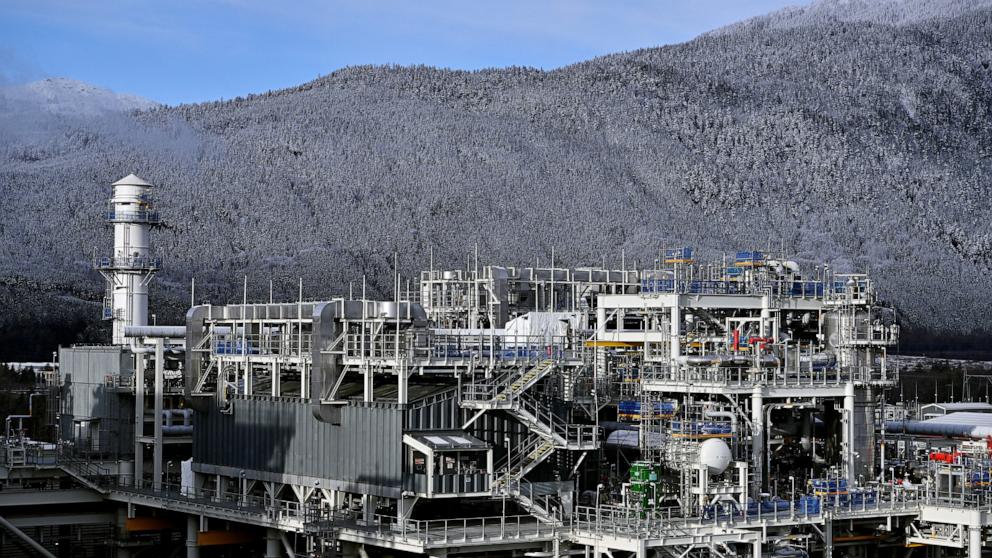
PHOTO: A general view of LNG Canada's liquified natural gas facility in Kitimat, British Columbia, Canada November 19, 2024.
Jennifer Gauthier/Reuters
A general view of LNG Canada's liquified natural gas facility in Kitimat, British Columbia, Canada November 19, 2024.
Jennifer Gauthier/Reuters

The DOE analysis, released Tuesday, found that LNG exports account for nearly half of domestic LNG production. It also found that current export volumes are expected to double by 2030, at which point the department expects the U.S. will exceed other countries’ exports by about 40%.

“With additional unfettered exports, wholesale domestic natural gas prices would increase by over 30% and the average American household will pay more than an extra $100 annually on their gas bills,” Granholm said.

The secretary added that communities “living in the shadows of LNG export projects” would be subject to even higher methane levels, nitrogen oxides and particulate matter. She said the annual direct emissions associated with exports in 2050 would represent more than 25% of our yearly greenhouse gas emissions.

Tuesday’s report has been in the works since January when the Biden Administration announced a pause on approvals for new LNG export terminals while the agency re-assessed whether such projects were in the “public interest.”

Under the authority of the National Gas Act, the DOE can make such determinations for exports to countries that are not part of a Free Trade Agreement with the U.S.

Earlier this year, President Biden said the pause “sees the climate crisis for what it is: the existential threat of our time.”

The incoming Trump Administration is expected to reverse course and expedite LNG export projects that are still awaiting approval as part of an effort to establish “energy dominance.”

The analysis released Tuesday will have a 60-day public comment period.

-ABC New Climate Unit's Kelly Livingston


Dec 16, 2024 10:00 PM

How climate change is transforming the winter season

Don't let the recent blasts of cold and snow impacting much of the U.S. fool you. Meteorological winter, which started Dec. 1, is most of the country's fastest-warming season, according to the National Oceanic and Atmospheric Administration (NOAA). And the impacts of this warming are intensifying with each passing year.

While cold and snowy conditions will continue to be a part of winter weather across the country, the global climate continues to warm at an accelerating rate. This long-term warming trend continues to fuel an overall decline in snow and extreme cold events across the U.S. and worldwide.

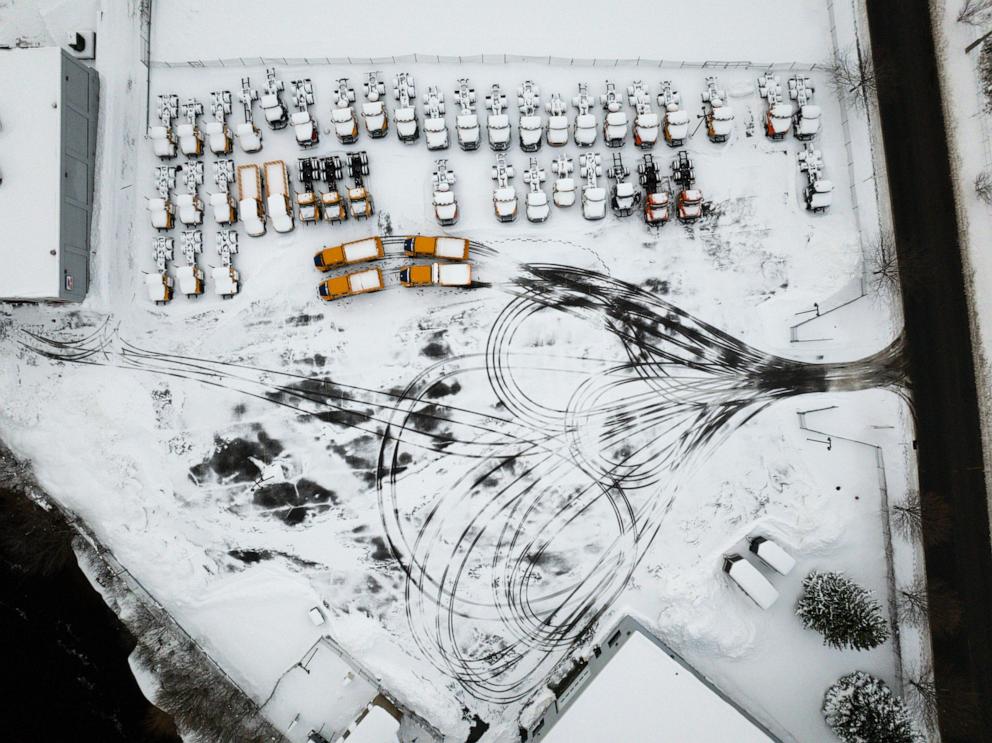
PHOTO: In an aerial view, trucks covered in snow sit parked on Dec. 5, 2024 in Watertown, New York.
Kayla Bartkowski/Getty Images, FILE
In an aerial view, trucks covered in snow sit parked on Dec. 5, 2024 in Watertown, New York.
Kayla Bartkowski/Getty Images, FILE

Our winter wonderlands are changing from white to wet as increased rainfall replaces snowfall and warmer temperatures make it difficult for snow to stay on the ground. This impacts everything from winter tourism to local ecosystems and agriculture. The multi-billion dollar winter tourism industry has already lost revenue due to the decrease in snow days, according to the Fifth National Climate Assessment.

While there is a good understanding of the general long-term trends and impacts of a warming winter season, we still have much to learn about how these changes explicitly impact a local area.

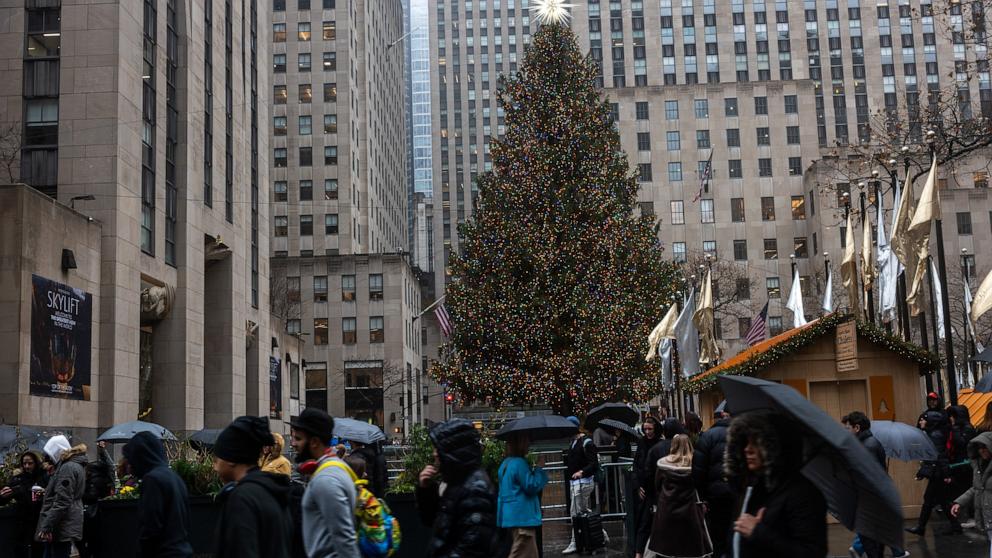
PHOTO: People walk through Rockefeller Center a little over a week before Christmas, Dec. 16, 2024, in New York.
Spencer Platt/Getty Images
People walk through Rockefeller Center a little over a week before Christmas, Dec. 16, 2024, in New York.
Spencer Platt/Getty Images

Climate Central is shedding some light on local impacts in a new report. The nonprofit climate research group compared the number of above-freezing winter days to historical averages and investigated any links to climate change.

The report estimates that in the U.S., 28 states and around 63% (39 out of 62) of the cities analyzed experienced, on average, an additional week's worth of above-freezing winter days over the past decade. In other words, these days felt less like winter and more like the start of spring.

Specific location-based data like this could be extremely valuable to a ski resort by helping them allocate resources for an upcoming winter season or planning their long-term business strategy. While smaller-scale climate change attribution is still a relatively new area of climate science, further advancements could provide a vital resource as the world adapts to our changing climate.

-ABC News meteorologist Dan Peck


Dec 16, 2024 4:52 PM

More than three-quarters of the planet's land is now permanently drier due to climate change

Humans are dependent on the land for our very survival. If we can't farm, we don't eat. However, much of that precious soil is in danger due to human-amplified climate change, according to a new report.

In its new report, the U.N. Convention to Combat Desertification (UNCCD) found that 77.6% of the Earth's land has become permanently drier over the last three decades leading up to 2020. During the same period, drylands expanded by more than 1.6 million square miles and now cover more than 40% of the planet (excluding Antarctica).

Drylands are regions characterized by low rainfall and moisture, resulting in scarce water and arid land. Drier land can result in insufficient food production, increased wildfire activity, water scarcity and land degradation, according to the report.

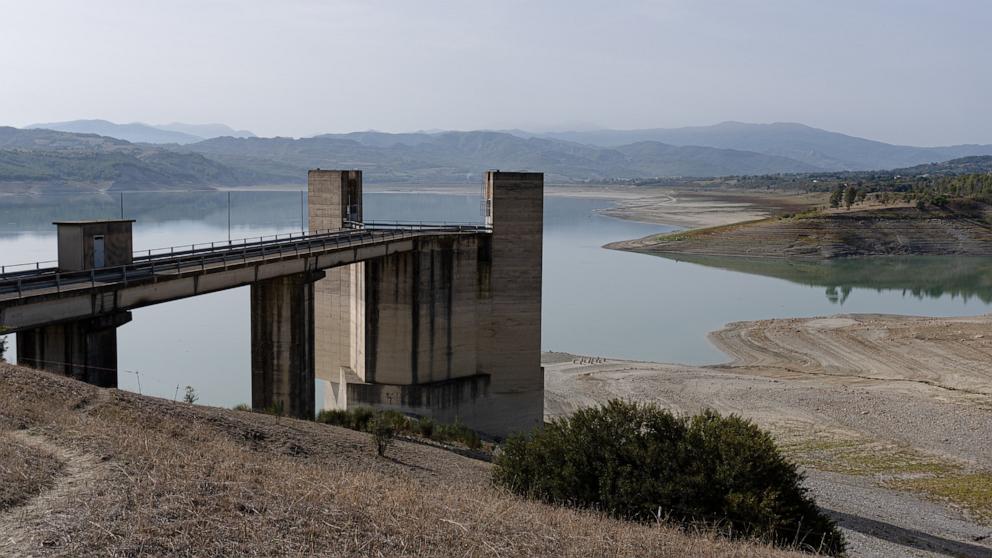
PHOTO: Visible banks, dry soil, and uncultivated vegetation replace the water at Lake Monte Cotugno, which in the summer of 2024 contains just 300 thousand cubic meters of water and is therefore practically dry, Basilicata, Italy, Oct. 16, 2024.
Paolo Manzo/NurPhoto via Getty Images
Visible banks, dry soil, and uncultivated vegetation replace the water at Lake Monte Cotugno, which in the summer of 2024 contains just 300 thousand cubic meters of water and is therefore practically dry, Basilicata, Italy, Oct. 16, 2024.
Paolo Manzo/NurPhoto via Getty Images

"Unlike droughts—temporary periods of low rainfall—aridity represents a permanent, unrelenting transformation," UNCCD Executive Secretary Ibrahim Thiaw said in a press statement. "Droughts end. When an area's climate becomes drier, however, the ability to return to previous conditions is lost. The drier climates now affecting vast lands across the globe will not return to how they were and this change is redefining life on Earth."

The report says human-amplified climate change is the primary reason for this transformation. The UNCCD finds that greenhouse gas emissions from electricity generation, transportation, industry and land use changes are warming the planet and affecting rainfall, evaporation and plant life. They say those changes create the ideal conditions for increased dryness.

And it's not just dry areas getting drier. The researchers found that more than 7% of global lands were transformed from non-drylands to drylands or from less arid areas to more arid. They warn that another 3% of the world's humid areas could become drylands by the end of the century if we don't reduce greenhouse gas emissions.

"Without concerted efforts, billions face a future marked by hunger, displacement, and economic decline. Yet, by embracing innovative solutions and fostering global solidarity, humanity can rise to meet this challenge. The question is not whether we have the tools to respond—it is whether we have the will to act," Nichole Barger, chair of the UNCCD's science-policy interface, said in a statement.

The report makes several recommendations, including better monitoring, improved land use policies and investing in new water efficiency technologies. But they make it clear that the world must curb global warming if they are to stop the future damage and the threats that come from it.

-ABC News Climate Unit's Matthew Glasser


Jan 23, 2025 4:10 PM

Climate funders say they will cover US climate obligations after Paris Agreement withdrawal

On Monday, President Donald Trump announced his intention to withdraw the United States from the Paris Agreement, the U.N.-backed international climate treaty. Bloomberg Philanthropies announced Thursday that they, along with a coalition of climate charities, would step up and ensure that the U.S. meets its obligations under the Paris Agreement, including any financial and reporting requirements.

"While government funding remains essential to our mission, contributions like this are vital in enabling the UN Climate Change secretariat to support countries in fulfilling their commitments under the Paris Agreement and a low-emission, resilient, and safer future for everyone," said Simon Stiell, United Nations climate change executive secretary, in a press statement.

This is the second time Trump has withdrawn the country from the Paris Agreement. During his first term, Trump justified backing out of the treaty by claiming that participating in the agreement would result in the loss of jobs and cost the U.S. trillions of dollars. In reality, in 2023, clean energy jobs grew at more than twice the rate of the overall U.S. labor market and accounted for more than 8.35 million positions, according to a Department of Energy report. In terms of spending, the U.S. has committed several billion dollars to the effort, not trillions.

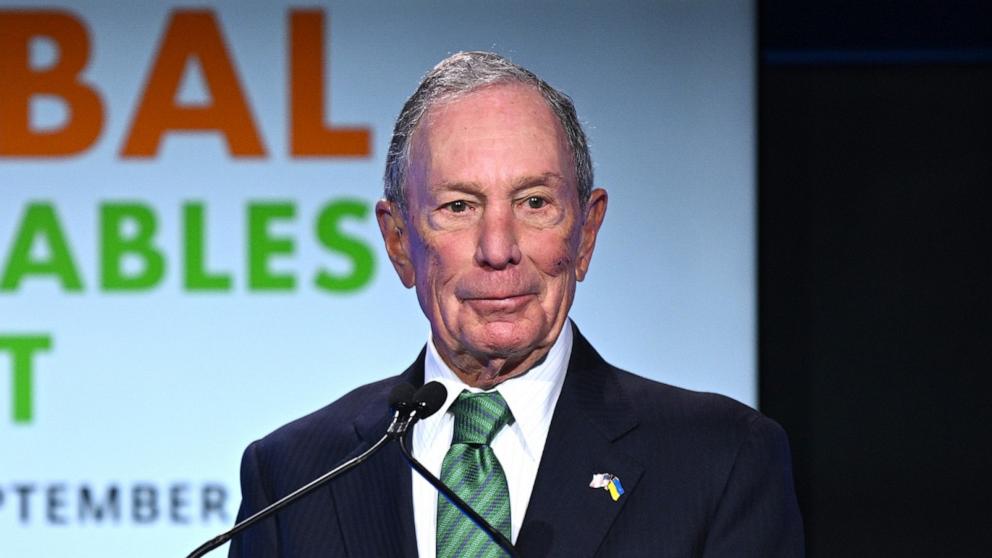
PHOTO: Michael R. Bloomberg speaks at the Global Renewables Summit, co-hosted by Bloomberg Philanthropies and the Global Renewables Alliance, Sept. 24, 2024, in New York
Bryan Bedder/Getty Images for Bloomberg Philanthropies
Michael R. Bloomberg speaks at the Global Renewables Summit, co-hosted by Bloomberg Philanthropies and the Global Renewables Alliance, Sept. 24, 2024, in New York
Bryan Bedder/Getty Images for Bloomberg Philanthropies

Michael Bloomberg, a billionaire businessman, founder of Bloomberg Philanthropies and a U.N. Secretary-General's Special Envoy on Climate Ambition and Solutions, said he also plans to continue supporting a coalition of states, cities and businesses that are working to reduce U.S. greenhouse gas emissions by 61-66% below 2005 levels by 2035.

"More and more Americans have had their lives torn apart by climate-fueled disasters, like the destructive fires raging in California. At the same time, the United States is experiencing the economic benefits of clean energy, as costs have fallen and jobs have grown in both red and blue states. The American people remain determined to continue the fight against the devastating effects of climate change," Bloomberg said.


GMA Newsletters

Sign up for our newsletters to get GMA delivered to your inbox every morning!

Up Next in news

PHOTO: Los Angeles City Council member and mayoral candidate Nithya Raman in Los Angeles, May 16, 2026. Spencer Pratt campaigns for mayor in Los Angeles, May 31, 2026. Los Angeles Mayor Karen Bass speaks to supporters, May 31, 2026, in Venice, Calif.

Karen Bass advances in Los Angeles mayoral race as opponent currently remains unclear

June 3, 2026
PHOTO: Pattie Gonia performs at the "Save Her! Environmental Drag Show" during Climate Week, Sept. 24, 2024, in New York City.

Drag queen Pattie Gonia publicly rejects proposal from Patagonia on trademark lawsuit

June 2, 2026
PHOTO: Photo illustration of cyber crime through email.

FTC warns about email scam masking as party invitations

May 29, 2026

The latest lifestyle and entertainment news and inspiration for how to live your best life - all from Good Morning America.
  • Contests
  • Terms of Use
  • Privacy Policy
  • Do Not Sell My Info
  • Children’s Online Privacy Policy
  • Advertise with us
  • Your US State Privacy Rights
  • Interest-Based Ads
  • About Nielsen Measurement
  • Press
  • Feedback
  • Shop FAQs
  • ABC News
  • ABC
  • All Videos
  • All Topics
  • Sitemap

© 2026 ABC News
  • Privacy Policy— 
  • Your US State Privacy Rights— 
  • Children's Online Privacy Policy— 
  • Interest-Based Ads— 
  • Terms of Use— 
  • Do Not Sell My Info— 
  • Contact Us— 

© 2026 ABC News