• Video
  • Shop
  • Culture
  • Family
  • Wellness
  • Food
  • Living
  • Style
  • Travel
  • News
  • Book Club
  • Newsletter
  • Privacy Policy
  • Your US State Privacy Rights
  • Children's Online Privacy Policy
  • Interest-Based Ads
  • Terms of Use
  • Do Not Sell My Info
  • Contact Us
  • © 2026 ABC News
ABC News

Climate and environment updates: 7 key measures of Earth's health in danger, report warns

PHOTO: Reef fishes swim over a reef affected by coral bleaching from high water temperature on May 08, 2024 in Trat, Thailand.
1:54
Sirachai Arunrugstichai/Getty Images
Summer temperatures stretching later into the season
By ABC Climate Unit
Last Updated: January 24, 2025, 2:49 PM

The climate crisis is not a distant threat; it's happening right now and affecting what matters most to us. Hurricanes intensified by a warming planet and drought-fueled wildfires are destroying our communities. Rising seas and flooding are swallowing our homes. And record-breaking heat waves are reshaping our way of life.

The good news is we know how to turn the tide and avoid the worst possible outcomes. However, understanding what needs to be done can be confusing due to a constant stream of climate updates, scientific findings and critical decisions that are shaping our future.

That's why the ABC News Climate and Weather Unit is cutting through the noise by curating what you need to know to keep the people and places you care about safe. We are dedicated to providing clarity amid the chaos, giving you the facts and insights necessary to navigate the climate realities of today -- and tomorrow.

Key Headlines

  • 7 key measures of the Earth's health are in now in danger: Report
  • Earth's oceans face 'triple planetary crisis,' new report warns
  • Climate change is straining America's health care system: Study
Here's how the news is developing.

Jan 24, 2025 2:49 PM

Millions of students are missing school because of extreme weather

A new analysis from UNICEF finds that nearly a quarter of a billion children worldwide had their education disrupted by extreme weather events in 2024 — exacerbating what the organization calls an "existing learning crisis."

The report found that at least 242 million students across 85 countries experienced schooling disruptions last year because of extreme weather like heat waves, storms, floods, droughts and tropical cyclones.

"Children are more vulnerable to the impacts of weather-related crises, including stronger and more frequent heatwaves, storms, droughts and flooding," UNICEF Executive Director Catherine Russell said. "Last year, severe weather kept one in seven students out of class, threatening their health and safety, and impacting their long-term education."

Heat waves were the most common weather disruptor for education. UNICEF found that over 118 million students were impacted by extreme heat in April alone, with South Asia seeing some of the most widespread impacts.

PHOTO: Residents ride a boat in Dela Paz village, which remains flooded since Tropical Storm Trami hit a month ago, on Nov. 20, 2024 in Binan, Laguna province, Philippines.
Ezra Acayan/Getty Images, FILE
Residents ride a boat in Dela Paz village, which remains flooded since Tropical Storm Trami hit a month ago, on Nov. 20, 2024 in Binan, Laguna province, Philippines.
Ezra Acayan/Getty Images, FILE

The report also found that September had the most frequent weather-related disruptions, with at least 16 countries suspending classes for a time due to extreme weather events like Typhoon Yagi in East Asia.

While the analysis found that almost three-quarters of the students impacted were in low and lower-middle income countries, UNICEF says no region was free from these effects.

"Education is one of the services most frequently disrupted due to climate hazards. Yet it is often overlooked in policy discussions, despite its role in preparing children for climate adaptation," Russell said. "Children's futures must be at the forefront of all climate related plans and actions."

-ABC News climate unit's Kelly Livingston


Jan 23, 2025 4:10 PM

Climate funders say they will cover US climate obligations after Paris Agreement withdrawal

On Monday, President Donald Trump announced his intention to withdraw the United States from the Paris Agreement, the U.N.-backed international climate treaty. Bloomberg Philanthropies announced Thursday that they, along with a coalition of climate charities, would step up and ensure that the U.S. meets its obligations under the Paris Agreement, including any financial and reporting requirements.

"While government funding remains essential to our mission, contributions like this are vital in enabling the UN Climate Change secretariat to support countries in fulfilling their commitments under the Paris Agreement and a low-emission, resilient, and safer future for everyone," said Simon Stiell, United Nations climate change executive secretary, in a press statement.

This is the second time Trump has withdrawn the country from the Paris Agreement. During his first term, Trump justified backing out of the treaty by claiming that participating in the agreement would result in the loss of jobs and cost the U.S. trillions of dollars. In reality, in 2023, clean energy jobs grew at more than twice the rate of the overall U.S. labor market and accounted for more than 8.35 million positions, according to a Department of Energy report. In terms of spending, the U.S. has committed several billion dollars to the effort, not trillions.

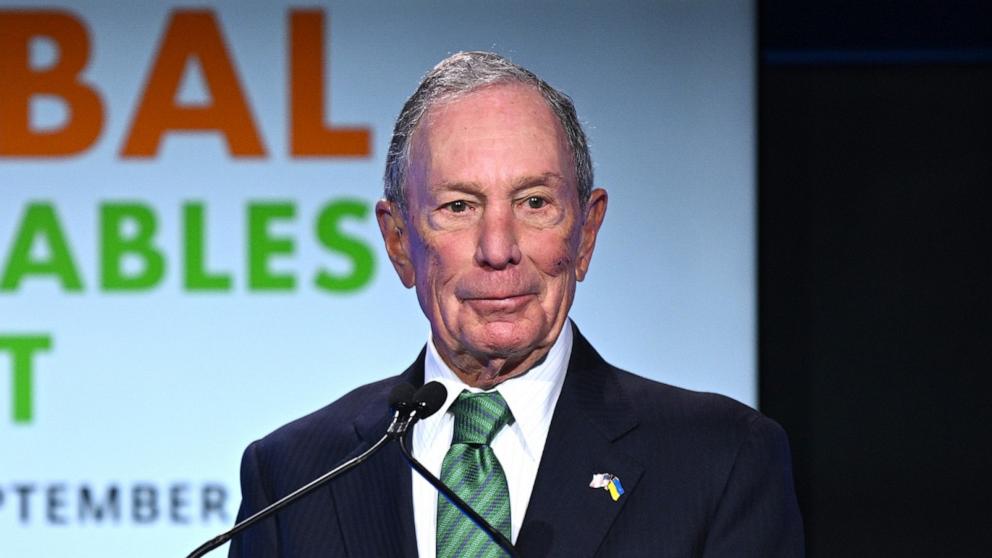
PHOTO: Michael R. Bloomberg speaks at the Global Renewables Summit, co-hosted by Bloomberg Philanthropies and the Global Renewables Alliance, Sept. 24, 2024, in New York
Bryan Bedder/Getty Images for Bloomberg Philanthropies
Michael R. Bloomberg speaks at the Global Renewables Summit, co-hosted by Bloomberg Philanthropies and the Global Renewables Alliance, Sept. 24, 2024, in New York
Bryan Bedder/Getty Images for Bloomberg Philanthropies

Michael Bloomberg, a billionaire businessman, founder of Bloomberg Philanthropies and a U.N. Secretary-General's Special Envoy on Climate Ambition and Solutions, said he also plans to continue supporting a coalition of states, cities and businesses that are working to reduce U.S. greenhouse gas emissions by 61-66% below 2005 levels by 2035.

"More and more Americans have had their lives torn apart by climate-fueled disasters, like the destructive fires raging in California. At the same time, the United States is experiencing the economic benefits of clean energy, as costs have fallen and jobs have grown in both red and blue states. The American people remain determined to continue the fight against the devastating effects of climate change," Bloomberg said.


Jan 16, 2025 5:02 PM

2024 natural disasters cost the world $320 billion in damages

While its impact varies from disaster to disaster, extensive research has found that changes in our climate are making extreme weather events like heat waves, hurricanes, flooding and wildfires worse. Now, a new analysis shows us just how costly these natural disasters were in 2024.

Munich Re, a reinsurance company, found that natural disasters in 2024 caused $320 billion worth of financial losses worldwide. That's $52 billion more than in 2023. And of those losses, the company says less than half were covered by insurance.

According to the company, weather catastrophes were responsible for almost all of the financial loss. They say 93% of overall losses and 97% of insured losses were caused by severe weather like floods, wildfires, thunderstorms and tropical cyclones. Hurricanes Helene and Milton took the top spot for the most destructive disasters of 2024.

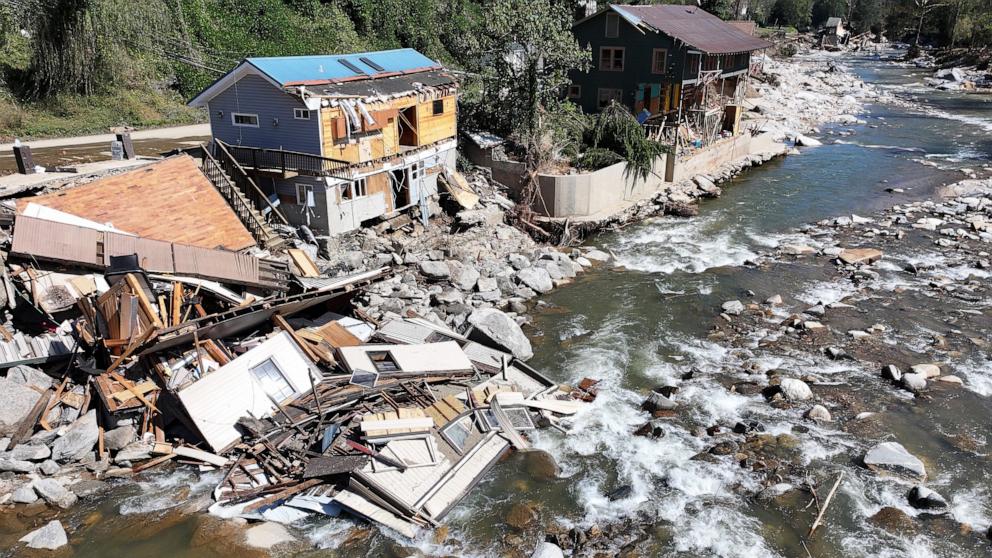
PHOTO: In this Oct. 8, 2024, file photo, an aerial view of destroyed and damaged buildings in the aftermath of Hurricane Helene flooding is shown in Bat Cave, N.C.
Mario Tama/Getty Images, FILE
In this Oct. 8, 2024, file photo, an aerial view of destroyed and damaged buildings in the aftermath of Hurricane Helene flooding is shown in Bat Cave, N.C.
Mario Tama/Getty Images, FILE

Munich Re says 2024 was also the third-most expensive year in terms of insured losses and the fifth-most costly for overall costs since 1980.

"The physics are clear: the higher the temperature, the more water vapour and therefore energy is released into the atmosphere. Our planet's weather machine is shifting to a higher gear. Everyone pays the price for worsening weather extremes, but especially the people in countries with little insurance protection or publicly funded support to help with recovery," said Munich Re's chief climate scientist, Tobias Grimm, in a statement.

-ABC News climate unit's Matthew Glasser


Jan 15, 2025 3:15 PM

Climate change amplified dryness, but LA fires still extreme without it: UCLA analysis

In a new quick-turn analysis, UCLA climate scientists found that climate change could be responsible for roughly a quarter of the extreme vegetation dryness present when the Palisades and Eaton fires began. But they say the fires would still have been extreme even without that moisture deficit.

"We believe that the fires would still have been extreme without the climate change components noted above, but would have been somewhat smaller and less intense," the team noted.

The climate scientists at UCLA's Climate & Wildlife Research Initiative considered what contributed to the fire "to quantify how unusual these factors are, in the context of the natural weather and climate variability."

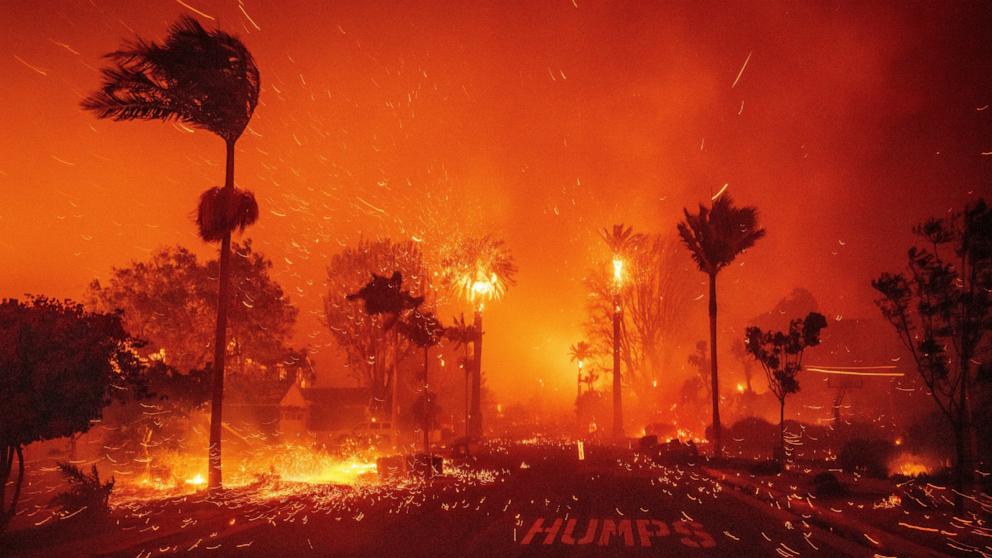
PHOTO: The Palisades Fire ravages a neighborhood amid high winds in the Pacific Palisades neighborhood of Los Angeles, Jan. 7, 2025.
Ethan Swope/AP
The Palisades Fire ravages a neighborhood amid high winds in the Pacific Palisades neighborhood of Los Angeles, Jan. 7, 2025.
Ethan Swope/AP

The researchers examined the intense summer heat, drought and extreme precipitation that impacted the region in recent years. They concluded that the unusually warm temperatures during the summer and fall of 2024 are the most likely way climate change could have helped intensify the wildfires by lowering fuel moisture in the region.

However, the analysis found that this stretch of unusually warm weather was likely not the primary driver of the extreme vegetation dryness that was in place at the time of the wildfires.

Researchers point to the lack of early wet season precipitation as the main contributor of the extremely dry fuels, estimating that about 75% of the dryness was due to lack of rain and roughly 25% attributed to the stretch of anomalous warmth. They say the current rain deficit is more likely due to California's highly variable natural climate rather than human-amplified climate change.

"As I've often said, no one claims that climate change directly causes natural disasters. Instead, we highlight that human-caused climate change amplifies these events. As this issue becomes more pronounced, it's essential that we focus on mitigation, adaptation, and planning for the warming that is already inevitable," explained Ginger Zee, ABC News chief meteorologist and chief climate correspondent.

Based on their findings, the research team recommends aggressively suppressing fire ignitions when extreme fire weather is forecast, making homes more fire resistant, and building new units in low wildfire risk zones.

The analysis has not been peer-reviewed and additional findings are likely to emerge as new studies are completed.

-ABC News Climate Unit


Nov 13, 2024 3:56 PM

Fossil fuel emissions hit record highs in 2024, according to study

If negotiating international agreements to slow down and reverse the global climate crisis wasn't challenging enough, the delegates at COP29, the U.N. climate conference in Azerbaijan, are facing the grim reality that the world is moving in the wrong direction when it comes to fossil fuels.

According to the latest Global Carbon Budget report from the Global Carbon Project, carbon emissions from fossil fuels have hit a record high in 2024. The study projects that carbon dioxide (CO₂) emissions will reach 37.4 billion tonnes, up 0.8% from 2023.

For almost three decades, international leaders have been attending COP conferences and discussing the urgent need to reduce greenhouse gas emissions. However, despite these efforts, the Global Carbon Project says, "There is still no sign that the world has reached a peak in fossil CO2 emissions."

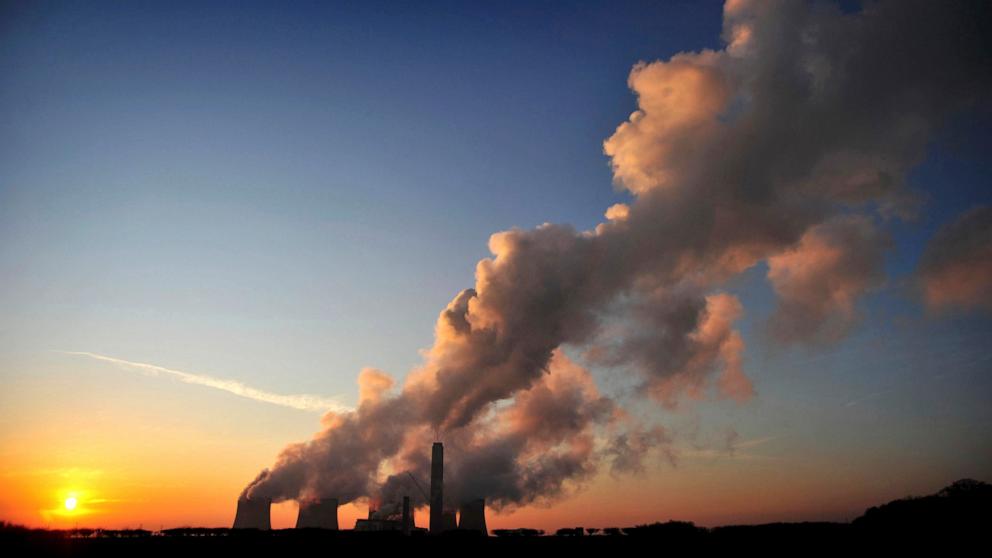
PHOTO: The sun sets over Ratcliffe on Soar Power Station near Nottingham, England.
Matthew Vincent/PA via AP
The sun sets over Ratcliffe on Soar Power Station near Nottingham, England.
Matthew Vincent/PA via AP

"The impacts of climate change are becoming increasingly dramatic, yet we still see no sign that burning of fossil fuels has peaked," wrote Pierre Friedlingstein of Exeter's Global Systems Institute in a press statement.

He added, "Until we reach net zero CO2 emissions globally, world temperatures will continue to rise and cause increasingly severe impacts."

Although the past decade has seen a decline in emissions from deforestation and land-use changes, emissions this year are rising compared to 2023, influenced by extreme drought conditions linked to the 2023-2024 El Niño climate event, according to the study. Despite this increase, land-use emissions have actually declined by 20% over the past decade thanks to reforestation and afforestation efforts.

Efforts to stop burning coal for energy are slowing down the year-over-year increase in those emissions, but they are still rising, albeit modestly. The study estimates that global coal emissions will increase by 0.2%. China and India are seeing increases of 0.2% and 4.5%, respectively, while the United States and the European Union are seeing declines of 3.5% and 15.8%.

Overall, the study found that China's emissions (32% of the worldwide total) for 2024 are expected to increase by 0.2% compared to 2023. India (8% of the worldwide total) is projected to grow emissions by 4.6% from the previous year. The European Union (7% of the worldwide total) should see a 3.8% decline year-to-year and the United States (13% of the worldwide total) is looking at a 0.6% decrease compared to 2023.

It's important to remember that many products purchased and used in the U.S. and Europe are made in places like China and India. Hence, their emissions reflect the manufacturing of goods for other countries.

According to the research, this trend worsens the cumulative impact of CO₂ in the atmosphere, projected to reach 422.5 parts per million (ppm) in 2024, representing a 52% increase compared to pre-industrial levels.

There is some good news in the data. The study finds that many countries have succeeded in reducing their fossil fuel carbon emissions or slowing down their growth. However, it's not enough to put the world on a path to net zero.

"There are many signs of positive progress at the country level, and a feeling that a peak in global fossil CO2 emissions is imminent, but the global peak remains elusive," wrote Glen Peters of the CICERO Center for International Climate Research in a statement. "Climate action is a collective problem, and while gradual emission reductions are occurring in some countries, increases continue in others."

-ABC News Climate Unit's Matthew Glasser


GMA Newsletters

Sign up for our newsletters to get GMA delivered to your inbox every morning!

Up Next in news

PHOTO: Los Angeles City Council member and mayoral candidate Nithya Raman in Los Angeles, May 16, 2026. Spencer Pratt campaigns for mayor in Los Angeles, May 31, 2026. Los Angeles Mayor Karen Bass speaks to supporters, May 31, 2026, in Venice, Calif.

Karen Bass advances in Los Angeles mayoral race as opponent currently remains unclear

June 3, 2026
PHOTO: Pattie Gonia performs at the "Save Her! Environmental Drag Show" during Climate Week, Sept. 24, 2024, in New York City.

Drag queen Pattie Gonia publicly rejects proposal from Patagonia on trademark lawsuit

June 2, 2026
PHOTO: Photo illustration of cyber crime through email.

FTC warns about email scam masking as party invitations

May 29, 2026

The latest lifestyle and entertainment news and inspiration for how to live your best life - all from Good Morning America.
  • Contests
  • Terms of Use
  • Privacy Policy
  • Do Not Sell My Info
  • Children’s Online Privacy Policy
  • Advertise with us
  • Your US State Privacy Rights
  • Interest-Based Ads
  • About Nielsen Measurement
  • Press
  • Feedback
  • Shop FAQs
  • ABC News
  • ABC
  • All Videos
  • All Topics
  • Sitemap

© 2026 ABC News
  • Privacy Policy— 
  • Your US State Privacy Rights— 
  • Children's Online Privacy Policy— 
  • Interest-Based Ads— 
  • Terms of Use— 
  • Do Not Sell My Info— 
  • Contact Us— 

© 2026 ABC News