• Video
  • Shop
  • Culture
  • Family
  • Wellness
  • Food
  • Living
  • Style
  • Travel
  • News
  • Book Club
  • Newsletter
  • Privacy Policy
  • Your US State Privacy Rights
  • Children's Online Privacy Policy
  • Interest-Based Ads
  • Terms of Use
  • Do Not Sell My Info
  • Contact Us
  • © 2026 ABC News
ABC News

Climate and environment updates: 7 key measures of Earth's health in danger, report warns

PHOTO: Reef fishes swim over a reef affected by coral bleaching from high water temperature on May 08, 2024 in Trat, Thailand.
1:54
Sirachai Arunrugstichai/Getty Images
Summer temperatures stretching later into the season
By ABC Climate Unit
Last Updated: November 4, 2024, 6:31 PM

The climate crisis is not a distant threat; it's happening right now and affecting what matters most to us. Hurricanes intensified by a warming planet and drought-fueled wildfires are destroying our communities. Rising seas and flooding are swallowing our homes. And record-breaking heat waves are reshaping our way of life.

The good news is we know how to turn the tide and avoid the worst possible outcomes. However, understanding what needs to be done can be confusing due to a constant stream of climate updates, scientific findings and critical decisions that are shaping our future.

That's why the ABC News Climate and Weather Unit is cutting through the noise by curating what you need to know to keep the people and places you care about safe. We are dedicated to providing clarity amid the chaos, giving you the facts and insights necessary to navigate the climate realities of today -- and tomorrow.
Key Headlines

  • 7 key measures of the Earth's health are in now in danger: Report
  • Earth's oceans face 'triple planetary crisis,' new report warns
  • Climate change is straining America's health care system: Study
Here's how the news is developing.

Nov 04, 2024 6:31 PM

Nearly 40% of the world's trees face extinction, according to new assessment

Climate change, deforestation, invasive pests and disease all threaten to permanently wipe out nearly 40% of the earth's trees, according to a new assessment by the International Union for the Conservation of Nature (IUCN).

The organization, comprised of 1,400 member organizations worldwide and 16,000 experts, said more than one in three tree species across 192 countries is now facing extinction, especially trees found on islands.

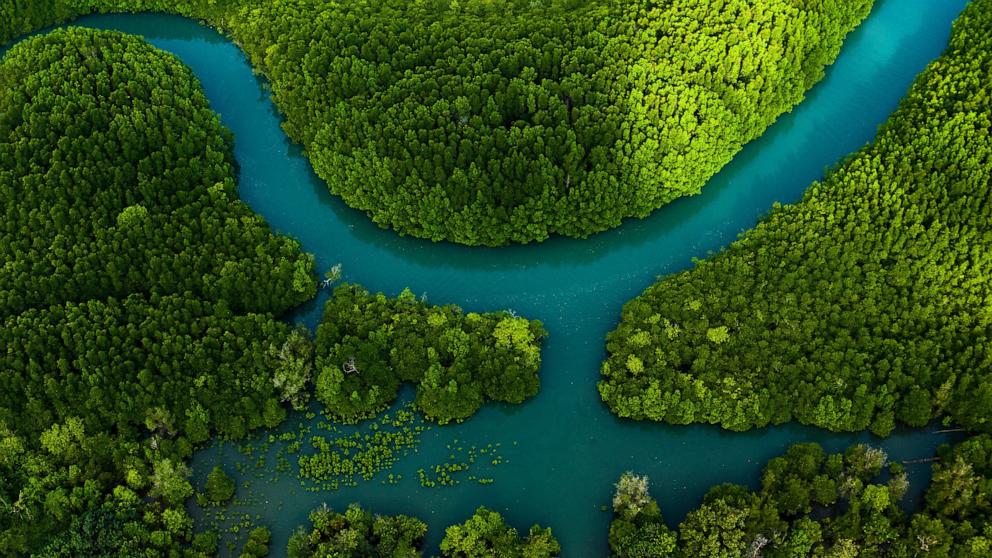
PHOTO: More than one third of the planet's tree species are facing extinction. The highest proportion of threatened trees is found on islands.Pictured Trat Province Thailand
STOCK PHOTO/Athit Perawongmetha/Getty Images
.Pictured Trat Province Thailand More than one third of the planet's tree species are facing extinction. The highest proportion of threatened trees is found on islands.
STOCK PHOTO/Athit Perawongmetha/Getty Images

The IUCN said island trees are at particular risk because of deforestation for new development and agriculture, as well as the other threats faced by tree species across the globe.

Since 1964, the IUCN has hosted its " Red List," a database of threatened species from around the world. The research group found that 16,425 of the 47,282 tree species on their list are at risk of extinction -- more than 2,000 of which are used for medicines, food, and fuels.

"Trees are essential to support life on Earth through their vital role in ecosystems, and millions of people depend upon them for their lives and livelihoods," said Grethel Aguilar, IUCN director general, in a statement.

According to their analysis, "the number of threatened trees is more than double the number of all threatened birds, mammals, reptiles and amphibians combined."

The group is calling for more habitat protection and restoration to protect these species and the creation of seed banks and botanical gardens to ensure they don't disappear forever.

“The significance of the Global Tree Assessment cannot be overstated, given the importance of trees to ecosystems and people. We hope this frightening statistic of one in three trees facing extinction will incentivize urgent action and be used to inform conservation plans,” said Eimear Nic Lughadha from the Royal Botanic Gardens, in a statement.

-ABC News Climate Unit's Matthew Glasser


Nov 01, 2024 5:23 PM

Report finds climate change increased heat deaths among older adults by 167%; worsened food security

The health and economic costs of climate change are rising worldwide, according to the newly released 2024 Lancet Countdown, a yearly report hosted by University College London and involving more than 300 researchers.

According to the report, "Of the 15 indicators monitoring climate change-related health hazards, exposures, and impacts, ten reached concerning new records in their most recent year of data."

With global communities facing an additional 50 days of "dangerous heat," heat-related deaths among older adults increased by a record-breaking 167% in 2023 compared to the 1990s, according to the report's findings.

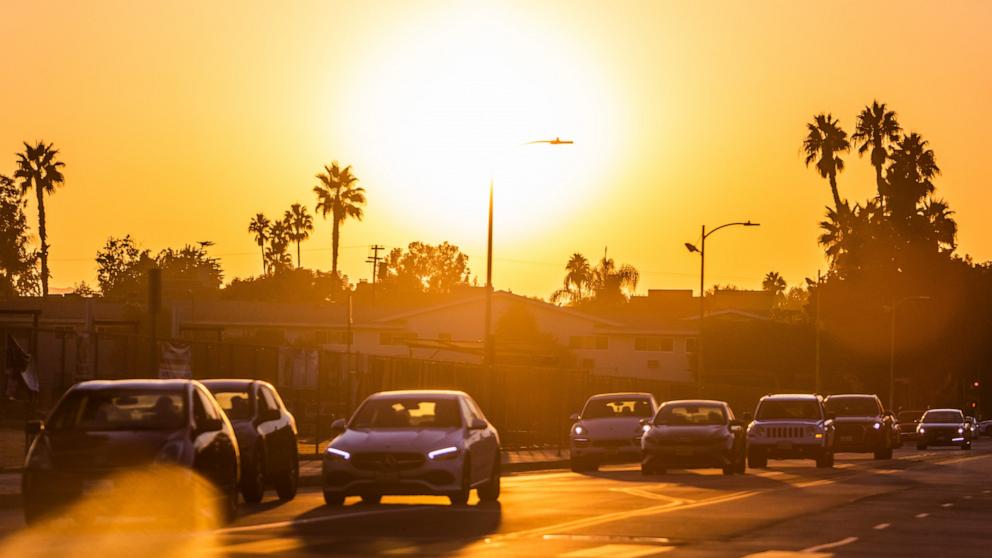
PHOTO: A view shows vehicles passing along the 101 Freeway, Oct. 3, 2024, in Los Angeles.
Apu Gomes/Getty Images
A view shows vehicles passing along the 101 Freeway, Oct. 3, 2024, in Los Angeles.
Apu Gomes/Getty Images

In addition to the heat impact, the Lancet report found that climate change is significantly worsening food insecurity, with 151 million more people facing shortages compared to previous decades. And more than 3 million people died in 2021 because of air pollution and fine particulate matter.

The researchers also found that global extreme weather costs have increased by 23% from 2010-14 to 2019-23, amounting to $227 billion annually.

-ABC News Climate Unit's Kelly Livingston and ABC News Medical Unit's Sony Salzman


Oct 31, 2024 2:00 PM

Compost your pumpkin and do a gourd thing for the planet

From carving jack-o-lanterns to baking pies, pumpkins are a staple of fall festivities and Halloween. According to the USDA, American farmers produced more than 1.6 billion pounds of pumpkins last year.

But what happens to all those pumpkins after the trick-or-treating and hayrides are done? The ones that aren't turned into food end up at a local landfill and decompose into methane, a potent greenhouse gas that is contributing to climate change.

In the U.S., food is the most common material sent to landfills, making up 24% of municipal solid waste. The EPA estimates that food waste, including pumpkins, is responsible for 58% of fugitive methane emissions from municipal solid waste landfills.

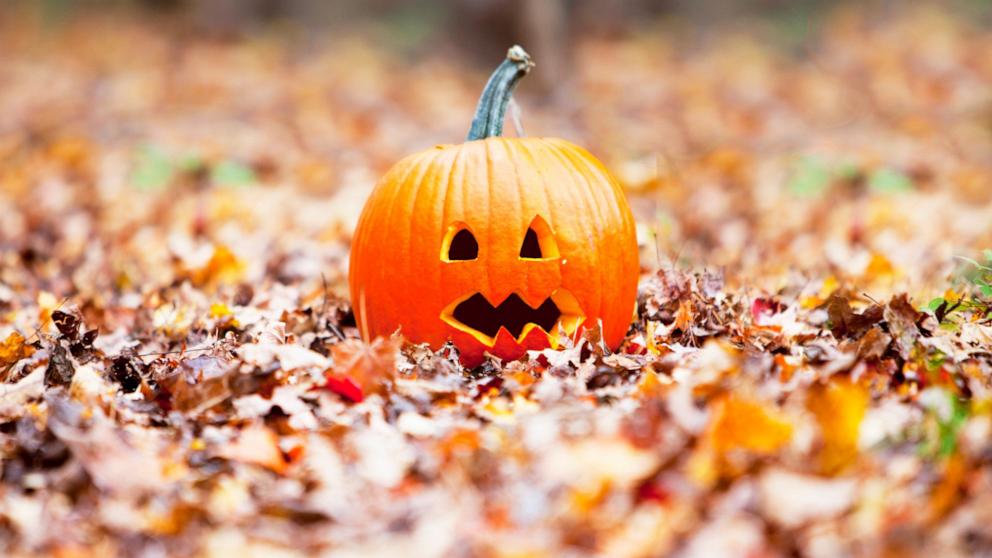
PHOTO: In this undated stock photo, a carved pumpkin is seen on the ground.
Adobe Stock
In this undated stock photo, a carved pumpkin is seen on the ground.
Adobe Stock

There are alternatives, however, to throwing out your pumpkins and other organic decorations like hay, cornstalks and leaves. But before you get started, make sure these materials are free of paint, coating and any nonorganic compounds. Those should be discarded in the trash.

Composting is an excellent option if your pumpkin doesn't have any of those alterations. This can be done in your backyard or at a local community-based composting program. Just make sure you remove the seeds or your compost could turn into a pumpkin patch. To speed up the composting process, you can break your pumpkin into little pieces before spreading it into your garden. Unlike landfills that trap waste, bacteria in your backyard release very little methane when they break down organic material.

If you don't want to compost it at home, look for local events and nonprofits, like Pumpkins for the People, that collect used pumpkins for farms and community composting. Some zoos and local farms also accept pumpkins and use them to feed their animals.

Besides composting, you can also chop up your pumpkin and leave it out for local wildlife to enjoy. The Nature Conservancy says that many animals, from squirrels to porcupines, enjoy feasting on this fall treat. But you should ask for permission before leaving it at a park or a managed open space like a state or national park, as some discourage this practice.

You could turn your pumpkin into a temporary bird feeder and leave the pumpkin seeds for birds completing their migration journey. You can also plant the pumpkin seeds. According to the National Wildlife Federation, the blooming flowers of the pumpkin plant provide a great source of nectar for certain bee species and insects.

-ABC News meteorologist Dan Peck and ABC News Climate Unit's Matthew Glasser


Oct 30, 2024 7:11 PM

What caused the extreme flooding in Spain that killed more than 90 people?

The weather phenomenon responsible for the extreme rainfall and flooding in Valencia, Spain, isn't rare or even uncommon. It was also well forecasted in the days leading up to the storm.

The Mediterranean region, including parts of eastern Spain, is frequently affected by heavy rainfall and significant flash flooding events. This recent disaster saw a year's worth of rainfall in just eight hours. In September 2019, the same region saw 12 to 18 inches of rain in 48 hours.

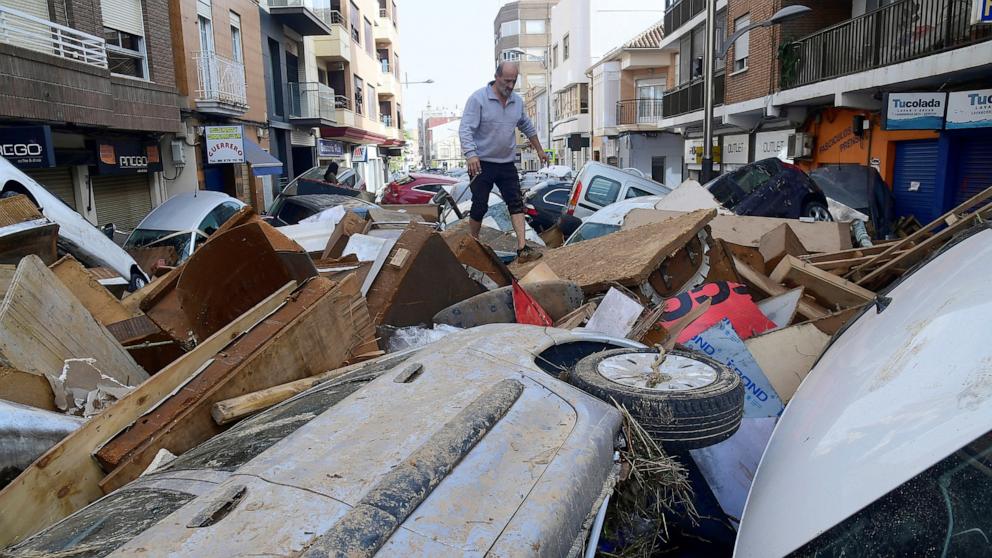
PHOTO: A man climbs on piled up cars following deadly floods in Sedavi, south of Valencia, eastern Spain, on Oct. 30, 2024.
Jose Jordan/AFP via Getty Images
A man climbs on piled up cars following deadly floods in Sedavi, south of Valencia, eastern Spain, on Oct. 30, 2024.
Jose Jordan/AFP via Getty Images

What's responsible for these events is a weather system known as a cut-off low. This happens when a low-pressure area is separated from the primary airflow.

Cut-off lows are common and can happen at any time of the year, anywhere in the world. When there is an extended stretch of cloudy, damp, and dreary weather, this is often related to a cut-off low.

However, the slow-moving nature of a cut-off low can set the stage for devastating extreme rainfall events when it interacts with other favorable factors, like the warm waters of the Mediterranean Sea and nearby mountains. Because it is slow-moving, it can quickly pound areas with relentless rounds of heavy rain, resulting in significant flooding.

In Spain, these weather events are often called a "gota fría," which translates to "cold drop." But that term doesn't tell the whole story. What happened in Valencia wasn't caused by a sudden cold blast sweeping across the region but by the unique characteristics of a cut-off low.

That's not to say that cold air in the atmosphere doesn't play a role in enhancing the precipitation. It does bring more frequent rounds of heavy rain. As the system pushes the colder air over the very warm waters of the Mediterranean Sea, it helps trigger and enhance areas of heavy rain.

Because the low-pressure system moves very slowly, it keeps sending waves of heavy rain over the same areas for an extended period, bringing extreme rainfall totals and catastrophic flash flooding.

The nearby mountains also likely enhanced the precipitation and impacts. Plus, the infrastructure in the Valencia region, like many municipalities, isn't built to handle this amount of rainfall. Add in all of those factors, and you get catastrophic flash flooding.

What role, if any, does climate change play in these extreme weather events?

Climate attribution science will look at how much worse the rain was because of human-caused emissions, but we know that human-amplified climate change is supercharging the water cycle, bringing heavier rainfall and related flood risks. More intense extreme rainfall events increase the frequency and scale of flash flooding as the influx of water is more than the infrastructure of many municipalities was built to handle.

According to the U.S. Government's Fifth National Climate Assessment, human-amplified climate change is contributing to increases in the frequency and intensity of the heaviest precipitation events. So, in a way, we are all making it rain more.

-ABC News meteorologist Dan Peck and ABC News Climate Unit's Matthew Glasser


Nov 08, 2024 5:08 PM

How a university is using AI to reduce cafeteria food waste

Food waste is a massive problem. According to the UN, the world wastes more than a billion tons annually. Here at home, Americans waste around 80 million tons each year. And worldwide, nearly 40% of all the food we produce is lost or wasted, according to the WWF.

At the same time, Feeding America, a nationwide network of food banks and pantries, says 47 million people in the U.S. face hunger, including 1 in 5 children. Then, there are the significant environmental impacts of sending so much wasted food to landfills. Left to decompose, this organic waste releases methane, a powerful greenhouse gas that's far more potent than carbon dioxide.

How AI is being used to tackle food waste
4:25
ABC News Ginger Zee reports on how Georgia State University is using AI to alleviate food waste after more than a billion tons of leftover food in landfills contribute to rising levels of methane gas.

Erin Murphy, a student at Georgia State University in Atlanta and a sustainability initiatives intern, saw all the food her peers were wasting and wanted to do something about it. She applied for a grant to bring new technology to campus that uses artificial intelligence to examine food waste and provide real-time data on what's left behind.

The technology, aptly named " Raccoon Eyes," analyzes the food left on each plate, categorizing and weighing the leftovers to provide detailed data on the waste and recommendations for reducing the leftovers.

When students finish their meals, they place their plates on a conveyor belt, where "Raccoon Eyes" captures an image of the plate. AI then uses that picture to evaluate the contents. This data is displayed on an online dashboard, offering real-time insights to the dining staff.

Ivan Zou, the co-founder of "Raccoon Eyes," said the information helps identify trends, such as how many plates of a specific meal were uneaten. For example, the system showed that students ate most of the salmon they put on their plates during a particular meal, but they left behind a lot of French fries during another meal.

Jennifer Wilson, GSU's director of sustainability, said that since the program's launch in January, AI has analyzed over 400,000 plates and found that approximately 21% contained food waste.

And it turns out that some of the most popular items, like chicken, pizza, and french fries, also generate the most waste. The dashboard's detailed feedback, however, also reveals that popular meals often have leftover portions because students take too much, not because the food is unpopular. This nuanced insight helps dining services adjust not only the menu but also portion sizes and serving methods.

The initiative is already making a difference. In the first four months, GSU reduced food waste by 23%, thanks to AI insights and increased student awareness.

The program even encourages feedback through a kiosk where students can leave comments like "sorry for my waste." Such feedback has proven invaluable, guiding the dining team in refining their offerings, for instance, by making more of the crowd-favorite Hot Cheetos sushi and less of other items.

-ABC News Climate Unit's Matthew Glasser, ABC News' Matt German, and ABC News meteorologist Dan Manzo


GMA Newsletters

Sign up for our newsletters to get GMA delivered to your inbox every morning!

Up Next in news

PHOTO: A hiker from Brooklyn was rescued from a crevice in upstate New York by an emergency response forest ranger.

Forest ranger details dramatic cave rescue of man stuck in crevice

May 25, 2026
PHOTO: People enjoy the beach at Jones Beach State Park, in Wantagh, New York.

Rip current risk at onset of Memorial Day Weekend: How to stay safe

May 22, 2026
PHOTO: Sharks Now A Common Sight On The Cape

What to know about 'Lulu's Law' requiring emergency shark attack notifications

May 21, 2026

The latest lifestyle and entertainment news and inspiration for how to live your best life - all from Good Morning America.
  • Contests
  • Terms of Use
  • Privacy Policy
  • Do Not Sell My Info
  • Children’s Online Privacy Policy
  • Advertise with us
  • Your US State Privacy Rights
  • Interest-Based Ads
  • About Nielsen Measurement
  • Press
  • Feedback
  • Shop FAQs
  • ABC News
  • ABC
  • All Videos
  • All Topics
  • Sitemap

© 2026 ABC News
  • Privacy Policy— 
  • Your US State Privacy Rights— 
  • Children's Online Privacy Policy— 
  • Interest-Based Ads— 
  • Terms of Use— 
  • Do Not Sell My Info— 
  • Contact Us— 

© 2026 ABC News