• Video
  • Shop
  • Culture
  • Family
  • Wellness
  • Food
  • Living
  • Style
  • Travel
  • News
  • Book Club
  • Newsletter
  • Privacy Policy
  • Your US State Privacy Rights
  • Children's Online Privacy Policy
  • Interest-Based Ads
  • Terms of Use
  • Do Not Sell My Info
  • Contact Us
  • © 2026 ABC News
ABC News

'Welcome home, Artemis': Crew celebrates historic 10-day moon mission

PHOTO: (L-R) NASA's Artemis II mission astronauts Canadian Space Agency's Jeremy Hansen, mission specialist Christina Koch, pilot Victor Glover and commander Reid Wiseman attend a welcoming ceremony in Houston, Texas, on April 11, 2026.
3:01
Ronaldo Schemidt/AFP via Getty Images
Artemis II crew arrives back to Houston after the dramatic Pacific splashdown
By Mary Kekatos, Julia Jacobo, Leah Sarnoff, Ivan Pereira, Meredith Deliso
Last Updated: April 3, 2026, 9:16 PM

NASA's Artemis II mission lifted off on April 1 at 6:35 p.m. ET from the Kennedy Space Center in Florida.

The four-person crew completed a 695,081-mile, 10-day journey around the moon, also known as a lunar fly-by.

A "textbook" splashdown took place at 8:07 p.m. ET on Friday, April 10.

Key Headlines

  • Crew makes 1st appearance since return from historic mission
  • 'Welcome home, Artemis': Jubilant and emotional, crew speaks out on historic moon mission
  • Trump says he will welcome Artemis II crew to White House 'soon'
  • NASA officials hail 'new era' of space exploration after successful mission
  • Crew members hoisted into helicopters
  • All 4 crew members out of the capsule
Here's how the news is developing.

Apr 03, 2026 9:16 PM

NASA gives preview of upcoming lunar flyby

During Friday's press conference, NASA leaders gave a preview of the Artemis II crew's upcoming lunar flyby.

On Saturday, the crew will take a selfie of the spacecraft and test some thruster flight modes on Orion.

On Monday, during the six-hour lunar observation period when the crew is on the far side of the moon, the astronauts will be at their closest approach to the lunar surface.

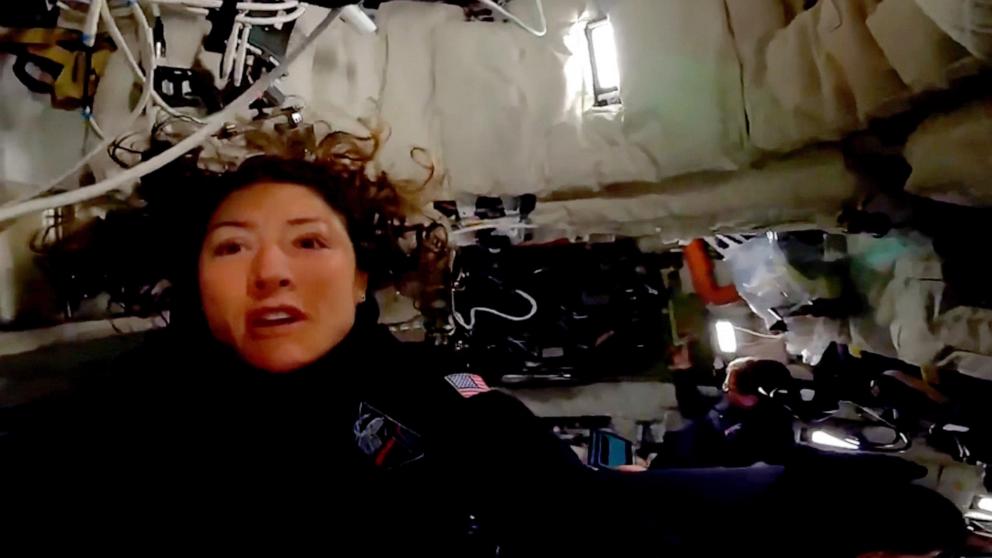
PHOTO: NASA astronaut Christina Koch participates in the daily planning conference in Orion spacecraft as it heads to the moon, April 3, 2026.
NASA
NASA astronaut Christina Koch participates in the daily planning conference in Orion spacecraft as it heads to the moon, April 3, 2026.
NASA


They will be making visual observations as well as photographs and video. The observation period will begin at around 2:30 p.m. ET, NASA said.

The blackout period, when the crew is behind the moon and loses communications with Mission Control, is expected to last about 40 minutes.

When asked if there is reason to worry about the astronauts when they are behind the moon and out of contact with Earth, Judd Frieling, Artemis flight director, said, "Physics takes over and physics will absolutely get us back to the front side of the moon."

-ABC News' Matthew Glasser


Apr 03, 2026 9:19 PM

NASA says Artemis II crew 'really excited about this opportunity’

During a press conference on Friday, NASA leaders said the Artemis II crew is in "great spirits" and "really excited about the opportunity to be there and what's going on."

Orion's navigation and propulsion systems are performing so well that thew crew will not perform the planned trajectory burn scheduled for this evening, NASA said.

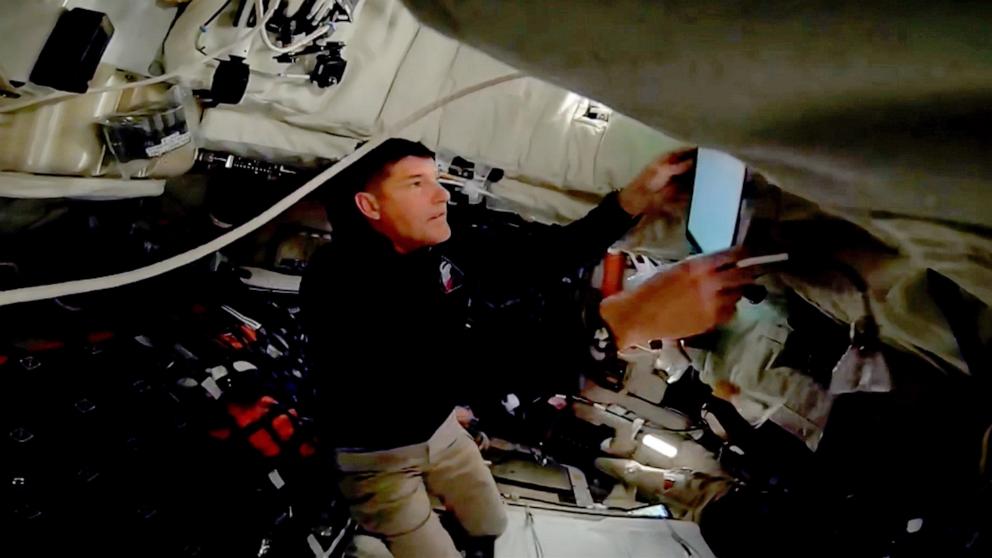
PHOTO: CSA astronaut Jeremy Hansen participates in the daily planning conference in Orion spacecraft as it heads to the moon, April 3, 2026.
NASA
CSA astronaut Jeremy Hansen participates in the daily planning conference in Orion spacecraft as it heads to the moon, April 3, 2026.
NASA

"I think it's really good to see that we don't need these minor correction burns. It shows that our navigation performance and our ability to get ranging has been outstanding," Howard Hu, program manager for the Orion spacecraft, said

On Friday, the astronauts spent some time conducting a "noise characterization" assessment of the toilet's noise levels.

The crew also had time to exercise and did a CPR demonstration. NASA said the astronauts are conducting a medical kit evaluation and will test emergency communications with the Deep Space Network.

-ABC News' Matthew Glasser


Apr 03, 2026 5:52 PM

Artemis II crew awakes to 'In a Daydream'

The Artemis II astronauts woke up around 1:00 p.m. ET on day 3 of their mission to the moon.

"Whenever you want to do some wake-up music, we can do some post-wake-up music," mission commander Reid Wiseman told Mission Control.

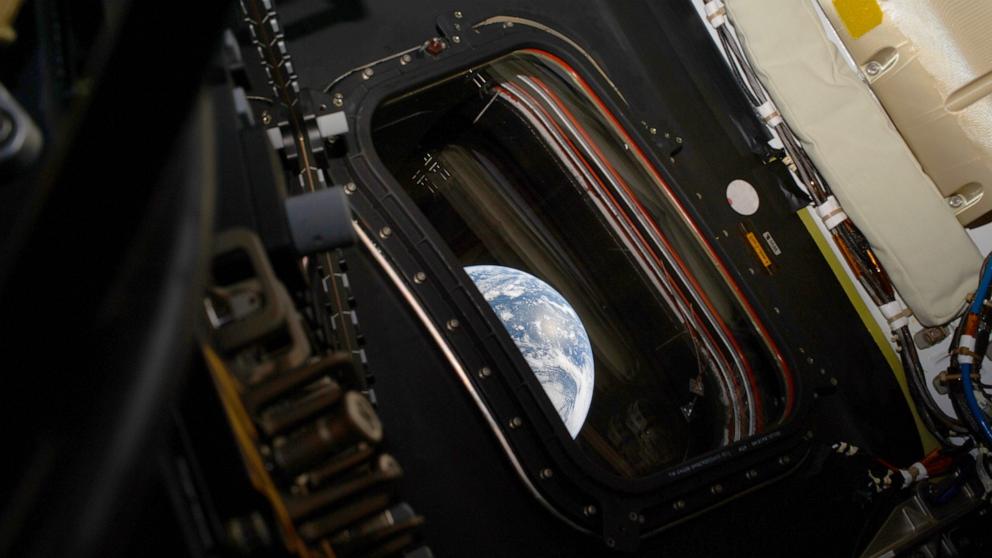
PHOTO: A view of Earth taken by NASA astronaut and Artemis II Commander Reid Wiseman from one of the Orion spacecraft's four windows after completing the translunar injection burn on April 2, 2026.
Reid Wiseman/NASA
A view of Earth taken by NASA astronaut and Artemis II Commander Reid Wiseman from one of the Orion spacecraft's four windows after completing the translunar injection burn on April 2, 2026.
Reid Wiseman/NASA

NASA's Mission Control in Houston played "In a Daydream" by the Freddy Jones Band.

Day 3 will include demonstrating CPR procedures in space and checking out some of Orion's medical kit, including the thermometer, blood pressure monitor, stethoscope and otoscope, according to NASA.

PHOTO: A view of a backlit Earth taken by NASA astronaut and Artemis II Commander Reid Wiseman from one of the Orion spacecraft's window after completing the translunar injection burn on April 2, 2026.
Reid Wiseman/NASA
A view of a backlit Earth taken by NASA astronaut and Artemis II Commander Reid Wiseman from one of the Orion spacecraft's window after completing the translunar injection burn on April 2, 2026.
Reid Wiseman/NASA

The crew will also begin to configure the cabin for its upcoming lunar flyby so it has the most ideal setup for capturing images and data of the far side of the moon.

Additionally, the Artemis II astronauts will be doing a Deep Space Network emergency communications test make sure the system works.

-ABC News' Matthew Glasser and Mary Kekatos


Apr 03, 2026 5:45 PM

Out of this world photos from Orion capsule revealed

NASA released the first batch of high quality photos of Earth taken from the Orion capsule.

PHOTO: NASA astronaut and Artemis II Commander Reid Wiseman took this picture of Earth from the Orion spacecraft's window on April 2, 2026, after completing the translunar injection burn.
Reid Wiseman/NASA
NASA astronaut and Artemis II Commander Reid Wiseman took this picture of Earth from the Orion spacecraft's window on April 2, 2026, after completing the translunar injection burn.
Reid Wiseman/NASA

The images show the crew’s view as they look back at the pale blue dot we call home, while continuing their journey toward the moon.

PHOTO: A view of Earth taken by NASA astronaut and Artemis II commander Reid Wiseman from one of the Orion spacecraft's four main windows after completing the translunar injection burn on April 2, 2026.
Reid Wiseman/NASA
A view of Earth taken by NASA astronaut and Artemis II commander Reid Wiseman from one of the Orion spacecraft's four main windows after completing the translunar injection burn on April 2, 2026.
Reid Wiseman/NASA

According to NASA, the images were taken on Artemis II commander Reid Wiseman's "personal computing device, PC or tablet."

-ABC News' Briana Alvarado


Apr 01, 2026 4:38 PM

How NASA plans to keep astronauts safe during the Artemis II mission

Despite all the preparation, safety systems and redundancies, the nature of human spaceflight is inherently risky, according to experts.

"I think it'd make everybody feel comfortable to say that all the risk was knocked down to zero," Danny Olivas, former NASA astronaut and engineer, told ABC News. "The truth is it is not and never will be."

PHOTO: NASA's Artemis II Space Launch System rocket and Orion spacecraft atop a mobile launcher at Launch Complex 39B, March 30, 2026, at NASA's Kennedy Space Center in Florida.
Bill Ingalls/NASA/AFP via Getty Images
NASA's Artemis II Space Launch System rocket and Orion spacecraft atop a mobile launcher at Launch Complex 39B, March 30, 2026, at NASA's Kennedy Space Center in Florida.
Bill Ingalls/NASA/AFP via Getty Images

NASA is using a variety of tools and systems to ensure crew safety from launch to splashdown, including customized lifesaving spacesuits, a launch abort system, radiation monitoring, an emergency egress system and other contingencies.

Read more here.

-ABC News' Briana Alvarado


GMA Newsletters

Sign up for our newsletters to get GMA delivered to your inbox every morning!

Up Next in news

PHOTO: In this March 30, 2026, file photo, gas prices are displayed at a Shell gas station in Los Angeles.

Gas prices are up across the country. Here's where you'll find the most expensive -- and cheapest -- gas

May 2, 2026
PHOTO: New York City police officers responded to a domestic incident call that turned into a house explosion.

Police officers hailed as heroes after New York house explosion

May 1, 2026
PHOTO: King Charles III and Queen Camilla attend a community block party and pot luck celebrating America's 250th 'birthday', on April 30, 2026, in Front Royal, Virginia.

King Charles III, Queen Camilla conclude US state visit

April 30, 2026

The latest lifestyle and entertainment news and inspiration for how to live your best life - all from Good Morning America.
  • Contests
  • Terms of Use
  • Privacy Policy
  • Do Not Sell My Info
  • Children’s Online Privacy Policy
  • Advertise with us
  • Your US State Privacy Rights
  • Interest-Based Ads
  • About Nielsen Measurement
  • Press
  • Feedback
  • Shop FAQs
  • ABC News
  • ABC
  • All Videos
  • All Topics
  • Sitemap

© 2026 ABC News
  • Privacy Policy— 
  • Your US State Privacy Rights— 
  • Children's Online Privacy Policy— 
  • Interest-Based Ads— 
  • Terms of Use— 
  • Do Not Sell My Info— 
  • Contact Us— 

© 2026 ABC News