• Video
  • Shop
  • Culture
  • Family
  • Wellness
  • Food
  • Living
  • Style
  • Travel
  • News
  • Book Club
  • Newsletter
  • Privacy Policy
  • Your US State Privacy Rights
  • Children's Online Privacy Policy
  • Interest-Based Ads
  • Terms of Use
  • Do Not Sell My Info
  • Contact Us
  • © 2026 ABC News
ABC News

'Welcome home, Artemis': Crew celebrates historic 10-day moon mission

PHOTO: (L-R) NASA's Artemis II mission astronauts Canadian Space Agency's Jeremy Hansen, mission specialist Christina Koch, pilot Victor Glover and commander Reid Wiseman attend a welcoming ceremony in Houston, Texas, on April 11, 2026.
3:01
Ronaldo Schemidt/AFP via Getty Images
Artemis II crew arrives back to Houston after the dramatic Pacific splashdown
By Mary Kekatos, Julia Jacobo, Leah Sarnoff, Ivan Pereira, Meredith Deliso
Last Updated: April 7, 2026, 6:14 PM

NASA's Artemis II mission lifted off on April 1 at 6:35 p.m. ET from the Kennedy Space Center in Florida.

The four-person crew completed a 695,081-mile, 10-day journey around the moon, also known as a lunar fly-by.

A "textbook" splashdown took place at 8:07 p.m. ET on Friday, April 10.

Key Headlines

  • Crew makes 1st appearance since return from historic mission
  • 'Welcome home, Artemis': Jubilant and emotional, crew speaks out on historic moon mission
  • Trump says he will welcome Artemis II crew to White House 'soon'
  • NASA officials hail 'new era' of space exploration after successful mission
  • Crew members hoisted into helicopters
  • All 4 crew members out of the capsule
Here's how the news is developing.

Apr 07, 2026 6:14 PM

Artemis II crew recreates 'Full House' opening

The Artemis II crew put its own spin on the "Full House" opening credits, recreating the intro and calling it "Full Capsule."

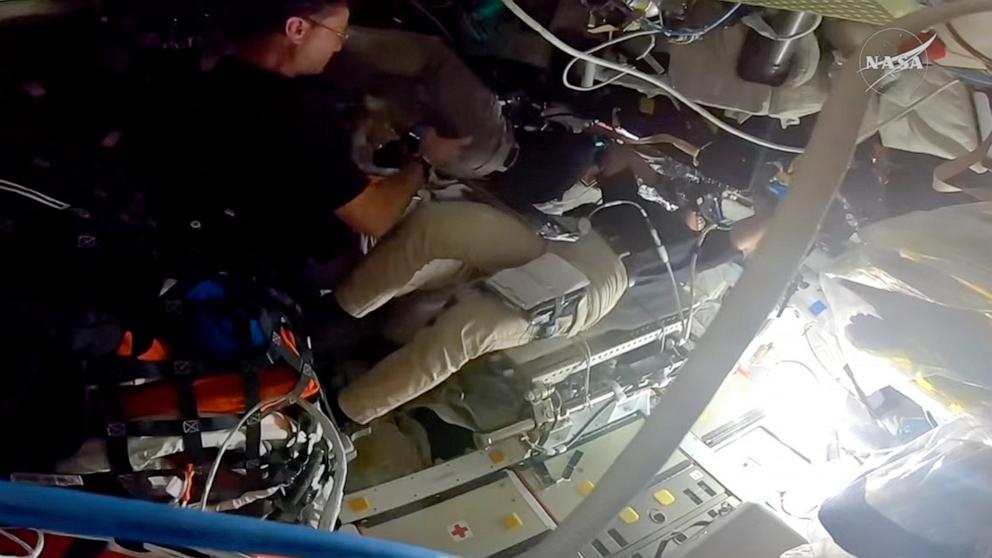
The video features the opening theme to the TV show, "Everywhere You Look," introducing the crew along with clips of life inside the Orion spacecraft.

Also featured in the clip is "Rise," the plush toy designed by a second grader, who won a contest for his toy to go to space with the crew.


Apr 07, 2026 6:21 PM

NASA shares more photos of far side of the moon

NASA has shared additional photos of the far side of the moon taken during the Artemis II crew's historic lunar flyby on Monday.

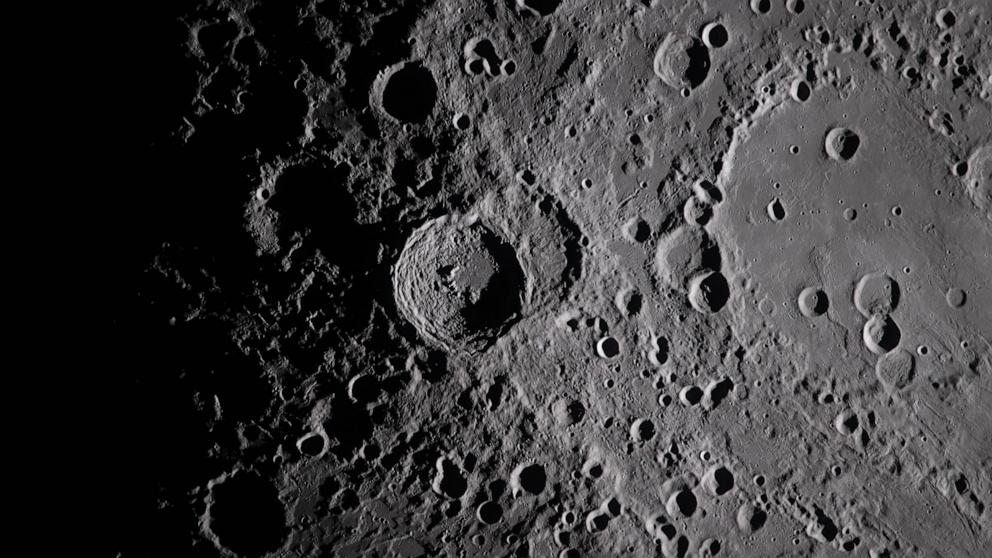
One image shows a close-up view of Vavilov Crater, an impact crater on the rim of the older and larger Hertzsprung impact basin, none of which can be seen from Earth.

PHOTO: A close-up view taken by the Artemis II crew of Vavilov Crater on the rim of the older and larger Hertzsprung basin, April 6, 2026.
NASA
A close-up view taken by the Artemis II crew of Vavilov Crater on the rim of the older and larger Hertzsprung basin, April 6, 2026.
NASA

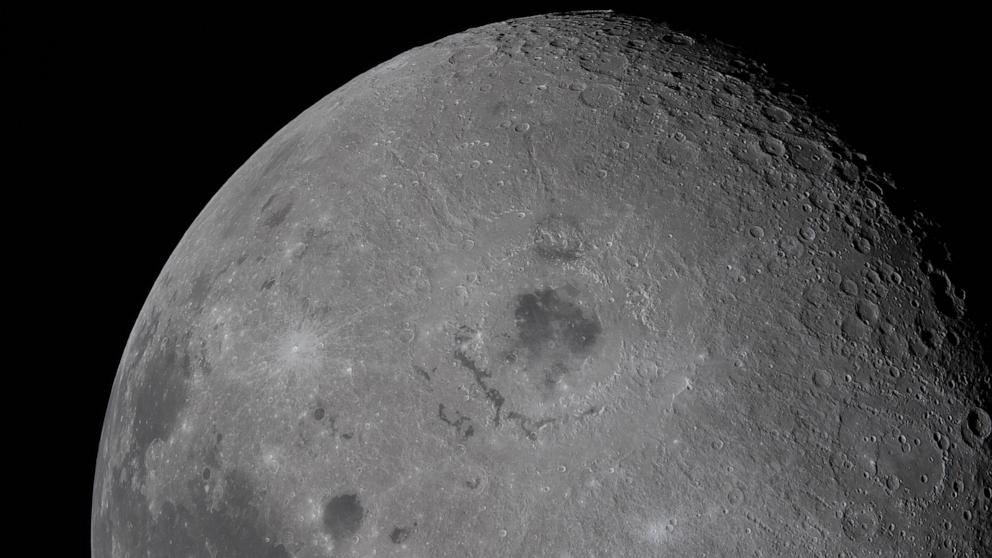
Another image shows the Orientale basin in the center with a black patch of ancient lava that punched through the moon's crust in an eruption billions of years ago. It is located on the western border between the near and far side of the moon and is hard to see from Earth.

PHOTO: Orientale basin is visible in the center, with a black patch of ancient lava in the center that punched through the Moon's crust in an eruption billions of years ago, in this view of the Moon, taken by the Artemis II crew, April 6, 2026.
NASA
Orientale basin is visible in the center, with a black patch of ancient lava in the center that punched through the Moon's crust in an eruption billions of years ago, in this view of the Moon, taken by the Artemis II crew, April 6, 2026.
NASA

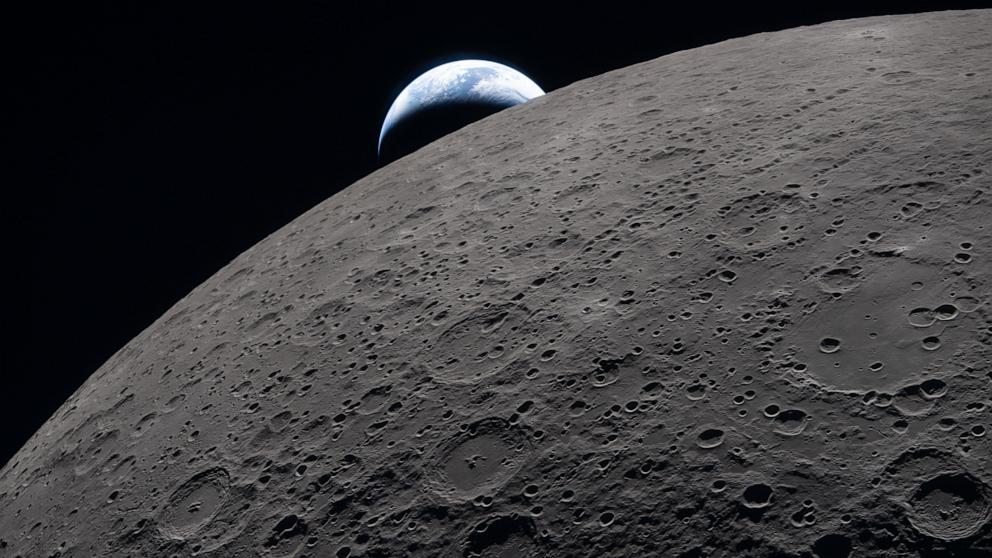
A third image captures the lunar surface in sharp detail while a distant Earth hovers in the background.

PHOTO: The lunar surface fills the frame in sharp detail, as seen during the Artemis II lunar flyby, while a distant Earth sets in the background, April 6, 2026.
NASA
The lunar surface fills the frame in sharp detail, as seen during the Artemis II lunar flyby, while a distant Earth sets in the background, April 6, 2026.
NASA

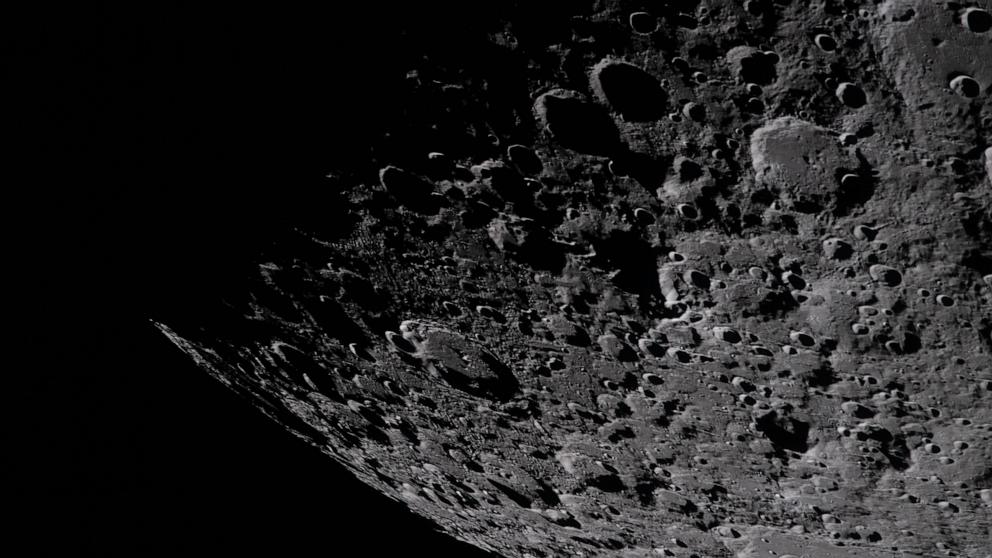
Also captured by the Artemis II crew is the heavily cratered terrain of the eastern edge of the South Pole-Aitken basin, an impact crater on the far side of the moon.

The basin is seen with the shadowed terminator -- the boundary between lunar day and night -- at the top of the image.

PHOTO: Captured by the Artemis II crew, April 6, 2026, the heavily cratered terrain of the eastern edge of the South Pole-Aitken basin is seen with the shadowed terminator, the boundary between lunar day and night at the top of the image.
NASA
Captured by the Artemis II crew, April 6, 2026, the heavily cratered terrain of the eastern edge of the South Pole-Aitken basin is seen with the shadowed terminator, the boundary between lunar day and night at the top of the image.
NASA

Apr 07, 2026 2:24 PM

Artemis II crew dons eclipse glasses in space

NASA released a photo of the Artemis II crew donning eclipse glasses ahead of the solar eclipse.

The image shows (from far left) Christina Koch, Jeremy Hansen, Reid Wiseman and Victor Glover protecting their eyes at key moments during the solar eclipse they experienced on Monday.

PHOTO: art002e009302
NASA
The Artemis II crew, Christina Koch, Jeremy Hansen, Reid Wiseman and Victor Glover use eclipse viewers to protect their eyes at key moments during the solar eclipse they experienced during their lunar flyby, April 6, 2026.
NASA


Apr 07, 2026 2:03 PM

Artemis II crew captures total solar eclipse in space

NASA has shared a photo of the moon fully eclipsing the sun, taken aboard the Orion spacecraft.

The image shows a mostly darkened moon with the solar corona, which is the Sun's outermost atmosphere, glowing around the moon's edge.

PHOTO: The sun's corona glow is seen around the moon's edge during a solar eclipse photographed by the astronauts aboard the Orion spacecraft, April 6, 2026.
NASA
The sun's corona glow is seen around the moon's edge during a solar eclipse photographed by the astronauts aboard the Orion spacecraft, April 6, 2026.
NASA

The Artemis II astronauts are the first humans to have witnessed a total solar eclipse in space.

The solar eclipse lasted for about an hour, according to NASA.


Apr 06, 2026 11:21 PM

Orion makes its closest approach to the moon

Shortly after losing communication with NASA, the Artemis II crew is making its closest approach to the moon.

Orion will be about 4,070 miles above the surface of the moon, according to NASA.

The Artemis II astronauts will be the first humans to see most of the far side of the moon, or the side not visible from Earth, since the Apollo missions.

PHOTO: NASA astronaut Christina Koch lays on her back as she take photographs of the Moon out the window of the Orion spacecraft, April 6, 2026.
NASA
NASA astronaut Christina Koch lays on her back as she take photographs of the Moon out the window of the Orion spacecraft, April 6, 2026.
NASA

"It turns out there's about 60% of the far side, I think, that has never been seen by human eyes because of the lighting conditions," Reid Wiseman, mission commander, said during a news conference on March 29. "Apollo always wanted that light on the front side of the moon for their landing and launch capability. ... We've seen it in satellite photos, but humans have never, ever seen that before. That's cool."


GMA Newsletters

Sign up for our newsletters to get GMA delivered to your inbox every morning!

Up Next in news

PHOTO: Gas station clerk Abdulrahman Abohatem speaks to ABC affiliate WXYZ.

Gas station clerk speaks out after foiling alleged kidnapping

April 15, 2026
PHOTO: Pauls Valley High School principal Kirk Moore took down a shooter in the halls after shots were fired.

Oklahoma high school principal takes down would-be shooter, hailed as hero

April 15, 2026
VIDEO: American influencer found dead in Tanzania

American influencer found dead in Tanzania

April 15, 2026

The latest lifestyle and entertainment news and inspiration for how to live your best life - all from Good Morning America.
  • Contests
  • Terms of Use
  • Privacy Policy
  • Do Not Sell My Info
  • Children’s Online Privacy Policy
  • Advertise with us
  • Your US State Privacy Rights
  • Interest-Based Ads
  • About Nielsen Measurement
  • Press
  • Feedback
  • Shop FAQs
  • ABC News
  • ABC
  • All Videos
  • All Topics
  • Sitemap

© 2026 ABC News
  • Privacy Policy— 
  • Your US State Privacy Rights— 
  • Children's Online Privacy Policy— 
  • Interest-Based Ads— 
  • Terms of Use— 
  • Do Not Sell My Info— 
  • Contact Us— 

© 2026 ABC News