New study suggests there may be beneficial 'Goldilocks' window for kids to use social media

A new study suggests there may be a so-called "Goldilocks" time frame in which kids may face less risk when they use social media.
The time frame doesn't cut out social media use completely but suggests there is an amount of time that is "just right" for kids to use it, a reference to the phrase Goldilocks uses in the fairy tale of the same name.
The study from Australia, published Monday in the journal JAMA Pediatrics, suggests there may be a certain amount of time that can benefit kids and their mental health and estimates that it is less than two hours a day, on average.
For the study, researchers followed 100,000 Australian children and teens in grades 4 through 12 and their social media use -- or lack thereof -- for three years. They also measured eight different aspects of well-being, including happiness, sadness, optimism, worry and engagement in school.

Researchers defined a "high" use of social media in the study as more than two hours per day. On average, they found that moderate use, which is less than two hours a day, was best.
The study found that kids who use too much social media and those who didn't use any social media were all more likely to experience a lower level of well-being. Heavy social media use in kids was associated with distress, whereas avoiding social media completely may lead to missed social connections with friends, another stress factor for kids.
Differences between boys' and girls' social media use
The study highlighted differences between boys' and girls' social media use and its impacts, which can vary across age groups.
For younger girls in grades 4-6, their well-being tended to be highest with no social media use. Girls in grades 7 through 12, meanwhile, benefited from moderate use, showing an improvement in well-being when they did use some social media. Girls across age groups who used social media heavily, however, showed negative well-being markers.
For boys in grades 4-6, there was not much of a difference in well-being between those who used social media moderately and those who did not use it at all. However, boys in grades 7 through 12 who didn't use social media at all showed signs of a decline in well-being.
Social media recommendations for parents
Experts say one of the most important indicators of a child's social media use and well-being comes down to a parent's involvement.
"There's no real age [at which it's recommended to let a child start using social media], although a lot of experts will say you should wait till 13. Some even say 16," ABC News chief medical correspondent Dr. Tara Narula said on "Good Morning America" Tuesday. "We know the brain is really developing until age 25, in terms of your ability to emotionally regulate, process information, have impulse control, but really, each child is different, and that's going to depend on their traits, characteristics, maturity, responsibility and family values."
Narula recommends parents start "open, non-judgmental discussions" with their children about social media use and set rules and boundaries when necessary.
"Just like we teach our kids about how to drive, how to manage our finances, sexual health, drugs and alcohol, we need to be talking about social media," Narula said. "That means teaching them about how to deal with cyberbullying and harassment, what you should be sharing and not sharing … [and] how to look for things that might be fake on social media or scams."
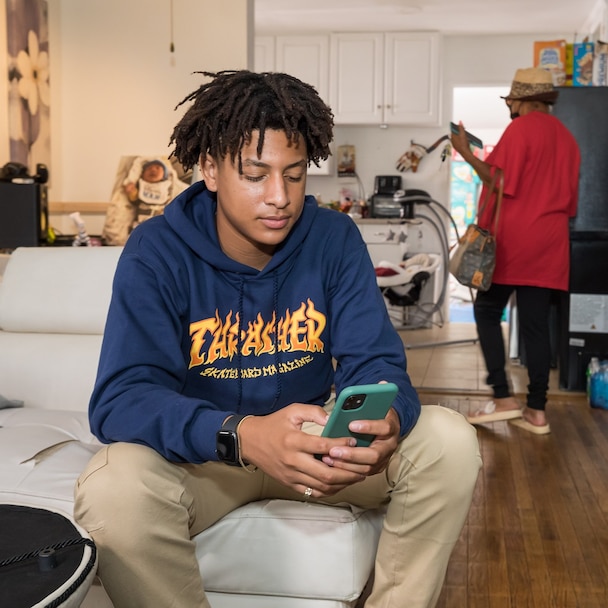


In addition to setting examples for kids and being a role model for them, Narula said parents can be proactive and set their kids up for healthy social media use.
"You, as a parent, can friend your child and follow them so you can monitor what's happening on their social media accounts," Narula said. "You can set privacy filters on their accounts, and you can also set boundaries around when they use it."
"And then last, you want to make sure that [kids are] doing in-person activity groups, clubs, sports," Narula added. "[Social media] should not take away from that real-life interaction."