The latest recommendations on youth sports and concussions research
This is an Inside Science story.
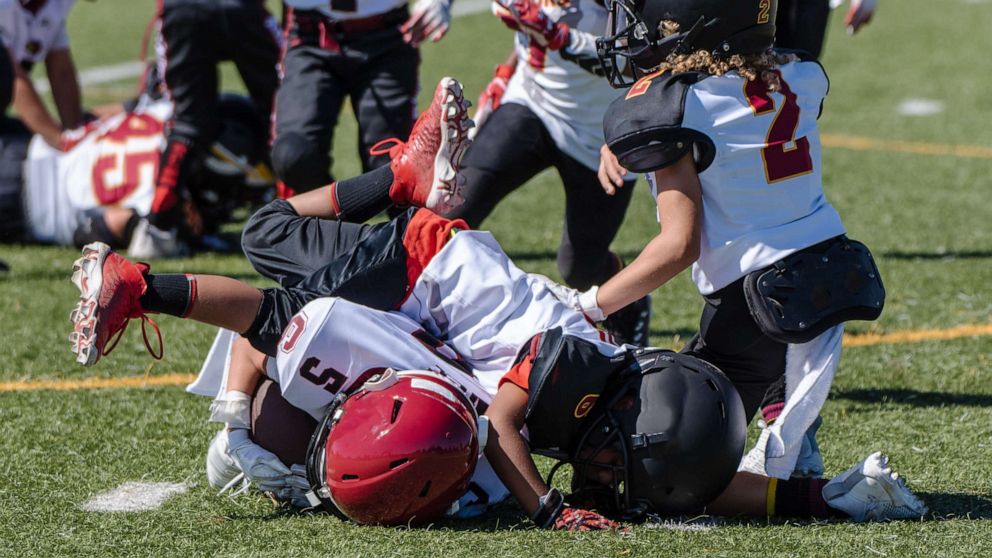
(Inside Science) -- A panel of experts studying past research on the risk of concussion in youth contact sports concluded that for most sports, including football and soccer, there is no clear evidence to indicate an age at which kids should begin activities associated with potential brain injury risks, such as tackling in football and heading the ball in soccer.
They also concluded that there is limited evidence to indicate that "modern helmets differ in their ability to reduce the risk of concussion" in youth football or that current headgear sometimes used in youth soccer reduces concussion risk.
The team of 13 researchers published their report yesterday in the journal JAMA Pediatrics. They surveyed medical literature on sports-related concussions in youth, then used the evidence they found to make specific recommendations for many sports, such as guidelines regarding the amount of contact in youth football practices.
The researchers also noted when current research did not offer enough evidence to make a clear recommendation. In addition, they identified glaring needs for research on important questions that have not yet been widely studied.
Their approach required that all panelists rate the evidence for each conclusion or recommendation in the paper at least as high as seven on a nine-point scale. They did this, said pediatrician Frederick Rivara of the University of Washington's School of Medicine and Sports Institute, in Seattle, to "emphasize to the people that what we're really doing is trying to base this on evidence rather than expert opinion, and acknowledging where there are holes in the evidence, because there are lots of holes."
The research brought together observations that others had made previously, including that the rates of concussion in contact and collision sports such as football and hockey are higher than for other sports, and that adolescent females have higher rates of reported concussions than adolescent males for sports such as soccer and basketball.
Despite the information that is available on these topics, they said, it was not completely clear how sex, age and risk of sports-related concussion were related. This meant that the panel was unable to make recommendations for topics such as an age at which youth should begin learning contact techniques in most sports.
They did recommend that body checking not be allowed in youth hockey below the age of 13. This matches the rules of USA Hockey and findings made in previous research. It differs from the position of the American Academy of Pediatrics, which recommends that checking not be introduced before the age of 15.
Sports safety advocate and researcher Chris Nowinski, who co-founded the Concussion Legacy Institute, said that he agreed with about 95% of what was in the paper, but questioned how the panel could make a recommendation on checking in hockey, but not make recommendations about when to introduce heading in soccer or tackling in football. He personally suggests that kids don't play tackle football before the age of 14.
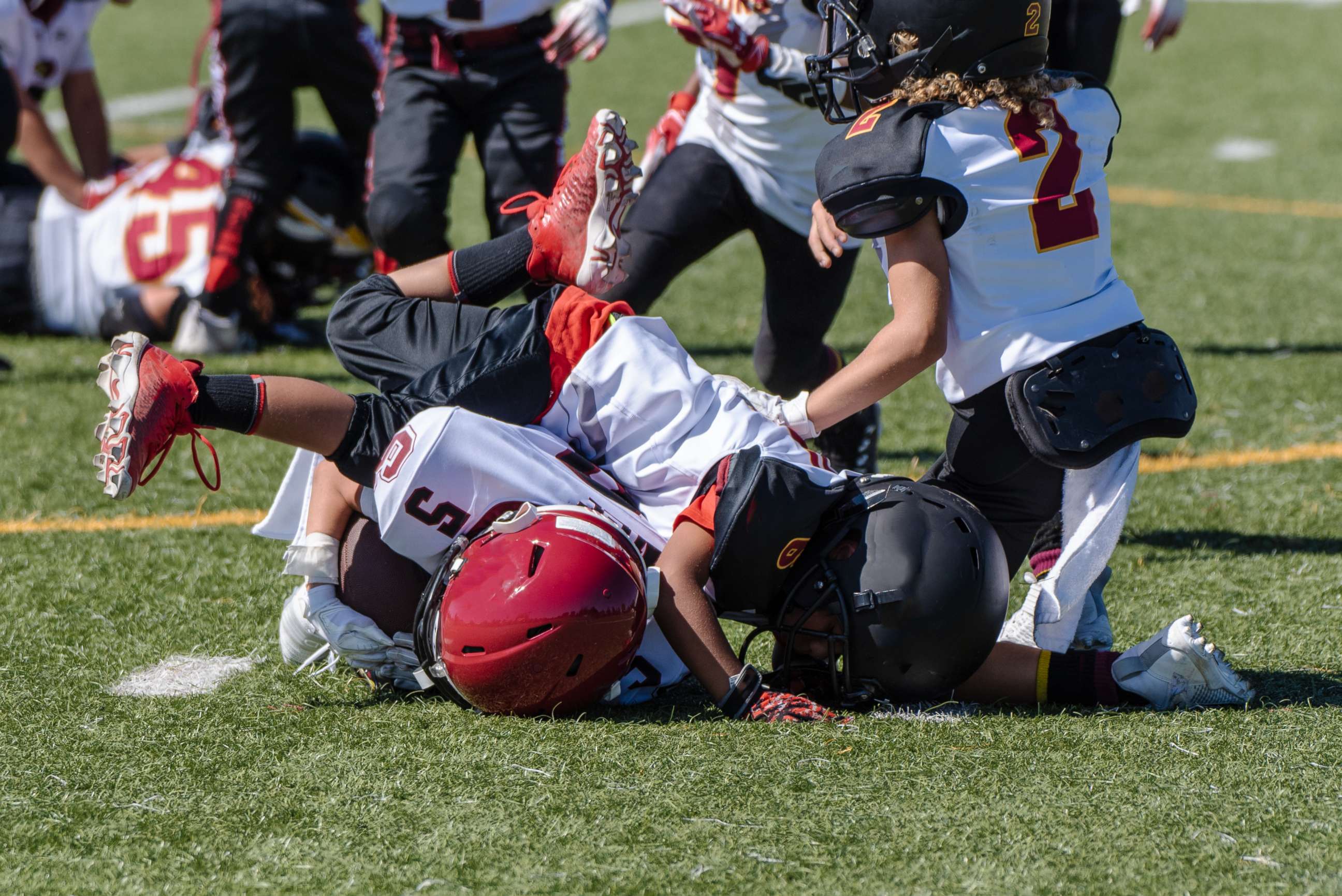
"The evidence is there that you have fewer concussions and fewer head impacts in flag football versus tackle football," he said.
He also said that the new research was completed before a recent study came out that suggested that the risk of the degenerative brain disease chronic traumatic encephalopathy rises by 30% per year of football played. He was a co-author with other researchers from Boston University's CTE Center.
It's important to look at the cumulative effects of the repetitive head impacts in football that happen over the course of a player’s career, including four potential components -- youth, high school, college and pro football, Nowinski said. "My suggestion, looking at the evidence, is do not start young. … But if you just take one of them, we don't have evidence to say any single one of those four components is so dangerous you shouldn't do it."
[Inside Science: After this story was published, Nowinski clarified by email that reviewing only the evidence regarding youth football is an inappropriate way to examine the cumulative risk for CTE.]
Mark Halstead, who directs the sports concussion program at Washington University in St. Louis and was not part of the panel, wrote in an email that researchers definitely need more information on many sports safety questions.
"There still are several areas that really don’t have a lot of research yet to help us make strong recommendations one way or the other, which include ages that are best for heading, or if heading should even be done, or a minimum age for tackle football," he told Inside Science. "We want to make these recommendations based on the science rather than hearsay."
The panel identified several issues that need more study, such as the way conditions such as anxiety, depression and ADHD influence the risk of sports-related concussion. They also recommended that researchers develop data that can demonstrate the age or stage of development at which contact should be introduced in individual sports, as well as develop a better understanding of what the best techniques are in each sport.
They found that there was limited evidence that changing rules, teaching safer training techniques or improving conditioning reduced risk. They also recommended limiting contact and collision in practice for football.
The study was funded by a collection of organizations including USA Football, US Lacrosse, USA Rugby and the American College of Sports Medicine. At a conference in May, the researchers acknowledged this and said these groups weren't involved beyond providing money for the research.
Rivara said that there "was some disappointment that there wasn't more evidence for some areas." He noted that there is a need to accumulate more information through research. For example, the panel found no peer-reviewed research regarding what happens to youth activity and exercise if contact sports options are removed.
"Physical activity in kids is important, right?" he said. "I think that everyone is trying to be careful that we don't discourage physical activity."
Inside Science note (2:20 pm, November 12, 2019): An earlier version of this story stated that the National Institutes of Health and the CDC provided funding for the study mentioned in the story. As the paper says, "This project was funded by US Lacrosse, USA Football, the American College of Sports Medicine, and USA Rugby." We regret the error.
Inside Science is an editorially-independent nonprofit print, electronic and video journalism news service owned and operated by the American Institute of Physics.