Refugee Olympic Team features 29 athletes from across the globe
Yusra Mardini escaped the Syrian civil war in August 2015. She went from Syria to Lebanon and then to Turkey, and from there, she got on a broken boat -- meant for just a few people but holding around 20 -- heading to Greece. When the boat began to capsize, she swam through the sea with a couple of others to push the boat ashore.
Mardini eventually made it to Germany, and not long after, to Rio de Janeiro, where she competed as a swimmer on the Refugee Olympic Team in 2016.
“Sport was our way out,” she said in a recent Olympic Channel Instagram interview. “It was kind of what gave us hope to build our new lives.”
She didn't take home any medals that year, but Mardini will try once more, again on the refugee team, at the Tokyo Olympics.
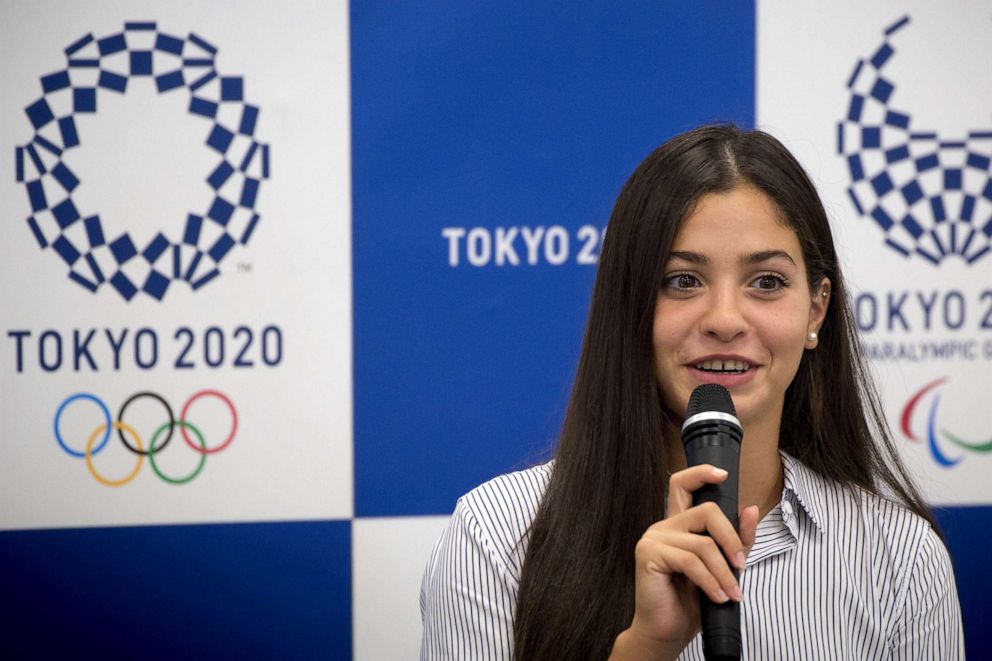
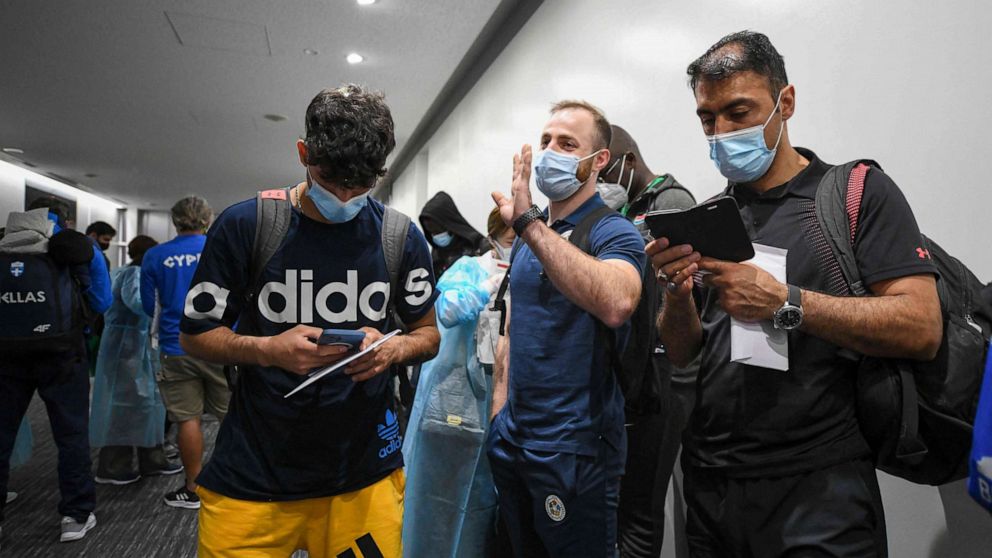
The team, which marches under the Olympic flag, will make its second appearance at the games this year with 29 athletes -- including six who were the 2016 team in Rio.
Andrea Mucino-Sanchez of the UNHCR, the UN Refugee Agency, which partners with the International Olympic Committee to support the refugee team, said the team is a symbol of hope to the millions of displaced people around the world.
"Sport is more than a leisure activity. It has the power to foster inclusion in local communities," she told ABC News. "It helps heal, and it really enables refugees to build a future in their host countries and beyond."
What the Refugee Olympic Team is
The Refugee Olympic Team -- which goes by the official acronym EOR based on its French name, Équipe Olympique des Réfugiés -- first came onto the international stage during the Rio 2016 Olympics.
At the time, the team consisted of 10 athletes in the athletics, judo and swimming categories. This year, the team has expanded to 29 athletes in those same categories, as well as badminton, boxing, canoe sprint, cycling, karate, shooting, taekwondo, weightlifting and wrestling.
All of the athletes are refugees, having fled violence or persecution in their home countries. They now live in other countries across the globe.
There are various factors to qualify for the team, Mucino-Sanchez said, including athletic performance -- "They are all elite athletes, but there are minimums to be able to compete in the Olympic Games," she said -- and their refugee status, which must be confirmed by UNHCR.
Why the team was created
IOC President Thomas Bach announced the creation of the team in October 2015 during what was being called the biggest refugee crisis since World War II. Wars in Syria, Afghanistan, Iraq, Somalia and Sudan fueled a massive migration to Europe, and the world was still reeling from the death of Alan Kurdi, a 3-year-old Syrian boy whose body was photographed on a Turkish beach after his family tried and failed to escape to Greece on an overcrowded boat.
"This will be a symbol of hope for all refugees in the world and will make the world better aware of the magnitude of this crisis," Bach said of the team. "It is also a signal to the international community that refugees are our fellow human beings and are an enrichment to society."
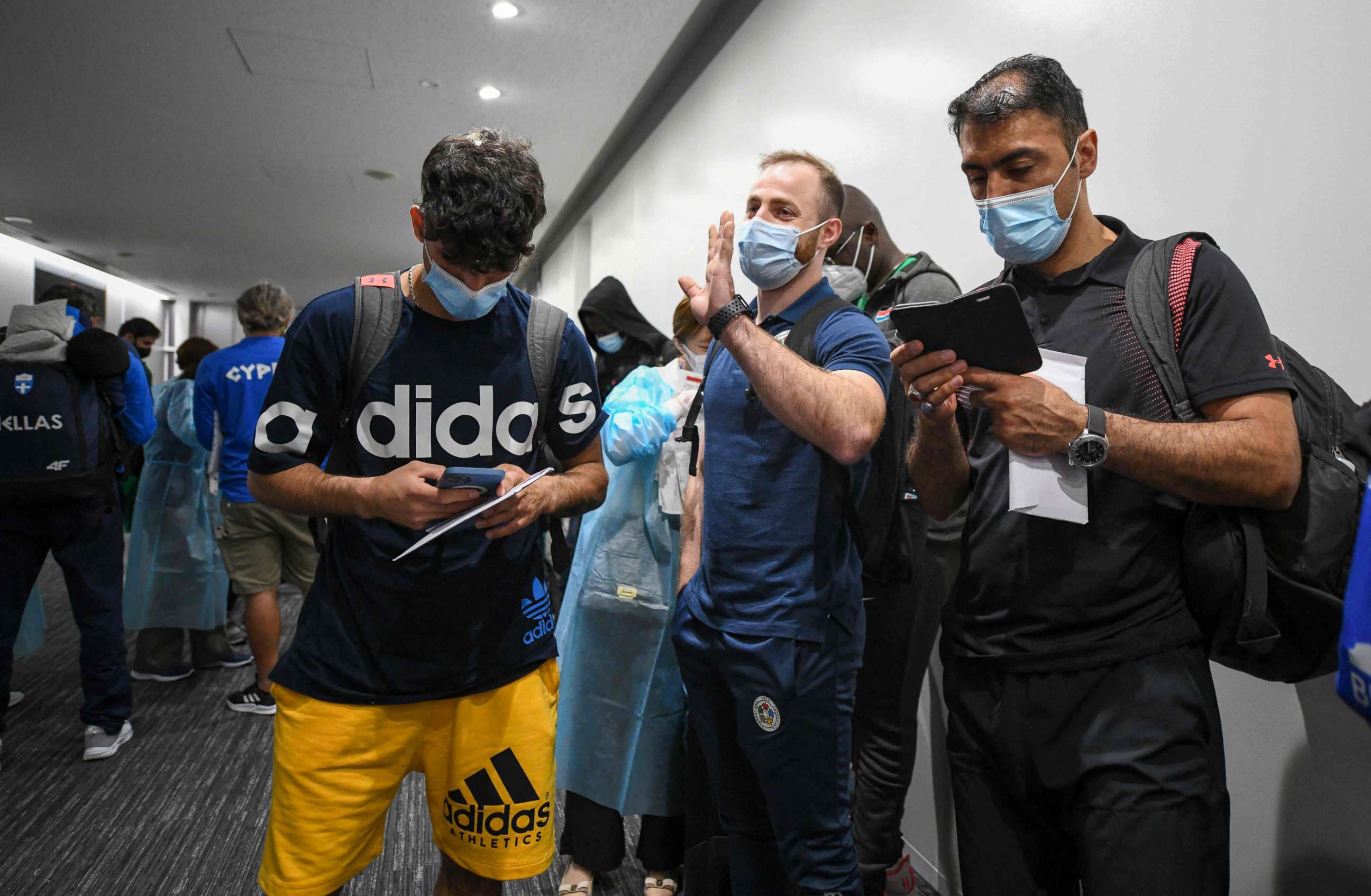
The refugee crisis is still ongoing.
According to UNHCR, there were over 82 million forcibly displaced people around the world by the end of 2020 -- 26 million of whom are refugees.
Who -- and where -- the athletes are
Each athlete lives and trains in the country of their host National Olympic Committee (NOC). Host NOCs include Kenya, Portugal, Israel, Netherlands, Germany, France, Switzerland and Canada, among others. The host NOCs receive funding from Olympic Solidarity, an athlete development assistance program, to help them prepare and support the refugee athletes during their training.
Financial assistance also goes directly to refugee scholarship recipients. According to the 2020 Olympic Solidarity annual report, 52 refugee athletes received scholarship support from the program. However, not everyone supported ends up qualifying for the Olympics.
The IOC previously said that it helps athletes "build their future" outside of training for the Olympics. However, there have been some concerns about management of the program from past participants. Some members who were based in a training camp in Kenya for years left, alleging mismanagement and denied opportunities, TIME reported.
Two runners who were refugees from South Sudan claimed they not only did not get prize money they won at competitions, but also received a significantly lower stipend than program participants based in other areas.
The IOC did not respond to ABC News' request for comment.
There are 29 athletes across 12 sports participating in the Tokyo Olympics. Along with Mardini, there are eight other athletes from Syria, four from South Sudan, three from Afghanistan, as well as others from Eritrea, Republic of the Congo, Iraq, Cameroon and Venezuela.
The team this year also includes five athletes from Iran, two of whom were previously on the Iranian Olympic team.
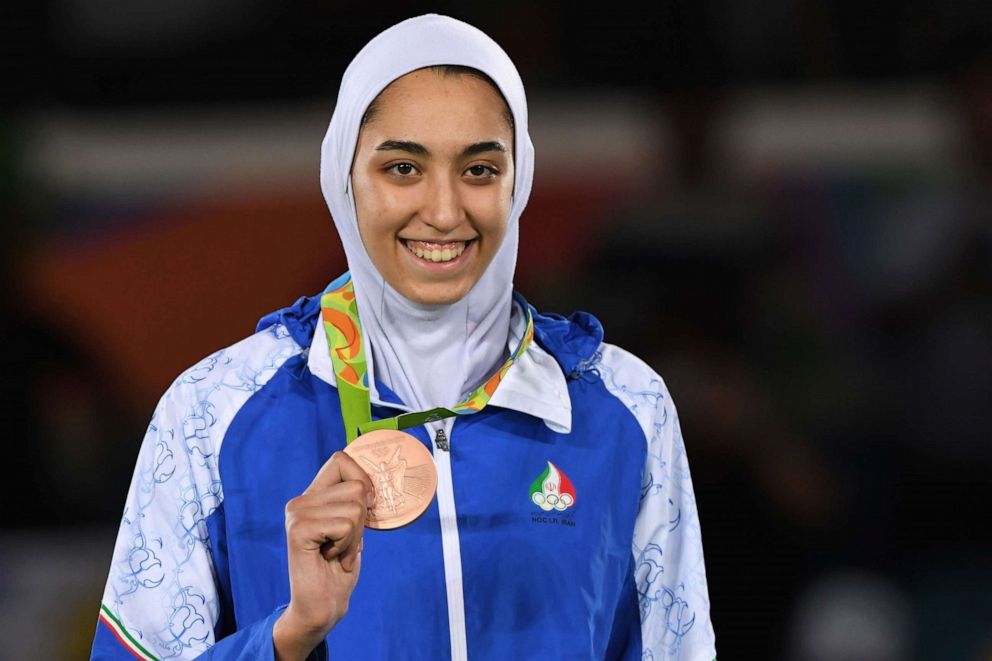
Kimia Alizadeh became Iran's first female Olympic medalist when she won a bronze medal for the Iranian Olympic team in the -57kg taekwondo category during the 2016 Rio Olympics. She fled the country in 2020, calling herself in an Instagram post "one of the millions of oppressed women in Iran" who was just a "tool" used by the country for medals.
Alizadeh, who criticized having to wear a mandatory headscarf, reportedly began receiving threats and fled Iran. The Iran Taekwondo Association has prevented her from competing for another nation, according to the IOC. She now lives in Germany and is working toward naturalization.
According to Mucino-Sanchez, one goal of supporting the refugee athletes is so they can eventually compete with their new nation.
After her participation on the Refugee Olympic Team in Tokyo, Alizadeh hopes to compete in the 2024 Olympics -- perhaps then on the German team -- as well.