• Video
  • Shop
  • Culture
  • Family
  • Wellness
  • Food
  • Living
  • Style
  • Travel
  • News
  • Book Club
  • Newsletter
  • Privacy Policy
  • Your US State Privacy Rights
  • Children's Online Privacy Policy
  • Interest-Based Ads
  • Terms of Use
  • Do Not Sell My Info
  • Contact Us
  • © 2026 ABC News
ABC News

Climate and environment updates: 7 key measures of Earth's health in danger, report warns

PHOTO: Reef fishes swim over a reef affected by coral bleaching from high water temperature on May 08, 2024 in Trat, Thailand.
1:54
Sirachai Arunrugstichai/Getty Images
Summer temperatures stretching later into the season
By ABC Climate Unit
Last Updated: January 31, 2025, 3:27 PM

The climate crisis is not a distant threat; it's happening right now and affecting what matters most to us. Hurricanes intensified by a warming planet and drought-fueled wildfires are destroying our communities. Rising seas and flooding are swallowing our homes. And record-breaking heat waves are reshaping our way of life.

The good news is we know how to turn the tide and avoid the worst possible outcomes. However, understanding what needs to be done can be confusing due to a constant stream of climate updates, scientific findings and critical decisions that are shaping our future.

That's why the ABC News Climate and Weather Unit is cutting through the noise by curating what you need to know to keep the people and places you care about safe. We are dedicated to providing clarity amid the chaos, giving you the facts and insights necessary to navigate the climate realities of today -- and tomorrow.

Key Headlines

  • 7 key measures of the Earth's health are in now in danger: Report
  • Earth's oceans face 'triple planetary crisis,' new report warns
  • Climate change is straining America's health care system: Study
Here's how the news is developing.

Jan 31, 2025 3:27 PM

New study warns entire species could vanish if climate change gets worse

It's not uncommon for the type of animals and plants in a particular area to change over time. It's called species turnover and happens naturally in ecosystems across the planet. However, a new study in Nature finds that climate change is accelerating the destabilization of animal populations worldwide.

Scientists at the University of California, Santa Cruz; Rutgers University and across Europe studied more than 42,000 species living on land and in ocean and freshwater environments. They found species turnover was faster in locations experiencing more rapid temperature changes, including warming and cooling.

"It's like shuffling a deck of cards, and temperature change now is shuffling that deck faster and faster," said lead author Malin Pinsky, associate professor of ecology and evolutionary biology at UC Santa Cruz, in a statement. "The worry is that eventually you start to lose some cards."

PHOTO: A female northern spotted owl catches a mouse on a stick held by Mark Higley, wildlife biologist for the Hoopa Valley Tribe on the Hoopa Valley Reservation in Northern California, Aug. 28, 2024.
The Washington Post via Getty Images
A female northern spotted owl catches a mouse on a stick held by Mark Higley, wildlife biologist for the Hoopa Valley Tribe on the Hoopa Valley Reservation in Northern California, Aug. 28, 2024.
The Washington Post via Getty Images

According to the study, nearly half of all species could be replaced per decade, and ecosystems could break down if the climate change trends continue.

The study also found that animals living in more diverse environments, with access to various habitats, are more likely to survive extreme temperature swings. For example, if an animal can walk from an open field to a forest to cool down, they are less susceptible to turnover. But not every species has that option.

The research team said human activities may also be impacting turnover. They believe land use changes, pollution and the introduction of invasive species intensify the effects of temperature changes on species replacement and theorize that these human actions are diminishing landscape diversity and increasing stress on species that are already close to their temperature limits.

-ABC News climate unit's Matthew Glasser


Jan 31, 2025 2:06 AM

How NASA could help solve the global temperature spike mystery

Last year, 2024, was the warmest year on record for the planet, easily breaking the previous record set just a year earlier.

Scientists say the unfolding El Niño event superimposed on long-term global warming is a primary driver of this huge spike in global surface temperatures since mid-2023. But the magnitude of the increase shocked many experts, leaving them somewhat puzzled about what else could be behind the remarkable rise.

PHOTO: AFS-8/101
Denny Henry/Nasa
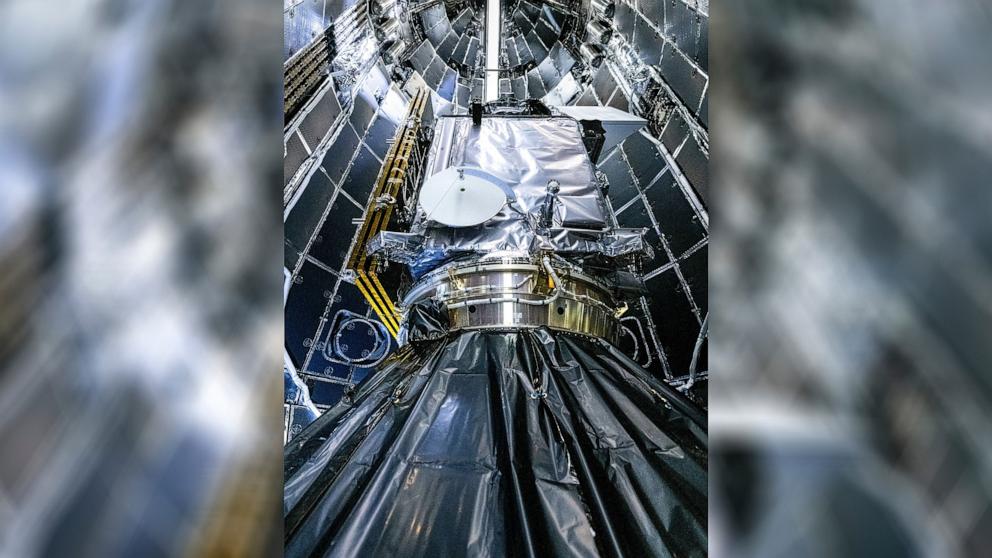
NASA and SpaceX technicians safely encapsulate the PACE spacecraft in a SpaceX Falcon 9 rocket, Jan. 30, 2024, at the Kennedy Space Center in Florida.
Denny Henry/Nasa

NASA's newest Earth-observing satellite, PACE (Plankton, Aerosol, Cloud, ocean Ecosystem), is expected to provide new data to help scientists understand how changing levels of different atmospheric aerosols impact Earth's energy balance.

Read more here.

-ABC News meteorologist Dan Peck


Jan 24, 2025 2:49 PM

Millions of students are missing school because of extreme weather

A new analysis from UNICEF finds that nearly a quarter of a billion children worldwide had their education disrupted by extreme weather events in 2024 — exacerbating what the organization calls an "existing learning crisis."

The report found that at least 242 million students across 85 countries experienced schooling disruptions last year because of extreme weather like heat waves, storms, floods, droughts and tropical cyclones.

"Children are more vulnerable to the impacts of weather-related crises, including stronger and more frequent heatwaves, storms, droughts and flooding," UNICEF Executive Director Catherine Russell said. "Last year, severe weather kept one in seven students out of class, threatening their health and safety, and impacting their long-term education."

Heat waves were the most common weather disruptor for education. UNICEF found that over 118 million students were impacted by extreme heat in April alone, with South Asia seeing some of the most widespread impacts.

PHOTO: Residents ride a boat in Dela Paz village, which remains flooded since Tropical Storm Trami hit a month ago, on Nov. 20, 2024 in Binan, Laguna province, Philippines.
Ezra Acayan/Getty Images, FILE
Residents ride a boat in Dela Paz village, which remains flooded since Tropical Storm Trami hit a month ago, on Nov. 20, 2024 in Binan, Laguna province, Philippines.
Ezra Acayan/Getty Images, FILE

The report also found that September had the most frequent weather-related disruptions, with at least 16 countries suspending classes for a time due to extreme weather events like Typhoon Yagi in East Asia.

While the analysis found that almost three-quarters of the students impacted were in low and lower-middle income countries, UNICEF says no region was free from these effects.

"Education is one of the services most frequently disrupted due to climate hazards. Yet it is often overlooked in policy discussions, despite its role in preparing children for climate adaptation," Russell said. "Children's futures must be at the forefront of all climate related plans and actions."

-ABC News climate unit's Kelly Livingston


Jan 23, 2025 4:10 PM

Climate funders say they will cover US climate obligations after Paris Agreement withdrawal

On Monday, President Donald Trump announced his intention to withdraw the United States from the Paris Agreement, the U.N.-backed international climate treaty. Bloomberg Philanthropies announced Thursday that they, along with a coalition of climate charities, would step up and ensure that the U.S. meets its obligations under the Paris Agreement, including any financial and reporting requirements.

"While government funding remains essential to our mission, contributions like this are vital in enabling the UN Climate Change secretariat to support countries in fulfilling their commitments under the Paris Agreement and a low-emission, resilient, and safer future for everyone," said Simon Stiell, United Nations climate change executive secretary, in a press statement.

This is the second time Trump has withdrawn the country from the Paris Agreement. During his first term, Trump justified backing out of the treaty by claiming that participating in the agreement would result in the loss of jobs and cost the U.S. trillions of dollars. In reality, in 2023, clean energy jobs grew at more than twice the rate of the overall U.S. labor market and accounted for more than 8.35 million positions, according to a Department of Energy report. In terms of spending, the U.S. has committed several billion dollars to the effort, not trillions.

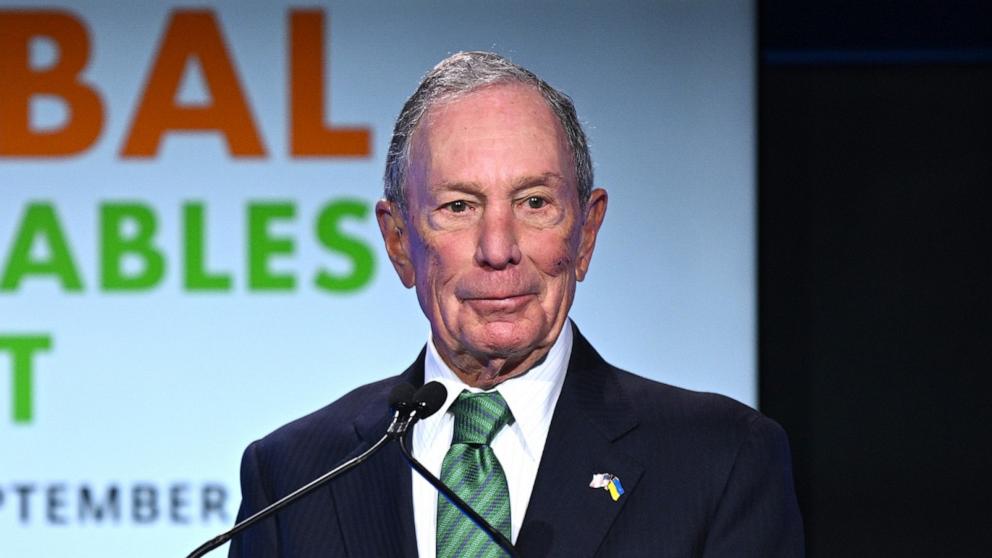
PHOTO: Michael R. Bloomberg speaks at the Global Renewables Summit, co-hosted by Bloomberg Philanthropies and the Global Renewables Alliance, Sept. 24, 2024, in New York
Bryan Bedder/Getty Images for Bloomberg Philanthropies
Michael R. Bloomberg speaks at the Global Renewables Summit, co-hosted by Bloomberg Philanthropies and the Global Renewables Alliance, Sept. 24, 2024, in New York
Bryan Bedder/Getty Images for Bloomberg Philanthropies

Michael Bloomberg, a billionaire businessman, founder of Bloomberg Philanthropies and a U.N. Secretary-General's Special Envoy on Climate Ambition and Solutions, said he also plans to continue supporting a coalition of states, cities and businesses that are working to reduce U.S. greenhouse gas emissions by 61-66% below 2005 levels by 2035.

"More and more Americans have had their lives torn apart by climate-fueled disasters, like the destructive fires raging in California. At the same time, the United States is experiencing the economic benefits of clean energy, as costs have fallen and jobs have grown in both red and blue states. The American people remain determined to continue the fight against the devastating effects of climate change," Bloomberg said.


Jun 30, 2025 1:34 PM

Climate change is making it harder for us to sleep: Study

Rising temperatures, amplified by climate change, are contributing to an increase in cases of sleep apnea, a condition in which breathing repeatedly stops during sleep, according to a new study published in the journal Nature Communications.

"If temperature keeps rising the way they project it to, the burden and prevalence of sleep apnea may double, increasing by 20-100%, depending on greenhouse gas emission reduction," Bastien Lechat, the study's author and a senior research fellow at Flinders University in Australia, told ABC News.

Obstructive sleep apnea, or OSA, affects about 1 billion people globally, and 80% of people who have it are unaware and untreated. OSA has been linked to an increased risk of heart disease, stroke, dementia, diabetes and depression. People with OSA also have two times greater risk of getting in a car accident, according to Lechat.

The study followed over 115,000 people from numerous countries for up to two years, measuring their sleep quality with below-the-mattress sleep monitors and then cross-referencing this information with weather data to evaluate the relationship between temperature and OSA.

When comparing 80-degree Fahrenheit days to days in the 40s, there was a 40 to 45% increase in the frequency or severity of sleep apnea. The risk was even higher for males and individuals who normally sleep longer or have higher body weight.

PHOTO: Stock photo of a man suffering from obstructive sleep apnea and sleeping with a Cpap mask.
STOCK PHOTO/Getty Images

Extreme heat can exacerbate OSA by making it even harder to sleep, the study noted. Higher temperatures can disrupt the body's ability to cool down during the night, which interferes with the natural sleep cycle. This can lead to more frequent awakenings, shallower sleep and worsened airway instability, resulting in more apnea events.

Using existing health-economic models, the researchers estimated over 788,000 healthy years of life were lost or disabled in 2023 due to temperature-related increases in OSA, equivalent to a loss of approximately $68 billion, according to the models.

"When you look at the rate of years of life lost per 100,000 people, this is similar to a disorder like Parkinson's disease, or bipolar disorder, or similar to low physical activity as a risk factor, so it's a significant burden," Lechat told ABC News.

Lechat said that increased access to air conditioning and better diagnosis and treatment of OSA could offset some of the increases caused by climate change. However, he emphasized that limiting global warming through policy changes is the most effective and cost-efficient option.

"Limiting global warming is probably cost effective, when you look at the numbers -- the loss of well-being and the economic costs of increasing temperature," he added.

-Dr. Ilan Kokotek, a board-certified family physician and member of ABC News' Medical Unit


GMA Newsletters

Sign up for our newsletters to get GMA delivered to your inbox every morning!

Up Next in news

PHOTO: Knicks fans celebrate in Central Park after the New York Knicks defeated the San Antonio Spurs in Game 5 of the NBA Finals to win the series, in New York, on June 13, 2026.

Knicks victory parade comes with increased security, street closures in New York City

June 17, 2026
PHOTO: Former president Barack Obama and first lady Michelle Obama speak with "Good Morning America" co-anchor Robin Roberts at the Obama Presidential Center on June 13, 2026.

Barack, Michelle Obama reflect on new presidential center, greatest White House legacy

June 17, 2026
PHOTO: Students with cellphones in an undated stock photo.

British prime minister announces social media ban for kids 16 and under

June 15, 2026

The latest lifestyle and entertainment news and inspiration for how to live your best life - all from Good Morning America.
  • Contests
  • Terms of Use
  • Privacy Policy
  • Do Not Sell My Info
  • Children’s Online Privacy Policy
  • Advertise with us
  • Your US State Privacy Rights
  • Interest-Based Ads
  • About Nielsen Measurement
  • Press
  • Feedback
  • Shop FAQs
  • ABC News
  • ABC
  • All Videos
  • All Topics
  • Sitemap

© 2026 ABC News
  • Privacy Policy— 
  • Your US State Privacy Rights— 
  • Children's Online Privacy Policy— 
  • Interest-Based Ads— 
  • Terms of Use— 
  • Do Not Sell My Info— 
  • Contact Us— 

© 2026 ABC News