• Video
  • Shop
  • Culture
  • Family
  • Wellness
  • Food
  • Living
  • Style
  • Travel
  • News
  • Book Club
  • Newsletter
  • Privacy Policy
  • Your US State Privacy Rights
  • Children's Online Privacy Policy
  • Interest-Based Ads
  • Terms of Use
  • Do Not Sell My Info
  • Contact Us
  • © 2026 ABC News
ABC News

Climate and environment updates: 7 key measures of Earth's health in danger, report warns

PHOTO: Reef fishes swim over a reef affected by coral bleaching from high water temperature on May 08, 2024 in Trat, Thailand.
1:54
Sirachai Arunrugstichai/Getty Images
Summer temperatures stretching later into the season
By ABC Climate Unit
Last Updated: May 7, 2025, 1:10 PM

The climate crisis is not a distant threat; it's happening right now and affecting what matters most to us. Hurricanes intensified by a warming planet and drought-fueled wildfires are destroying our communities. Rising seas and flooding are swallowing our homes. And record-breaking heat waves are reshaping our way of life.

The good news is we know how to turn the tide and avoid the worst possible outcomes. However, understanding what needs to be done can be confusing due to a constant stream of climate updates, scientific findings and critical decisions that are shaping our future.

That's why the ABC News Climate and Weather Unit is cutting through the noise by curating what you need to know to keep the people and places you care about safe. We are dedicated to providing clarity amid the chaos, giving you the facts and insights necessary to navigate the climate realities of today -- and tomorrow.

Key Headlines

  • 7 key measures of the Earth's health are in now in danger: Report
  • Earth's oceans face 'triple planetary crisis,' new report warns
  • Climate change is straining America's health care system: Study
Here's how the news is developing.

May 07, 2025 1:10 PM

Why protecting seagrass is vital for combatting climate change

As carbon dioxide levels in Earth's atmosphere reach record highs and the effects of human-amplified climate change intensify, climate scientists are urgently searching for effective ways to slow global warming. Rapidly reducing atmospheric levels of CO2, a heat-trapping greenhouse gas, is one of the most critical challenges, and in many cases, nature can be part of the solution.

Hidden along the world's coastlines and just beneath the ocean's surface, seagrass meadows are among the most threatened and one of the most overlooked ecosystems on the planet. But they could play an essential role in fighting climate change thanks to their remarkable ability to absorb and store carbon, according to a new study published in Nature Communications.

Although they cover only about 0.2% of the ocean floor, seagrass meadows store a significant portion of the ocean's carbon, accounting for roughly 10% of its total carbon storage capacity. Seagrass absorbs CO2 up to 35 times faster than tropical rainforests, according to the United Nations Environment Programme.

PHOTO: A manatee swims among seagrass in the Homosassa River on October 05, 2021 in Homosassa, Florida.
Joe Raedle/Getty Images
A manatee swims among seagrass in the Homosassa River on October 05, 2021 in Homosassa, Florida.
Joe Raedle/Getty Images

In the largest study of coastal ecosystems to date, researchers analyzed over 3,000 samples of seagrass and soil from 61 countries, revealing significantly greater variation in carbon storage among species and regions than previously understood.

"Seagrass meadows are not just important for marine biodiversity, they are a critical piece of the climate puzzle," said lead author Johannes Krause, a researcher at Conservation International and assistant research professor at Florida International University. "This research underscores their vast potential as carbon sinks and the importance of accurate data to ensure we're protecting them properly."

Researchers say that protecting and restoring seagrass meadows is a promising yet underutilized climate mitigation tool. Greater investment and research on these ecosystems can help preserve biodiversity and strengthen the planet's natural ability to store carbon.

Protecting vegetated coastal ecosystems, like seagrass meadows, could prevent the release of 1.2 billion metric tons of CO2 into the atmosphere, the equivalent of removing the annual carbon footprint of 100 million homes in the United States, according to the nonprofit Conservation International, which funded the study. Researchers also estimate this could avoid more than $200 billion in climate change-related costs through 2050.

-ABC News meteorologist Dan Peck


Apr 25, 2025 5:34 PM

Climate change is now primary driver of biodiversity loss in the US: Study

For the first time, a new study finds climate change is now the primary driver of biodiversity loss in the United States.

Researchers examined the five predominant threats facing 2,766 imperiled species in the U.S. Those are plants and animals that have significantly declined in numbers and are at high risk of extinction.

The team from the Center for Conservation Innovation at Defenders of Wildlife found when they applied climate change assessments to the plants and animals on the U.S. Endangered Species Act list, climate change was the most far-reaching biodiversity threat, impacting 91% of ESA-listed species.

PHOTO: The Red Wolf (Canis rufus).
Jeff Goulden/Getty Images
The Red Wolf (Canis rufus).
Jeff Goulden/Getty Images

While climate change may be the most common threat, it's not the only one. Changes to land and sea ecosystems, such as land conversion, pollution and resource extraction, was the No. 2 most common at 90%. Other primary drivers of biodiversity loss include overexploitation, invasive species and pollution.

These five threats often overlap. The researchers found that 86% of all U.S. imperiled species faced two or more threats. On average, those on the ESA list faced nearly three of the five threats. And the researchers found a species' habitat largely impacts its risks. Marine species, for example, face the highest number of threats.

"With the biodiversity and climate crises deeply intertwined, not only is addressing climate change necessary for imperiled species, but protecting biodiversity and supporting healthy ecosystems is also essential to shifting our climate trajectory," the authors wrote in the study.

- ABC News Weather and Climate Unit's Matthew Glasser


Apr 24, 2025 4:55 PM

Government scientists are better than ever at forecasting hurricane paths, but will that last?

The government organization responsible for forecasting hurricanes and keeping people safe during these deadly and destructive storms set a new record for forecast track accuracy in 2024. But recent budget and staffing cuts by the Trump administration could jeopardize this progress.

Part of the National Oceanic and Atmospheric Administration, the National Hurricane Center played a crucial role in helping people prepare through timely and accurate forecasts. NHC issued 347 official forecasts during the 2024 Atlantic hurricane season, and its track predictions set accuracy records for every time period, according to a new report released on Wednesday.

Track forecast performance, which details the path a storm will take, was the best in history for the agency. Official track forecast errors have decreased significantly in recent years and are now up to 75% smaller than they were a few decades ago, according to the report.

The report also analyzed intensity forecast accuracy, which continues to lag behind track forecasts. However, the report said overall intensity predictions have shown steady improvement over the past decade.

PHOTO: A WC-130J Super Hercules aircraft from the 53rd Weather Reconnaissance Squadron “Hurricane Hunters” returned from the West Coast to Keesler Air Force Base, Miss., March 25, 2021.
U.S. Air Force
A WC-130J Super Hercules aircraft from the 53rd Weather Reconnaissance Squadron “Hurricane Hunters” returned from the West Coast to Keesler Air Force Base, Miss., March 25, 2021.
U.S. Air Force

NOAA and several key divisions, like the National Weather Service and National Hurricane Center, have been impacted by recent staff reductions approved by the Trump administration. According to current and former NOAA employees who spoke to ABC News, these cuts are impacting offices that are already coping with inadequate staffing levels.

Staffing limitations have impacted several key services provided by the National Weather Service, including reducing weather balloon launches at select sites nationwide. With fewer upper-air observations, less data is available for the weather models that forecasters rely on.

NOAA and the United States Air Force operate aircraft, commonly called the Hurricane Hunters, which fly into tropical cyclones to collect data essential for forecasting a storm's path, timing and strength. According to a March report from the Government Accountability Office, these vital missions have also faced staffing and maintenance challenges in recent years, which has resulted in canceled flights.

Hurricane Hunter flights provide critical meteorological data from inside the storms, a necessary component for producing detailed tropical cyclone forecasts. NOAA research shows that their collected data improves hurricane forecast accuracy by at least 10%. The more high-quality data that forecasters have at their disposal, the more effectively they can develop precise and detailed forecasts.

-ABC News meteorologist Dan Peck


Apr 22, 2025 12:13 PM

How planet's climate has changed since first Earth Day in 1970

It's been more than 50 years since the first Earth Day in the United States. On April 22, 1970, people gathered at events across the country to raise awareness about the environmental issues impacting our nation and the planet. While the Earth Day movement has helped raise awareness about human-amplified climate change and has led to some regulatory actions, 5 1/2 decades later, the planet continues to warm at an alarming rate, with the impacts of that warming worsening with each passing decade.

Climate scientists have long recognized that increasing levels of carbon dioxide and other greenhouse gases that trap heat in the atmosphere contribute directly to global warming. There is a strong and well-established link between rising global temperatures and extreme heat events as a result of human-induced climate change.

Since the first Earth Day, the annual average concentration of carbon dioxide in the atmosphere has increased by more than 30%. It is now rising at the fastest rate on record, according to the National Oceanic and Atmospheric Administration.

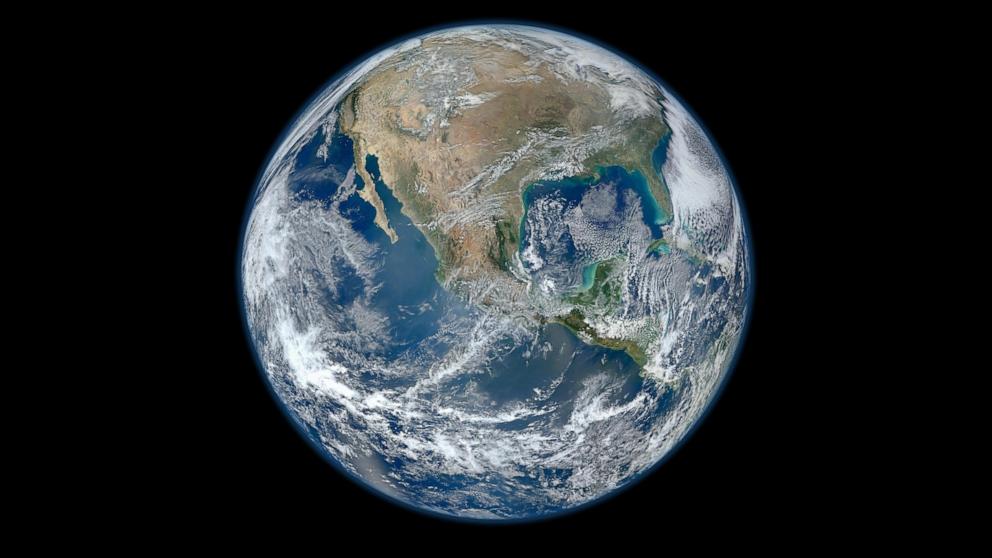
PHOTO: Earth created from photographs taken by the Visible/Infrared Imager Radiometer Suite (VIIRS) instrument on board the Suomi NPP satellite, Jan. 30, 2012.
NASA
Earth created from photographs taken by the Visible/Infrared Imager Radiometer Suite (VIIRS) instrument on board the Suomi NPP satellite, Jan. 30, 2012.
NASA

All 50 states and 240 cities across the U.S. have experienced warming since the first Earth Day, according to an analysis by Climate Central, a nonprofit climate research group. Alaska has warmed the fastest, followed by Delaware, Massachusetts and New Jersey.

The Arctic region is heating much faster than the global average, which has pushed Alaska to the top of the list, with its average annual temperature rising by 4.3 degrees Fahrenheit since 1970. Among cities, the fastest-warming over the past 55 years include Reno and Las Vegas in Nevada, El Paso and Tyler in Texas and Burlington, Vermont.

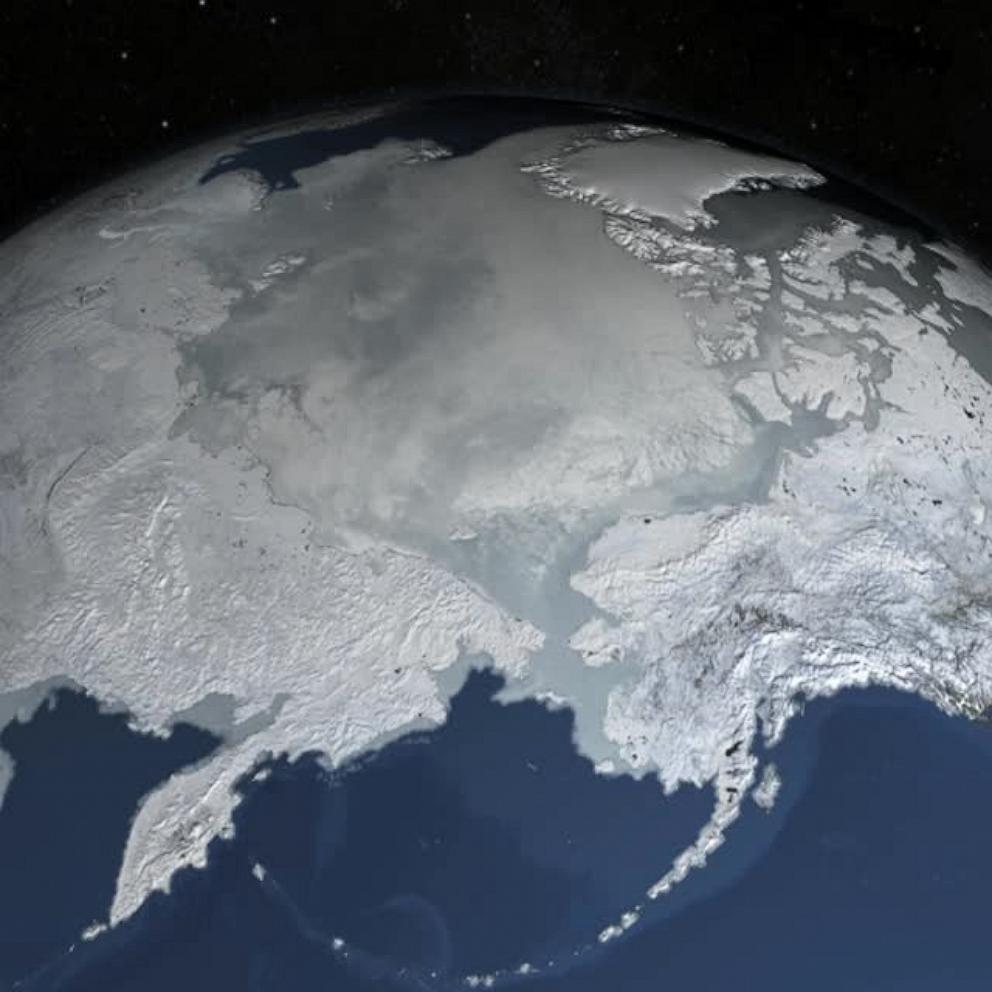
PHOTO: The sea ice cap of the Arctic, Dec. 17, 2017.
NASA
The sea ice cap of the Arctic, Dec. 17, 2017.
NASA

Overall, the contiguous United States is now about 2.8 degrees Fahrenheit warmer than it was in 1970, based on average annual temperatures.

Warming global temperatures are also driving sea-level rise, which has been accelerating in recent decades due to melting glaciers and ice sheets, as well as the thermal expansion of seawater as it warms.

Since 1970, sea levels have risen by more than half a foot, on average, across the contiguous United States, according to the Interagency Task Force on Sea Level Change. Some regional coastlines, states and cities have experienced even greater increases. Sea-level rise varies regionally along the nation's coastlines due to shifts in both land elevation and ocean height.

The Northeast coastline, for example, has recorded an average increase of 9 inches since 1970. Florida has seen a rise of 7 inches over the past 5 1/2 decades, while in Washington, D.C., the sea level is now 8 inches higher than in 1970.

-ABC News meteorologist Dan Peck


Dec 23, 2024 7:37 PM

Could climate change bring more earthquakes?

Earthquakes are usually triggered by seismic activity deep beneath the Earth's surface and far beyond the influence of atmospheric conditions. However, according to new research, there may be instances where climate change can impact seismic activity.

A recent Colorado State University study suggests that melting glaciers could impact earthquake activity in some areas. Researchers analyzed southern Colorado's Sangre de Cristo Mountains during the last ice age. They found the active fault responsible for triggering earthquakes was held in place by the weight of glaciers sitting on top of it.

Thousands of years ago, as the last ice age ended and the planet began to naturally warm, glaciers in this region began to melt. The study found that as the ice melted, there was less pressure on the quake-prone fault, which triggered an increase in earthquake activity. Basically, the glacier was holding the fault in place -- less ice, less weight.

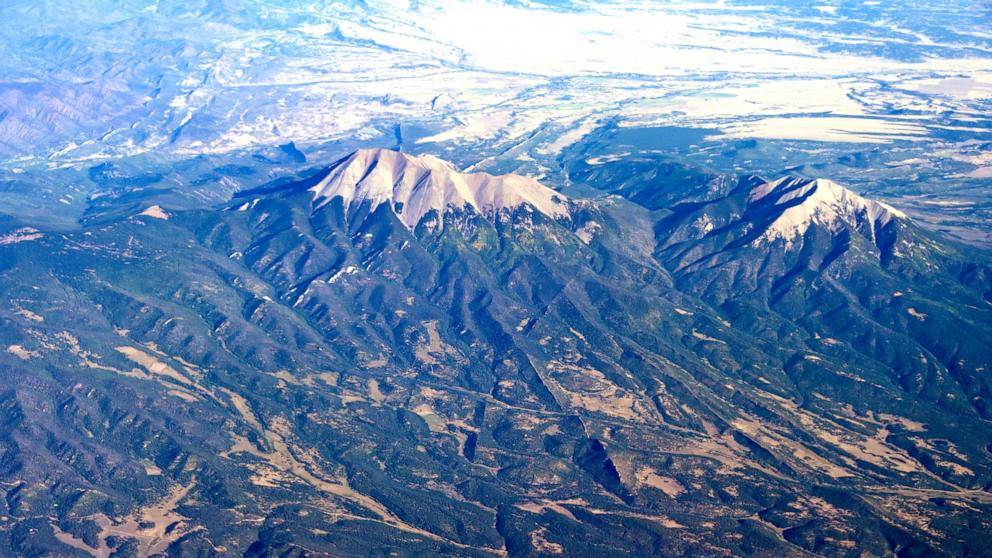
PHOTO: Areial view of the the Sangre de Cristo mountains at the southernmost subrange of the Rocky Mountains in Colorado on September 25, 2019.
Daniel Slim/AFP via Getty Images
Areial view of the the Sangre de Cristo mountains at the southernmost subrange of the Rocky Mountains in Colorado on September 25, 2019.
Daniel Slim/AFP via Getty Images

There is limited scientific evidence linking changes in Earth's climate to earthquake activity. Still, this study demonstrates that, in some cases, climate-related events, like melting glaciers, could influence seismic events.

Sean Gallen, Geosciences associate professor and senior author of the study, highlights that this research helps us better understand the factors that can drive earthquakes.

Even though the study focused on investigating links between Earth's natural climate variability (an ice age) and seismic activity, this research shows how other glacier-adjacent faults worldwide could respond as greenhouse gas emissions accelerate global warming.

As human-amplified climate change continues to drive global glacier melt, earthquake activity along these faults could increase as glaciers recede.

"We see this in the rapid mountain glacial retreats in Alaska, the Himalayas and the Alps," said Cece Hurtado, an author of the study. "In many of these regions, there are also active tectonics, and this work demonstrates that as climate change alters ice and water loads, tectonically active areas might see more frequent fault movements and earthquakes due to rapidly changing stress conditions."

-ABC News meteorologist Dan Peck


GMA Newsletters

Sign up for our newsletters to get GMA delivered to your inbox every morning!

Up Next in news

PHOTO: In this April 20, 2025, file photo, Prince Andrew leaves after attending the Easter Matins Service at St. George's Chapel, Windsor Castle in Windsor, England.

Man arrested near former Prince Andrew's home appears in court

May 8, 2026
PHOTO: As part of his civic curriculum, Leon Smith takes his students at Haverford High School to the Pennsylvania state capitol.

Black educators say they're committed to the profession amid growing pressures, underrepresentation

May 8, 2026
PHOTO: Jake Reiner attends the Los Angeles premiere of "Things Like This" at Landmark Theatres Sunset on May 13, 2025 in Los Angeles, California.

Jake Reiner discusses death of parents Rob and Michelle Reiner in return to podcast

May 7, 2026

The latest lifestyle and entertainment news and inspiration for how to live your best life - all from Good Morning America.
  • Contests
  • Terms of Use
  • Privacy Policy
  • Do Not Sell My Info
  • Children’s Online Privacy Policy
  • Advertise with us
  • Your US State Privacy Rights
  • Interest-Based Ads
  • About Nielsen Measurement
  • Press
  • Feedback
  • Shop FAQs
  • ABC News
  • ABC
  • All Videos
  • All Topics
  • Sitemap

© 2026 ABC News
  • Privacy Policy— 
  • Your US State Privacy Rights— 
  • Children's Online Privacy Policy— 
  • Interest-Based Ads— 
  • Terms of Use— 
  • Do Not Sell My Info— 
  • Contact Us— 

© 2026 ABC News