• Video
  • Shop
  • Culture
  • Family
  • Wellness
  • Food
  • Living
  • Style
  • Travel
  • News
  • Book Club
  • Newsletter
  • Privacy Policy
  • Your US State Privacy Rights
  • Children's Online Privacy Policy
  • Interest-Based Ads
  • Terms of Use
  • Do Not Sell My Info
  • Contact Us
  • © 2026 ABC News
ABC News

Climate and environment updates: 7 key measures of Earth's health in danger, report warns

PHOTO: Reef fishes swim over a reef affected by coral bleaching from high water temperature on May 08, 2024 in Trat, Thailand.
1:54
Sirachai Arunrugstichai/Getty Images
Summer temperatures stretching later into the season
By ABC Climate Unit
Last Updated: January 31, 2025, 3:27 PM

The climate crisis is not a distant threat; it's happening right now and affecting what matters most to us. Hurricanes intensified by a warming planet and drought-fueled wildfires are destroying our communities. Rising seas and flooding are swallowing our homes. And record-breaking heat waves are reshaping our way of life.

The good news is we know how to turn the tide and avoid the worst possible outcomes. However, understanding what needs to be done can be confusing due to a constant stream of climate updates, scientific findings and critical decisions that are shaping our future.

That's why the ABC News Climate and Weather Unit is cutting through the noise by curating what you need to know to keep the people and places you care about safe. We are dedicated to providing clarity amid the chaos, giving you the facts and insights necessary to navigate the climate realities of today -- and tomorrow.


Key Headlines

  • 7 key measures of the Earth's health are in now in danger: Report
  • Earth's oceans face 'triple planetary crisis,' new report warns
  • Climate change is straining America's health care system: Study
Here's how the news is developing.

Jan 31, 2025 3:27 PM

New study warns entire species could vanish if climate change gets worse

It's not uncommon for the type of animals and plants in a particular area to change over time. It's called species turnover and happens naturally in ecosystems across the planet. However, a new study in Nature finds that climate change is accelerating the destabilization of animal populations worldwide.

Scientists at the University of California, Santa Cruz; Rutgers University and across Europe studied more than 42,000 species living on land and in ocean and freshwater environments. They found species turnover was faster in locations experiencing more rapid temperature changes, including warming and cooling.

"It's like shuffling a deck of cards, and temperature change now is shuffling that deck faster and faster," said lead author Malin Pinsky, associate professor of ecology and evolutionary biology at UC Santa Cruz, in a statement. "The worry is that eventually you start to lose some cards."

PHOTO: A female northern spotted owl catches a mouse on a stick held by Mark Higley, wildlife biologist for the Hoopa Valley Tribe on the Hoopa Valley Reservation in Northern California, Aug. 28, 2024.
The Washington Post via Getty Images
A female northern spotted owl catches a mouse on a stick held by Mark Higley, wildlife biologist for the Hoopa Valley Tribe on the Hoopa Valley Reservation in Northern California, Aug. 28, 2024.
The Washington Post via Getty Images

According to the study, nearly half of all species could be replaced per decade, and ecosystems could break down if the climate change trends continue.

The study also found that animals living in more diverse environments, with access to various habitats, are more likely to survive extreme temperature swings. For example, if an animal can walk from an open field to a forest to cool down, they are less susceptible to turnover. But not every species has that option.

The research team said human activities may also be impacting turnover. They believe land use changes, pollution and the introduction of invasive species intensify the effects of temperature changes on species replacement and theorize that these human actions are diminishing landscape diversity and increasing stress on species that are already close to their temperature limits.

-ABC News climate unit's Matthew Glasser


Jan 31, 2025 2:06 AM

How NASA could help solve the global temperature spike mystery

Last year, 2024, was the warmest year on record for the planet, easily breaking the previous record set just a year earlier.

Scientists say the unfolding El Niño event superimposed on long-term global warming is a primary driver of this huge spike in global surface temperatures since mid-2023. But the magnitude of the increase shocked many experts, leaving them somewhat puzzled about what else could be behind the remarkable rise.

PHOTO: AFS-8/101
Denny Henry/Nasa
NASA and SpaceX technicians safely encapsulate the PACE spacecraft in a SpaceX Falcon 9 rocket, Jan. 30, 2024, at the Kennedy Space Center in Florida.
Denny Henry/Nasa

NASA's newest Earth-observing satellite, PACE (Plankton, Aerosol, Cloud, ocean Ecosystem), is expected to provide new data to help scientists understand how changing levels of different atmospheric aerosols impact Earth's energy balance.

Read more here.

-ABC News meteorologist Dan Peck


Jan 24, 2025 2:49 PM

Millions of students are missing school because of extreme weather

A new analysis from UNICEF finds that nearly a quarter of a billion children worldwide had their education disrupted by extreme weather events in 2024 — exacerbating what the organization calls an "existing learning crisis."

The report found that at least 242 million students across 85 countries experienced schooling disruptions last year because of extreme weather like heat waves, storms, floods, droughts and tropical cyclones.

"Children are more vulnerable to the impacts of weather-related crises, including stronger and more frequent heatwaves, storms, droughts and flooding," UNICEF Executive Director Catherine Russell said. "Last year, severe weather kept one in seven students out of class, threatening their health and safety, and impacting their long-term education."

Heat waves were the most common weather disruptor for education. UNICEF found that over 118 million students were impacted by extreme heat in April alone, with South Asia seeing some of the most widespread impacts.

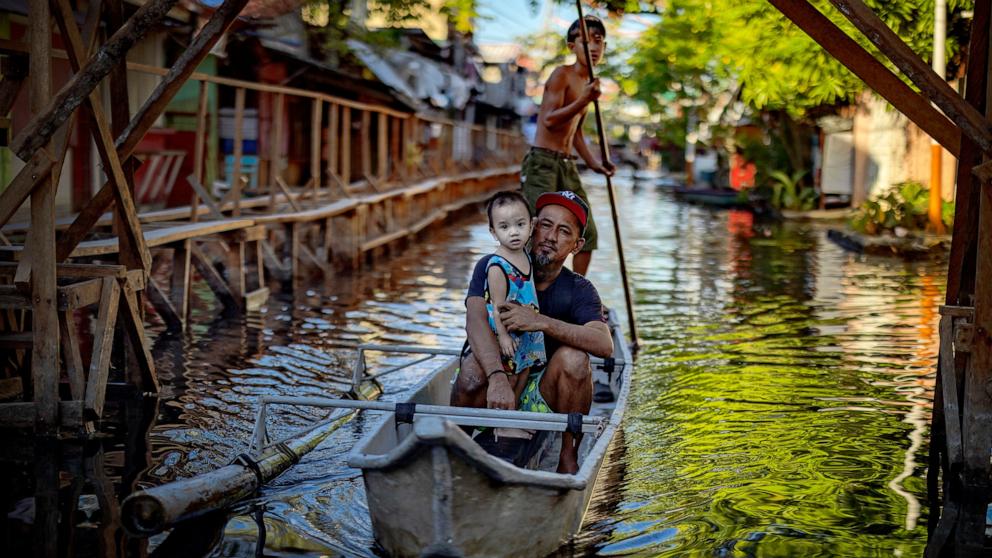
PHOTO: Residents ride a boat in Dela Paz village, which remains flooded since Tropical Storm Trami hit a month ago, on Nov. 20, 2024 in Binan, Laguna province, Philippines.
Ezra Acayan/Getty Images, FILE
Residents ride a boat in Dela Paz village, which remains flooded since Tropical Storm Trami hit a month ago, on Nov. 20, 2024 in Binan, Laguna province, Philippines.
Ezra Acayan/Getty Images, FILE

The report also found that September had the most frequent weather-related disruptions, with at least 16 countries suspending classes for a time due to extreme weather events like Typhoon Yagi in East Asia.

While the analysis found that almost three-quarters of the students impacted were in low and lower-middle income countries, UNICEF says no region was free from these effects.

"Education is one of the services most frequently disrupted due to climate hazards. Yet it is often overlooked in policy discussions, despite its role in preparing children for climate adaptation," Russell said. "Children's futures must be at the forefront of all climate related plans and actions."

-ABC News climate unit's Kelly Livingston


Jan 23, 2025 4:10 PM

Climate funders say they will cover US climate obligations after Paris Agreement withdrawal

On Monday, President Donald Trump announced his intention to withdraw the United States from the Paris Agreement, the U.N.-backed international climate treaty. Bloomberg Philanthropies announced Thursday that they, along with a coalition of climate charities, would step up and ensure that the U.S. meets its obligations under the Paris Agreement, including any financial and reporting requirements.

"While government funding remains essential to our mission, contributions like this are vital in enabling the UN Climate Change secretariat to support countries in fulfilling their commitments under the Paris Agreement and a low-emission, resilient, and safer future for everyone," said Simon Stiell, United Nations climate change executive secretary, in a press statement.

This is the second time Trump has withdrawn the country from the Paris Agreement. During his first term, Trump justified backing out of the treaty by claiming that participating in the agreement would result in the loss of jobs and cost the U.S. trillions of dollars. In reality, in 2023, clean energy jobs grew at more than twice the rate of the overall U.S. labor market and accounted for more than 8.35 million positions, according to a Department of Energy report. In terms of spending, the U.S. has committed several billion dollars to the effort, not trillions.

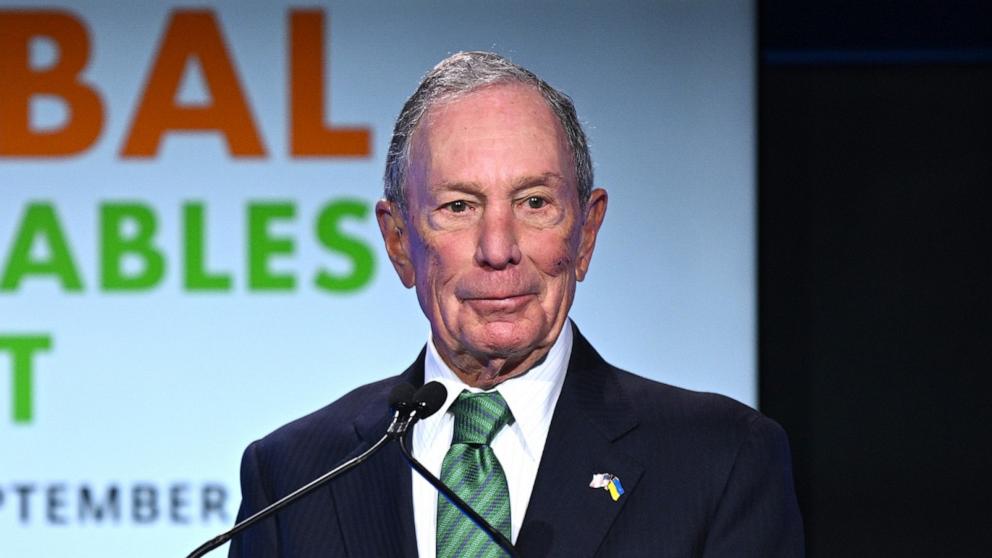
PHOTO: Michael R. Bloomberg speaks at the Global Renewables Summit, co-hosted by Bloomberg Philanthropies and the Global Renewables Alliance, Sept. 24, 2024, in New York
Bryan Bedder/Getty Images for Bloomberg Philanthropies
Michael R. Bloomberg speaks at the Global Renewables Summit, co-hosted by Bloomberg Philanthropies and the Global Renewables Alliance, Sept. 24, 2024, in New York
Bryan Bedder/Getty Images for Bloomberg Philanthropies

Michael Bloomberg, a billionaire businessman, founder of Bloomberg Philanthropies and a U.N. Secretary-General's Special Envoy on Climate Ambition and Solutions, said he also plans to continue supporting a coalition of states, cities and businesses that are working to reduce U.S. greenhouse gas emissions by 61-66% below 2005 levels by 2035.

"More and more Americans have had their lives torn apart by climate-fueled disasters, like the destructive fires raging in California. At the same time, the United States is experiencing the economic benefits of clean energy, as costs have fallen and jobs have grown in both red and blue states. The American people remain determined to continue the fight against the devastating effects of climate change," Bloomberg said.


Nov 22, 2024 9:41 PM

UN climate conference delegates struggle to reach agreement on financing the climate fight

The U.N. climate conference in Azerbaijan was supposed to be the "finance COP." World leaders would determine how much fighting the climate crisis would cost and who would pay for it.

However, as COP29 winds down, many developing countries and nongovernmental organizations are dissatisfied with the current language in the proposed climate finance agreement.

In 2015, under the Paris Agreement, participating countries agreed to set a New Collective Quantified Goal, or NCQG, on climate finance in 2024 that would account for the needs of developing countries. Basically, how much money would each nation spend to support developing countries that are being disproportionately impacted by climate?

While several versions of the new NCQG have been proposed, a final agreement is still out of reach. The latest text calls for a $1.3 trillion climate finance investment annually until 2035 but only requires a $250 billion investment from developed countries.

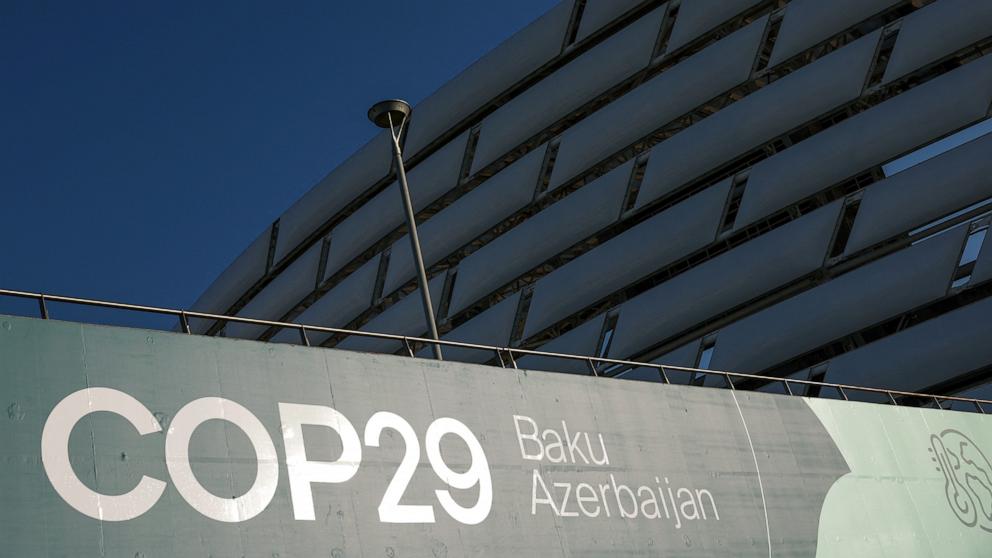
PHOTO: A view shows a venue of the COP29 United Nations climate change conference, in Baku, Azerbaijan November 22, 2024.
Murad Sezer/Reuters
A view shows a venue of the COP29 United Nations climate change conference, in Baku, Azerbaijan November 22, 2024.
Murad Sezer/Reuters

"With a paltry climate finance offer of $250 billion annually, and a deadline to deliver as late as 2035, richer nations, including EU countries, and the United States are dangerously close to betraying the Paris Agreement," Dr. Rachel Cleetus, policy director for the Climate and Energy Program, Union of Concerned Scientists, said. "This is nowhere near the robust and desperately needed funding lower income nations deserve to combat climate change."

The latest NCQG language lays out a variety of funding sources that can play a part in reaching global climate finance goals, including multilateral development banks, or MDBs, that can distribute funds through grants and concessional loans for developing countries and adaptation projects.

However, the text does not make clear whether funds from MDBs are part of reaching the $250 billion goal or supplement that goal. It also includes provisions allowing for voluntary contributions from developing countries.

"The central demand coming into COP29 was for a strong, science-aligned climate finance commitment, which this appalling text utterly fails to provide," Cleetus said. "Wealthier nations seem content to shamefully renege on their responsibility and cave in to fossil fuel interests while unjustly foisting the costs of deadly climate extremes on countries that have contributed the least to the climate crisis."

World Resources Institute Global Climate, Economics and Finance Program Director Melanie Robinson agrees, releasing a statement Friday saying, "Developed countries should aim higher than the $250 billion they've put on the table."

"We should leave Baku with a goal that at least gets to $300 billion a year by 2035," Robinson said.

Tasneem Essop, executive director of Climate Action Network International, called the latest draft text "an insult to the people in the Global south."

"This latest draft text on the New Collective Quantified Goal is not just a joke -- it's an insult to the people in the Global South living on the front line of the climate crisis," Essop said. "In the meantime, millions of people's lives are at risk. We are angry, but we will keep fighting until the end."

-ABC News Climate Unit's Kelly Livingston and ABC News' Charlotte Slovin


GMA Newsletters

Sign up for our newsletters to get GMA delivered to your inbox every morning!

Up Next in news

PHOTO: A 7-month-old male macaque monkey named Punch, who was abandoned by his mother shortly after birth spends time with a stuffed orangutan toy at Ichikawa City Zoo and Botanical Gardens in Chiba Prefecture, February 19, 2026.

2 suspects identified in stunt at enclosure of viral monkey Punch

May 19, 2026
PHOTO: Oliver Foran spoke to "Good Morning America," May 18, 2026, after surviving an avalanche on Mount Everest.

Climber who survived avalanche on Mount Everest speaks out as he attempts to set a new world record

May 18, 2026
PHOTO: Stock photo of children swimming in a pool.

Doctors group releases new drowning prevention recommendations

May 18, 2026

The latest lifestyle and entertainment news and inspiration for how to live your best life - all from Good Morning America.
  • Contests
  • Terms of Use
  • Privacy Policy
  • Do Not Sell My Info
  • Children’s Online Privacy Policy
  • Advertise with us
  • Your US State Privacy Rights
  • Interest-Based Ads
  • About Nielsen Measurement
  • Press
  • Feedback
  • Shop FAQs
  • ABC News
  • ABC
  • All Videos
  • All Topics
  • Sitemap

© 2026 ABC News
  • Privacy Policy— 
  • Your US State Privacy Rights— 
  • Children's Online Privacy Policy— 
  • Interest-Based Ads— 
  • Terms of Use— 
  • Do Not Sell My Info— 
  • Contact Us— 

© 2026 ABC News