• Video
  • Shop
  • Culture
  • Family
  • Wellness
  • Food
  • Living
  • Style
  • Travel
  • News
  • Book Club
  • Newsletter
  • Privacy Policy
  • Your US State Privacy Rights
  • Children's Online Privacy Policy
  • Interest-Based Ads
  • Terms of Use
  • Do Not Sell My Info
  • Contact Us
  • © 2026 ABC News
  • News

After a 10-year makeover, King Tut's tomb is back, in living color and ready for its close-up
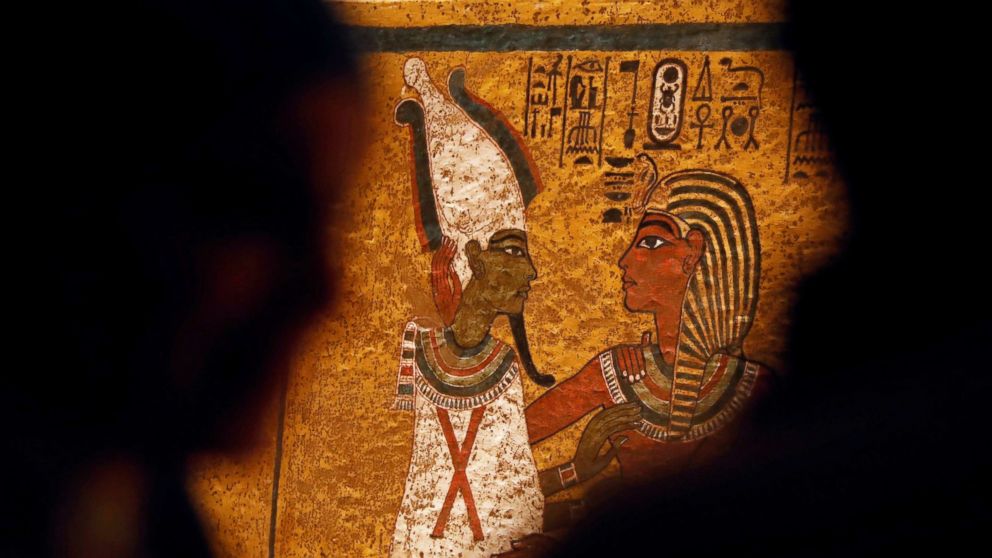
0:34
A well-preserved tomb uncovered in Egypt
Mohamed Abd El Ghany/Reuters
ByRanda Ali
January 31, 2019, 1:14 PM

CAIRO -- A symposium to celebrate the success of a decade-long restoration project on the tomb of King Tutankhamun was held Thursday in Luxor, Egypt -- a city on the east bank of the Nile River in southern part of the country.

During the event, a documentary was screened that detailed every aspect of the research and conservation efforts undertaken to preserve the tomb of the legendary boy king, best known as "King Tut."

The project was launched in 2009 by the Los Angeles-based Getty Conservation Institute and the Egyptian Ministry of Antiquities, amid growing concerns that years of tourists and visitors has taken its toll on the 3,000-year-old tomb.
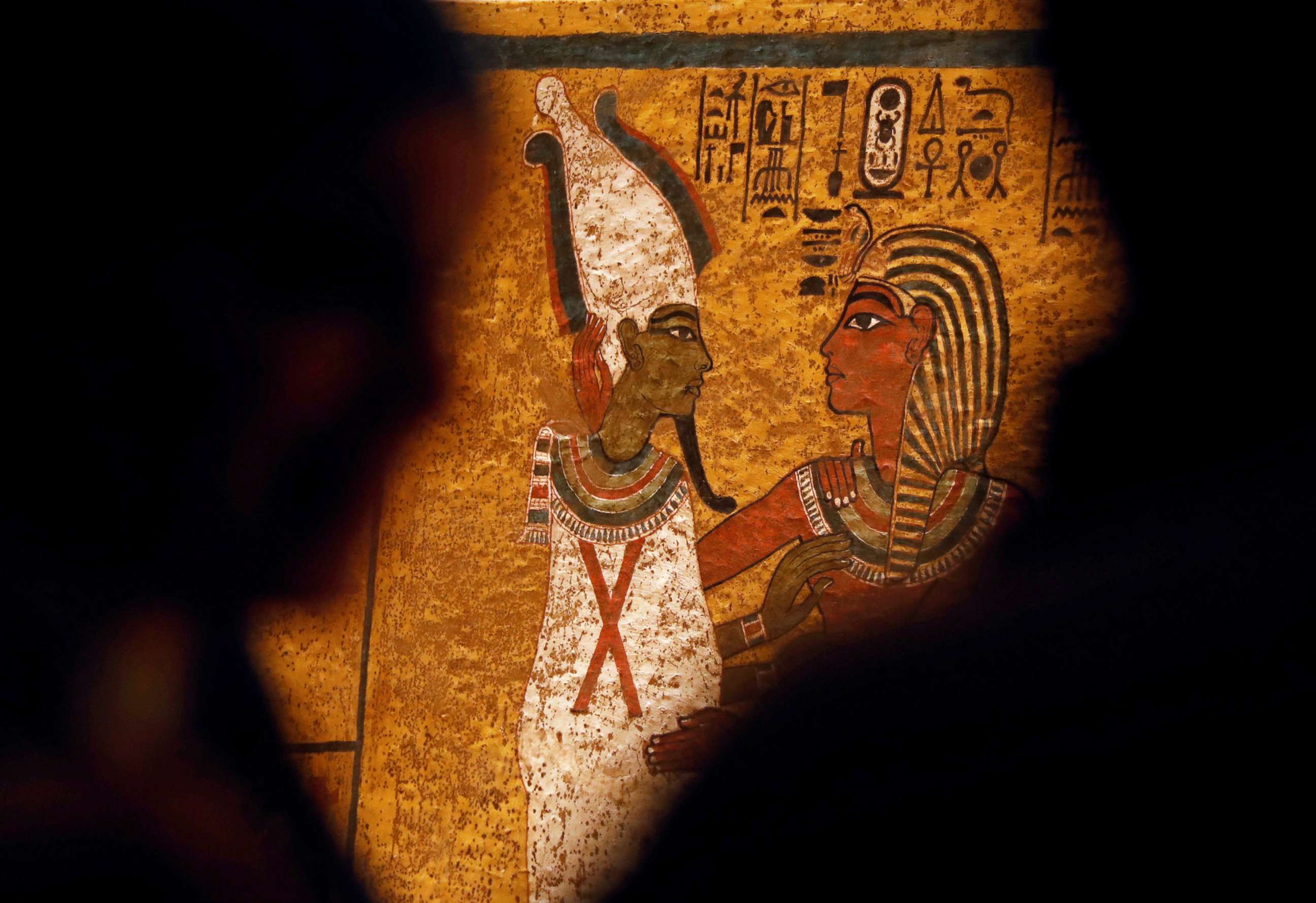
Visitors look at ancient Egyptian drawings on a wall of the newly renovated tomb of boy pharaoh King Tutankhamun in the Valley of the Kings in Luxor, Egypt Jan. 31, 2019.
Mohamed Abd El Ghany/Reuters

The tomb was discovered in 1922 by Egyptologist Howard Carter, and has since become the most popular antiquities site in the world.

Related Articles

(MORE: Egypt discovers 4,400-year-old priest tomb in 'exceptional' condition)

The main damages incurred were caused by humidity, carbon dioxide and dust brought in by tourists, according to experts who restored the tomb. Filming equipment brought into the tomb has also caused abrasion and scratches on the walls, which required restoration.
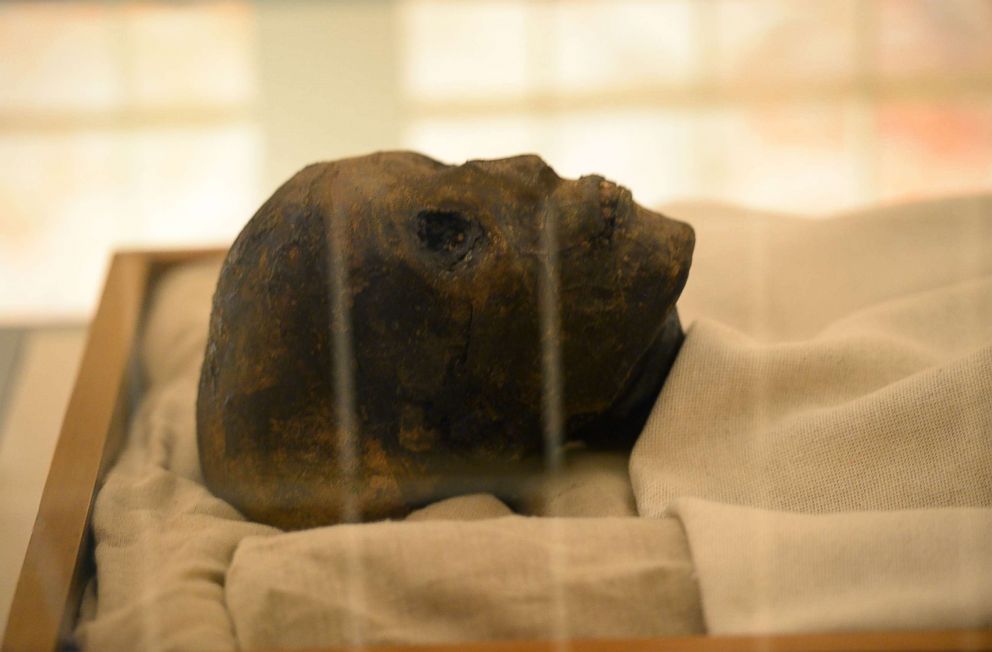
The head linen-wrapped mummy of of the 18th dynasty Pharaoh Tutankhamun displayed in his climate-controlled glass case in his underground tomb in the Valley of the Kings on the west bank of the Nile river south of the capital Cairo.
Mohamed El-Shahed/AFP/Getty Images
This project conducted the most thorough study of the tomb since the time of Howard Carter.
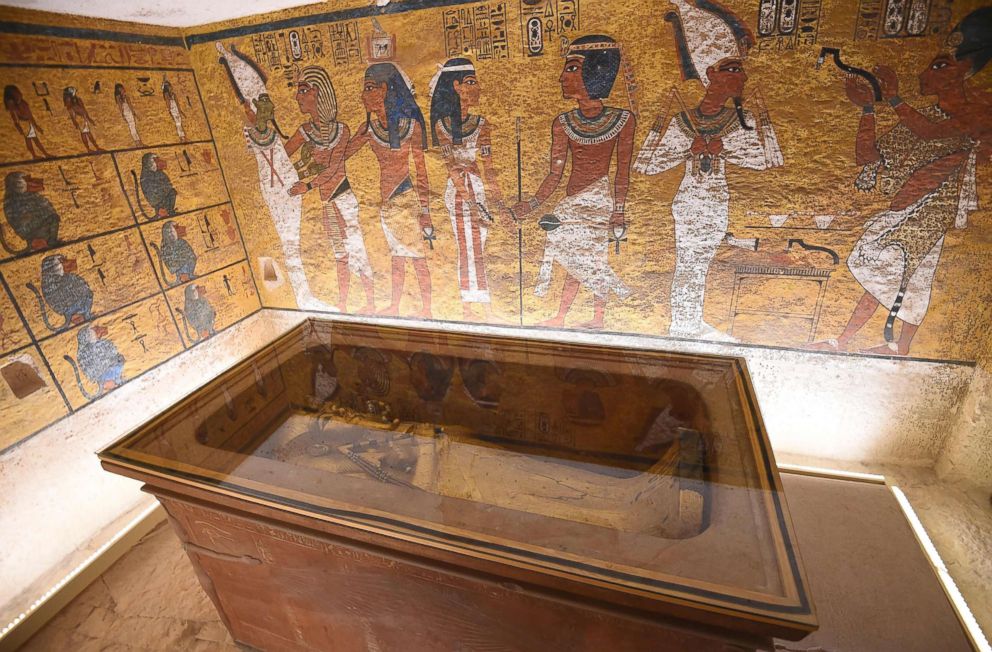
The golden sarcophagus of the 18th dynasty Pharaoh Tutankhamun displayed in his burial chamber in his underground tomb in the Valley of the Kings on the west bank of the Nile river opposite the southern Egyptian city of Luxor.
Mohamed El-Shahed/AFP/Getty Images

Pictures of the completed restoration show the vivid colors of the mural depicting Tut’s life, restored after layers of dust that had created a gray veil were removed.

To ensure that the tomb remains intact and accessible for generations, air filtration and ventilation system were installed, in addition to walkways, lighting and a viewing platform.
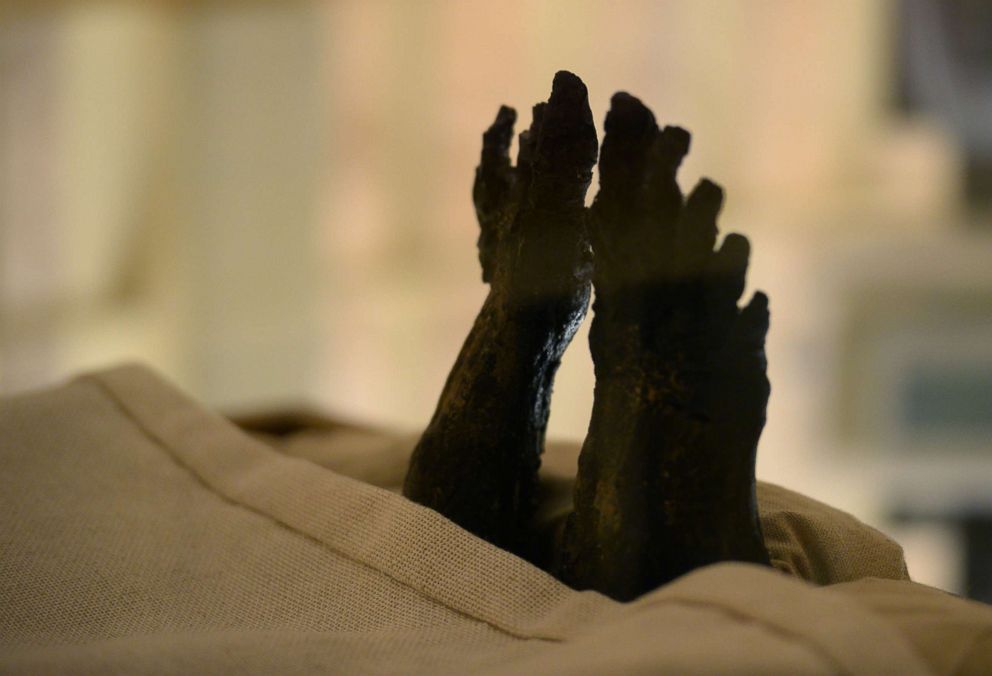
PHOTO: The feet of the linen-wrapped mummy of of the 18th dynasty Pharaoh Tutankhamun displayed in his climate-controlled glass case in his underground tomb in the Valley of the Kings on the west bank of the Nile river south of the capital Cairo.
The feet of the linen-wrapped mummy of of the 18th dynasty Pharaoh Tutankhamun (13321323 BC), displayed in his climate-controlled glass case in his underground tomb (KV62) in the Valley of the Kings on the west bank of the Nile river south of the capital Cairo.
Mohamed El-Shahed/AFP/Getty Images

The 1,182 square-foot tomb was opened for visitors during the 10-year years of work.
Related Articles

(MORE: Hundreds of gold coins dating to Rome's Imperial era found in Italy)

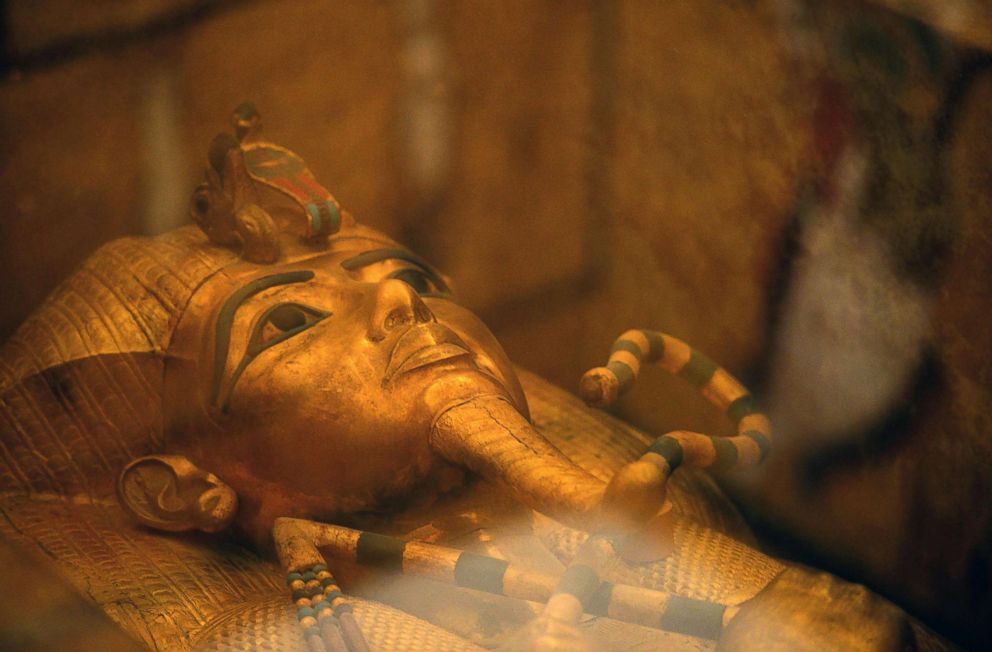
PHOTO: The head of the golden sarcophagus of the 18th dynasty Pharaoh Tutankhamun displayed in his burial chamber on the west bank of the Nile river opposite the southern Egyptian city of Luxor south of the capital Cairo.
The head of the golden sarcophagus of the 18th dynasty Pharaoh Tutankhamun displayed in his burial chamber in his underground tomb in the Valley of the Kings on the west bank of the Nile river opposite the southern Egyptian city of Luxor south of the capital Cairo.
Mohamed El-Shahed/AFP/Getty Images

“This project conducted the most thorough study of the tomb since the time of Howard Carter,” Tim Whalen said during the press conference.

The preservation effort also focused on identifying the “mysterious brown spots” on the wall paintings, present since the tomb was first opened, to ensure no new growth taking place. DNA and chemical analysis deemed the spots to be “microbiological in origin” but dead and hence is not a threat.
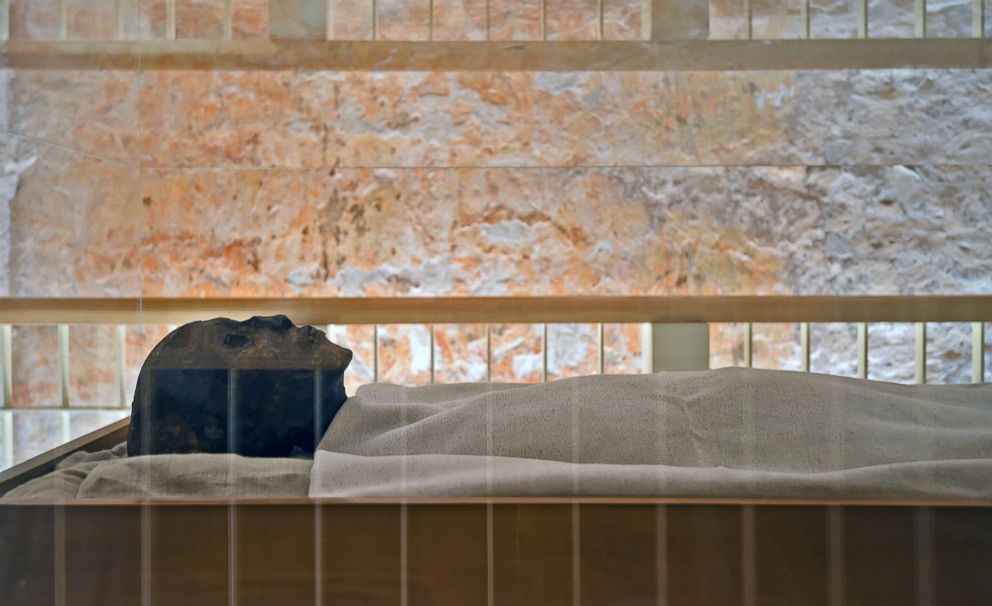
The linen-wrapped mummy of of the 18th dynasty Pharaoh Tutankhamun displayed in his climate controlled glass case in his underground tomb in the Valley of the Kings on the west bank of the Nile river opposite the southern Egyptian city of Luxor.
Mohamed El-Shahed/AFP/Getty Images

Also present at the presser was former minister of antiquities Zahi Hawass. The project was initiated during his term.

Hawass described the project as one of the “best studies research ever done in Egypt.”
Up Next in News—

This San Francisco shop is run completely by an AI agent

April 23, 2026

Mother charged after teen son allegedly hits and injures 81-year-old veteran while riding e-motorcycle

April 23, 2026

UK bill banning smoking products for those born after 2008 is one step away from becoming law

April 22, 2026

Pilot killed in Florida plane crash hailed as hero

April 21, 2026

Shop GMA Favorites

ABC will receive a commission for purchases made through these links.

Sponsored Content by Taboola

The latest lifestyle and entertainment news and inspiration for how to live your best life - all from Good Morning America.
  • Contests
  • Terms of Use
  • Privacy Policy
  • Do Not Sell My Info
  • Children’s Online Privacy Policy
  • Advertise with us
  • Your US State Privacy Rights
  • Interest-Based Ads
  • About Nielsen Measurement
  • Press
  • Feedback
  • Shop FAQs
  • ABC News
  • ABC
  • All Videos
  • All Topics
  • Sitemap

© 2026 ABC News
  • Privacy Policy— 
  • Your US State Privacy Rights— 
  • Children's Online Privacy Policy— 
  • Interest-Based Ads— 
  • Terms of Use— 
  • Do Not Sell My Info— 
  • Contact Us— 

© 2026 ABC News