• Video
  • Shop
  • Culture
  • Family
  • Wellness
  • Food
  • Living
  • Style
  • Travel
  • News
  • Book Club
  • Newsletter
  • Privacy Policy
  • Your US State Privacy Rights
  • Children's Online Privacy Policy
  • Interest-Based Ads
  • Terms of Use
  • Do Not Sell My Info
  • Contact Us
  • © 2026 ABC News
  • News

13th century priest's tomb discovered in Egypt's Luxor
0:51
13th century priest's tomb discovered in Egypt's Luxor
Khaeled Desouki/AFP/Getty Images
ByRanda Ali
November 26, 2018, 4:38 PM

CAIRO -- A 13th century tomb belonging to a priest and his wife was found in Luxor, Egypt, after five months of excavation work, Egypt's ministry of antiquities said Saturday.

The tomb — colored with scenes depicting the owner with his family and found on the Nile River's West Bank — belonged to Thaw-Irkhet-If, the overseer of the mummification shrine at the ancient Egyptian Mut temple, also in Luxor, according to the ministry.

“Inside the tomb are colored scenes," Khaled el-Anani said during a press conference Saturday to announce the discovery. "What remains of them are in exceptional condition."
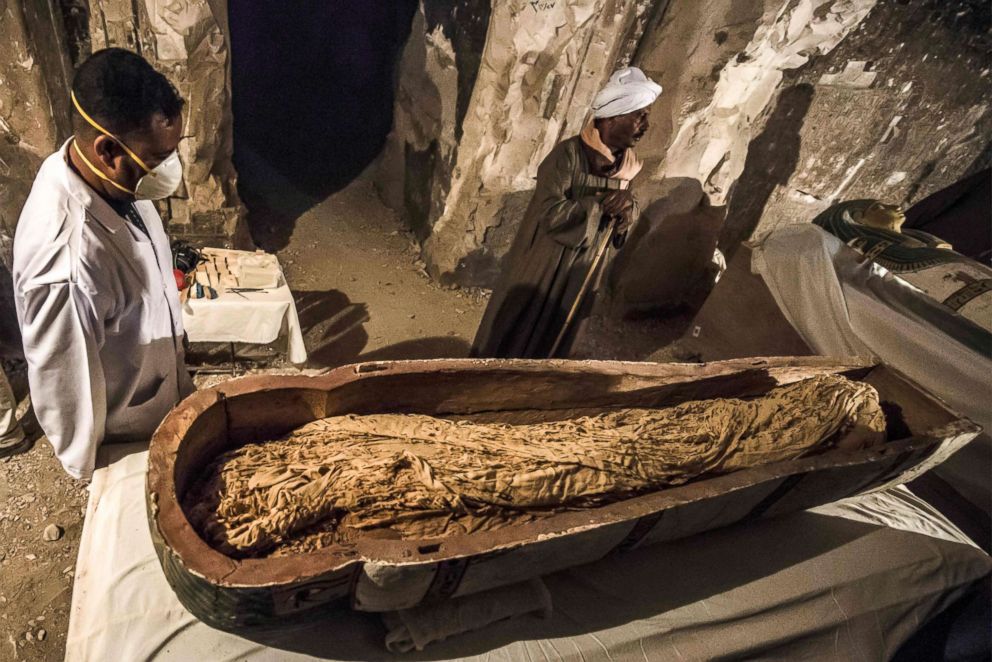
Egyptian workers and archaeologists standing next to an opened intact sarcophagus containing a well-preserved mummy of a woman named "Thuya" wrapped in linen, discovered by a French mission at the site of Tomb TT33, Nov. 24, 2018.
Khaeled Desouki/AFP/Getty Images

The sarcophagi of the priest and his wife were found in the tomb in addition to 1,000 funerary figurines known as Ushabti.

Related Articles

(MORE: Great Pyramid's previously hidden 'void' hailed by some scientists, dismissed by Egyptian experts)

The discovery work was carried out by an Egyptian Supreme Council of Antiquities mission.

A separate discovery by a French-led mission from the French Institute for Eastern Archaeology and the University of Strasbourg was unveiled on the same day.
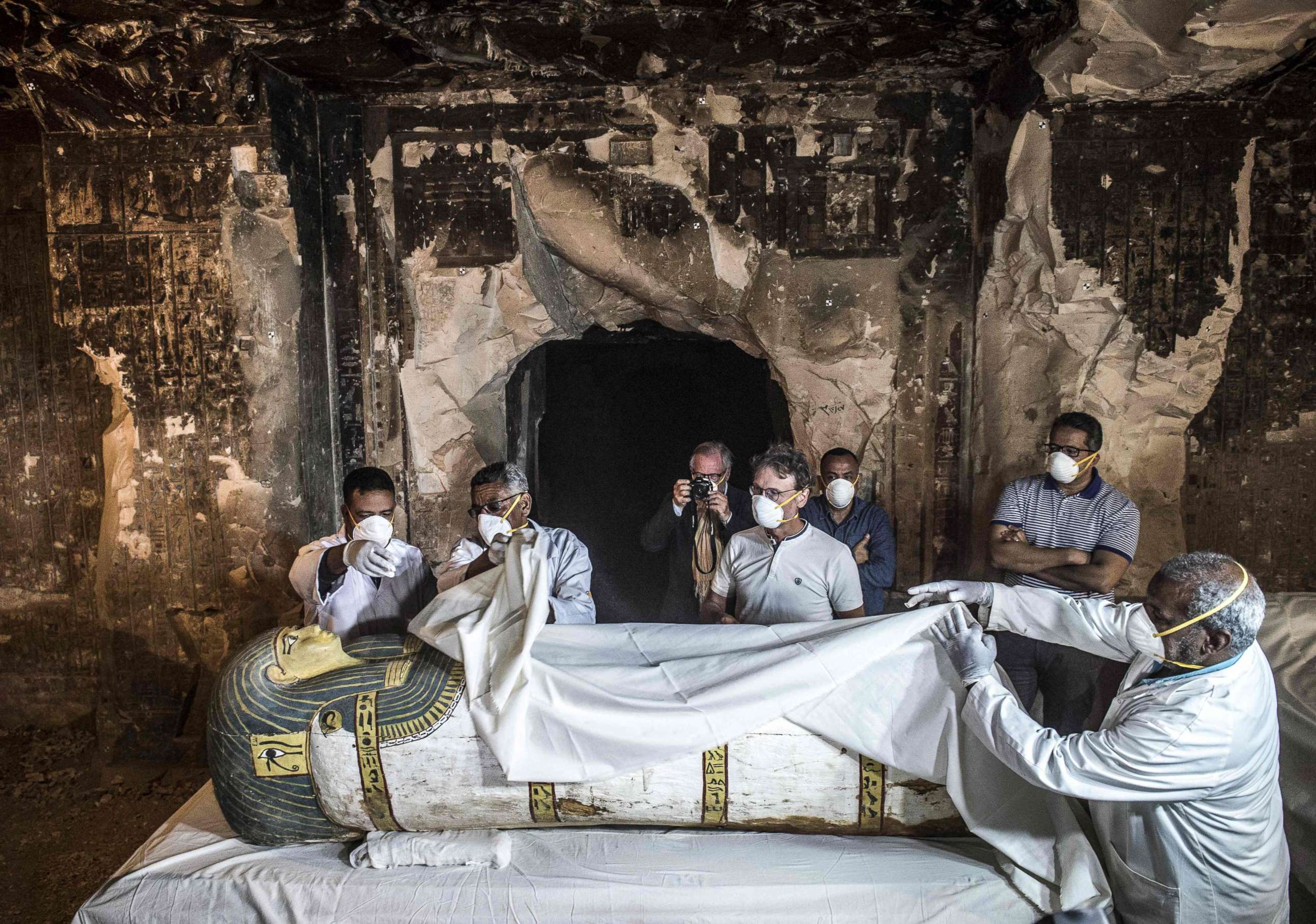
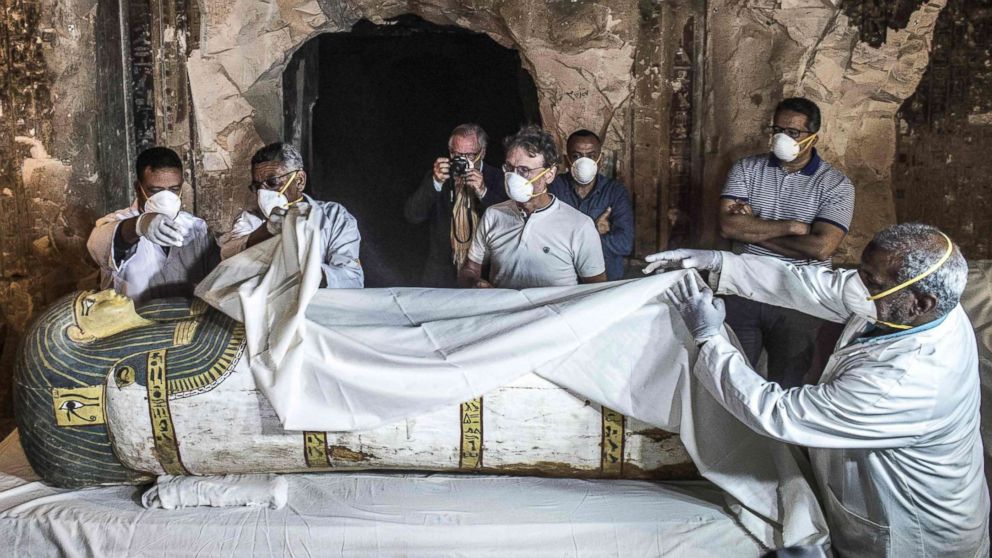
gypt's Antiquities Minister and the Secretary General of the Supreme Council of Antiquities, inspect an intact sarcophagus during its opening at the site of Tomb TT33 at Al-Assasif necropolis in the southern Egyptian city of Luxor, Nov. 24, 2018.
Khaeled Desouki/AFP/Getty Images

The mission unveiled an intact sarcophagus of a female mummy called Thuya.

Related Articles

(MORE: Archaeologists start on Europe's largest dig ever, spanning 10,000 years of history: The beginning of High Speed 2)

Thuya’s sarcophagus dates to the 18th dynasty — a period marked by some of the most well-known pharaohs such as Ramses II and Tutankhamun.

Archaeological discoveries are highly promoted by Egypt in an effort to boost the country's slowly-recovering tourism sector.
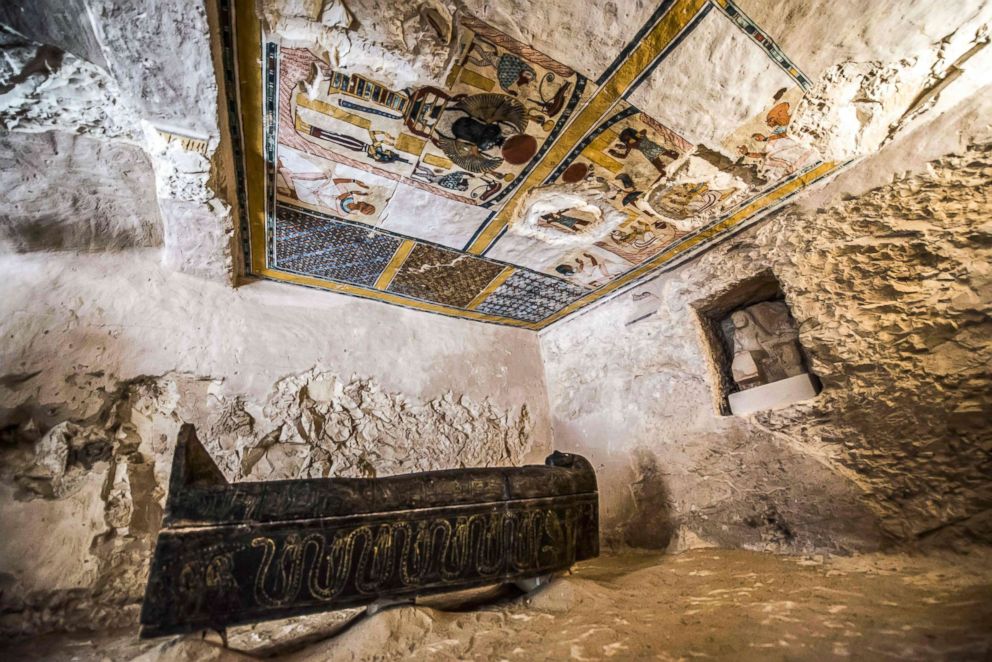

A carved black wooden sarcophagus dating to Egypt's Late period (7th-4th century BC), lying in a burial chamber at Al-Assasif necropolis on the west bank of the Nile north of the southern Egyptian city of Luxor, Nov. 24, 2018.
Khaeled Desouki/AFP/Getty Images

Up Next in News—

This San Francisco shop is run completely by an AI agent

April 23, 2026

Mother charged after teen son allegedly hits and injures 81-year-old veteran while riding e-motorcycle

April 23, 2026

UK bill banning smoking products for those born after 2008 is one step away from becoming law

April 22, 2026

Pilot killed in Florida plane crash hailed as hero

April 21, 2026

Shop GMA Favorites

ABC will receive a commission for purchases made through these links.

Sponsored Content by Taboola

The latest lifestyle and entertainment news and inspiration for how to live your best life - all from Good Morning America.
  • Contests
  • Terms of Use
  • Privacy Policy
  • Do Not Sell My Info
  • Children’s Online Privacy Policy
  • Advertise with us
  • Your US State Privacy Rights
  • Interest-Based Ads
  • About Nielsen Measurement
  • Press
  • Feedback
  • Shop FAQs
  • ABC News
  • ABC
  • All Videos
  • All Topics
  • Sitemap

© 2026 ABC News
  • Privacy Policy— 
  • Your US State Privacy Rights— 
  • Children's Online Privacy Policy— 
  • Interest-Based Ads— 
  • Terms of Use— 
  • Do Not Sell My Info— 
  • Contact Us— 

© 2026 ABC News