• Video
  • Shop
  • Culture
  • Family
  • Wellness
  • Food
  • Living
  • Style
  • Travel
  • News
  • Book Club
  • Newsletter
  • Privacy Policy
  • Your US State Privacy Rights
  • Children's Online Privacy Policy
  • Interest-Based Ads
  • Terms of Use
  • Do Not Sell My Info
  • Contact Us
  • © 2026 ABC News
  • News

Though 1M remain without, power slowly returns in Puerto Rico after back-to-back earthquakes
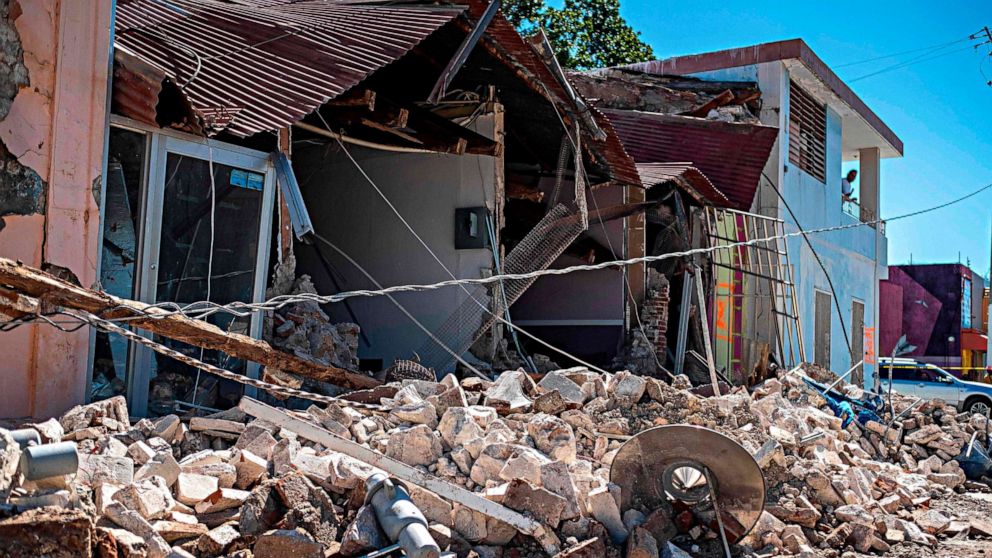
1:50
6.4 earthquake hits Puerto Rico leaving 1 dead, multiple injured
Ricardo Arduengo/AFP via Getty Images
ByChristina Carrega and Joshua Hoyos
January 08, 2020, 8:16 PM

After back-to-back earthquakes in Puerto Rico this week almost one million residents are without power and over 2,200 are living in shelters.

Since Monday, the U.S. commonwealth experienced two earthquakes that measured magnitudes of 6.4 and 5.8, respectively, that killed one and injured eight others.

"Many aftershocks" occurred and 23.6% of the citizens are without water as of Wednesday, said Carlos Acevado, director of the Puerto Rico Emergency Management Agency.
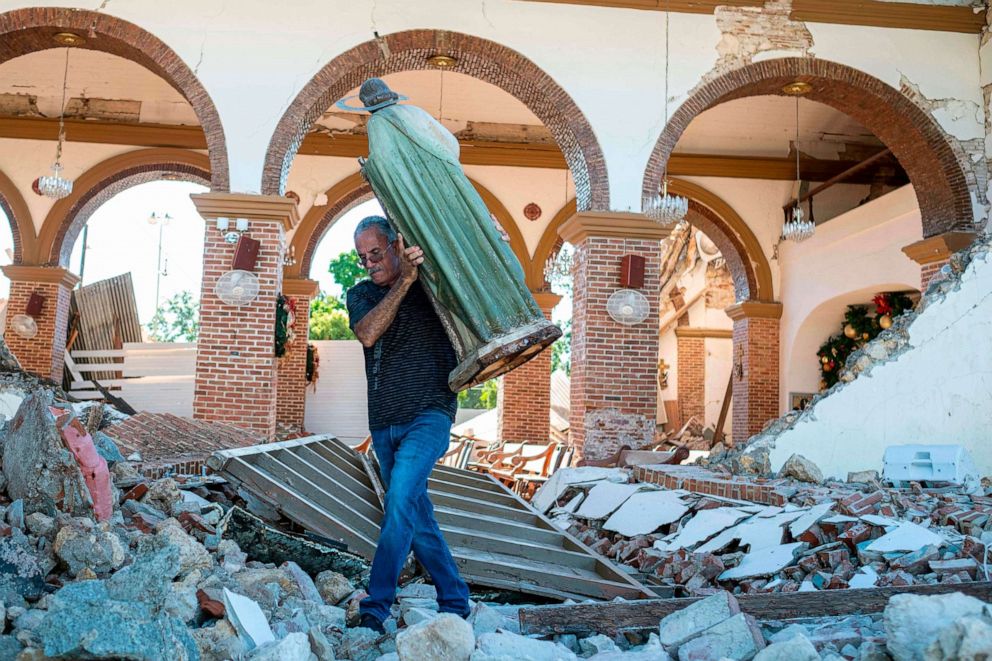
PHOTO: A man carries a St. Jude statue from the Inmaculada Concepcion church ruins that was built in 1841 and collapsed after an  earthquake hit the island in Guayanilla, Puerto Rico on Jan. 7, 2020.
A man carries a St. Jude statue from the Inmaculada Concepcion church ruins that was built in 1841 and collapsed after an earthquake hit the island in Guayanilla, Puerto Rico on Jan. 7, 2020.
Ricardo Arduengo/AFP via Getty Images

"Generators are being moved once water plants get back online to those that don’t to try and power water plants," Acevado said.

Related Articles

MORE: State of emergency declared in Puerto Rico after 6.4 magnitude earthquake kills 1

Acevado said that 950,000 customers are without power, 2,267 people are in shelters within 15 towns and over 300 residents have major damage to their property.
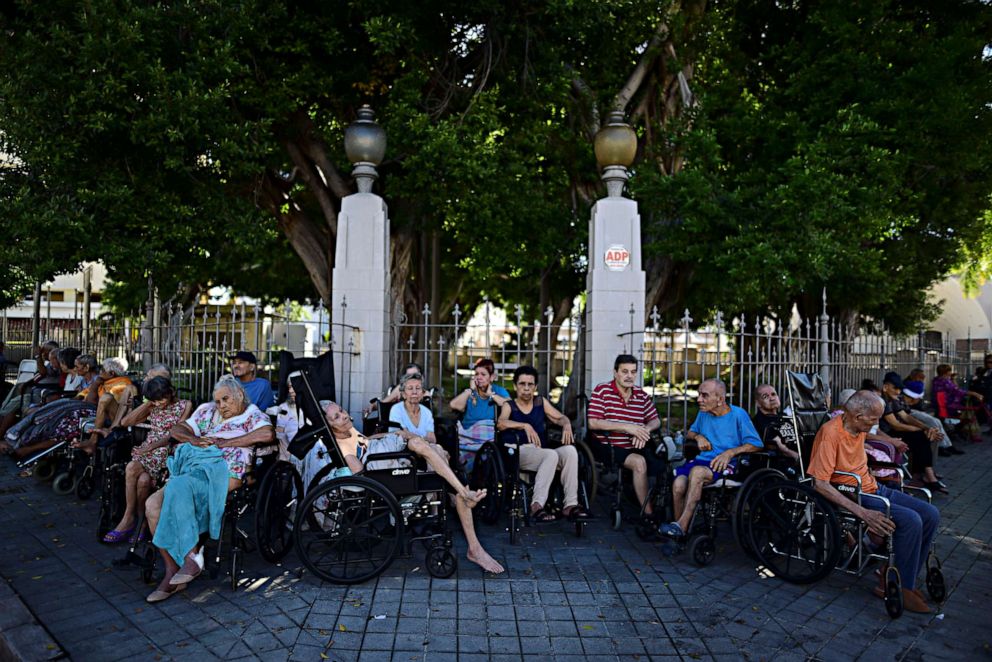
Residents of a nursing home sit outside of it after they were evacuated due to an earthquake in Ponce, Puerto Rico, Jan. 7, 2020.
Carlos Giusti/AP

"This morning we had many aftershocks," said Acevado.

Dr. Lucy Jones, a seismologist with CalTech, says that while earthquakes happen every day -- all around the world -- if you never felt one in your entire life, feeling an aftershock is a "psychological phenomenon."

Southern California measured about 30,000 aftershocks in 2019 following a recorded earthquake.
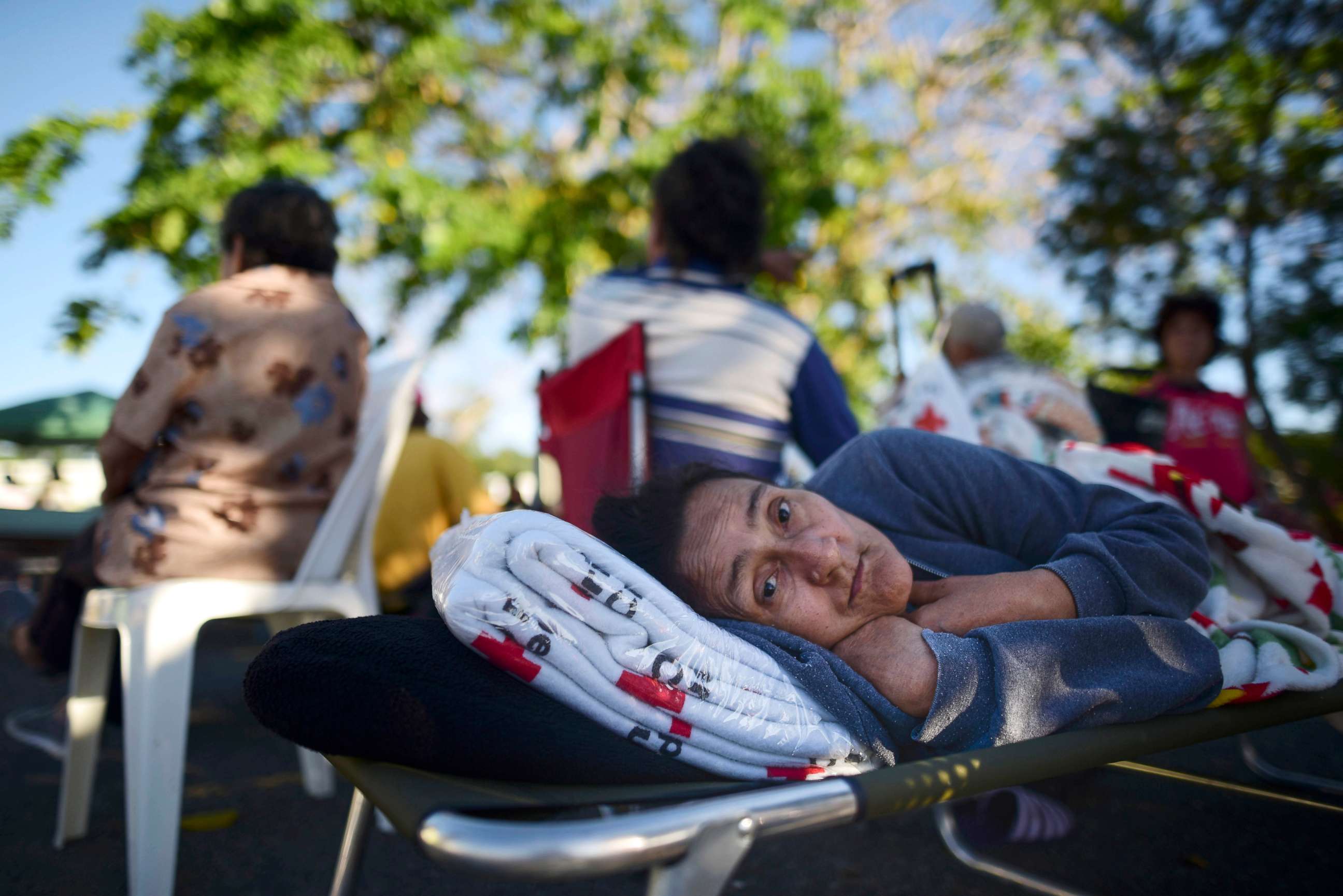
PHOTO: Maribel Rivera Silva, 58-years-old, rests outside a shelter due to concerns over aftershocks following an earthquake in Guanica, Puerto Rico, Jan. 7, 2020.
Maribel Rivera Silva, 58-years-old, rests outside a shelter due to concerns over aftershocks following an earthquake in Guanica, Puerto Rico, Jan. 7, 2020. A 6.4-magnitude earthquake struck Puerto Rico before dawn, killing one man, injuring others and collapsing buildings in the southern part of the island.
Carlos Giusti/AP

"We record magnitude 1.5s and twos every day ... sevens happen once a month that may happen underwater and no one feels it," said Jones, who retired from the United States' Geological Survey.

Related Articles

MORE: 5.8 magnitude earthquake rocks Puerto Rico

Jones told ABC News that over the next few days, the aftershocks will occur, but the magnitude will lessen and "die off quickly."

"The shaking affects people, not the magnitude... It can make people scared," she said, adding, "but predicting an aftershock is like predicting rain in Hawaii."

Governor Wanda Vazquez on Tuesday urged the over 3.6 million citizens to "remain calm" as help from FEMA, the U.S. National Guard and financial funds of $130 million were released to assist with their state of emergency.

Despite sequential quakes, their magnitudes were not strong enough to issue a tsunami warning.
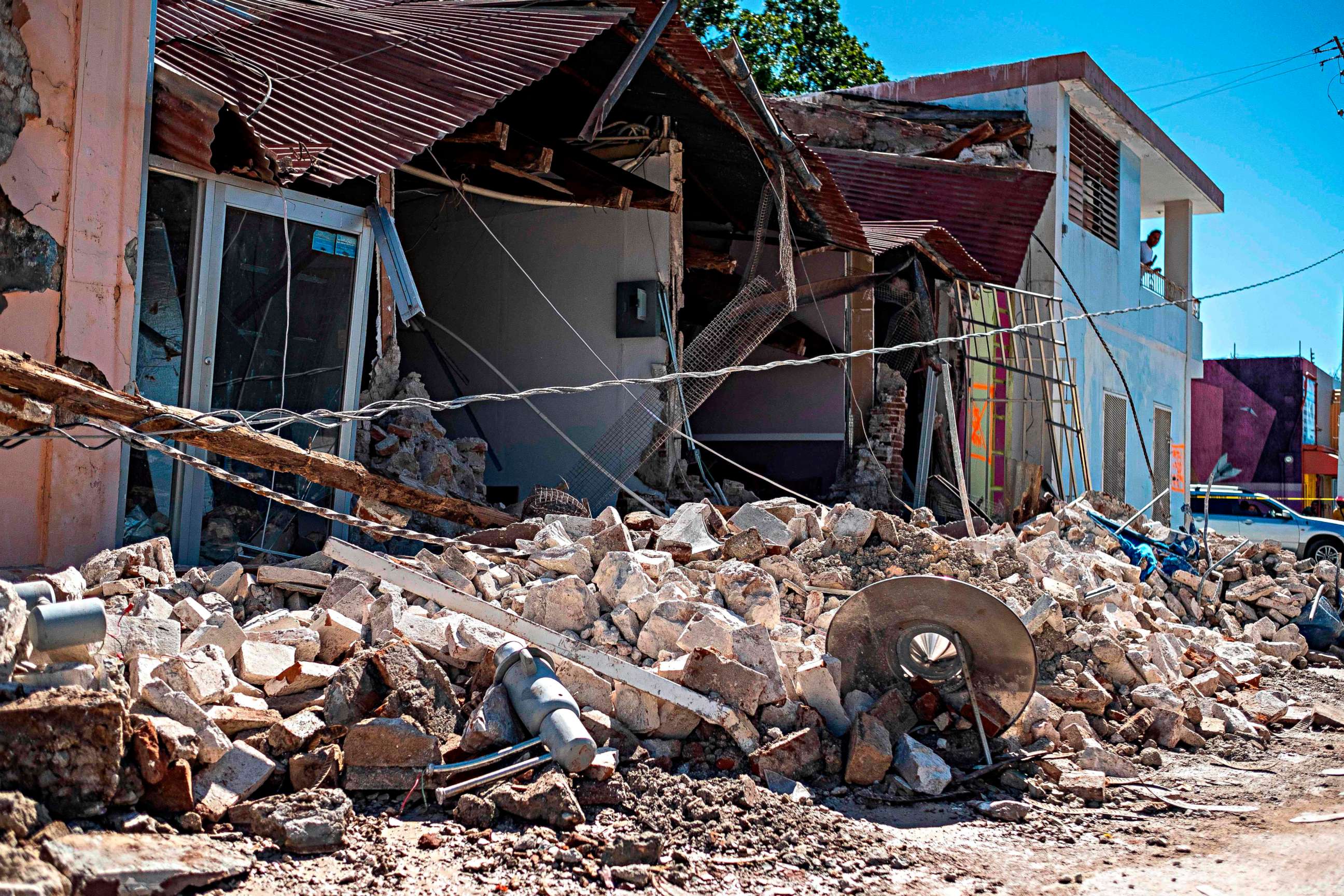
Rubble lies around a collapsed after an earthquake hit the island in Guanica, Puerto Rico on Jan. 7, 2020.
Ricardo Arduengo/AFP via Getty Images

An earthquake that measures an eight or more can cause a "significant tsunami" and a warning would sound if it hits a seven, said Jones.

Vazquez said they are still awaiting funds to fix more than half of their destroyed tsunami warning gauges, but Jones said they're not necessary.

"In Chile, everyone is taught in school, if your ground shakes and you're near the shore, run. If the earthquake lasts a long time, get away from the water, there's not time for a gauge," said Jones who classified a magnitude eight lasting a "couple of minutes." The 6.4 the island experienced on Tuesday lasted for five to 10 seconds.

Up Next in News—

This San Francisco shop is run completely by an AI agent

April 23, 2026

Mother charged after teen son allegedly hits and injures 81-year-old veteran while riding e-motorcycle

April 23, 2026

UK bill banning smoking products for those born after 2008 is one step away from becoming law

April 22, 2026

Pilot killed in Florida plane crash hailed as hero

April 21, 2026

Shop GMA Favorites

ABC will receive a commission for purchases made through these links.

Sponsored Content by Taboola

The latest lifestyle and entertainment news and inspiration for how to live your best life - all from Good Morning America.
  • Contests
  • Terms of Use
  • Privacy Policy
  • Do Not Sell My Info
  • Children’s Online Privacy Policy
  • Advertise with us
  • Your US State Privacy Rights
  • Interest-Based Ads
  • About Nielsen Measurement
  • Press
  • Feedback
  • Shop FAQs
  • ABC News
  • ABC
  • All Videos
  • All Topics
  • Sitemap

© 2026 ABC News
  • Privacy Policy— 
  • Your US State Privacy Rights— 
  • Children's Online Privacy Policy— 
  • Interest-Based Ads— 
  • Terms of Use— 
  • Do Not Sell My Info— 
  • Contact Us— 

© 2026 ABC News