4 years after Russia's invasion, Ukraine's children endure loss and show resilience
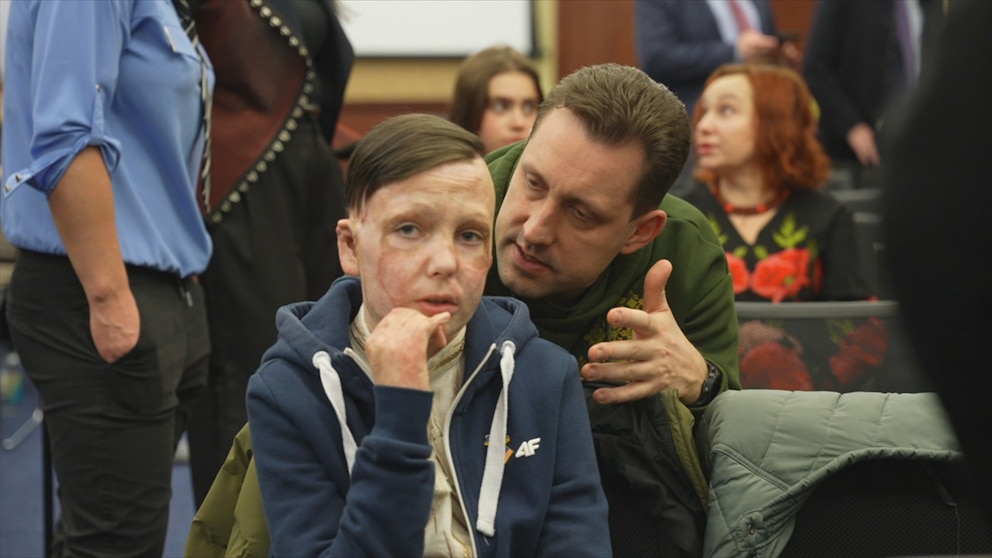
It has been four years since Russia launched its full-scale invasion into Ukraine and reshaped the childhoods of millions of Ukrainian kids.
According to UNICEF officials, more than 3,200 children have been killed or injured since the invasion began and roughly 20,000 others have been abducted by Russia.
When Moscow launched its assault in February 2022, few Ukrainian children imagined they would still be living under the strain of war four years later. For many, air raid sirens and missile strikes have become the backdrop to daily life. Yet even amid all the destruction, a dream of peace still exists for many children, including Roman Oleksiv.
Roman was 8 years old in July 2022 when the war found him and his mother, Halyna. Roman's mother was taking him for a routine appointment at a medical center in Vinnytsia when missiles struck in the middle of the day.
"We were sitting in a chair waiting for an appointment," he recalled. "I was thrown to the wall. I remember Mom saying to me, 'Lay down.' And then the second hit happened."
Roman said he lost consciousness after the second blast. When he came to, the clinic was engulfed in smoke and flames.
He and his mother were amid the smoldering rubble. Halyna would not survive.
He still remembers the final moments with his mother.
"I came to her, I said goodbye to her, and I started to make my way out."
Roman's mother was one of 28 people killed in the strike. Three were children. Roman suffered shrapnel wounds all over his body, a broken arm and burns over 45% of his body.
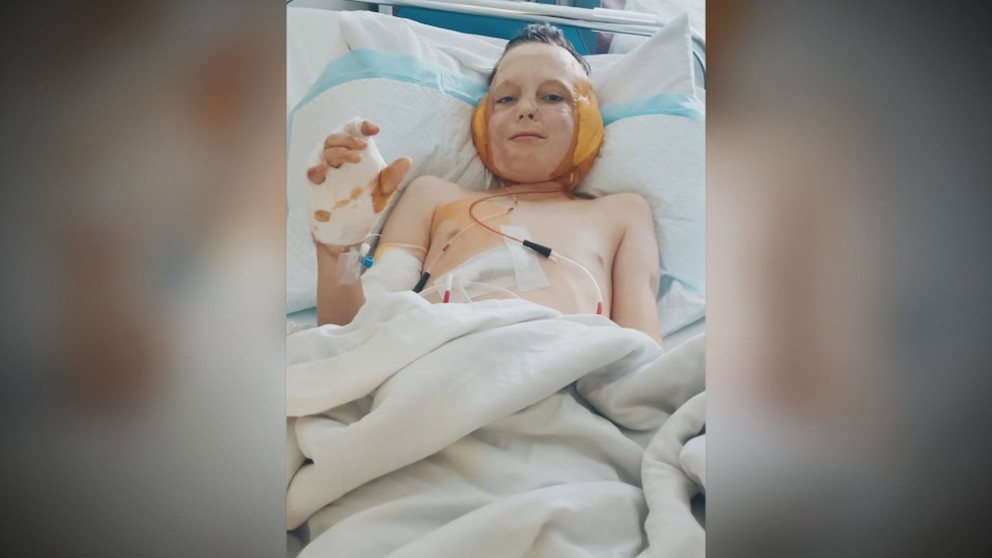
Roman's father, Yaroslav Oleksiv, was at the music academy in lviv where he and Halyna worked when he saw images of the attack on the news. By the time he had reached Roman "it was impossible to recognize him because he was covered in bandages. I couldn't even understand if it was really Roman," Yaroslav recalled.
Roman's burns were so bad that his father says he was forced to take him to a hospital in Dresden, Germany, for Roman to survive.
It was there that Roman woke up from a 30-day coma. He would undergo 36 different surgeries in order to regain feeling in his fingers, arms and legs.
Yaroslav recalled to ABC News the recovery from the strike: "Roman clearly remembers everything that happened to him at that moment when the rocket [hit]. In the first two months, he told us this story every morning. He wanted to speak out."
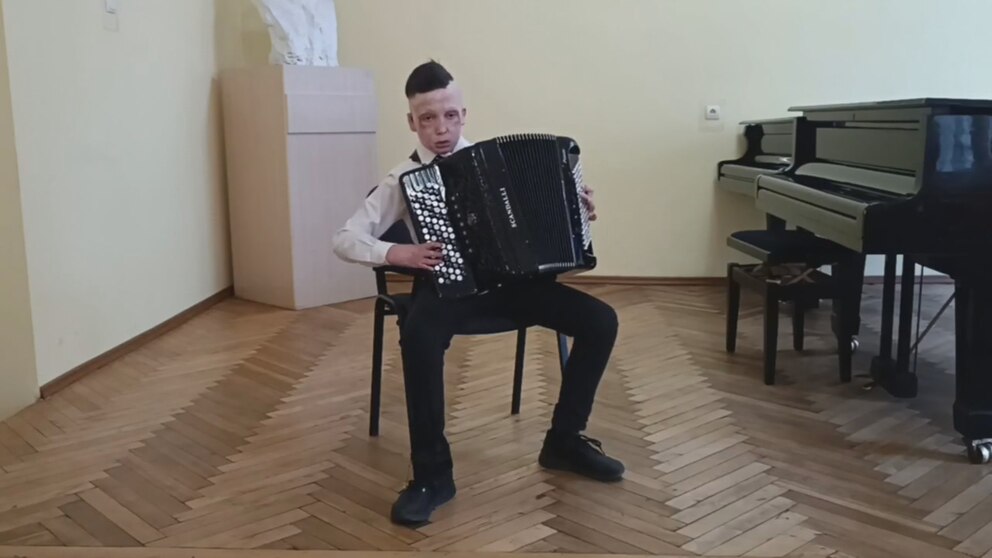
Told he may never walk again, Roman went a step further, returning to his passions of ballroom dancing and playing the accordion.
"My wife wanted him to do ballroom dancing because it teaches respect for the girl, for the partner." Yaroslav recalled.
Roman said, "I like dancing because first, I like it. It's like my hobby, and second is my therapy when I'm dancing, it's therapy for my leg, but when I'm playing accordion, it's therapy for my two hands and arms."
Now 12 years old, Roman is telling his story before governments and in press conferences around the world. At the European Parliament, a translator struggled through tears as Roman told about saying goodbye to his mother.
On Capitol Hill in Washington, Roman addressed lawmakers directly during the Congressional Ukraine Caucus' Ukraine Week earlier this month.
"I'm here to show you how the kids in Ukraine suffer," Roman told them. "I can say it in my words; a lot of kids cannot."
"In a way, I see it as my mission," he told ABC News.
Roman's story is featured in "Children in the Fire," a documentary by director and co-producer Evgeny Afineevsky that follows eight Ukrainian children and shows the war through their eyes.
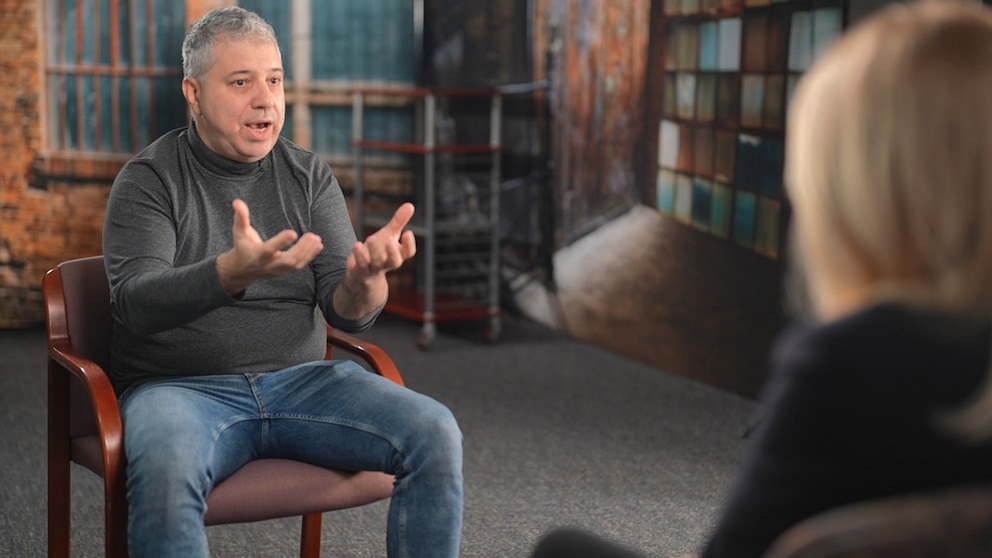
"I wanted to give voice to the younger generation of Ukrainians about their dreams, about their future, about their resilience, about their hope," Afineevsky said.
At the start of the invasion, psychologists studying children in Ukraine noted which toys children reached for. Fighter jets were among the most common. Liudmyla Romanenko, a Ukrainian trauma psychologist, said children were already speaking about the possibility of nuclear war.
Afineevsky used animation to capture the children's tellings of the events that changed their lives.
"When you were a child ... did you watch cartoons? Let's go to the world of the children ... that's why I wanted to allow them to show their world, their view, how they went through this darkness," he said.
There is one exception, though -- Afineevsky chose to show images of the incident as a child recounts watching his pregnant cousin carried from a hospital on a stretcher.
"It was important for me to give this image back to the world, because for him, it's in his memory he's talking today in my movie."
Olha Stefanishyna, Ukraine's ambassador to the United States, said the film allows Ukrainian children to tell the "pure truth" about the war from their perspective.
"Children are no politicians. Children cannot lie so you hear the pure truth from those children who were subjected to atrocious war crimes" she said. "They were deprived of their generation, their life, they were separated with their families and this is what we have to know."
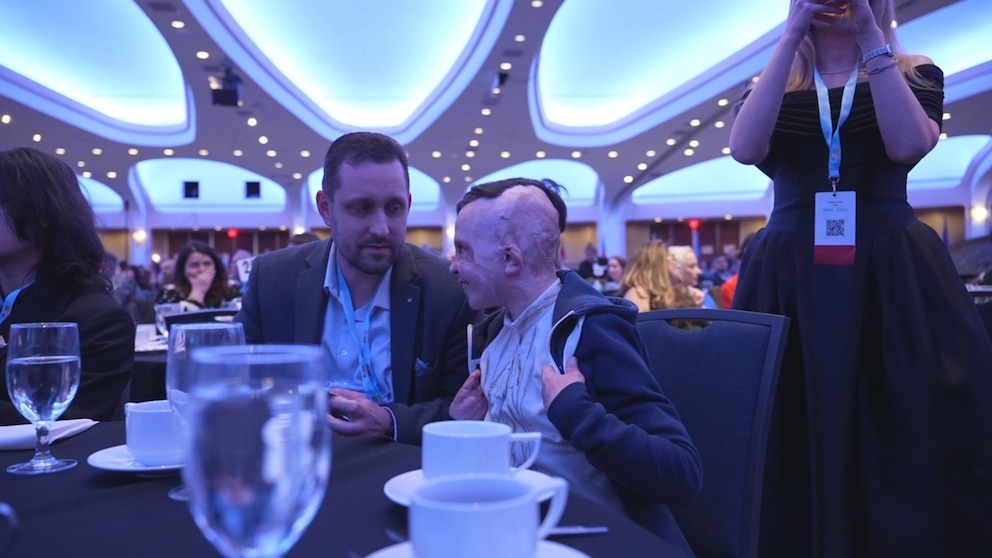
For Roman, the scars on his body take him back to the day he lost his mother.
"When I look at the scars, I always remember my mom and these things that happened," he said. "I do miss my mom a lot, but, yes, I also do feel courage after all of this that I've lived through."
Now entering a fifth year, there is no end in sight to Russia's offensive. Scenes that once shocked the world have, for many Ukrainians, become part of their life.
Children like Roman continue to inspire and he still continue to dream, "my global dream is that the war in Ukraine finishes," he says in English. "And my dream, I like cars, and I want to build my own car."
"In a way, my dad and I are like two dominoes built together in the shape of a house," Roman says. "If you take one away, they will both fall down. And that's us."
On this year's anniversary, Roman finds purpose in a famous Ukrainian poem about birds and freedom, about wings that cannot be seen but still exist.
"It's about the fact that humans have wings," Roman explains. "Not physical wings, but moral wings -- the fact that we can help others."