• Video
  • Shop
  • Culture
  • Family
  • Wellness
  • Food
  • Living
  • Style
  • Travel
  • News
  • Book Club
  • Newsletter
  • Privacy Policy
  • Your US State Privacy Rights
  • Children's Online Privacy Policy
  • Interest-Based Ads
  • Terms of Use
  • Do Not Sell My Info
  • Contact Us
  • © 2026 ABC News
  • News

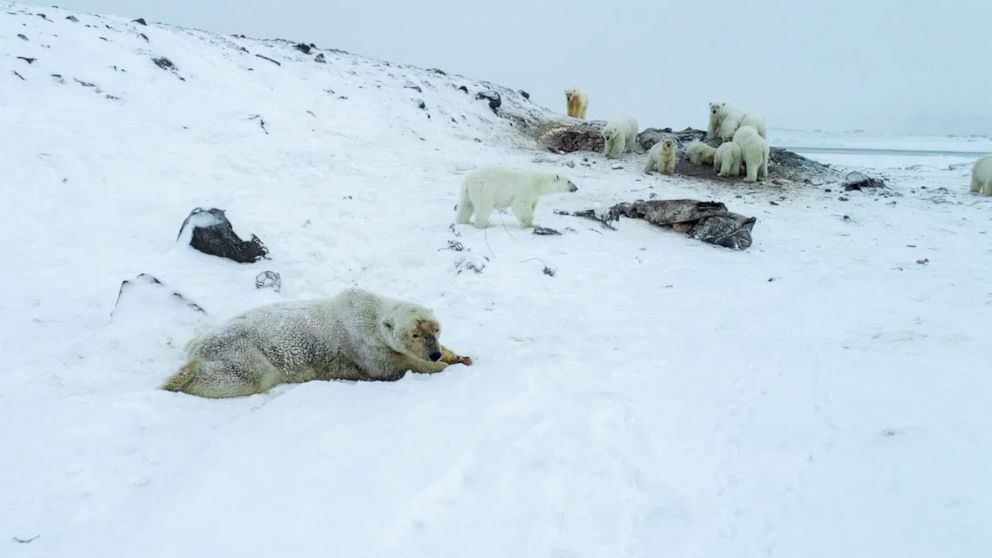
More than 50 polar bears descend on Russian village, frightening locals
0:36
More than 50 polar bears descend on Russian village, frightening locals
Maxim Dyominov via World Wildlife Fund Russia
ByGuy Davies and Tanya Stukalova
December 06, 2019, 3:34 PM

LONDON and MOSCOW -- More than 50 polar bears have descended on a Russian village looking for food, conservationists said.

In total 56 polar bears were counted by a patrol near the village of Ryrkaypiy on Kozhevnikov Cape in Russia’s far north over a period of four days, according to the World Wide Fund for Nature (WWF).

Although polar bears on the cape are a common occurrence in the area, the size of the gathering is “unusual,” according to WWF, which said the animals most likely came to the village in search of food.

“Almost all the bears are thin,” Tatyana Minenko, the head of Bear Patrol in Ryrkaypiy, said. “There are both adult and young animals, including cubs of different ages with their moms.”
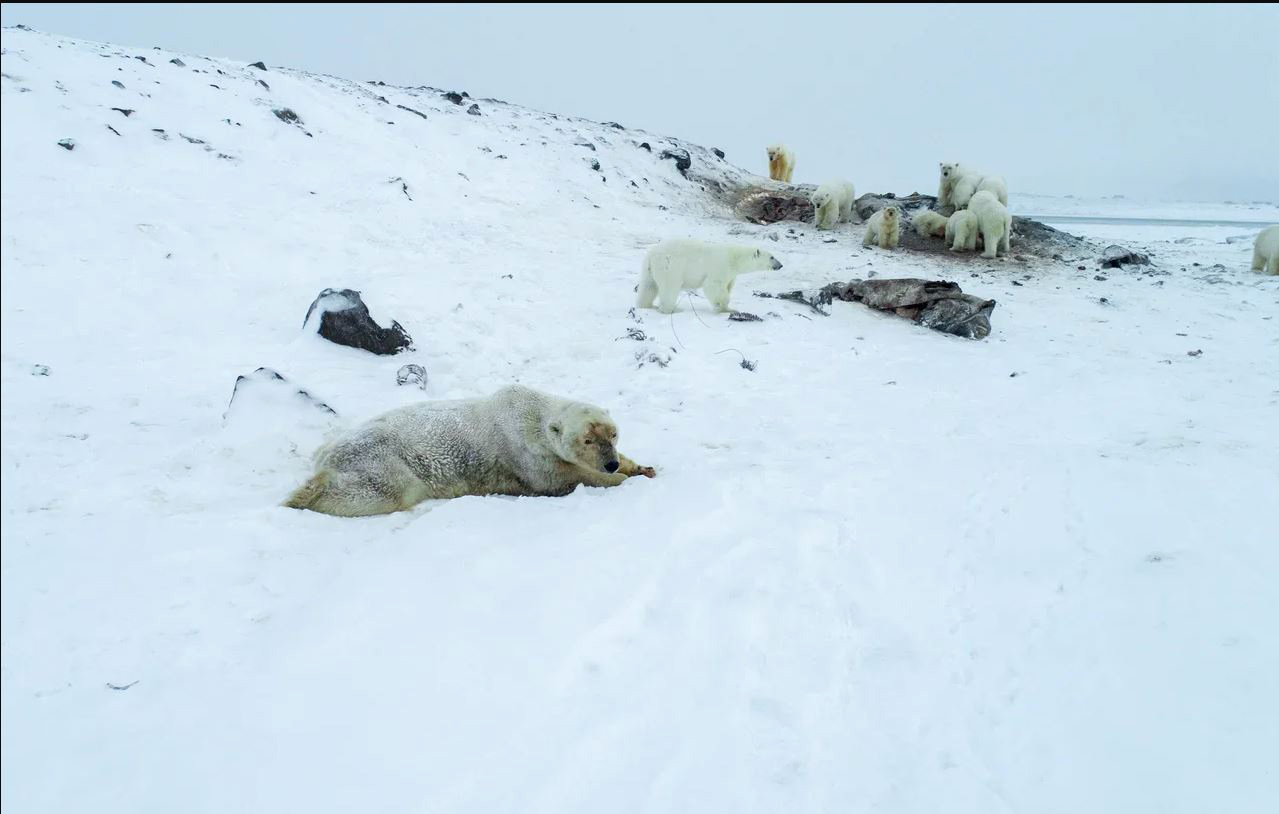
PHOTO: Polar bears gather outside the village of Ryrkaypiy in the Chukotka region of Siberia, Russia. More than 50 polar bears have gathered there environmentalists and residents said, as weak coastal ice leaves them unable to roam.
Polar bears gather outside the village of Ryrkaypiy in the Chukotka region of Siberia, Russia. More than 50 polar bears have gathered on the edge of a village in Russia's far north, environmentalists and residents said, as weak coastal ice leaves them unable to roam.
Maxim Dyominov via World Wildlife Fund Russia

Related Articles

(MORE: Russian region declares state of emergency after mass invasion of polar bears)

The environmentalists took pictures of the bears, which can be seen eating walrus carcasses in the freezing cold.

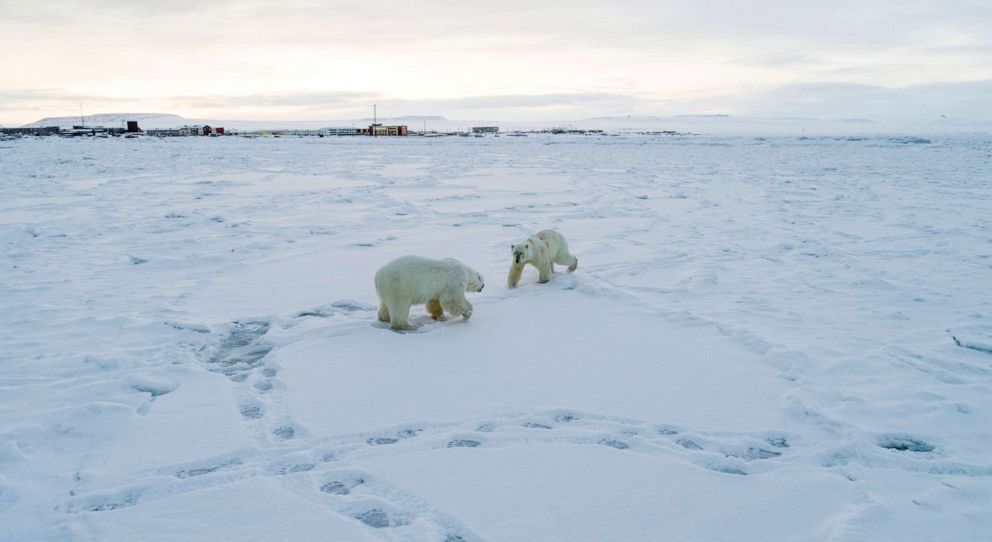
The local Bear Patrol is now monitoring the bears’ movements and inspecting the surrounding area on snowmobiles to stop the bears from entering the main area of the village. The bear invasion has led authorities to deploy special buses to take children to school safely.

Polar bears are increasingly entering human settlements due to the decline of the sea ice, meaning they are forced to go ashore in search of food, the WWF said.
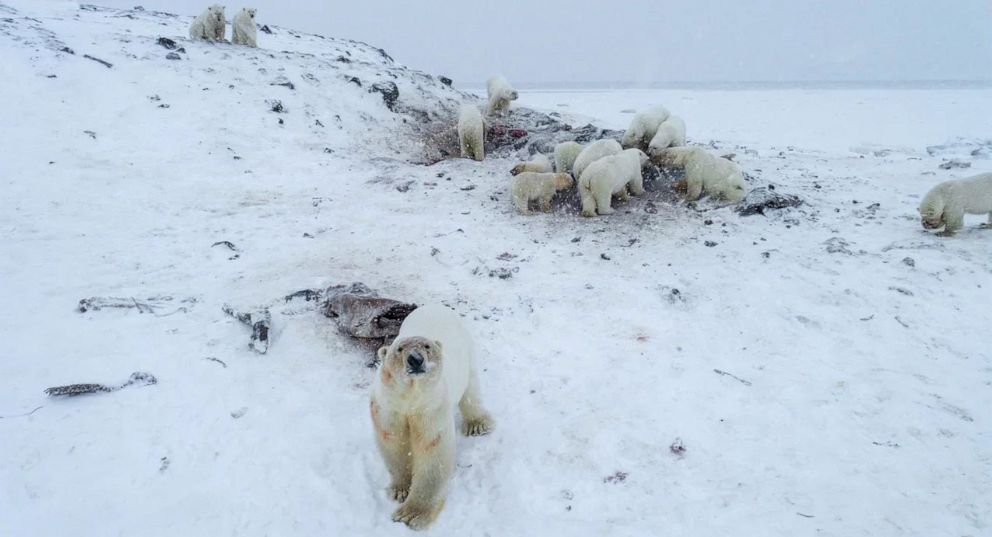
PHOTO: Polar bears gather outside the village of Ryrkaypiy in the Chukotka region of Siberia, Russia, Dec. 3, 2019. More than 50 polar bears have gathered there environmentalists and residents said, as weak coastal ice leaves them unable to roam.
Polar bears gather outside the village of Ryrkaypiy in the Chukotka region of Siberia, Russia, Dec. 3, 2019. More than 50 polar bears have gathered on the edge of a village in Russia's far north, environmentalists and residents said, as weak coastal ice leaves them unable to roam.
Maxim Dyominov via World Wildlife Fund Russia

Related Articles

(MORE: Polar bear cub born on Thanksgiving at Columbus Zoo)

"If there is enough ice, the bears would go further north to hunt the seals,” Mikhail Stishov, Arctic biodiversity projects coordinator for the WWF in Russia, said. “Until the ice is not thick enough, they will stay ashore and can visit the village due to curiosity and hunger. Spontaneous waste deposits can attract the animals: bears will go for the smell of food waste, regardless of the availability of other food.”

“Gathering of polar bears are becoming more frequent, and we have to adapt and find ways to avoid conflicts between people and animals," he added.
Related Articles

(MORE: Russia detains conman who built fake border with Finland to trick migrants)

PHOTO: Polar bears gather outside the village of Ryrkaypiy in the Chukotka region of Siberia, Russia, Dec. 3, 2019. More than 50 polar bears have gathered there environmentalists and residents said, as weak coastal ice leaves them unable to roam.
Polar bears gather outside the village of Ryrkaypiy in the Chukotka region of Siberia, Russia, Dec. 3, 2019. More than 50 polar bears have gathered on the edge of a village in Russia's far north, environmentalists and residents said, as weak coastal ice leaves them unable to roam.
Maxim Dyominov via World Wildlife Fund Russia

The incident follows a similar polar bear invasion earlier this year, when authorities in the remote region of Novaya Zemlya were forced to declare a state of emergency when hungry polar bears entered several villages.

Olga Filatova, a local resident, told ABC News that it was “frightening” for villagers as the number of bears is far higher than in previous years.

Vladimir Krever, the biodiversity program leader for WWF Russia, told ABC News that the bears "are pulling dead walruses out of the village. So far there are no accidents. But bears are potentially dangerous and when they are hungry they are potentially aggressive.”


Up Next in News—

Gas prices are up across the country. Here's where you'll find the most expensive -- and cheapest -- gas

May 2, 2026

Police officers hailed as heroes after New York house explosion

May 1, 2026

Artemis II astronauts on their out-of-this-world mission: 'Adventure of a lifetime'

April 30, 2026

'Rogue' AI agent went haywire at tech company. The CEO is still 'bullish' on the technology

April 29, 2026

Shop GMA Favorites

ABC will receive a commission for purchases made through these links.

Sponsored Content by Taboola

The latest lifestyle and entertainment news and inspiration for how to live your best life - all from Good Morning America.
  • Contests
  • Terms of Use
  • Privacy Policy
  • Do Not Sell My Info
  • Children’s Online Privacy Policy
  • Advertise with us
  • Your US State Privacy Rights
  • Interest-Based Ads
  • About Nielsen Measurement
  • Press
  • Feedback
  • Shop FAQs
  • ABC News
  • ABC
  • All Videos
  • All Topics
  • Sitemap

© 2026 ABC News
  • Privacy Policy— 
  • Your US State Privacy Rights— 
  • Children's Online Privacy Policy— 
  • Interest-Based Ads— 
  • Terms of Use— 
  • Do Not Sell My Info— 
  • Contact Us— 

© 2026 ABC News