81 Midwest Tornadoes Highly Unusual for November
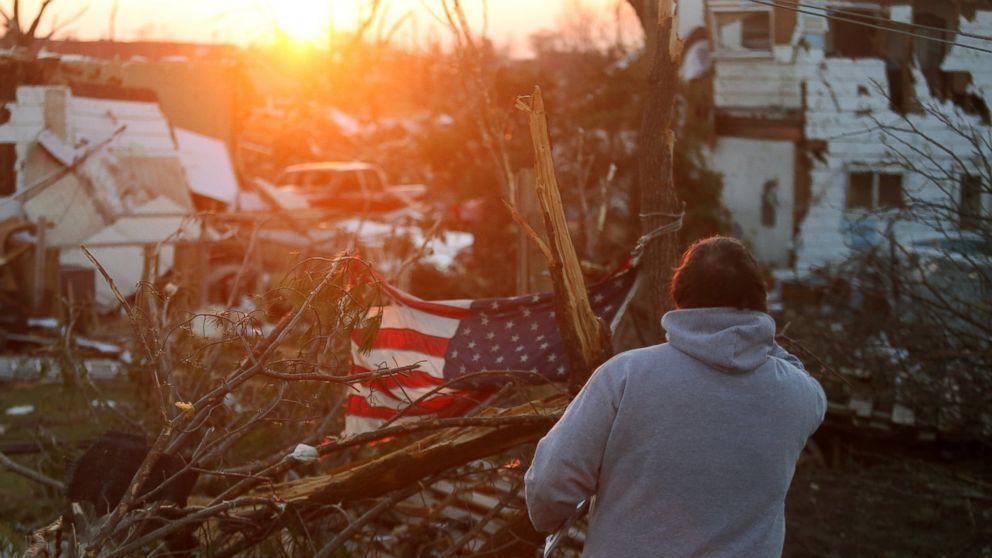
Nov. 18, 2013— -- After one of the quietest U.S. tornado seasons in 40 years, Sunday was nature's comeback, with a total of 81 tornado reports in Illinois, Kentucky, Missouri, Indiana and Ohio.
Illinois was the hardest hit, with 43 tornadoes, followed by 23 in Indiana, 13 in Kentucky, one in Missouri and one in Ohio.
See Photos of the Tornadoes' Sweeping Devastation
According to the National Weather Service's preliminary ratings, New Minden, Ill., in the southern part of the state, was in the swirl of an EF4 tornado, with winds of at least 166 mph. In Washington, Ill., the tornado, also an EF4, packed even more force, with winds from 170 to 190 mph.
According to the climatology of U.S. tornadoes in the Midwest, twisters of such force were unusual for this time of year. In the lower 48 states, the peak of severe weather and tornadoes usually occurs in April and May; November is known as the second peak for severe weather.
On average, the entire United States usually gets hit with 35 tornadoes in November. Only seven tornadoes on average occur in Midwestern states in November, and only one on average strikes Illinois in November.
More than 140 tornado warnings were issued Sunday from this storm. The National Oceanic and Atmospheric Administration had never issued a "high risk" prediction for severe weather, including tornadoes, this late in the season this far north.
At Least 6 Dead in Illinois After Tornadoes, Storms Damage Homes
But it was a perfect atmospheric setup: strong jet stream aloft (more than100 mph), blowing from the southwest to the northeast over the Midwest, which helped to lift the moist air at the surface coming from the Gulf of Mexico, south to north.
When these elements combine, they create "twist" in the atmosphere conductive to tornado development. As a strong cold front moved through this unstable environment, it helped to lift the moist, warm air. The result was violent, large and long tracked tornadoes, seen more typically in April or May.