Alaska's Mount Spurr getting even closer to eruption as unrest escalates, volcanologists say

Alaska's Mount Spurr, an active volcano near the most populated region in the state, is getting even closer to an eruption, according to volcanologists.
Scientists at the Alaska Volcano Observatory measured "significantly elevated" emissions of volcanic gas coming from Mount Spurr, located in the Aleutian Arc in southern Alaska about 75 miles west of Anchorage, according to a statement released Wednesday.
In addition, elevated earthquake activity, ground deformations and newly activated fumaroles -- or gas vents -- at the volcano's Crater Peak have been recorded, indicating that the probability of eruption has increased, researchers at the observatory said.
Small earthquakes have been occurring above ground at Mount Spurr since April, Matthew Haney, scientist in charge of the Alaska Volcano Observatory in Anchorage, told ABC News last month.
An overflight on March 7 measured about 450 metric tons per day of sulfur dioxide from Mount Spurr's summit vent -- an increase from less than 50 metric tons in December, according to the observatory.
Over the last month, more than 100 earthquakes per week have been occurring at the site as well. Ground deformation and collapse of snow and ice into the summit crater lake that formed during the unrest also continues, scientists said.
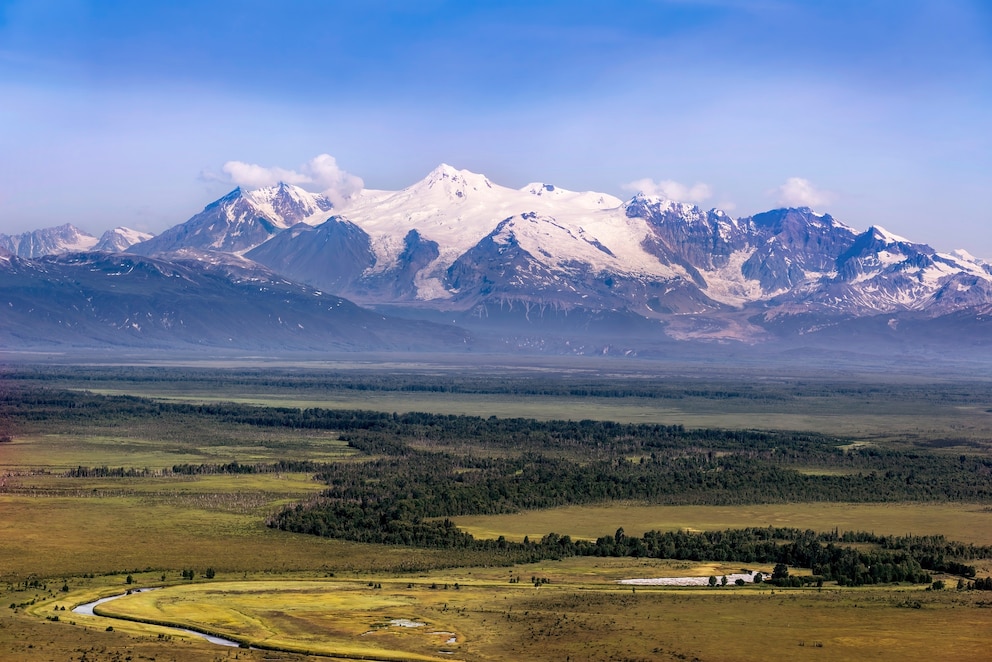
An increase in gas emissions confirms that new magma has entered the Earth’s crust beneath the volcano, indicating that an eruption is likely in the next weeks or months, according to the observatory.
While an eruption is "not certain," it is the most likely outcome of the current unrest, according to the observatory. If the magma stalls and does not reach the surface, the unrest could instead decrease over the next weeks and months, similar to events from 2004 to 2006, researchers said.
Eruptions that occurred in 1953 and 1992 were explosive -- lasting a few hours and producing ash clouds that were carried downwind for hundreds of miles, according to the observatory. The August 1992 eruption caused the Anchorage airport to close for 20 hours due to the wind and ash event that accompanied the eruption.
There is little geological evidence to suggest other past eruptions in the last 5,000 years, according to the observatory.
The volcano alert level for Mount Spurr as of Thursday was at "yellow" or "advisory," indicating that the volcano is exhibiting signs of elevated unrest above known background level
Mount Spurr is monitored constantly due to its proximity to Anchorage, the most populated city in Alaska, Haney said. There are 11 remote seismic stations situated around Mount Spurr.
Primary hazards to south-central Alaska communities during eruptions at Mount Spurr include far-traveled airborne ash clouds and ashfall, according to the observatory.
Volcanologists will be monitoring for further increases in seismic activity, gas emissions and surface heating to indicate that an eruption is imminent, according to the observatory. The detection of volcanic tremor -- a continuous shaking that can last for several minutes rather than short, small earthquakes -- would like prompt the level to raise, Haney said.
Should monitoring data suggest that an eruption is likely within hours or days, the observatory will raise its alert level to orange or red.


