Amber containing dinosaur feathers also carried 99 million-year-old lice
This is an Inside Science story.
(Inside Science) -- The oldest fossil lice yet unearthed have been found on dinosaur feathers encased in amber, a new study reports.
Until now, the earliest known fossil louse dated back 44 million years, about 22 million years after the age of dinosaurs had ended. As such, much remains a mystery about the origin and evolution of these parasites. The way parasites evolve closely in step with their targets can reveal details about their hosts that are otherwise invisible in the fossil record.
In the new study, researchers investigated two pieces of amber from the Hukawng Valley in northern Myanmar, which an amber collector donated to the scientists in 2016. Radioisotope dating of the rock the amber was found in suggests it was roughly 99 million years old.
The amber contained two feathers. Based on comparisons with previously unearthed fossils, the plumes came from dinosaurs, not birds, and were likely "down feathers that helped keep their animals warm," said study co-author Chung-Kun Shih, a paleoentomologist at the Smithsonian's National Museum of Natural History in Washington, D.C.
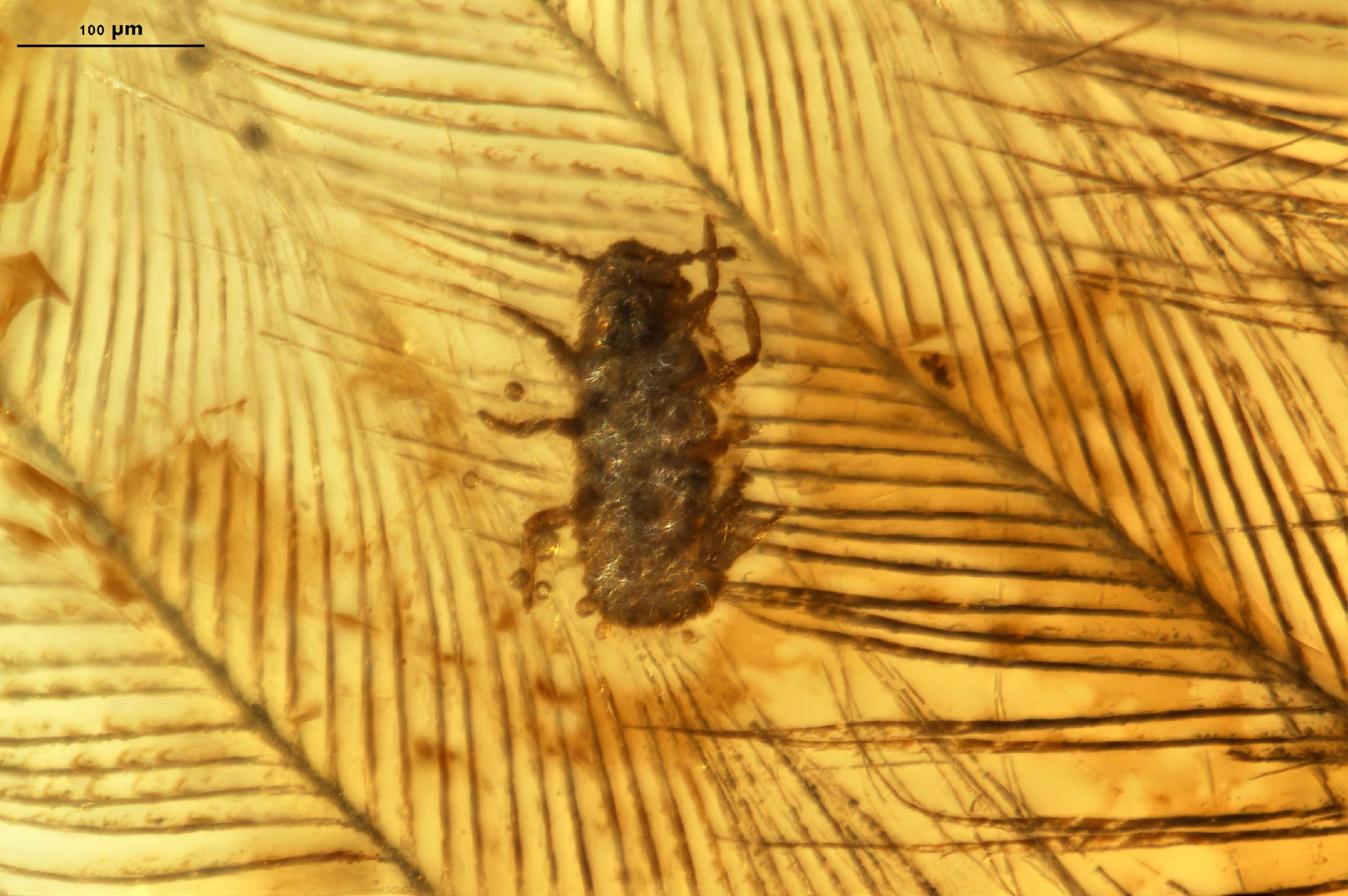
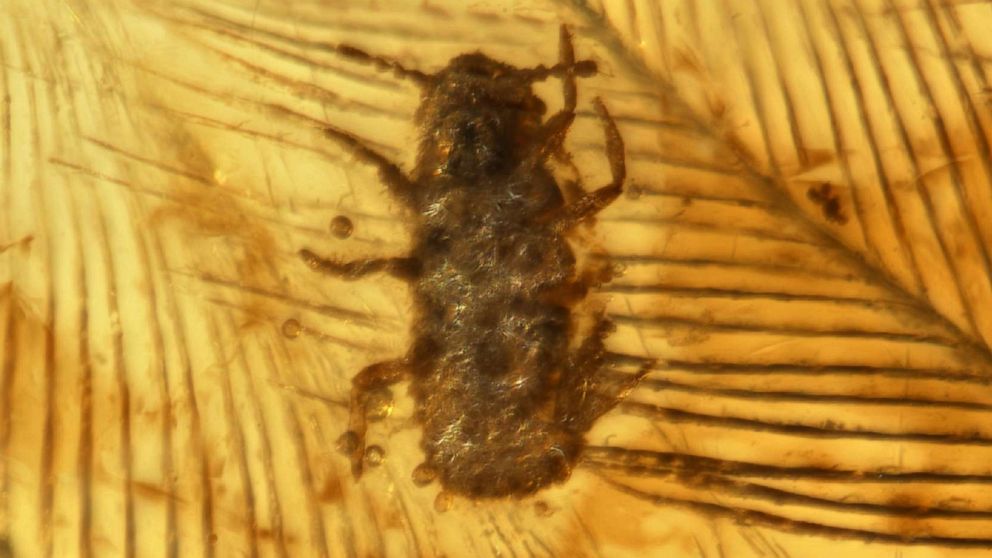
Unexpectedly, the researchers discovered 10 insect "nymphs," or immature specimens, preserved with the feathers. The largest was roughly 230 microns long -- in comparison, the average human hair is about 100 microns wide.
These insects were anatomically similar to modern lice. They had tiny wingless bodies with strong chewing mouthparts, stubby antennae and short, robust legs. The scientists named the new species Mesophthirus engeli -- Mesophthirus meaning "Mesozoic lice" and engeli in honor of paleoentomologist Michael Engel, whom the scientists had collaborated with before on insect fossils.
One of the feathers appeared to be damaged by chewing, in a very similar manner to modern bird feathers parasitized by lice. These findings suggest that parasites of feathers evolved during or before the middle of the Cretaceous Period, roughly when feathered dinosaurs and early birds started diversifying.
The scientists detailed their findings online Dec. 10 in the journal Nature Communications.
Inside Science is an editorially-independent nonprofit print, electronic and video journalism news service owned and operated by the American Institute of Physics.