As anti-government protests continue in Hong Kong, marchers embrace a new slogan made famous by Bruce Lee
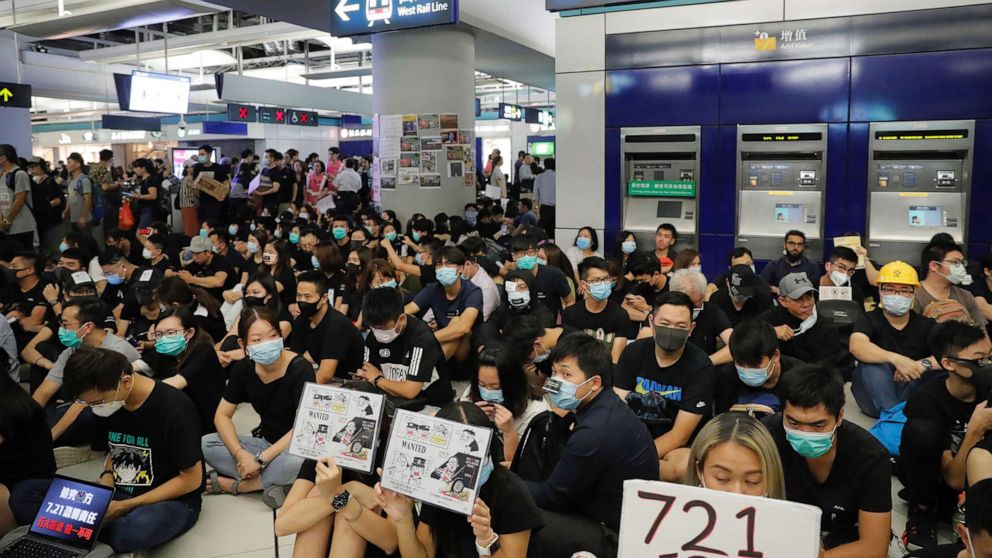
When Hong Kong riot police descended on a rail station where protesters were holding a sit-in on Wednesday, a small group of demonstrators unspooled a fire hose to create a watery moat in their path and shined laser beams at the officers' faces. By the time riot police entered the station, around 1,000 protesters had disappeared into train cars and escaped into the city’s back streets and alleyways, evading arrest or any confrontation.
In what has been a hallmark of the 11-week protest movement, a team of protesters stayed behind at the station, located in the city's outskirts, to mop up the water, reattach the fire hose and collect the rubber ducks that had been playfully set on the water.
As Hong Kong's anti-government movement nears its third month, protesters have explained its staying power -- and the fact that there have been relatively few clashes with police -- by invoking the slogan “Be Like Water.” The line is borrowed from kung fu master Bruce Lee, who grew up in Hong Kong and made movies there: “Be formless, shapeless, like water,” he said.
Massive protests often disperse with astonishing speed -- preventing violent confrontations -- and have been largely confined to weekends, which has minimized disruptions in this major hub for Asian business. Protesters, who wear black and cover their faces to avoid identification, regularly clean up after themselves.
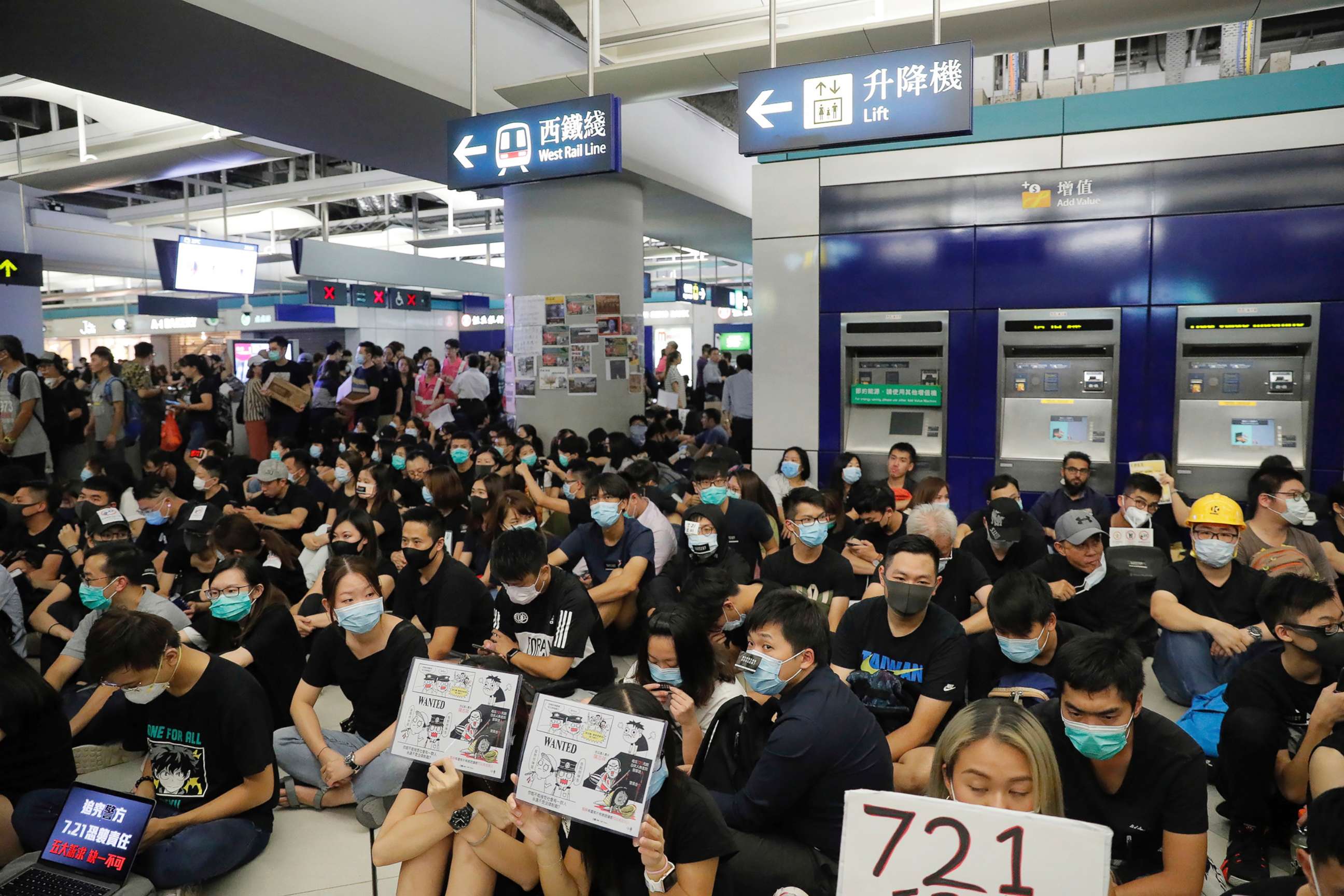
The sit-in on Wednesday was held in response to a violent attack on supporters of the protest movement, and protesters chose the site of a suburban train station because it was located close to a village where the attackers are believed to live.
Asked about the alleged attack, police offered no immediate comment.
The approach was on view on Sunday, when around a million people rallied in the city center holding signs that read "Free Hong Kong." It was one of the largest protests to date and it unfolded with almost no reports of clashes or unrest.
The protests began June 9, when hundreds of thousands of mostly young people marched against a proposed extradition bill that would allow individuals to be sent from semi-autonomous Hong Kong to mainland China for trial. Hong Kong leader Carrie Lam has since suspended the bill, but the movement has continued and protesters' demands have expanded to include a call for an investigation into police brutality and universal suffrage.
As protests have taken shape in nearly every weekend in Hong Kong, which was under British control until power was transferred to China in 1997, there have been some reports of confrontations.
Last week, a sit-in at Hong Kong's busy international airport grounded hundreds of flights and led to clashes with police. At one point, some protesters were seen beating a man who was later identified as a Chinese journalist. Police have accused protesters of hurling objects and pointing laser beams at them.
Protesters argue that they have faced unreasonable force from Hong Kong police and assaults from gangs, which protesters say are aligned with China.
Earlier this month, U.N. High Commissioner for Human Rights Michelle Bachelet said through a spokesman that there was “credible evidence” of law enforcement officials using some anti-riot measures which are “prohibited by international norms and standards,” including firing tear gas canisters into crowded, enclosed areas and directly at individual protesters.
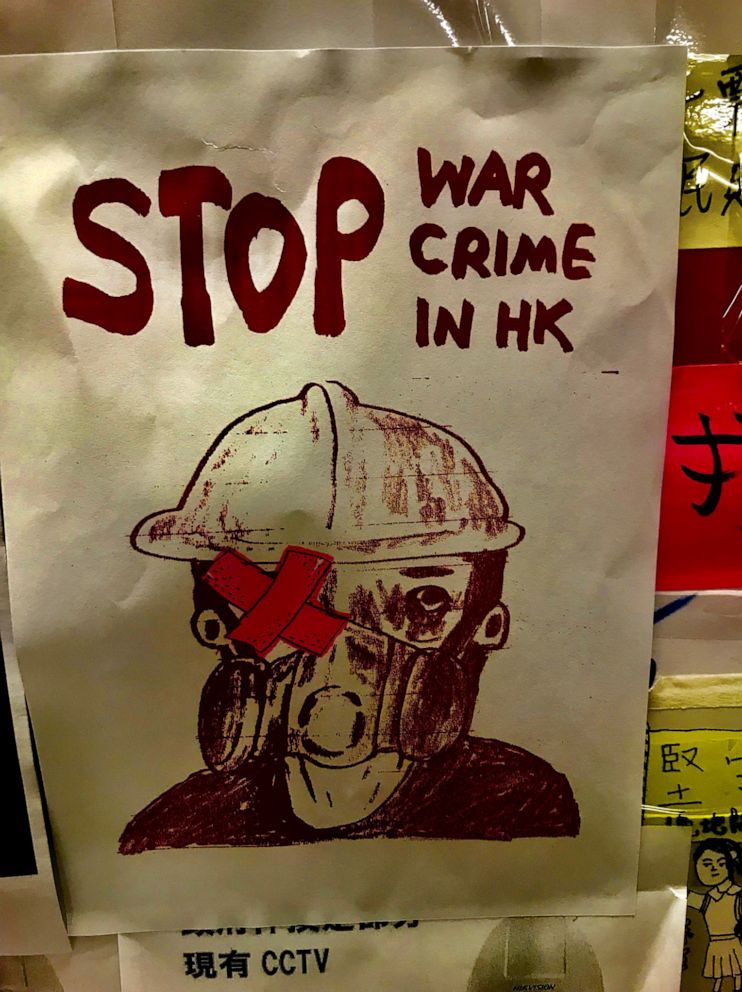
Some protesters have been seen wearing eye patches to show support for a woman whose eye was injured in an encounter with police earlier this month.
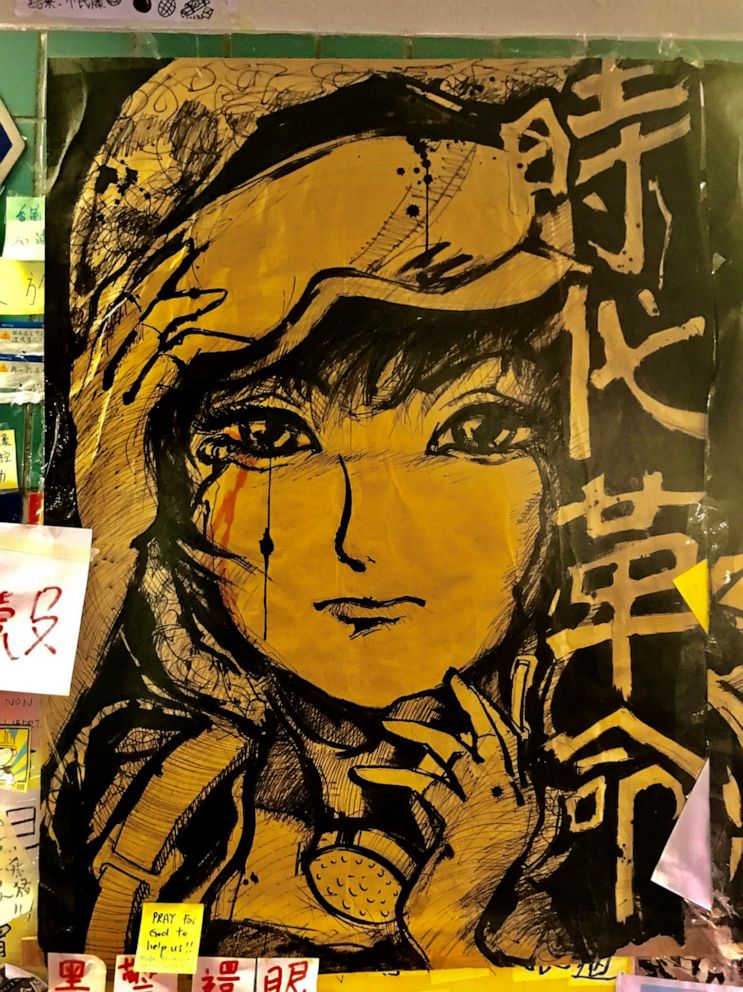
Outside the city center, the so-called "Lennon Tunnel" at the Tai Po Market train station has become a shrine to the movement's symbols and slogans.
The tunnel, which pays homage to John Lennon, is covered floor to ceiling with artwork, mosaics fashioned out of Post-it notes and flyers advertising upcoming demonstrations.