How Antonin Scalia's Death Could Affect the Outcome of These 5 Cases
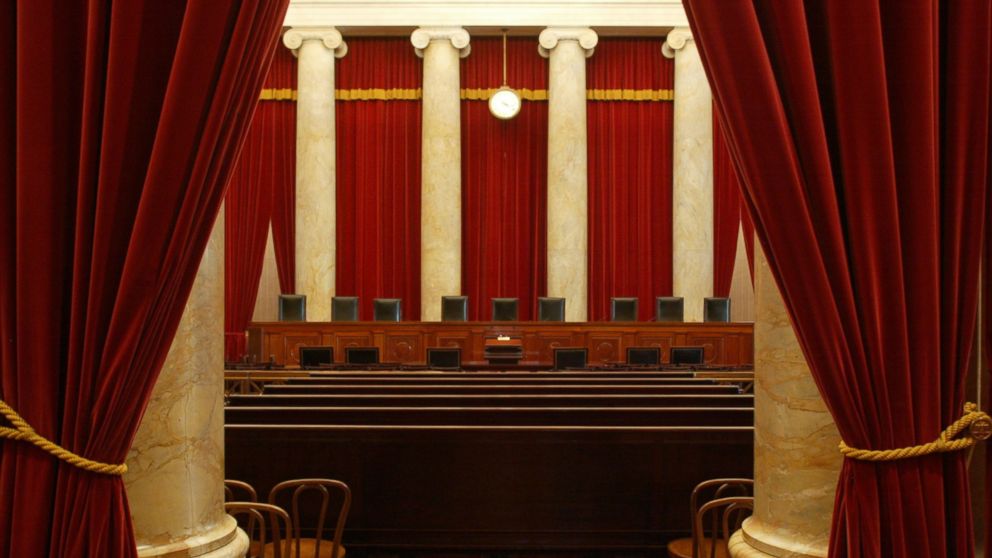
— -- The Supreme Court returns to work today for the first time since Justice Antonin Scalia's unexpected death last weekend. And with eight justices now left on the court, Scalia's absence means there is a real possibility of 4-4 ties.
In cases where the court divides evenly, the decision of the lower court stands and no national precedent is set. And while the justices could attempt to avoid ties through forging compromise to find five votes on narrow rulings, or schedule some cases for reargument next year, it is still possible that some of the most high-profile cases before the court could result in 4-4 ties.
Kate Shaw, an ABC News contributor and an assistant professor of law at the Benjamin N. Cardozo School of Law in New York, gives a quick overview and analysis of five cases in which such a split is a possibility.
Friedrichs v. California Teachers Association
This case asks whether public-sector employee unions can require nonmembers to pay mandatory dues to cover their “fair share” of the union’s collective bargaining activities. The unions won in the lower court, but after oral argument in January, the unions appeared to be heading for a 5-4 loss. Without Scalia, that vote is likely 4-4, which would affirm the union victory. Another similar case might eventually make its way to the court, but the outcome there would turn on the vote of the new ninth justice. And a 4-4 win would constitute a major victory for public-sector unions in the short term.
Whole Woman’s Health v. Hellerstedt
This case, which will be argued in the first week of March, involves two abortion regulations Texas enacted in 2013: 1) a requirement that abortion providers have admitting privileges at a nearby hospital; and 2) a requirement that abortion facilities comply with the requirements for ambulatory surgical centers. The plaintiffs argue that if these laws go into effect, the number of clinics in Texas will drop to under 10.
The plaintiffs argue that there’s no evidence that these regulations promote health, and that they’re really about impeding women’s access to abortion. The lower courts sided with the state, which defends the laws as protecting women’s health.
All eyes will be on Justice Kennedy at oral arguments; if he thinks the regulations have gone too far, they’ll likely be struck down 5-3; if not, the court will likely divide 4-4, affirming the lower court opinion and leaving the regulations in effect, but making no law for the rest of the country.
Evenwel v. Abbott
Since the 1960s, the court has held that legislative districts must comply with the principle of “one person, one vote.” Since then, most states have interpreted that rule as requiring them to draw legislative districts by evenly dividing the population between districts
In this case, several Texas voters claim that this method of dividing up the population violates the Constitution. Their argument is that because some districts contain significant numbers of individuals who are ineligible to vote, the voters in those districts are unfairly advantaged in comparison to voters in other districts.
If the plaintiffs are successful (the lower court rejected their claim), the suit would upend redistricting practice across the country. Signals were a bit murky coming out of oral arguments, so it’s not entirely clear how Scalia’s absence will affect the case. But a 4-4 tie would leave the lower court opinion rejecting the challenge in place.