Artemis III astronauts revealed for 'complex' NASA mission
NASA has revealed the astronauts selected for the next Artemis mission, following the space agency's historic lunar flyby.
Artemis III is hoping to launch the crew in the Orion spacecraft on top of the Space Launch System rocket in 2027 in a "complex" mission, according to NASA.
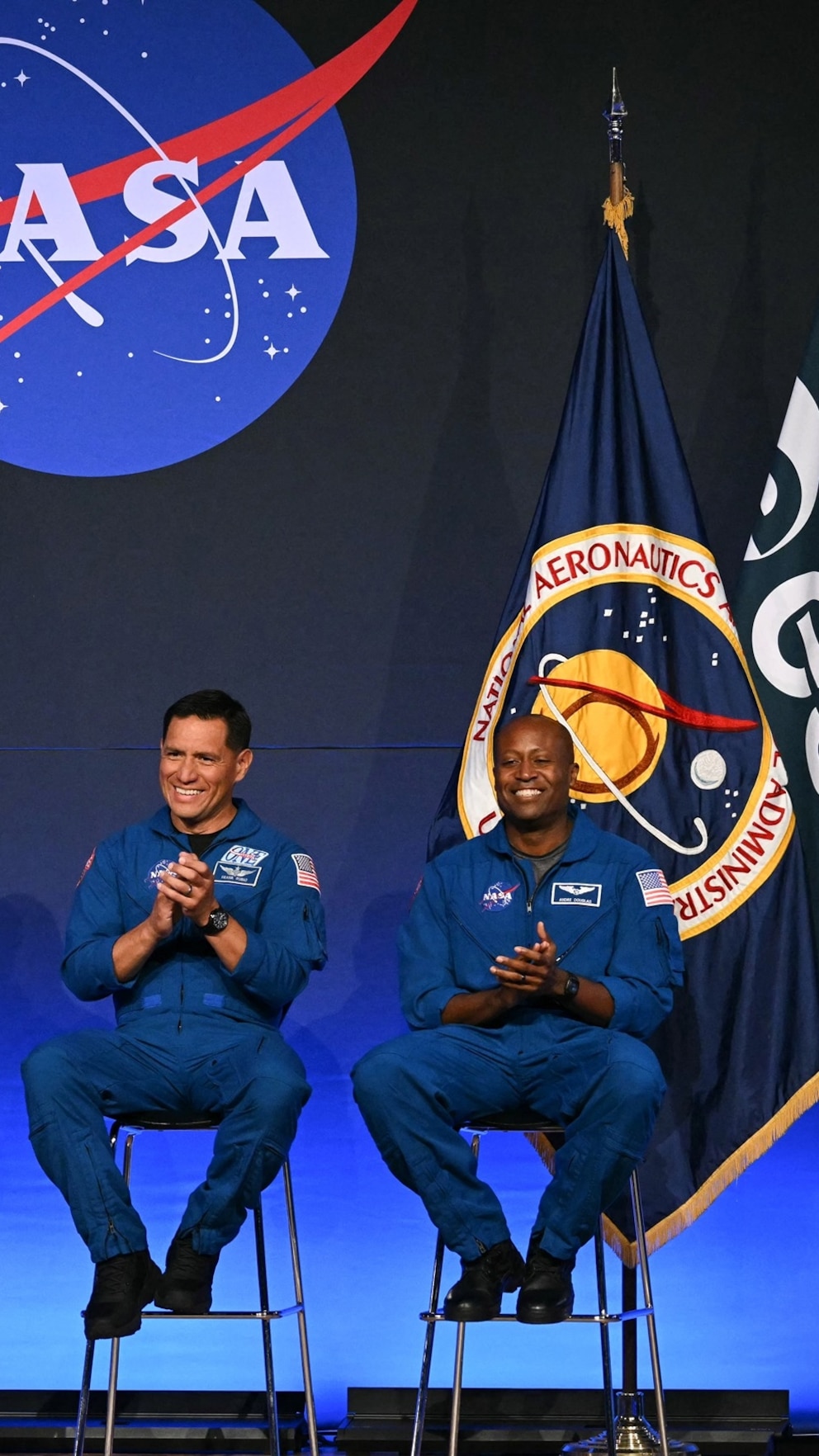
The crew includes three Americans and an Italian astronaut in the European Astronaut Corps for the European Space Agency: NASA astronaut and commander Randy Bresnik, ESA astronaut and pilot Luca Parmitano of Italy, and NASA astronauts and mission specialists Frank Rubio and Andre Douglas, NASA officials announced.
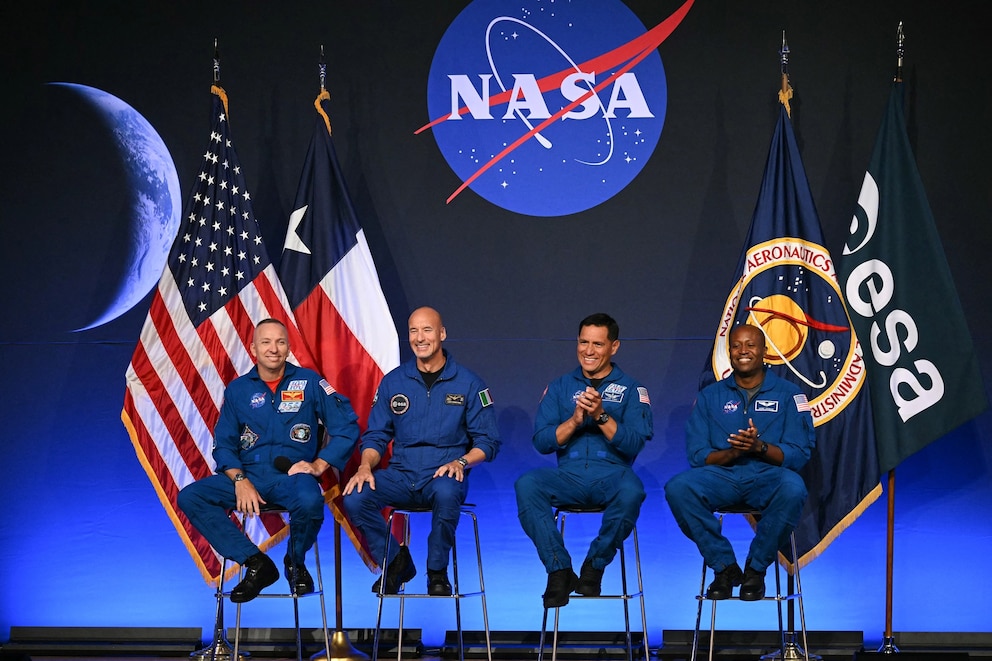
Another NASA astronaut, Bob Hines, was named as a backup crew member and will also train with the four astronauts.
"This mission is going to captivate the world and bring us Earth joy," Vanessa Wyche, director of NASA's Johnson Space Center, said during an event announcing the crew.
During the event, Artemis II Commander Reid Wiseman symbolically passed a baton to Bresnik while joined by other members of the Artemis II crew.
"The world watched your mission, and over the course of those 10 days, we saw how you inspired people worldwide. You saw how something was ignited within people, it was ignited within all of us by watching your mission," Bresnik told them, referring to the baton as an "Olympic torch" that the Artemis II crew lit. "We, the Artemis III crew, are honored to be able to carry this torch forward, to be able to execute our mission, to make that flame burn brighter and pass it on."
Bresnik joined his fellow crew members in thanking their families, NASA and the European Space Agency for the "opportunity to represent all of humanity" on the mission.
"My brain, it is going a mile a minute right now, but my heart, my heart, it is so warm. It is so full," Douglas said.
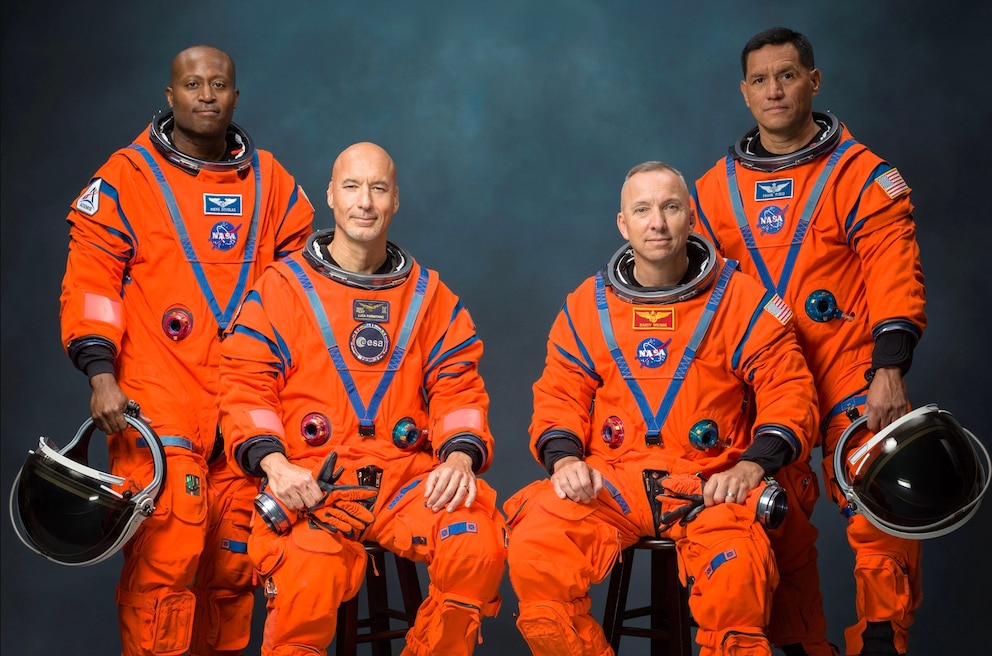
Wyche said the "extraordinary crew" will "lead humanity's next steps toward the moon."
"The incredible crew of Artemis II was just the beginning, and they did an absolutely outstanding job," NASA Administrator Jared Isaacman said during Tuesday's event, saying that crew "showed us the moon again, and they showed us the Earth again."
The Artemis II crew was the first to launch on the Space Launch System rocket and test the Orion spacecraft. The Artemis III mission will do the same, but joined by rockets and lunar landers from Blue Origin and SpaceX.
"This mission will be one of the most complex that NASA has undertaken," NASA Flight Operations Director Norm Knight said Tuesday.
The Artemis III mission is expected to last around two weeks and "is deliberately designed to take calculated risk so that future crews will be safer and ultimately successful when we put boots on the lunar surface," Jeremy Parsons, acting assistant deputy associate administrator for NASA's Moon to Mars Program Office, said during Tuesday's event.
The four astronauts will train for their mission over the next year and "ensure the lessons learned from the prior crew are implemented and assist in the development of the landers and operational procedures that will be necessary for their colleagues on future Artemis missions," Isaacman said.
The crew will fly in low Earth orbit on a circular trajectory around Earth and test rendezvous and docking capabilities between the Orion spacecraft and commercial landers from Blue Origin and SpaceX, which is necessary for landing astronauts on the moon, NASA said. The astronauts will spend several days in docked operations, during which they will operate the lander and "get critical test of the life support systems that can only be done in space."
Updates slated for the upcoming mission include a new docking system, an improved heat shield and updated communication technologies to "improve our data exchange between Orion and the ground," Parsons said.
The announcement comes nearly two weeks after one of Blue Origin's New Glenn rockets exploded on the launch tower during a static fire test, destroying the vehicle and damaging the launch site.
Parsons said that despite the "anomaly," they are "confident" that the rocket, which is needed to get the lander into orbit, will be ready for the Artemis III mission. John Couluris of Blue Origin also said Tuesday they expect the lander to be ready for launch in 2027.
Artemis III was originally planned to be a crewed trip to the lunar surface, but Isaacman said in February that the schedule had changed.
It came on the heels of a report from the Aerospace Safety Advisory Panel, which evaluates NASA's safety performance and offers recommendations on improving said performance. The panel's report deemed the previous Artemis III timeline as "high risk."
The test flights under the Artemis program are building toward a lunar surface mission by 2028.
Artemis III follows the successful Artemis II mission, which completed a 10-day journey around the moon in April of this year.
The four-person crew traveled nearly 700,000 miles and looped around the far side of the moon for the first time in more than 50 years.
Following splashdown, Isaacman told ABC News that Artemis II is just the first step toward the goal of establishing a permanent base on the moon and eventually sending astronauts to Mars.
Wiseman, Victor Glover and Christina Hammock Koch of NASA and Jeremy Hansen of the Canadian Space Agency made up the Artemis II crew. Koch was the first woman and Glover was the first person of color to travel around the moon.
This is a developing story. Please check back for updates.