Astronomers catch rare glimpse of interstellar comet 3I/ATLAS as it flies by Mars
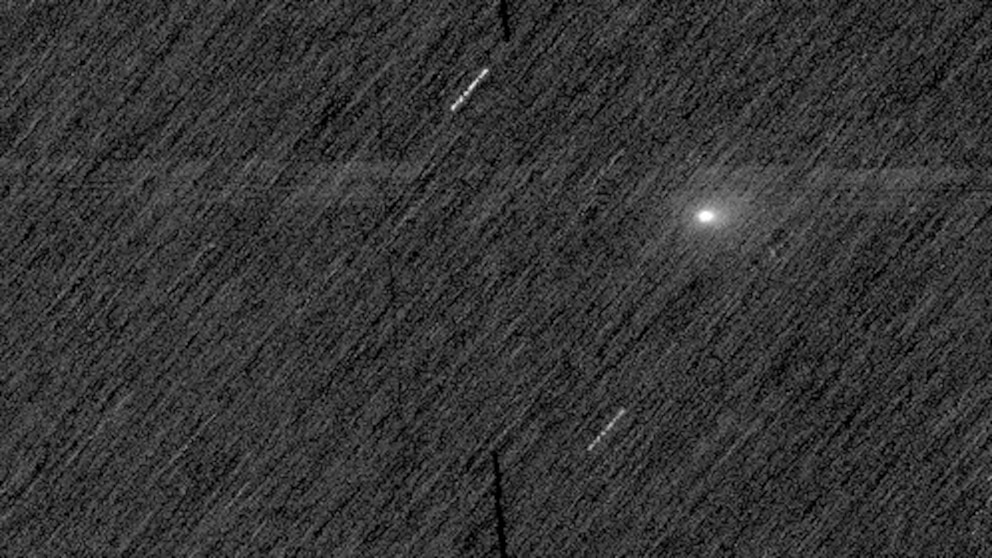
Astronomers just caught a rare glimpse of an interstellar comet as it zoomed past Mars.
Images of the object, dubbed 3I/ATLAS, were captured by two of the the European Space Agency's Mars orbiters -- ExoMars and Mars Express -- which were able to record the comet as it approached the Red Planet on Oct. 3, according to the ESA.
Both cameras are designed to photograph the bright surface of Mars, which lies fewer than 200 miles below.
"Scientists were unsure what to expect from observations of a relatively dim target so far away," the space agency said.
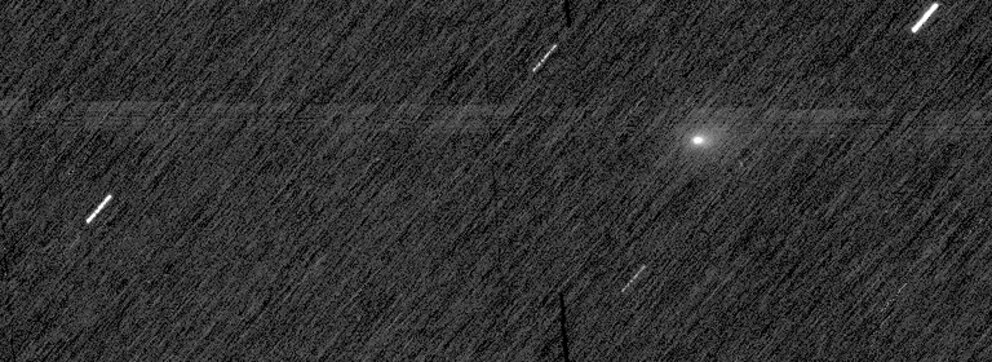
The observation of 3I/ATLAS was "very challenging" for the cameras because the comet is about 10,000 to 100,000 times fainter than their usual targets, said Nick Thomas, the principal investigator of the CaSSIS camera, in a statement.
The comet was about 18.6 million miles away from the orbiters when the image was taken, according to the ESA.
The cameras were able to capture the center of the comet, which is comprised of an icy-rocky nucleus and its surrounding coma, the fuzzy halo of gas and dust that forms around its nucleus.
The comet is one of only three interstellar objects ever recorded entering our solar system.
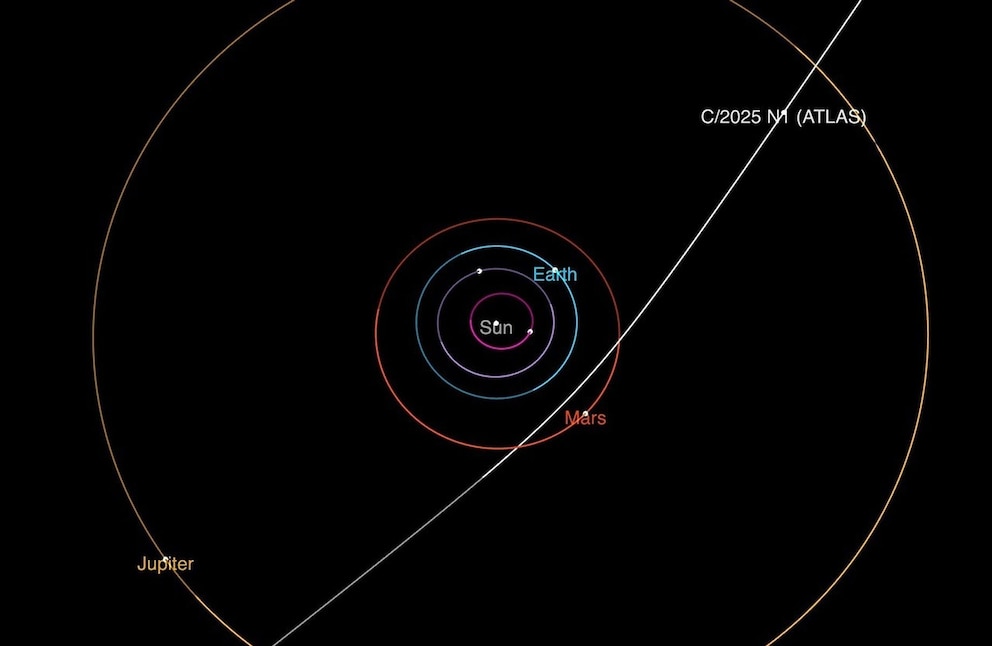
It was first spotted on July 1 by the Asteroid Terrestrial-impact Last Alert System in in Río Hurtado, Chile. Astronomers hypothesize that it could be the oldest comet ever observed, estimating its age at 3 billion years older than the solar system.
Scientists announced last month that the comet is much larger than previously thought, likely weighing more than 33 billion tons and with a nucleus mostly comprised of carbon dioxide gas and water ice.
Heat and radiation from the sun is "bringing the comet to life," causing the object to release the gas and dust that form the comet's coma, the space agency said.
In November, ESA astronomers will observe 3I/ATLAS through its Jupiter Icy Moons Explorer (Juice) as it makes its closest approach to the sun.
Scientists will continue to analyze data from ESA's orbiters to determine exactly what the comet is made of.
"Though our Mars orbiters continue to make impressive contributions to Mars science, it’s always extra exciting to see them responding to unexpected situations like this one," said Colin Wilson, Mars Express and ExoMars project scientist at ESA, in a statement. "I look forward to seeing what the data reveals following further analysis."