• Video
  • Shop
  • Culture
  • Family
  • Wellness
  • Food
  • Living
  • Style
  • Travel
  • News
  • Book Club
  • Newsletter
  • Privacy Policy
  • Your US State Privacy Rights
  • Children's Online Privacy Policy
  • Interest-Based Ads
  • Terms of Use
  • Do Not Sell My Info
  • Contact Us
  • © 2026 ABC News
  • News

'What he ate': Inside the meticulously planned operation to capture Maduro
Live
ABC News Illustration
ABC News Live
Str/AFP via Getty Images
ByLuis Martinez
January 03, 2026, 9:00 PM

Gen. Dan Caine, chairman of the Joint Chiefs of Staff, provided a very detailed account of how the U.S. military’s mission to apprehend Nicholas Maduro and his wife took place early Saturday morning.

Here are highlights:

The mission was called Operation "Absolute Resolve."

Caine said that more than 150 aircraft were involved, including fighter aircraft, bombers, surveillance aircraft, intelligence aircraft, and helicopters. He said the entire joint force was involved in the mission (Army, Navy, Air Force, Marines, Space Force, intelligence agencies).
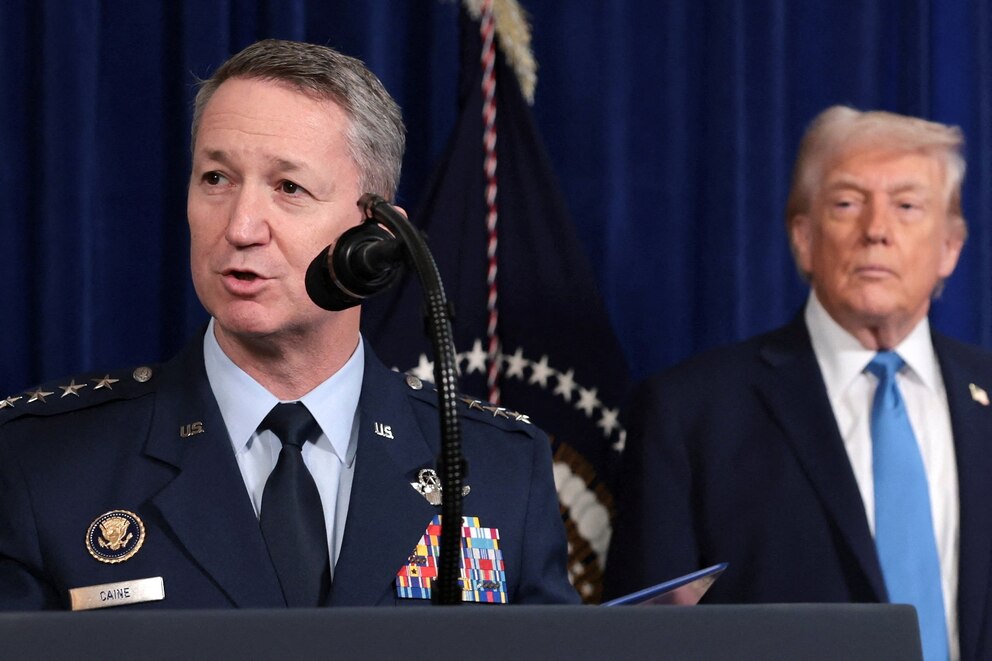
PHOTO: General Dan Caine, Chairman of the Joint Chiefs of Staff, speaks from Trump's Mar-a-Lago club in Palm Beach, Fla., on Jan. 3, 2026.
General Dan Caine, Chairman of the Joint Chiefs of Staff, speaks as President Donald Trump looks at him during a press conference following a U.S. strike on Venezuela where President Nicolas Maduro and his wife, Cilia Flores, were captured, from Trump's Mar-a-Lago club in Palm Beach, Fla., on Jan. 3, 2026.
Jonathan Ernst/Reuters

Related Articles

Venezuela live updates: Trump says US 'going to run the country' after Maduro capture

The aircraft involved were:

-- Fighters: F-35s, F/A-18s, E/A-18s, F-22s

-- Bombers: B-1 bombers

-- Unmanned aircraft and E-2 Hawkeyes

He said the aircraft took off from 20 different bases on land at at sea and that support aircraft were involved as well.
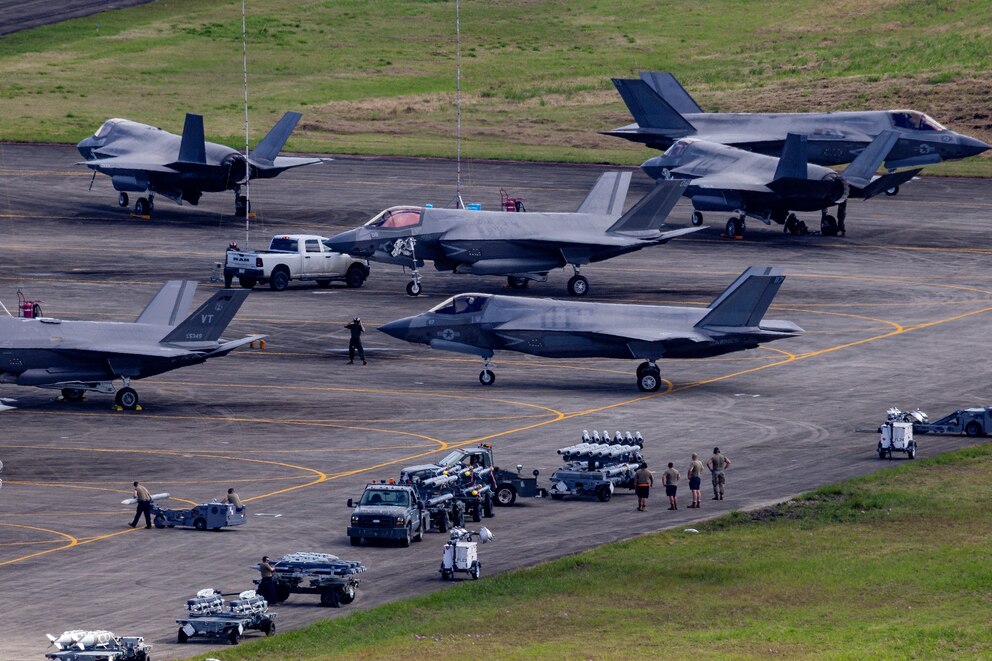
PHOTO: U.S. Air Force F-35 Lightning II fighter jets taxi on the tarmac at the former Roosevelt Roads naval base, after President Donald Trump said the U.S. captured Venezuela President Nicolas Maduro, in Ceiba, Puerto Rico, January 3, 2026.
U.S. Air Force F-35 Lightning II fighter jets taxi on the tarmac at the former Roosevelt Roads naval base, after President Donald Trump said the U.S. has struck Venezuela and captured its President Nicolas Maduro, in Ceiba, Puerto Rico, January 3, 2026.
Eva Marie Uzcategui/Reuters

President Donald Trump gave the order to undertake the mission at 10:46 p.m. Friday night, Caine said. He said the president's message of "Good luck and Godspeed" was communicated to the entire force.

The extraction force that captured Maduro and his wife included law enforcement.
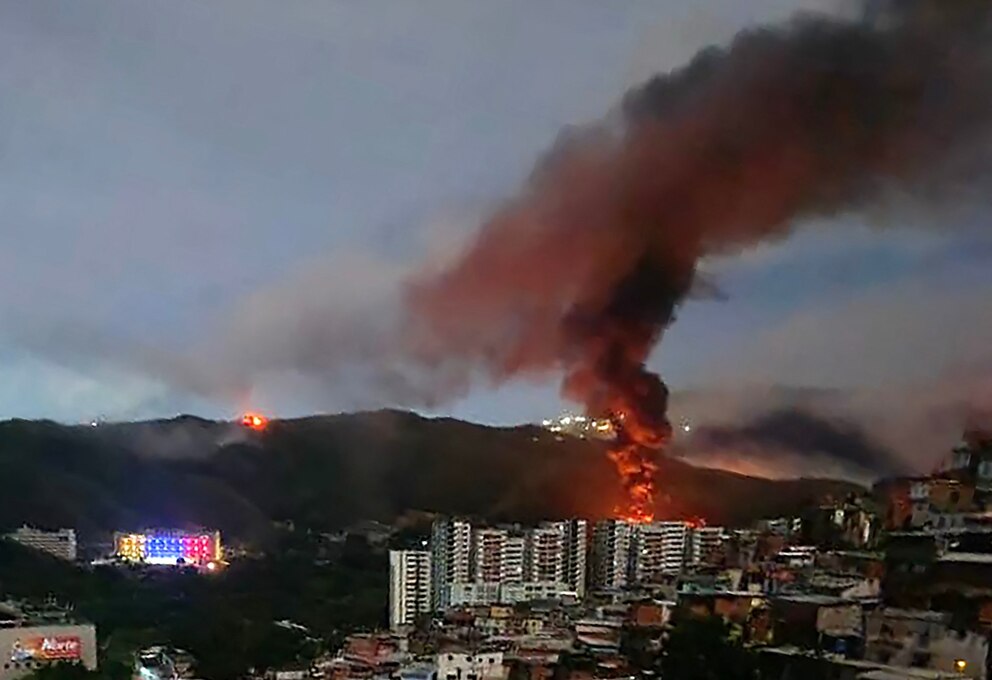
PHOTO: VENEZUELA-US-CONFLICT-CRISIS
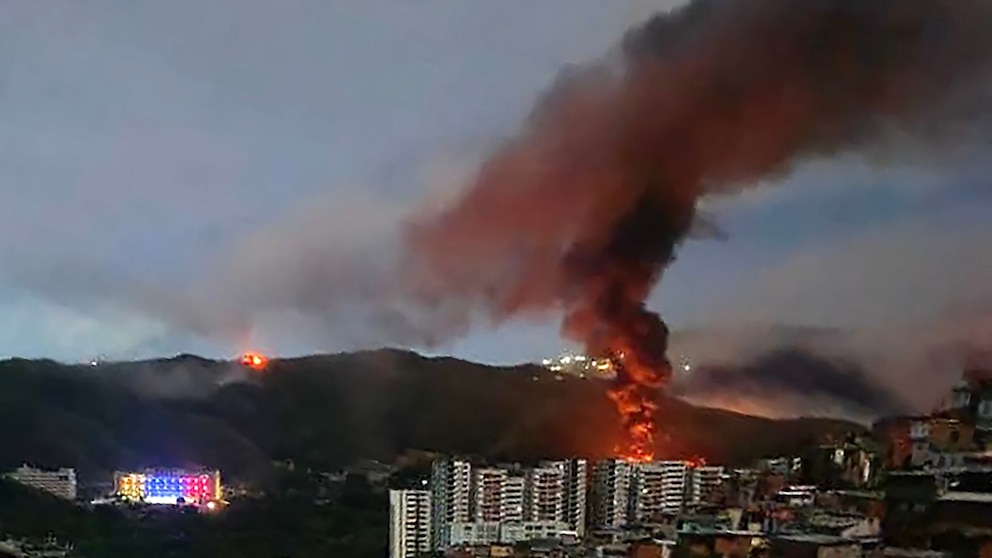
Fire at Fuerte Tiuna, Venezuela's largest military complex, is seen from a distance after a series of explosions in Caracas on January 3, 2026. The United States military was behind a series of strikes against the Venezuelan capital Caracas on Saturday, US media reported. The White House and Pentagon have not commented on the explosions and reports of aircraft over the city. US media outlets CBS News and Fox News reported unnamed Trump administration officials confirming that US forces were involved.
Str/AFP via Getty Images

Related Articles

Why Venezuela? Trump's shifting explanations about military buildup

The helicopters carrying the force flew at an altitude of 100 feet above the water as they approached Venezuela.

As they came near, air defense systems were disabled to ensure the safe passage of the helicopters to Maduro’s compound, Caine said.  
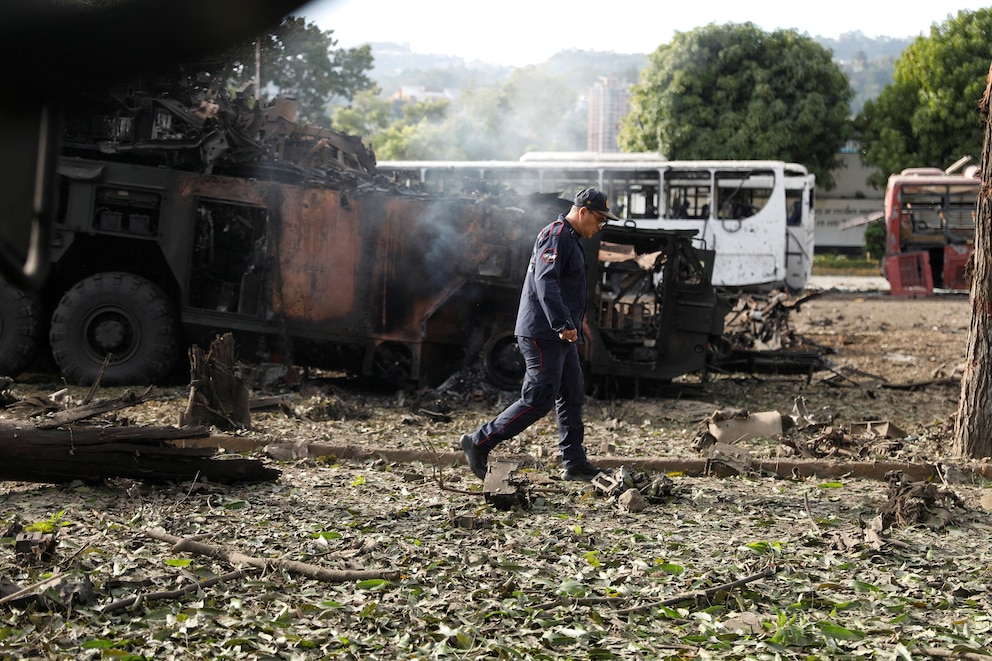
A firefighter walks past a destroyed anti-aircraft unit at La Carlota military air base, after President Donald Trump said the U.S. has struck Venezuela and captured its President Nicolas Maduro, in Caracas, Venezuela, January 3, 2026.
Leonardo Fernandez Viloria/Reuters

The helicopters arrived at the compound at 1:01 a.m. Eastern time, 2:01 a.m. local time. 

Upon arrival, they came under fire and responded in self-defense with "overwhelming force," Caine said.  

One of the helicopters was hit, but remained flyable.
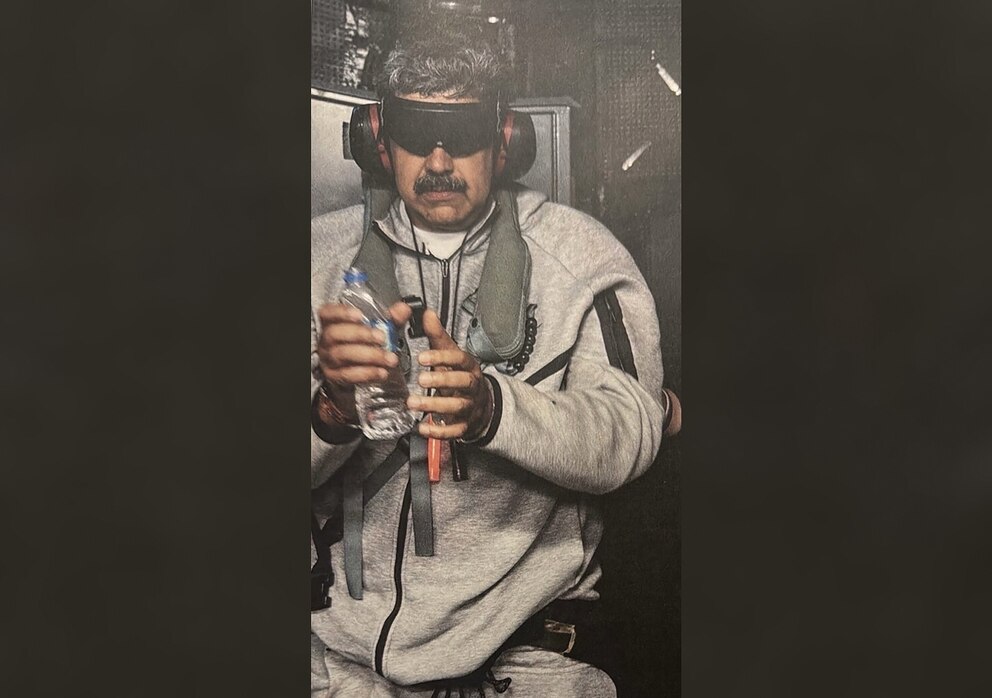
In this photo posted to social media by President Donald Trump, Venezuelan President Nicolas Maduro is shown in U.S. custody, on Jan. 3, 2026.
@realDonaldTrump/Truth Social

Maduro and his wife were taken into custody by Justice Department officials "assisted by incredible U.S. military" forces with "no loss of life," Caine said. He did not provide any details of any injured Americans.

When the helicopters left the compound, they were protected by fighter aircraft and drones that provided suppressive fire.

The extraction force was over water at 3:39 a.m. Eastern time, Caine said.

Maduro and wife were then taken to the USS Iwo Jima.

Venezuela's Vice President Delcy Rodriguez, in a call to state TV Saturday morning, said that "innocent people" had died, but gave no specifics, and didn't address during a later speech.

Caine said the mission was "meticulously planned" and was "the culmination of months of planning and rehearsals."

"We think we develop, we train, we rehearse, we debrief, we rehearse again and again, not to get it right, but to ensure that we cannot get it wrong. Our jobs are to integrate combat power so when the order comes, we can deliver overwhelming force at the time and the place of our choosing against any foe anywhere in the world," he said.
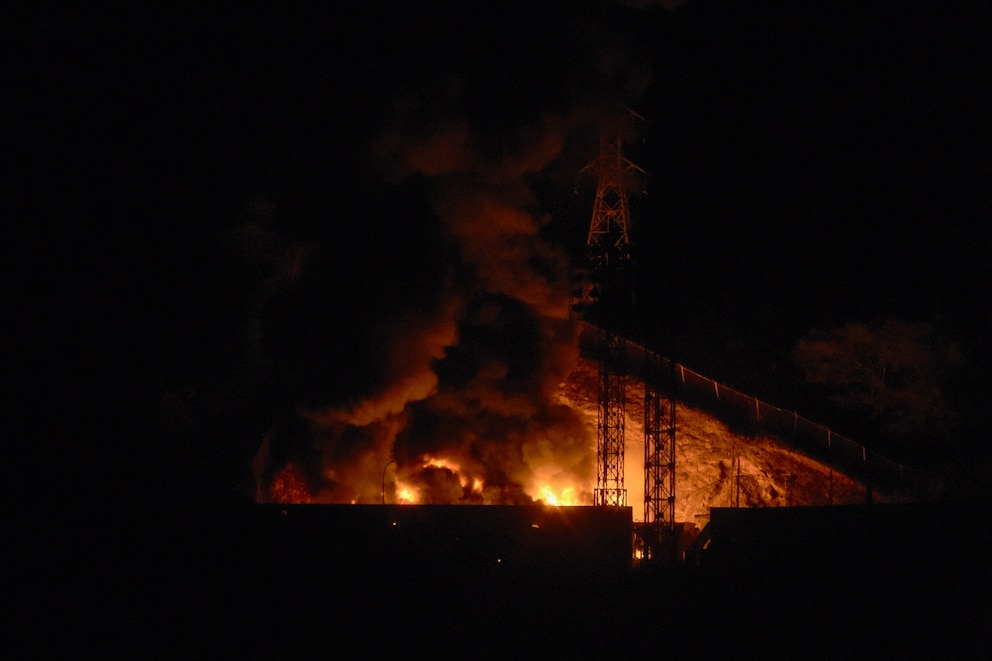
PHOTO: VENEZUELA-US-CONFLICT-CRISIS
Picture of fire at Fuerte Tiuna, Venezuela's largest military complex, after a series of explosions in Caracas on January 3, 2026. Loud explosions, accompanied by sounds resembling aircraft flyovers, were heard in Caracas around 2:00 am (0600 GMT) on January 3, an AFP journalist reported. The explosions come as US President Donald Trump, who has deployed a navy task force to the Caribbean, raised the possibility of ground strikes against Venezuela.
Luis Jaimes/AFP via Getty Images

Related Articles

Republicans largely back Trump on Venezuela action, Democrats decry it as unjustified

The military worked closely with the U.S. intelligence agencies: CIA, NGA, NSA. "We watched, we prepared, we remained patient and professional," said Caine.

U.S. intelligence knew Maduro’s pattern of life -- where he moved, lived, traveled, ate, and worked, he said.

The mission was ready in early December waiting for the right day to maximize the element of surprise, he said.

ABC News' Aicha Elhammar contributed to this report.
Up Next in News—

Woman speaks out after South Carolina deputy rescues her from burning car: 'Guardian angel'

June 5, 2026

'Extremely intelligent' bear that attacked 4 escapes capture in Japan

June 5, 2026

'Teen takeovers' prompt police responses across the country

June 5, 2026

Truck driver describes helping save young woman from alleged kidnapping

June 4, 2026

Shop GMA Favorites

ABC will receive a commission for purchases made through these links.

Sponsored Content by Taboola

The latest lifestyle and entertainment news and inspiration for how to live your best life - all from Good Morning America.
  • Contests
  • Terms of Use
  • Privacy Policy
  • Do Not Sell My Info
  • Children’s Online Privacy Policy
  • Advertise with us
  • Your US State Privacy Rights
  • Interest-Based Ads
  • About Nielsen Measurement
  • Press
  • Feedback
  • Shop FAQs
  • ABC News
  • ABC
  • All Videos
  • All Topics
  • Sitemap

© 2026 ABC News
  • Privacy Policy— 
  • Your US State Privacy Rights— 
  • Children's Online Privacy Policy— 
  • Interest-Based Ads— 
  • Terms of Use— 
  • Do Not Sell My Info— 
  • Contact Us— 

© 2026 ABC News