• Video
  • Shop
  • Culture
  • Family
  • Wellness
  • Food
  • Living
  • Style
  • Travel
  • News
  • Book Club
  • Newsletter
  • Privacy Policy
  • Your US State Privacy Rights
  • Children's Online Privacy Policy
  • Interest-Based Ads
  • Terms of Use
  • Do Not Sell My Info
  • Contact Us
  • © 2026 ABC News
  • News

Australian Team Finds What Could Be World's Largest Asteroid Impact Spots
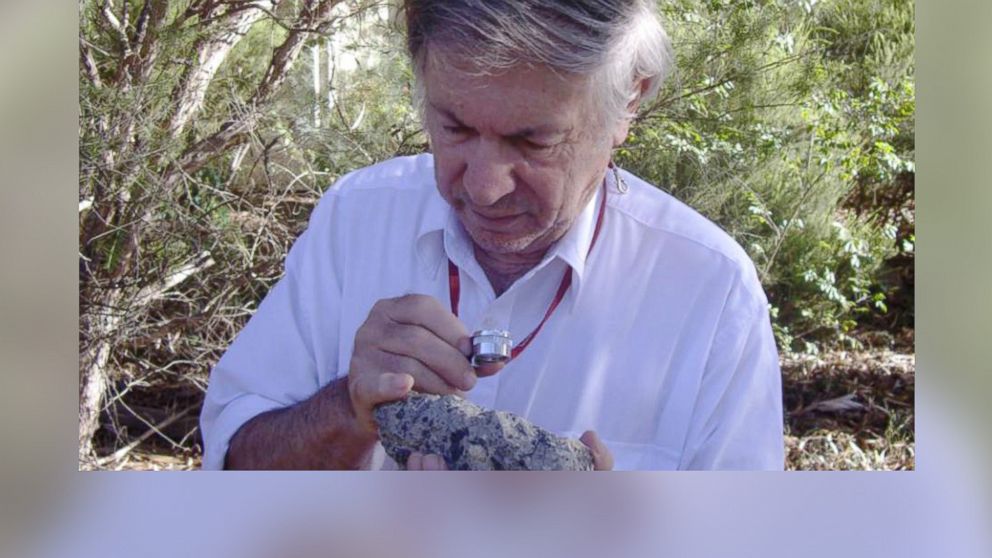
Australian National University's Dr. Andrew Glikson is pictured with a sample of suevite, a rock with partially melted material formed during an impact.
D. Seymour
ByALYSSA NEWCOMB
March 23, 2015, 7:51 PM

— -- Two deeps scars discovered in the Australian Outback are believed to be the site of one of the largest asteroid impacts ever.

The twin marks are believed to be indicators of what was once a 250-mile impact zone marking the moment the asteroid split into two pieces before impact, according to a study published in the journal Tectonophysics.

Related Articles

Incredible First Look Inside Huge Crater at 'End of the World'

Related Articles

Inside the Science of Sinkholes

Related Articles

Meet the Fearsome 'Carolina Butcher' That Ruled Before Dinosaurs

"It's a mystery -- we can't find an extinction event that matches these collisions. I have a suspicion the impact could be older than 300 million years," Andrew Glikson, lead researcher and a professor at Australian National University, said in a statement.

For example, evidence suggests a massive asteroid collision 65 million years ago led to the mass extinction of dinosaurs.

While the craters in the Australian outback have been covered over the course of time, the discovery came during a geothermal research project as a team drilled deep into the Earth's crust.

What they found were remnants of rocks that had been turned into glass, hinting at the possibility of an extreme event that changed the composition of the rocks.

Researchers looked even closer and found more evidence from Earth's crust.

"There are two huge deep domes in the crust, formed by the Earth’s crust rebounding after the huge impacts, and bringing up rock from the mantle below," Glikson said.

Researchers said the date of the impacts is unclear, however they have evidence from surrounding rocks that that puts it at 300 million to 600 million years old.

Most confusing of all is that there is no evidence surrounding the rocks of a mass extinction, leading scientists to have more questions than answers.

Up Next in News—

'Rogue' AI agent went haywire at tech company. The CEO is still 'bullish' on the technology

April 29, 2026

King Charles III gives toast at White House state dinner: Read his full speech

April 29, 2026

This San Francisco shop is run completely by an AI agent

April 23, 2026

Mother charged after teen son allegedly hits and injures 81-year-old veteran while riding e-motorcycle

April 23, 2026

Shop GMA Favorites

ABC will receive a commission for purchases made through these links.

Sponsored Content by Taboola

The latest lifestyle and entertainment news and inspiration for how to live your best life - all from Good Morning America.
  • Contests
  • Terms of Use
  • Privacy Policy
  • Do Not Sell My Info
  • Children’s Online Privacy Policy
  • Advertise with us
  • Your US State Privacy Rights
  • Interest-Based Ads
  • About Nielsen Measurement
  • Press
  • Feedback
  • Shop FAQs
  • ABC News
  • ABC
  • All Videos
  • All Topics
  • Sitemap

© 2026 ABC News
  • Privacy Policy— 
  • Your US State Privacy Rights— 
  • Children's Online Privacy Policy— 
  • Interest-Based Ads— 
  • Terms of Use— 
  • Do Not Sell My Info— 
  • Contact Us— 

© 2026 ABC News