Baby white sharks can't tell difference between humans and seals: Study
Swimmers beware: Hungry sharks do think you're food.
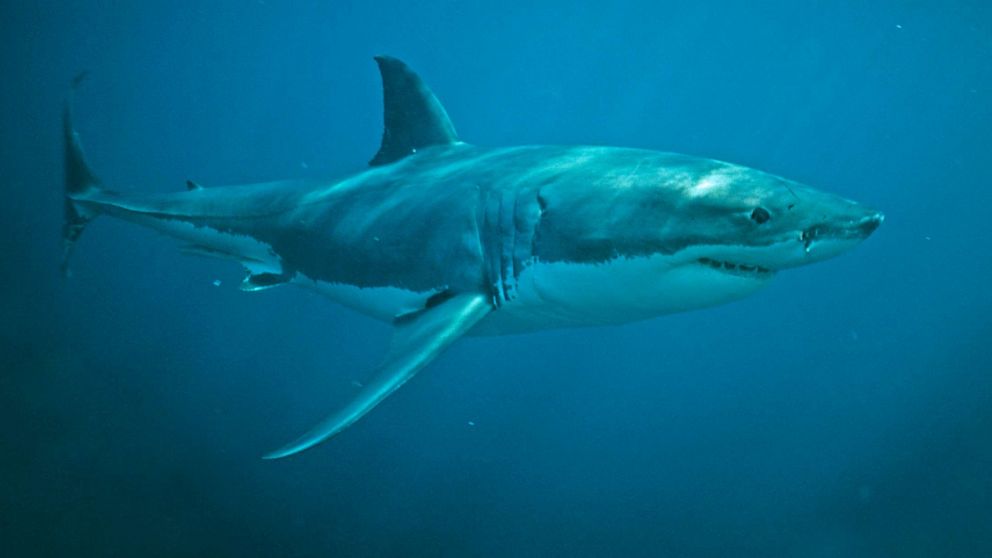
Young white sharks, which are responsible for the majority of attacks on people, can't distinguish between humans and seals, according to new research.
To test the theory of "mistaken identity theory" behind shark bites, researchers in Australia compared video footage of typical prey with images of humans swimming and paddling surfboards from the perspective of a juvenile white shark.
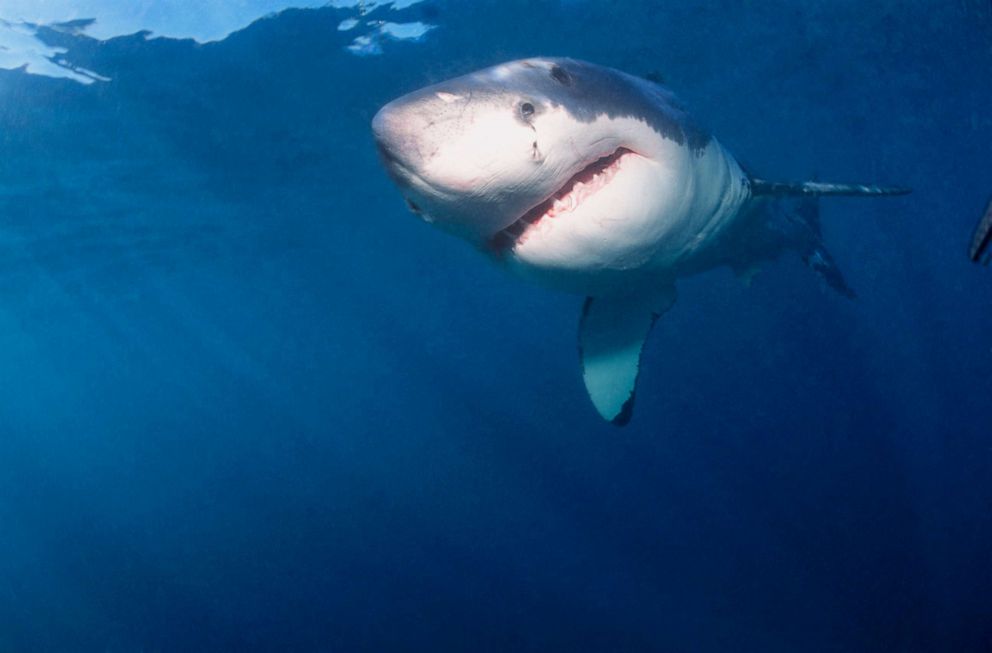
The researchers designed a virtual visual system based on what's known about the vision of juvenile white sharks and viewed the images of the swimmers and prey using that filter, Laura Ryan, a neurobiologist at Macquarie University in Sydney and author of the study, told ABC News.
Researchers found the sharks could not distinguish between the motion cues or shapes of the prey and humans, proving that humans and seals look "dangerously similar" from a shark's perspective, according to the study, published Tuesday in the Royal Society Journals. The researchers also found that, to juvenile sharks, swimmers and paddling surfers appeared similar to that of seals with their flippers abducted.

Sharks have lower spatial resolution than humans, meaning they don't see in as much detail, and they're colorblind, Ryan said, adding that scientists hypothesize that as younger sharks mature, they become more experienced hunters and rely more on other sensory cues.
"So, potentially, these older adults are more experienced, enhanced, so they might not make as many mistakes," she said. "Also, as an animal grows, its eye gets bigger, and so that means that their spatial acuity gets bigger, so they are able to distinguish a bit more detail."
Ryan emphasized that the researchers studied "unprovoked" attacks, such as those on swimmers and surfers, whereas a provoked shark attack may be defensive or aggressive disturbance in response to a direct disturbance by a human, such as a diver touching a shark or someone spear fishing.
White sharks, bull sharks and tiger sharks are the species responsible for the most injuries and fatal bites, according to the study.
One of the reasons the researchers embarked on this study is to help the "public perception" of sharks, Ryan said.
Shark bites, while rare, can have "devastating" effects on victims and first responders, and they can harm local businesses if tourism declines, according to the study. Bites also have negative consequences for shark populations, as they often result in the implementation of lethal shark mitigation measures.
Ryan added that researchers are studying some non-invasive mitigation efforts, such as changing the visual cues on surfboards -- using an LED counter-illumination to change the silhouette shape of the surfboard from below -- to reduce or prevent shark bites.