Bike Sharing's Latest Success Is in NYC's Jammed Streets
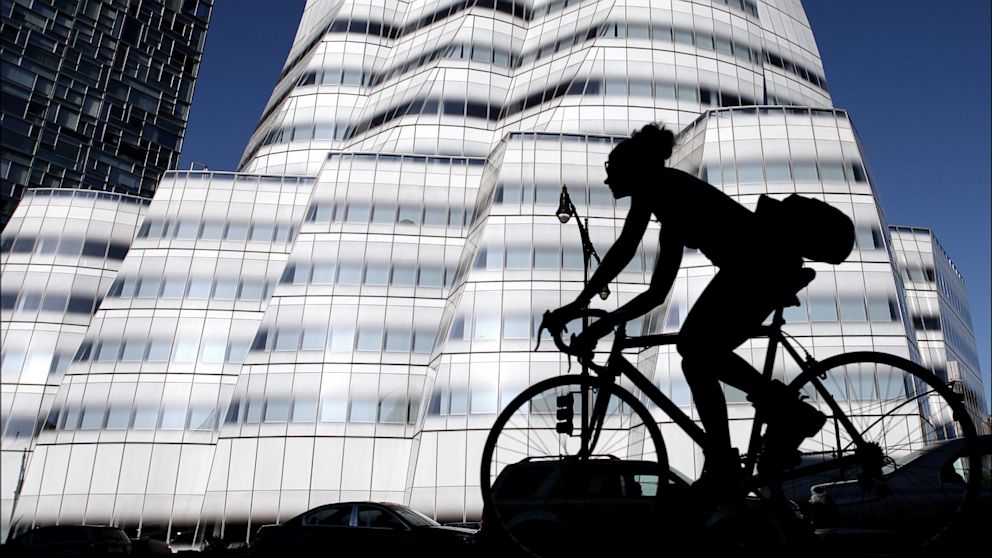
July 8, 2013 — -- A little over a month after New York City launched its bike sharing program, it has become so popular that many bike racks in midtown Manhattan are often empty during week day rush hours.
Manhattan bike lanes that were long an urban curiosity are now busy with guys in suits and women in office clothes pedaling the blue Citibikes, at times blowing whistles or just yelling for people to get out of their lane.
The apparent instant success of New York's bike sharing program is mimicking the welcome that similar programs have experienced in other cities.
In fact, the idea of sharing public bikes has become so popular that they are becoming must-have amenities for cities.
"The success of bike shares in cities like Washington DC, Boston, Montreal and Toronto makes it clear that for cities that want to be competitive and want to be providing better service for their citizens they will be offering bike share programs," said Andrew Stober, the chief of staff for the Philadelphia Mayor's Office of Transportation and Utilities.
The clunky, three-speed bikes have quickly become a favorite in New York. Louis Luho, who works for Citibikes, said the stations around the transportation hubs of Grand Central and Times Square are particularly popular during the morning commute. Some of the bigger bike racks are emptied of their wheels as early as 7 a.m.
Andrew Felbinger, 23, rides a Citibike to work "every day that it's not raining" from his apartment on Manhattan's East Side to his midtown financial job.
While finding a bike to get to work is easy, "it's a lot harder in midtown finding a bike back," he said.
Besides the outdoor time Felbinger finds it's cheaper than buying a monthly subway pass.
Avoiding the subways and city's cabs are big factors in the bikes' popularity. Even Gary Roth, who works for the city's Transit Authority, uses a Citibike most days to avoid the subways.
Citibikes has 54,000 annual members and since launching on May 27 has sold an additional 75,500 daily passes and 9,000 weekly passes.Its bikes have been unhooked from racks 750,000 times so far and users have pedaled 2 million miles, spokesman Nicholas Mosquera said.
"We knew New Yorkers were excited for bike share and clearly it struck a chord," Mosquera said.
The bikes have struck a chord in other cities as well.
Chicago rolled out 69 bike stations on June 28, and plans to have 400 stations by next year. San Francisco will launch its program in August, Phoenix has announced plans to implement one this December, and Philadelphia and Portland, Ore., are planning theirs for 2014.
Boston was one of the first cities to launch bike sharing in 2011 and the original plan anticipated having 5,000 people using the bikes. Instead, there are 7,500 bikers.
"We exceeded all our projections for ridership and membership," Nicole Freedman, who heads the Boston Bike Sharing program, told ABCNews.com. "I was surprised how many commuters actually took to it."
Washington D.C. began its program in 2008 with 120 bikes and 10 stations. It has expanded to 1,800 bikes and more than 200 stations.
Officials affiliated with these programs attribute the popularity to a wide range of factors, from economic to environmental. In addition to promoting sustainability and a healthy lifestyle, Freedman cited the economic benefits. He said 18 bicycle-related companies had moved to Boston since the program began.
William Rub, the director of Houston's bike sharing program, told ABC News that since the program was implemented in full force this past spring, Houston estimates it has reduced its annual carbon emissions by 113,510 pounds. Rub said the Houston bike program has 6,782 members.
For some bikers, these programs may just provide another method of getting around cities without the hassle of hot, sweaty and crowded subway cars.
"I use it on weekends instead of using the subway," said Pablo Virreal, a student at New York University. "I'm doing excercise, and enjoying the view. It takes the same amount of time as a subway."