Border Patrol chief ordered to meet with judge daily on Chicago immigration crackdown
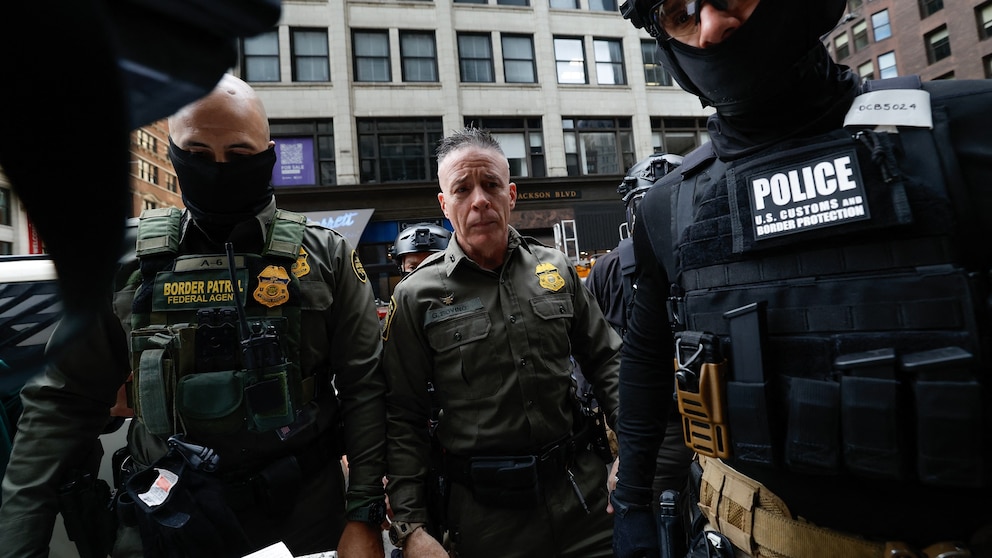
In a face-off on Tuesday with a federal judge, U.S. Customs and Border Patrol commander-at-large Greg Bovino came under questioning about the crowd-control tactics he and his agents are using in their immigration enforcement in Chicago.
With Bovino appearing before her dressed in uniform, Judge Sara Ellis of the U.S. District Court for the Northern District of Illinois ordered him to meet with her in person each weekday at 6 p.m. local time, to report to her on the immigration activities in Chicago that he is spearheading.
The order came after Bovino took the witness stand in Ellis’ courtroom for slightly over an hour in a case focused on the tactics used by federal agents in Chicago during "Operation Midway Blitz," the Trump administration’s high-profile immigration enforcement operation that began in September.
Watch "Nightline" on ABC on Tuesday for special coverage of the federal enforcement actions in Chicago. Also streaming on Disney+ and Hulu.
Tom Jones and Mark Rivera from Chicago ABC station WLS' I-Team contributed to this report.
Ellis opened the hearing by reminding Bovino of the oaths they both took before assuming their public roles.
"My role is not to tell you that you can or cannot enforce validly passed laws by Congress,“ Ellis said.
Ellis scheduled Tuesday's hearing to consider a request by the plaintiffs to ban federal agents from using tear gas in Chicago after raising allegations of multiple violations of a temporary restraining order (TRO) the judge issued this month.
Ellis did the vast majority of the talking during the hearing, including an oral recitation of each provision of her TRO that she first issued on Oct. 9, requiring federal agents to issue at least two advanced warnings when deploying tear gas.
The judge expanded the order on Oct. 16 to include a requirement for federal agents equipped with body-worn cameras to wear them and keep them on during "law enforcement activities" in Chicago.
"My role is simply to see that in the enforcement of those laws that you and the agents operating under you are acting in a manner that is consistent with your obligations under the law, meaning that it is consistent with the Constitution."
For about the first 20 minutes of the hearing, Bovino was not asked by Ellis to speak. Rather, the judge said she wanted to go through each provision of her TRO to clear up any possible misunderstanding of its terms.
"So, I thought it would really be a good idea to go through it to make sure we are on the same page," Ellis said.
Ellis then read aloud each provision of the TRO, which includes restraints on the use of force on journalists and demonstrators, restrictions on the use of riot control measures like tear gas, requirements for the agents to wear identifying information on their uniforms, and mandates that agents be equipped with body-worn cameras to turn them on during enforcement activities.
Ellis noted that the plaintiffs and the public have submitted to her videos taken in recent days that appear to show violations of her TRO, though she acknowledged she did not have all the facts or a complete picture of each incident.
"At least on the videos that I saw -- knowing that I am not there, I am not out in the street -- but it is difficult for me to see that the force being used is necessary to stop an immediate and serious threat” of physical harm to federal agents, she said.
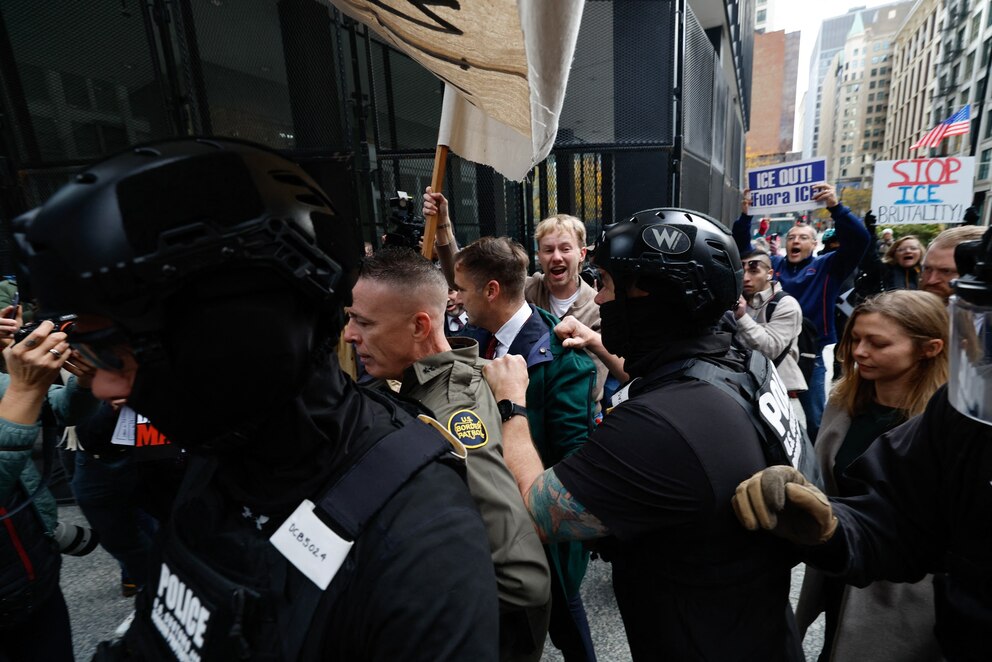
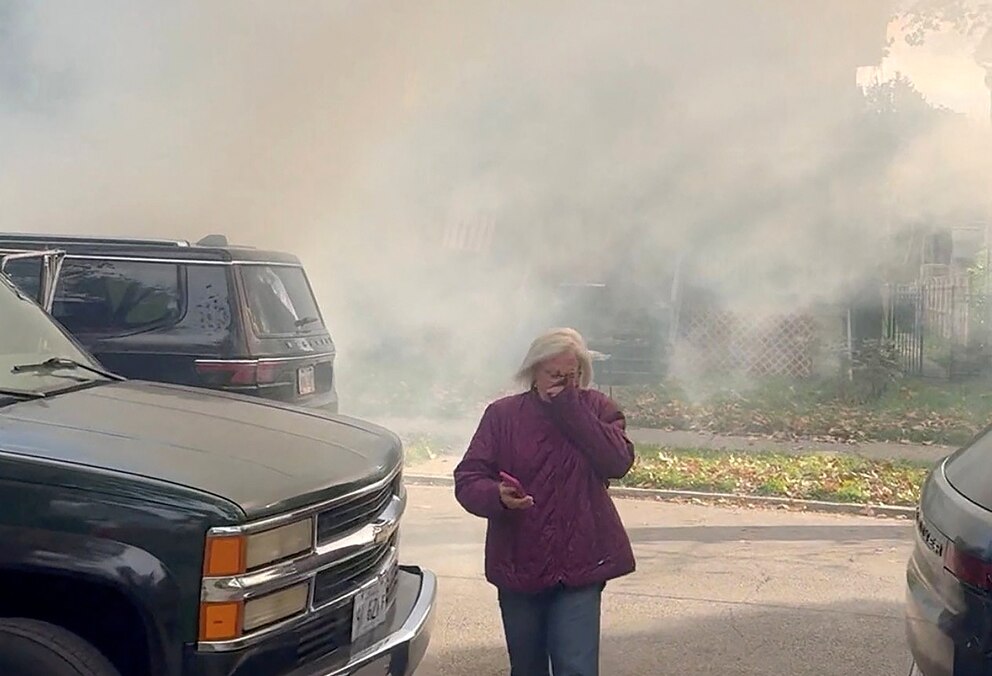
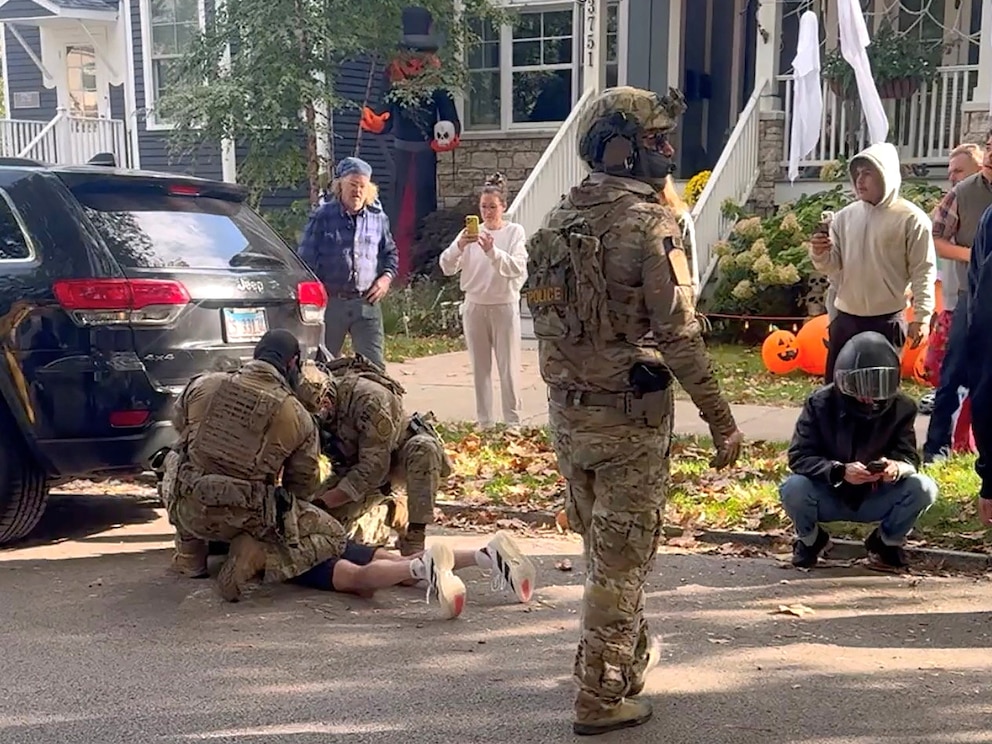
Before posing a single question to Bovino, Ellis went through a series of alleged violations raised by the plaintiffs in court filings over the past several days, including an incident over the weekend in which tear gas was deployed -- allegedly without warning -- in a residential neighborhood as children were preparing for a Halloween parade.
"Kids dressed in Halloween costumes on the way to a parade do not pose an immediate threat to the safety of law enforcement officers. They just don't," she said. "And you can’t use riot control weapons against them."
Ellis then turned to her requirement that agents involved in enforcement activities conspicuously display an identifying number on their uniforms. Ellis asked Bovino what instructions he had given to the agents under his command.
Bovino said he had instructed his agents to clearly display their identifying number somewhere on their uniform, but told the judge that, because of the variance in equipment depending on the assignment, he was unable to instruct agents specifically in each instance where to place the number.
Bovino agreed to instruct agents to place their identifying information "in a conspicuous location that they can choose based on their various kits."
Ellis is presiding over a lawsuit brought by journalists and citizens against the federal government over the immigration enforcement tactics in Chicago.
The plaintiffs argue that the government is "engineering their own pretext for their presence and behavior in Chicago" by "regularly inflicting harm on civilians who are simply protesting" the immigration enforcement operation.
Ellis also asked Bovino if all of the approximately 200 CBP agents participating in Operation Midway Blitz had been issued and trained on body-worn cameras, as her TRO required.
Bovino replied that "99% do." But he acknowledged that some agents rotating in from other sectors may not yet be equipped.
When Ellis asked if Bovino himself had a body-worn camera, Bovino replied that he did not.
"I have not yet received a body-worn camera or the training," Bovino said.
Ellis noted that someone in his position should be able to get a camera issued to him quickly and told him she wanted him to get one by Friday.
"We can get a camera by Friday," Bovino said.
The plaintiffs in the case have alleged that Bovino was personally involved in one incident last week where he allegedly deployed tear gas toward a crowd of protestors, without warning or justification.
A Department of Homeland Security statement claimed that Bovino had been hit in the head with a rock thrown by protestors prior to the deployment of the riot control measures.
Bovino was not asked by Ellis to comment specifically on that incident, but noted that the use of body-worn cameras could be useful to all parties involved.
"The camera is your friend," Ellis said. "If someone is throwing a rock at your head. The camera is going to catch it. If someone is throwing fireworks, the camera is going to catch it."
As Ellis continued to tick through the alleged violations of her TRO raised by plaintiffs, she told Bovino that her requirement to issue warnings before deploying tear gas needs to be very clear and specific that gas will be deployed if demonstrators do not comply with reasonable commands from law enforcement.
"A warning has to include what it is that you’re going to do before you do it," Ellis said.
The judge asked Bovino if he agreed that the incidents, on their face, suggest that her TRO has been violated at least in some instances.
Bovino said he didn’t have all the facts and couldn’t give an answer without more information.
"I believe that each situation is dependent on the situation. I would like to know more about what happened in those various activities," Bovino replied.
Just before excusing Bovino from the witness stand, Ellis asked Bovino twice if "we on the same page?"
"We are on the same page," said Bovino, adding, "We will abide by the restraining order and all the accoutrements that are in there."
In addition to requiring daily reports from Bovino, the judge ordered the government to produce by Friday all use-of-force reports and corresponding body camera video going back to the onset of the operation on September 2.
“I’ll let you get back to work,” Ellis said, upon excusing Bovino, who then left the courtroom.
After Bovino left the courtroom, Ellis denied the plaintiffs' request that she add to her TRO a temporary ban on deployment of tear gas in Chicago.
"I don’t know that we're going to see a whole lot of tear gas being deployed over the next week,” she said, noting that Bovino would be meeting with her "every day at 6 to tell me what happened" under his command.
Ellis emphasized that she was not trying to "tie agents' hands" but said she has the "inherent power to enforce my TRO."
"I know my lane," she said. "And I will stay in my lane. But I'm also not afraid to enforce this TRO. If they are using tear gas, they better be able to back it up. And if they can’t, then they will lose that as something they can use."
An attorney for the Department of Justice, Christopher Lynch, told the court that the government objected to her rulings on Tuesday.
"The agents have been under threat. These have been exigent circumstances,” DOJ attorney Christopher Lynch said. “You have seen one side of the story, but only one side of the story … it is partial and incomplete."
Ellis declined a request from the DOJ to stay her order requiring Bovino’s daily reports.