• Video
  • Shop
  • Culture
  • Family
  • Wellness
  • Food
  • Living
  • Style
  • Travel
  • News
  • Book Club
  • Newsletter
  • Privacy Policy
  • Your US State Privacy Rights
  • Children's Online Privacy Policy
  • Interest-Based Ads
  • Terms of Use
  • Do Not Sell My Info
  • Contact Us
  • © 2026 ABC News
  • News

British explorer's remains found nearly 200 years later under London train station
5:07
News headlines today: Jan. 24, 2019
James O. Jenkins/HS2 via AP
ByMorgan Winsor
January 25, 2019, 11:38 AM

LONDON -- The excavation of a centuries-old cemetery beneath a London train station has led to an exciting discovery: a long-lost British explorer.

The remains of Matthew Flinders, a British Royal Navy captain who led the first expedition to sail around the entire coast of Australia, were found under London's bustling Euston station, according to the company developing a major railway project in the area.

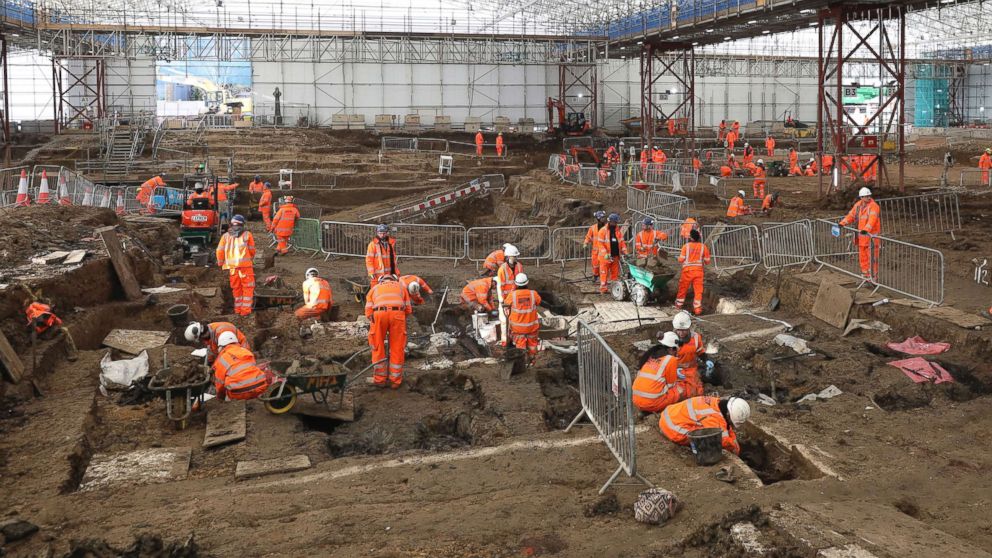
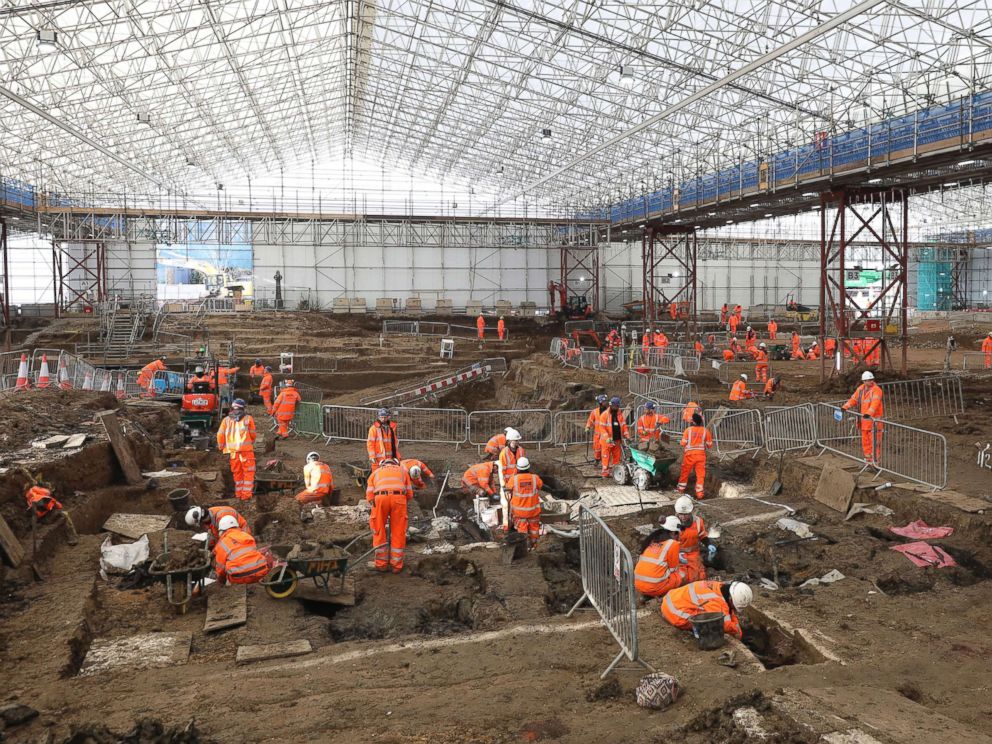
Archaeologists made the discovery earlier this month while exhuming some 40,000 graves in St James's Cemetery, behind the train station, in preparation for the construction of the $70 billion HS2 high-speed rail line that will link the British capital with Birmingham.
Related Articles

(MORE: Identity of pre-Civil War era body found in New York City revealed)

An image taken on Jan. 18, 2019 and issued by HS2 showing a general view of the archaeological excavation and research works at St James's Gardens in Euston, London.
James O. Jenkins/HS2 via AP

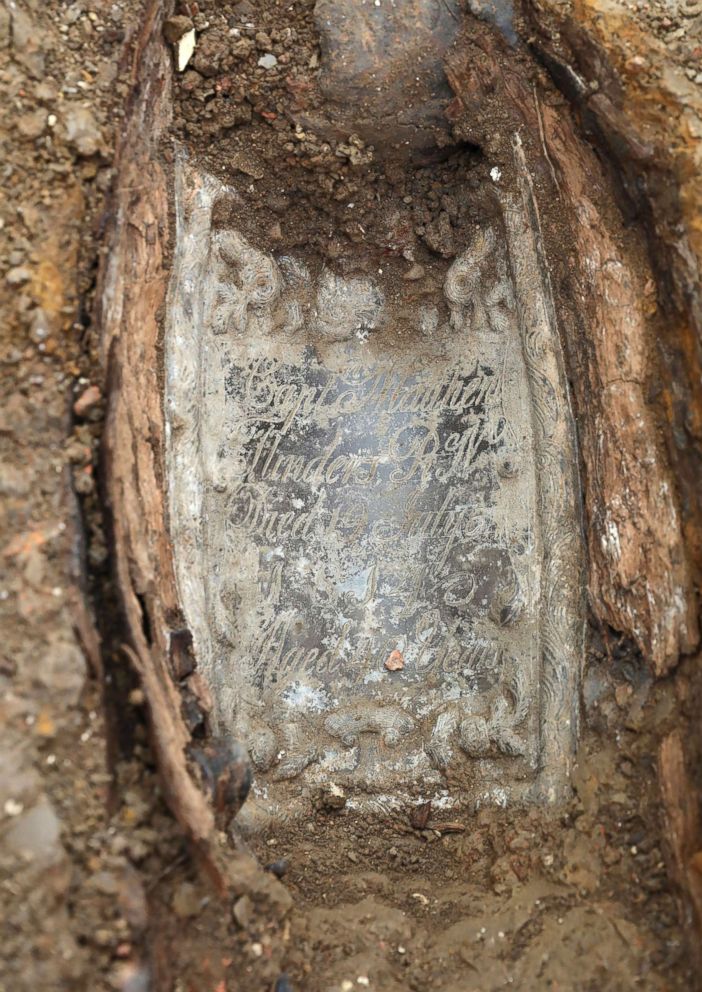
Flinders was buried in the sprawling churchyard in July 1814 after his death at the age of 40. But his grave site was lost in the mid-19th century following the expansion of Euston station into part of the burial ground. Archaeologists were able to identify his remains by the lead plate attached to the top of his coffin, according to a Jan. 22 press release from HS2 Ltd.

"Given the number of human remains at St. James's, we weren’t confident that we were going to find him," Helen Wass, the head of HS2's archeological team, said in a statement. "We were very lucky that Captain Flinders had a breastplate made of lead meaning it would not have corroded. We'll now be able to study his skeleton to see whether life at sea left its mark and what more we can learn about him."
Related Articles

(MORE: How investigators cracked unsolved murder of Harvard graduate student nearly 50 years later)

An image taken on Jan. 18, 2019 and issued by HS2 showing the lead plate placed on top of the coffin of Captain Matthew Flinders at the archaeological excavation and research works at St James's Gardens in Euston, London.
James O. Jenkins/HS2 via AP

Accompanied by a crew and his beloved cat Trim, Flinders led the first circumnavigation of Australia in an epic voyage that lasted from 1801 to 1803. The English navigator and cartographer is credited for identifying the landmass as a continent and giving Australia its name.

An indigenous Australian man called Bungaree, who was among Flinders's crew, is credited with being the first Australian to circumnavigate his native continent, according to Australian national broadcaster ABC.

Up Next in News—

Family seeks answers after influencer Ashlee Jenae is found dead on vacation in Tanzania

April 14, 2026

Couple shares warning after nearly losing down payment in mortgage fraud

April 10, 2026

Student speaks out after train clips school bus in incident caught on camera

April 8, 2026

IRS warns of AI tax collection scams ahead of Tax Day

April 8, 2026

Shop GMA Favorites

ABC will receive a commission for purchases made through these links.

Sponsored Content by Taboola

The latest lifestyle and entertainment news and inspiration for how to live your best life - all from Good Morning America.
  • Contests
  • Terms of Use
  • Privacy Policy
  • Do Not Sell My Info
  • Children’s Online Privacy Policy
  • Advertise with us
  • Your US State Privacy Rights
  • Interest-Based Ads
  • About Nielsen Measurement
  • Press
  • Feedback
  • Shop FAQs
  • ABC News
  • ABC
  • All Videos
  • All Topics
  • Sitemap

© 2026 ABC News
  • Privacy Policy— 
  • Your US State Privacy Rights— 
  • Children's Online Privacy Policy— 
  • Interest-Based Ads— 
  • Terms of Use— 
  • Do Not Sell My Info— 
  • Contact Us— 

© 2026 ABC News