What to expect as Canadian wildfires prompt more air quality alerts in US

Poor air quality stemming from the wildfires in Canada is continuing to affect large swaths of the U.S.
The National Weather Service has issued air quality alerts in five Midwestern states on Thursday as hundreds of wildfires continue to burn in several regions throughout Canada.
Minnesota and Wisconsin were under air quality alerts on Thursday, as well as parts of Kansas, Missouri and Illinois.
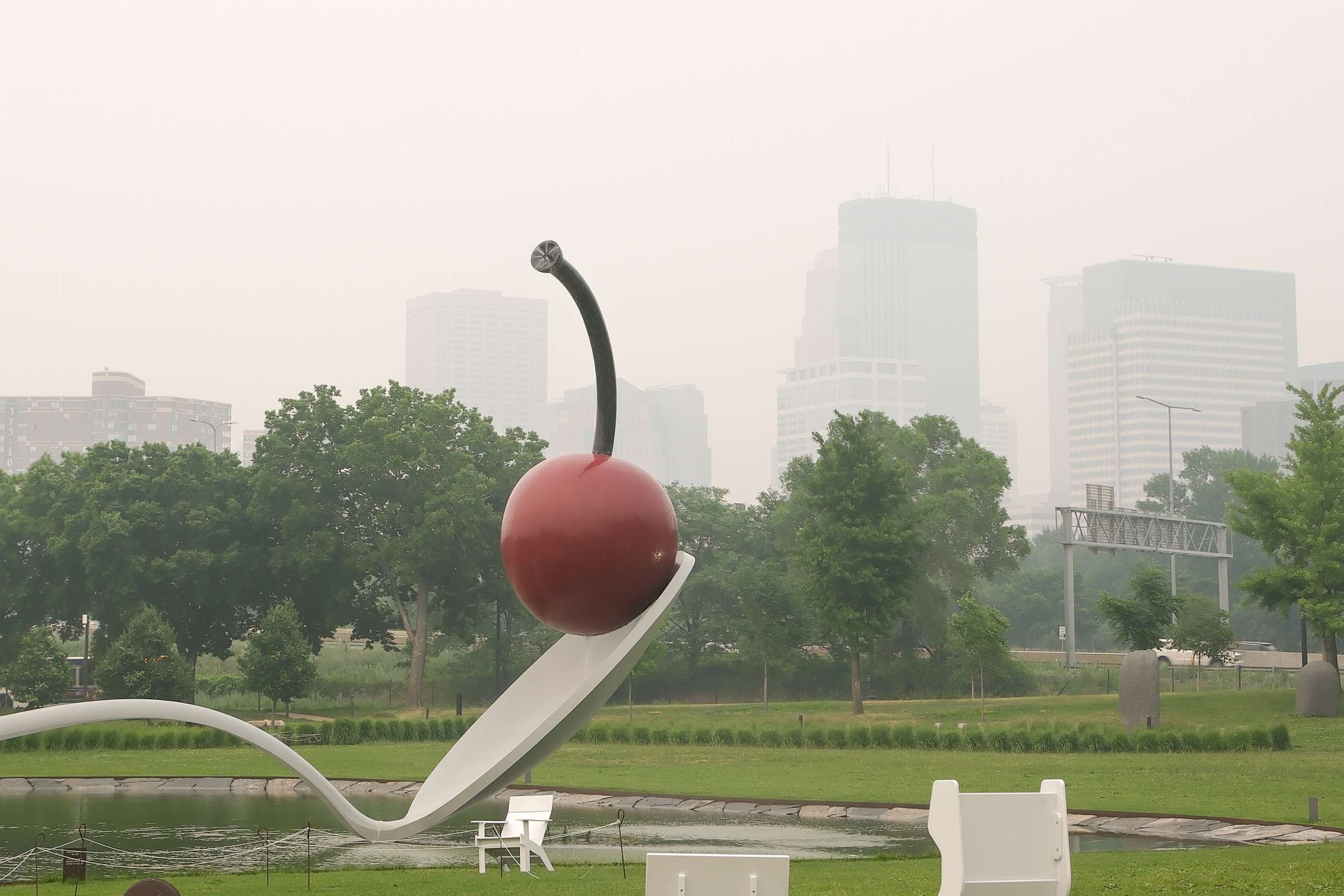
Minneapolis and St. Paul, Minnesota, experienced the cities' worst air quality on record since 1980 with a "Code Purple" on the Air Quality Index. The AQI was 234 in Minnesota and 271 in St. Paul, meaning "very unhealthy" for all populations.
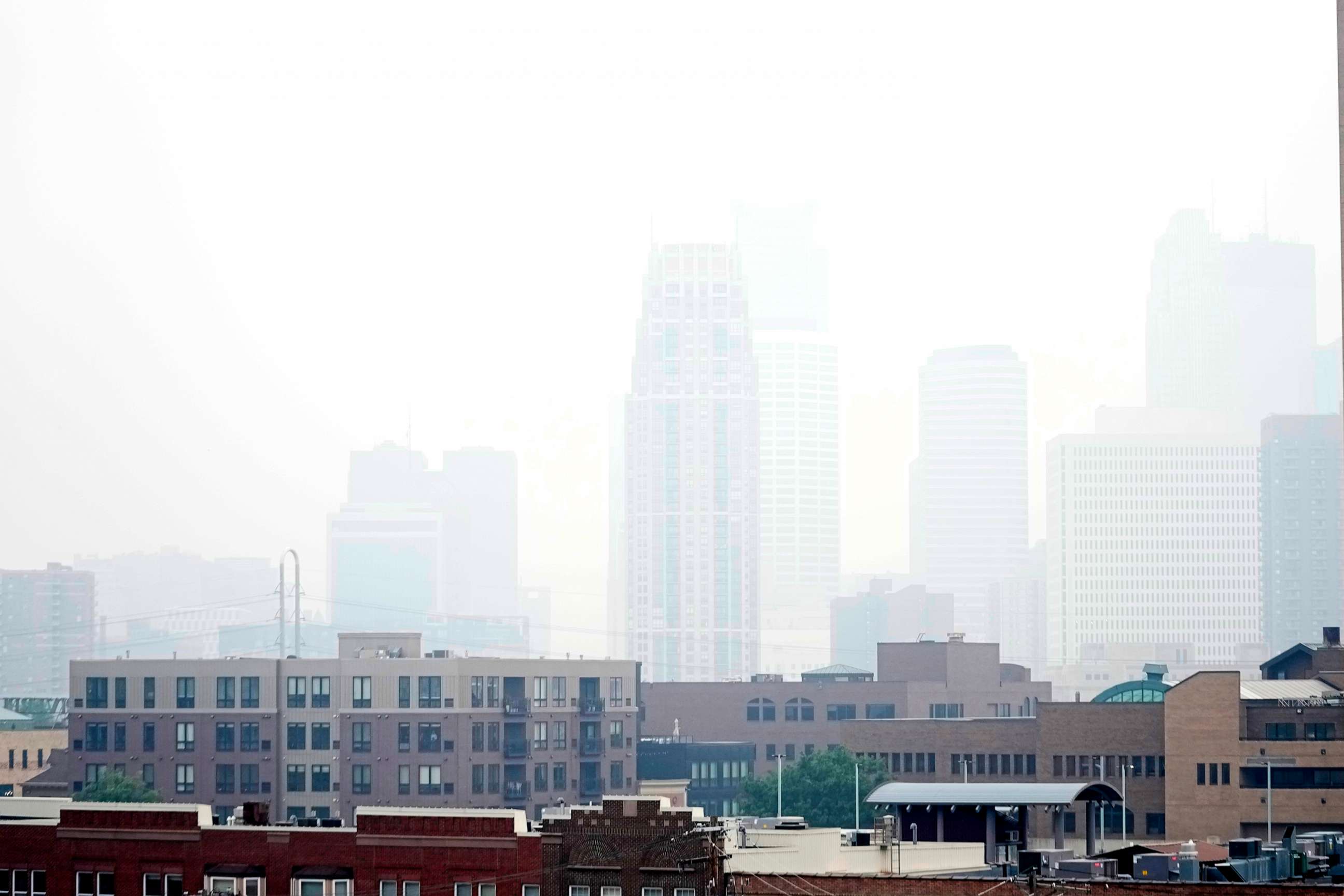
Photos taken from the Twin Cities on Wednesday and Thursday show a skyline nearly obscured by a thick haze of smoke.
That smoke is expected to spread toward Detroit and Indianapolis on Friday.

That particular intense plume of smoke is currently not expected to spread into the Northeast. However, there is potential for another round of intense wildfire smoke from Quebec and Ontario to return to the northeastern U.S. next week, depending on whether atmospheric conditions drag the smoke south.
Air quality concerns will likely continue in the U.S. through the summer due to Canada's wildfires, which are forecast to persist for months.
Last week, Canadian Prime Minister Justin Trudeau described the start of the country's wildfire season as "unprecedented." The warm and dry conditions will likely lead to "higher-than-normal fire activity across most of the country throughout the 2023 season," according to fire season outlook issued by the Canadian government last week.
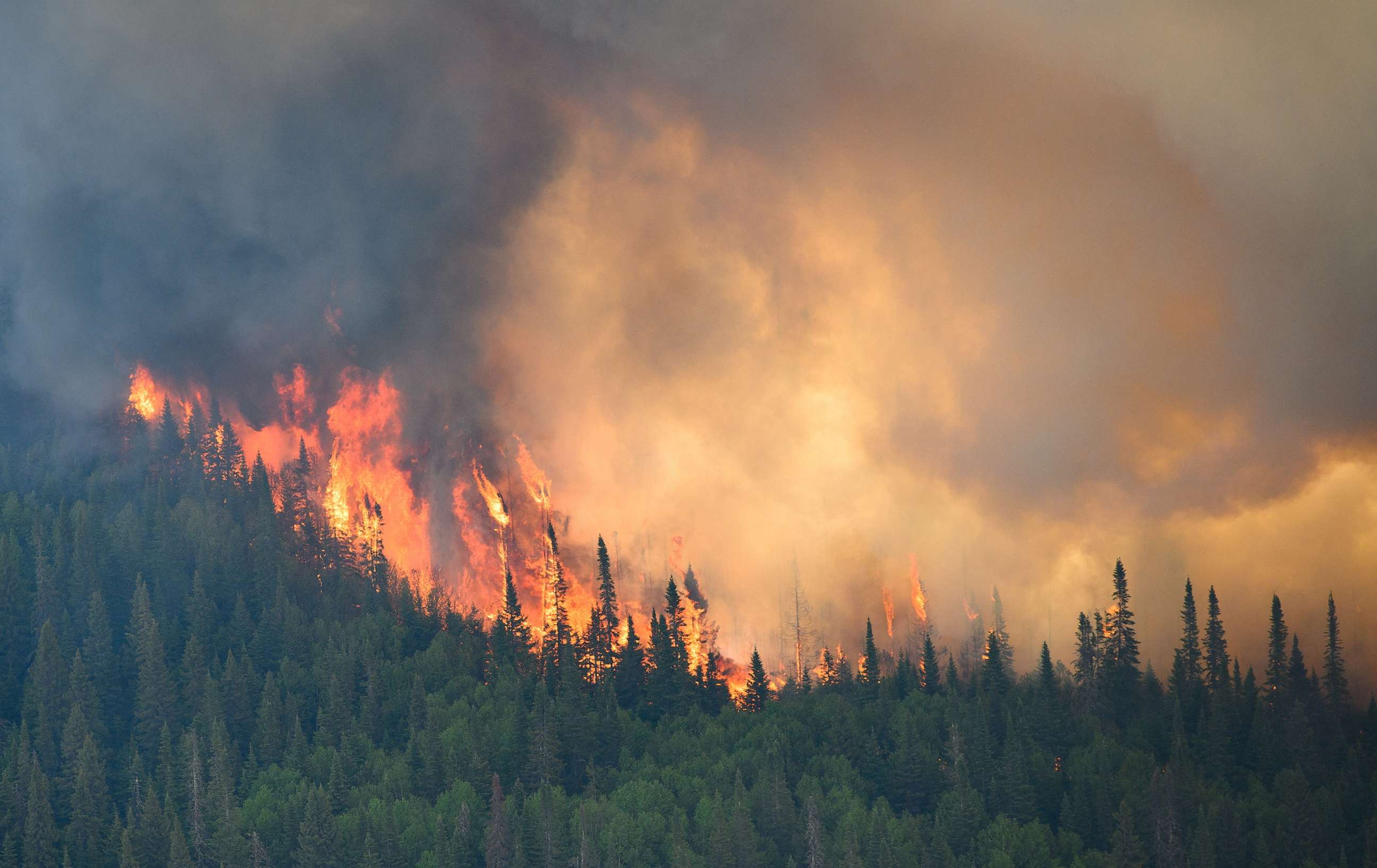
There are currently 451 active wildfires burning in Canada, with more than 5.4 million acres burned, according to the Canadian Interagency Forest Fire Centre. Nearly 220 of the active fires have been deemed out of control, fire officials said.
For weeks, the smoke from wildfires in different regions in Canada has been making its way south to the U.S. In May, air quality alerts were issued in Montana, Idaho, Colorado and Arizona due to wildfires burning in Alberta.
A cold front that swept across northern Canada on May 15 carried very little precipitation and aggravated several large fires, Jeremy Wolf, climate program leader, for the National Weather Service Forecast Office in Spokane, Washington, said Thursday during the National Oceanic and Atmospheric Administration' monthly climate call.
As the winds behind that front shifted north on May 16, as all the fires became very active, the winds started to push the wildfire smoke south, especially east of the Rocky Mountains, Wolf said.
By May 31, smoke from wildfires burning on the other side of the country, in Nova Scotia, led to the first stretch of air quality alerts in the U.S. northeast.
Last week, major cities in the U.S. northeast were breaking records for deteriorating air quality due to wildfires burning in Quebec -- with New York City reaching 484, nearing highest end of "hazardous" AQI ratings at 500.
The AQI in places like India and China are around 150 on any given day, according to IQAir, a website that publishes air quality data around the world.