Casinos' Data Could ID, Help Problem Gamblers
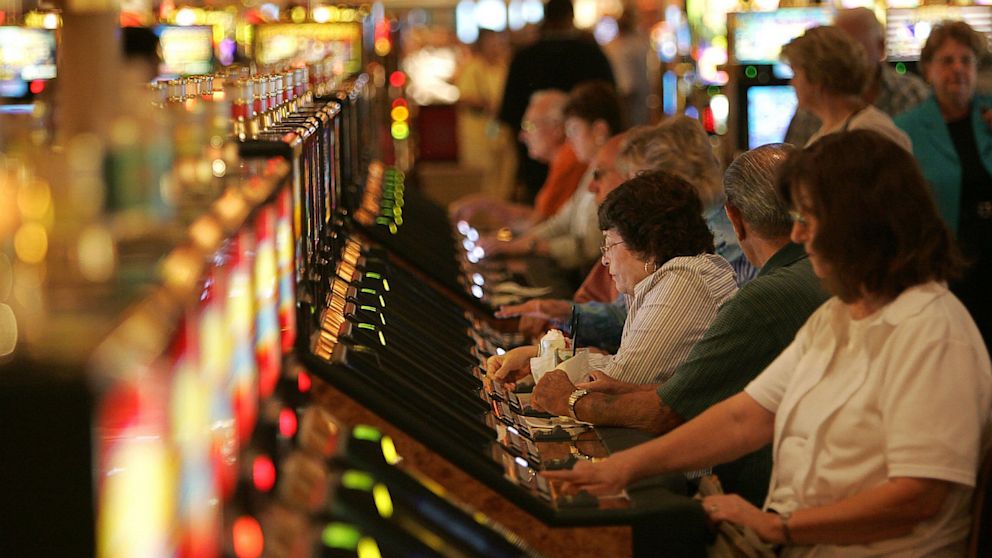
Aug. 8, 2013 -- The gaming industry, say researchers, has both the data and the analytics to identify problem gamblers early, and to stop them from becoming addicts. But few casinos, they say, are making use of the new science.
The gambling data comes from two sources: Casino's own loyalty programs, which record customers' betting behavior to award points redeemable for drinks, free hotel stays and other perks; and from Internet gaming companies that capture every keystroke every time a bettor bets.
Bwin, the biggest online betting company, partnered in 2005 with the Cambridge Health Alliance, an affiliate of Harvard Medical School, to create an early warning system to identify problem gamblers.
Sarah Nelson, Ph.D., associate director for research for the Alliance's division on addiction and an assistant professor of psychiatry at Harvard Medical, tells ABC News that Bwin made available for study huge amounts of data on Internet sports gamblers.
COURT REINSTATES POKER CONVICTION
"We used that," she tells ABC, "to start creating an epidemiology of gambling: how much a gambler spends, how much time they gamble. We then went on to try to figure out if we could use that to predict which people might run into trouble and to intervene before they develop problems." Most previous studies of problem gamblers, she says, have relied on surveys--gamblers' accounts of their own behavior. Few have tracked their actual betting. "We are one of the first to do that," she says.
In May, Nelson presented her most recent findings at a conference in Las Vegas: Certain variables seem to be particularly important for predicting which gamblers may become addicts. Unevenness in the amounts of bets, she says, is one red flag. "People who are all over the map turn up as people with problems." The number of different games played also correlates with problem gambling: the greater the variety, the more likely the problem.
Nelson cautions that the level of accuracy of the diagnostic tool she and her colleagues have devised--which she calls the "Sports Bettor Algorithm 1.1"--is still quite low. So far, her research has established only a correlation between certain behaviors and addiction; it does not yet prove causality.
Industry reaction to her work and to other research like it has been mixed, even as gambling expands in many states, creating ever more addicts.
Casino executives acknowledge that gambling addiction is a growing problem. The National Council On Problem Gambling estimates that in the U.S. alone, 6 to 8 million adults suffer some form of gambling addiction. But casinos fear that any system that would identify current or potential addicts would expose them to liability if they failed to intervene--in the same way that a bartender who continues serving a known drunk is liable.
"You're talking about trying to diagnose a mental health disorder," Alan Feldman a spokesman for MGM Resorts, told the Wall St. Journal in a story about Nelson's work. "I don't know too many nonprofessionals who are trained to do that offhand." In the same story, a spokesman for Caesars calls the idea that problem gamblers can be identified from their play "hogwash."
"Hogwash?" scoffs Tony Schellinck. Focal Research Consultants, the company he co-founded, has spent 15 years developing its own early-detection algorithm. The system Focal Research sells, called Alert, has a starting price of $500,000 and has been used by seven gaming clients in the past eight years, he says.