Cats among mammals that can fluoresce, new study finds

LONDON -- Over the last few years, fluorescence under ultraviolet light has been reported among many animals, including birds, reptiles, insects and fish. However, not much has been known about the frequency of fluorescence among mammals. Until now.
In a new study published today by researchers from the Western Australian Museum and Curtin University, fluorescence among mammals was found to be "extremely common."
Researchers studied 125 mammal species -- both preserved and frozen -- held in museum collections for the presence of "apparent fluorescence" under UV light, finding "apparent fluorescence" in all mammal specimens investigated to varying degrees.
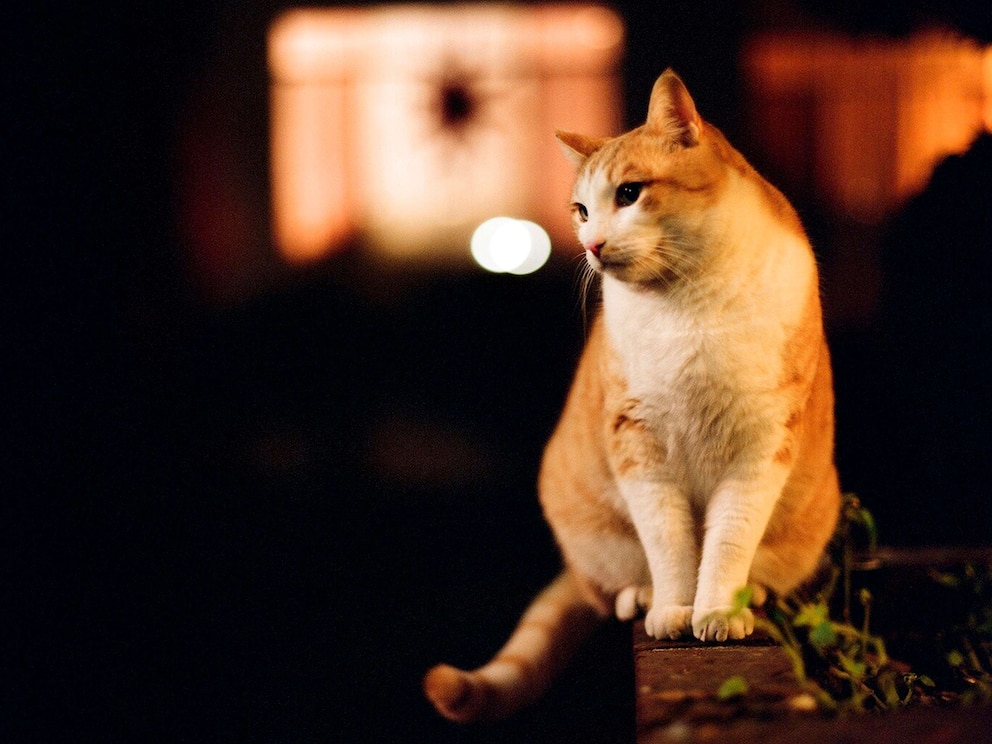
These include domestic cats, or Felis catus, along with polar bears, bats, mountain zebra, wombats, dwarf spinner dolphins, leopards and Tasmanian devils.
Fluorescent compounds were found in bone, teeth, claws, fur, feathers and skin, researchers said.
The fluorescent colors observed including red, yellow, green, pink and blue.
"We were quite curious to find out about fluorescence in mammals," said Kenny Travouillon, curator of Mammalogy at the Western Australian Museum and lead author of the study. "By using the spectrophotometer in the School of Molecular and Life Sciences at Curtin University, we were able to measure the light that was emitted from each specimen when exposed to UV light."
Scientists explain that fluorescence is the result of a chemical on the surface of a mammal -- such as protein or carotenoid -- that absorbs light before emitting it at "longer and lower-energy wavelengths" -- often a pink, green or blue glow.
The platypus -- one of Australia's most treasured species -- was also found to fluoresce under UV light.
"To date, reports of fluorescence among mammal have been limited to a relatively small number of species," the study's authors said. "Here, we are able to reproduce the results of these previous studies and observe apparent fluorescence in additional species: we report fluorescence for 125 mammal species."
The most fluorescent animals were found to be all white or with lighter colored fur, which represented 107 out of 125 species, of about 86%. Fluorescence, however, was more "masked" by melanin in mammals with darker fur, such as the Tasmanian devil.
"There was a large amount of white fluorescence in the white fur of the koala, Tasmanian devil, short-beaked echidna, southern hairy-nosed wombat, quenda, greater bilby, and a cat -- and while a zebra's white hairs glowed its dark hairs did not," said Travouillon.
Only one mammal examined -- the dwarf spinner dolphin -- has no fluorescence externally. Only the teeth of the dolphin were found to fluoresce.
"Fluorescence was most common and most intense among nocturnal species and those with terrestrial, arboreal, and fossorial habits," said Travouillon.
The study makes clear that fluorescent qualities are very common in mammals, however, scientists say debate continues on if fluorescence has any particular biological function in mammals, or if it is simply a result of their surface chemistry: "For most fluorescent animals there is insufficient information to evaluate."
"The only major mammalian clade missing from our dataset is lemur, a group that requires further investigation for the occurrence of luminescence; we predict, based on the prevalence of white fur, that this clade will also contain fluorescent species," the researchers said.
"We would not suggest that further studies should focus on non-preserved animals e.g., live or freshly dead," they concluded.