China's DeepSeek rolls out a long-anticipated update of its AI model
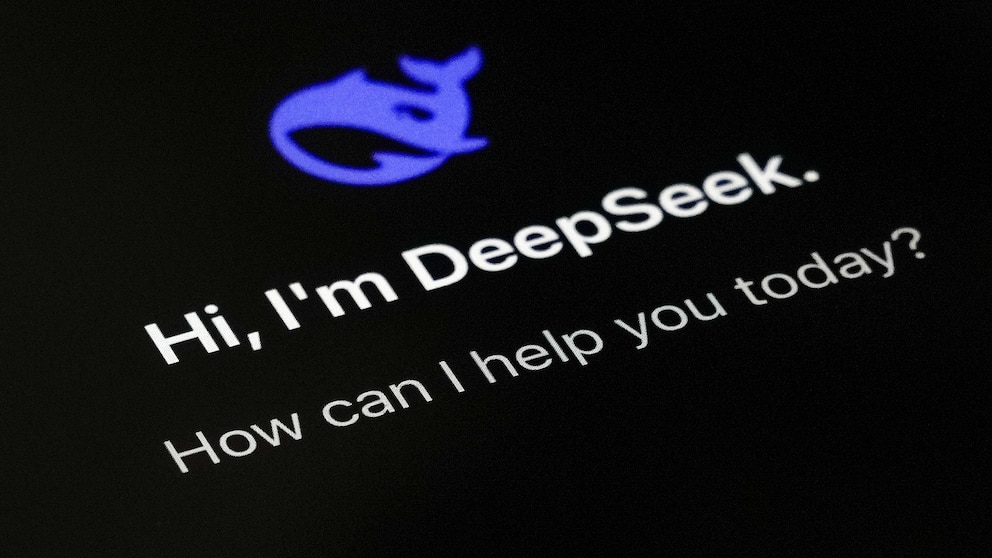
HONG KONG -- DeepSeek, the Chinese artificial intelligence startup that shook world markets last year, launched preview versions of its latest major update Friday as the AI rivalry between China and the U.S. heats up.
DeepSeek’s V4 has been keenly anticipated by users keen to test how it compares to U.S. competitors like OpenAI’s ChatGPT, Anthropic’s Claude and Google’s Gemini. Anthropic and OpenAI have accused DeepSeek of unfairly building its technology off their own.
Some industry analysts had expected the new model to arrive more than a month earlier at the start of the Lunar New Year.
DeepSeek says the new V4 open-source models, which include “pro” and “flash” versions, have big improvements in knowledge, reasoning and in their “agentic” capabilities – the ability to perform complex tasks and workflows autonomously.
V4 is a successor to V3, an AI model that DeepSeek released in late 2024.
But it was DeepSeek’s specialized “reasoning” AI model, called R1, that took markets by surprise with its release in January 2025. DeepSeek claimed it was more cost-effective than OpenAI’s similar model and it became a symbol of how China was catching up with the U.S. in technological advancements.
DeepSeek said the “V4 Pro Max” version has “superior performance” in terms of standard reasoning benchmarks relative to OpenAI’s GPT-5.2 model and Google’s Gemini 3.0-Pro. It falls “marginally” short of GPT-5.4 and Gemini 3.1-Pro, it said.
In terms of “agentic” capabilities, the Chinese company said the V4 “pro” version could outperform Claude’s Sonnet 4.5 and approaches the level of Claude's Opus 4.5 model based on its own evaluation.
The “flash” version of V4 performs on a par with the “pro” version on simple agent tasks and has reasoning capabilities closely approaching it, DeepSeek said.
“Based on the benchmark results, it does appear DeepSeek V4 is going to be very competitive against its U.S. rivals,” said Lian Jye Su, chief analyst at the technology research and advisory group Omdia.
Marina Zhang, an associate professor at the University of Technology Sydney, said DeepSeek's V4 rollout is as a “pivotal milestone for China’s AI industry”, especially as global competition intensifies in the pursuit of self-reliance in critical technologies.
DeepSeek offers a free‑to‑use web and mobile chatbot. Unlike the top models from Anthropic, Google and OpenAI, it describes its technology as “open source” in the way that it enables developers access to modify and build on its core technology.
Both the V4's “pro” and “flash” versions have a 1 million token context window, a parameter of how much information an AI model can process and recall, and run on a more efficient basis, the startup said. That is a significant improvement from before, since the V3 supported a 128,000 token context window.
A report from Microsoft in January showed use of DeepSeek has been gaining ground in many developing nations.
However, some analysts remain skeptical. Ivan Su, a senior equity analyst at Morningstar, said while V4 is a “competent” follow-up, it’s not as big a breakthrough as the rollout of R1.
“Domestic competition has intensified significantly since R1’s release,” Su said. “Against U.S. models, DeepSeek’s own evaluation suggests its capabilities largely match on most fronts, but independent evaluations are needed before final conclusions can be drawn.”
In February, Anthropic accused DeepSeek and two other China-based AI laboratories of “industrial-scale campaigns” to “illicitly extract Claude’s capabilities to improve their own models.” It said they did that using a technique called distillation that “involves training a less capable model on the outputs of a stronger one.” OpenAI made similar allegations in a letter to U.S. lawmakers.
This week, Michael Kratsios, chief science and technology adviser to U.S. President Donald Trump, also accused foreign tech companies “principally based in China” of distilling leading U.S. AI systems and “exploiting American expertise and innovation.”
China’s embassy in Washington hit back at the allegations, describing them as “unjustified suppression of Chinese companies by the U.S.”
___
O’Brien reported from Providence, Rhode Island.