Cod Fish Have 'Regional Accents' and This Could Mean Trouble for Their Love Lives, Scientist Says
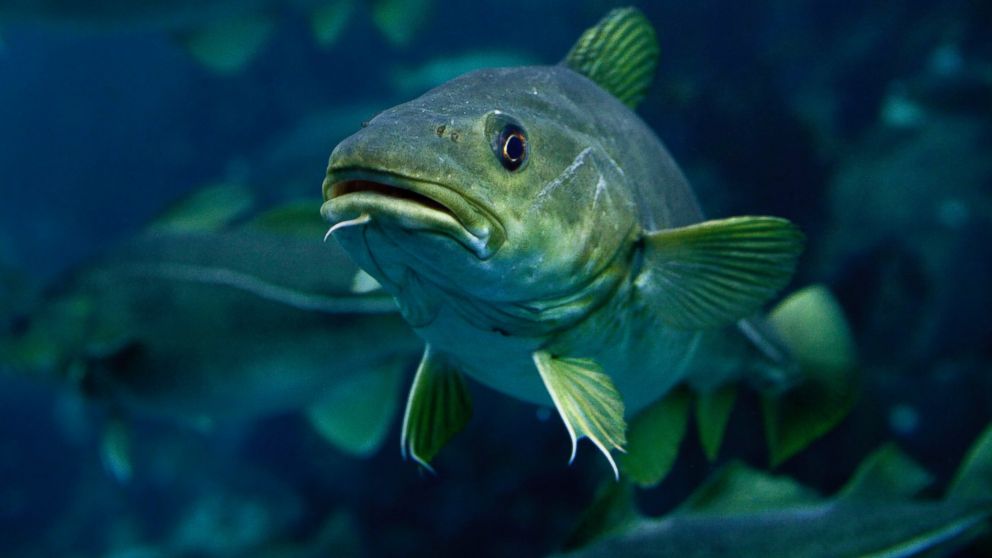
— -- It's a tale as old as time: Boy meets girl, but they speak different languages.
However, in this case, the boy and girl are cod fish, and the fact that they can't speak the same language could mean the demise of their species.
As cod are increasingly moving north due to warming waters, scientists are worried that males from one region may not be able to "chat up" females from another region with a "different dialect" -- thus threatening the species' ability to breed, according to Stephen Simpson, a marine biologist and professor at the University of Exeter in the U.K.
Male cod fish vibrate their swim bladders to produce sounds, or "love calls," which are meant to "impress females and stimulate them into releasing eggs for fertilization," Simpson told ABC News today after he presented his findings at the National Environment Research Council's "Into the Blue" science showcase in the U.K.
But the "accent," or unique sound of a male fish's "love call," depends on what spawning ground it came from, Simpson said.
Underwater recordings have revealed that male cod fish off Maine make "distinctly different" sounds than that of male cod fish off the U.K.
American cod appear to have "higher pitched" and "quite repetitive" love calls in contrast to that of European cod's "more longer, drawn out rumbling," Simpson said.
As seas are getting warmer, such isolated populations of cod could begin moving north to colder waters simultaneously and come into contact for the first time, Simpson explained.
"A whole set of challenges could arise if females show a particular preference for the kinds of love songs they like," he said. "They could struggle to breed and integrate."
Increasing noise pollution caused by ships and construction could also exacerbate the potential problem, Simpson added.
"But the exciting thing with studying noise pollution is that there's a real opportunity to change things quickly," Simpson explained. "While you can't easily reverse climate change due to hundreds of years of damage to the environment, you can manage when and where sound is made almost immediately."
"By understanding cod and other fish's natural behavior, we can create solutions for ocean noise pollution to increase the chances of survival for fish that depend on vocalization to reproduce," he said.