Coffee, shoes: Trump's sweeping new tariffs could hike these prices

President Donald Trump on Thursday slapped tariffs on dozens of countries, significantly expanding the reach of his controversial trade policy.
Tariffs between 10% and 41% were applied to nearly 70 countries, including top U.S. trade partners such as South Korea and Japan.
Price increases were set to hit coffee, shoes, appliances and other products as a result of the new levies, analysts previously told ABC News.
Tariffs put forward so far by Trump are expected to cost an average household an additional $2,400 this year, the Yale Budget Lab found last week.
“Tariffs could be incredibly high on certain countries and certain products,” Kyle Handley, a professor of economics at the University of California, San Diego, told ABC News. “Things will get a little more expensive.”
Here’s what to know about which products face price hikes as a result of the new tariffs:
Coffee
Coffee drinkers may feel the pinch of new tariffs, analysts said.
The list of country-specific levies includes a 50% tariff on products from Brazil, a major source of imported coffee. The U.S. imported nearly $2 billion worth of coffee from Brazil last year, which amounted to about 20% of all such imported products.
Importers typically pass along a share of the tariff-related tax burden onto consumers in the form of price hikes. In this case, that sticker shock could be exacerbated by a price increase that's already hitting coffee.
Coffee prices soared about 11% in May compared to a year ago, making inflation four times higher than the overall rate, U.S. Bureau of Labor Statistics data showed.
The spike in coffee prices comes down to a dearth of supply due to drought alongside robust demand, meaning too many dollars are chasing after too few coffee beans. Tariffs on Brazil could push up prices even more, analysts said.
“Coffee is already near record-high prices,” Jason Miller, a professor of supply chain management at Michigan State University. “I’d expect that price to go higher.”
Clothing and shoes
The latest tariffs target countries like Bangladesh and Cambodia that are key sources of apparel and footwear, putting those products also at risk of price hikes, analysts said.
Trump slapped 19% tariffs on goods from Cambodia as well as 20% tariffs on Bangladesh. Indonesia, another major exporter to the U.S., faces 19% tariffs.
“If you look at the tags on your clothing it's made in these places,” Handley said.
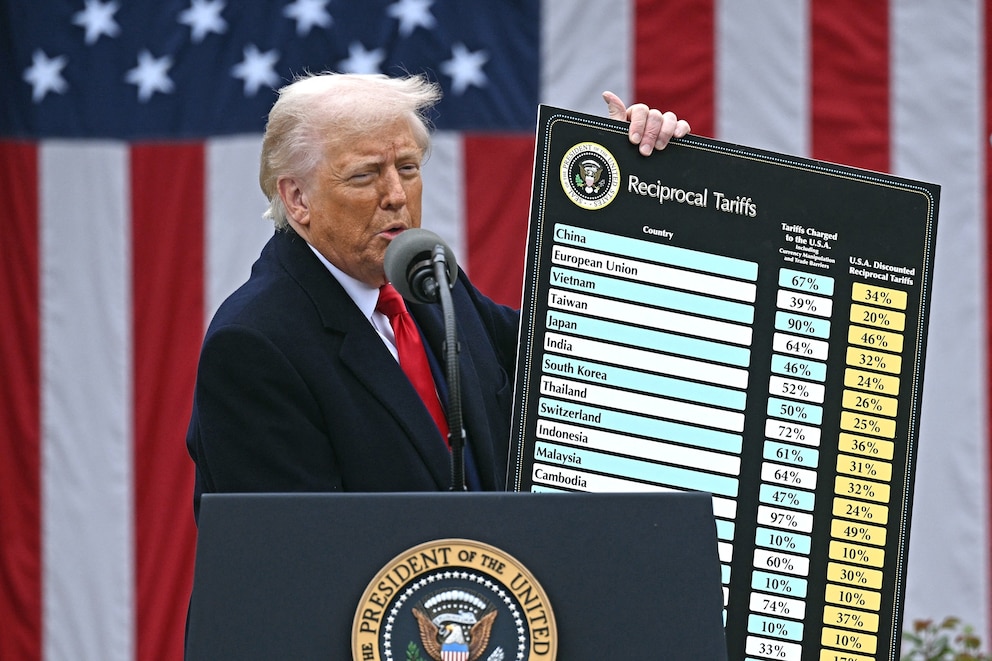
A trade agreement with Vietnam last month enshrined 20% tariffs on all Vietnamese goods, cementing higher prices for those apparel and shoe imports.
Footwear Distributors and Retailers of America, an industry group representing 95% of the American shoe and sneaker manufacturers, criticized the trade agreement with Vietnam. The deal, the group said, would “hit American consumers and our industry hard.”
China, meanwhile, faces 30% tariffs on nearly all of their exports to the U.S. China accounts for about $4 of every $10 in imported footwear sold to U.S. buyers, the United States International Trade Commission found in 2020.
Price impacts on footwear and apparel may prove smaller than expected, however, since manufacturers and retailers could bear the burden of the increased taxes with otherwise wide profit margins, Miller said.
“The profit margins are so pronounced that there may be a little less of a consumer impact,” Miller said.
Appliances, electric vehicles and home hardware
Trump’s 50% tariffs on copper could raise prices for an array of goods, ranging from home fixtures to electric vehicles, analysts said.
“A lot of stuff that you’re getting at the hardware store – it’s copper,” Handley said.
An electric vehicle requires roughly 83 kilograms of copper – about 183 pounds – which amounts to nearly four times as much copper as a combustion-engine car, the International Copper Association found in 2017. The adoption of electric vehicles was expected to bring a surge in demand for copper, the group said.
The copper tariffs, Miller said, will push electric vehicle prices higher: “We’d expect to see inflationary pressure on EVs."