Coloradans are voting on an abortion ban: What to know about Proposition 115
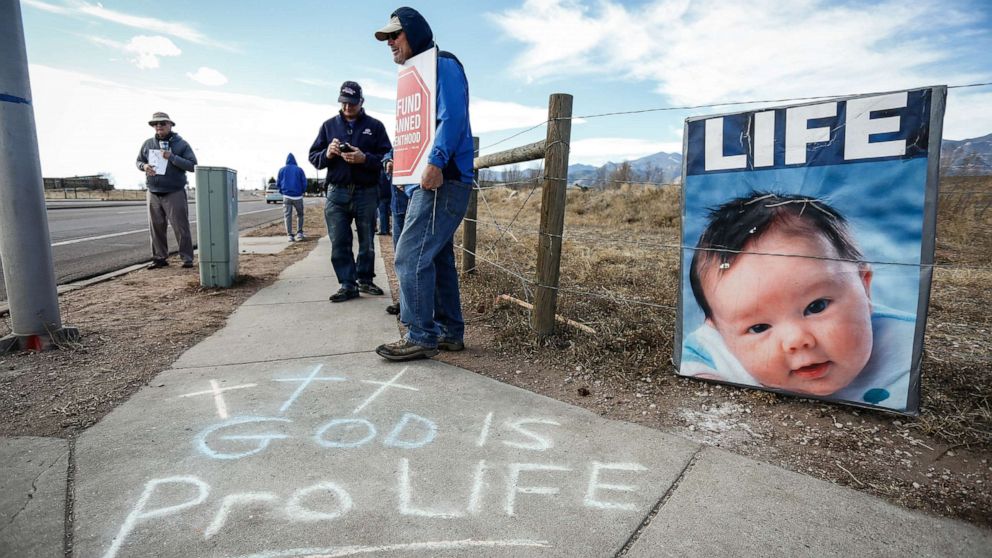
As Coloradans vote this fall, they're deciding on more than just the president and other elected officials -- they're also being asked to vote on a ballot measure, Proposition 115, which seeks to ban abortion in the state after 22 weeks of pregnancy.
Colorado is one of seven states without a gestational limit on abortion, with or without exceptions, according to the Guttmacher Institute.
If Prop 115 is approved and enacted, a person who performs an abortion after that point is guilty of a Class 1 misdemeanor and subject to a fine ($500 to $5,000), according to the measure's language. A licensed practitioner would lose their license for at least three years. The patient would not be charged with a crime.
The ballot measure includes only one exception: if "an abortion is immediately required to save the life of a pregnant woman," including physical disorders, illnesses and injuries. There are no exceptions for rape or incest.
Proponents of the proposal say it is to prevent the abortions of potentially viable fetuses. Opponents say it puts pregnant people's lives and wellness at risk, while there are also concerns about the disproportionate impact a ban could have on already marginalized communities.
Singular exception frightens some doctors
Dr. Rebecca Cohen, an OB-GYN in the Denver area, pointed to the language in the ballot measure requiring a pregnant person's life be at "immediate" risk.
"As a practicing physician, it's unethical for me to allow a medical situation to progress to the point that someone's life is immediately in danger," she told ABC News.
Dr. James Monaco, a Colorado cardiologist who has cared for patients in high-risk pregnancies due to cardiac issues, wrote in an opinion piece for The Colorado Sun that if passed, the proposition "will result in unnecessary maternal deaths."
He expanded in a piece for the Colorado Times Recorder that if a pregnant person with severe heart disease has a 50% chance of death, doctors would have to question, "Is a 50% chance of death 'immediate?'"
The exception also does not mention the health of the fetus. That means if a pregnant person gets a diagnosis that the fetus will likely either be stillborn or only live a few hours or days, that person then potentially has to carry the fetus to term and go through labor -- which includes an emotional and financial toll on top of the physical risks of labor and pregnancy.
The Coalition for Women and Children, also known as the DueDateTooLate campaign, which supports the proposition, says that in cases of fatal fetal abnormalities, pregnant people would turn to "perinatal hospice."
"Perinatal hospice involves a multidisciplinary team" to "accompany the family through the pregnancy and birth allowing them to fully embrace and celebrate the abbreviated life of their baby," according to the campaign.
"These 22-week-old human beings have most of the characteristics that we associate with being human being," Dr. Tom Perille, head of the medical advisory team of the Coalition for Women and Children and president of Democrats for Life of Colorado, told ABC News, referring to studies on fetal behavior among twins. "And we think that for these fetuses and for these families, perinatal hospice offers a more life-affirming, compassionate approach to the care of these individuals than does late abortion."
To this point, Cohen said Coloradans already have the option for perinatal hospice -- if they so choose.
Perille said the decision to not include an exception for rape came out of research and discussions with providers that victims of rape typically seek abortions before 22 weeks of pregnancy.
Abortions after 22 weeks are extremely rare
Only 1.2% of abortions in the United States were performed after 21 weeks of pregnancy, according to the CDC's latest data.
The most common reason patients seek an abortion at that stage, Cohen said, "is because they have new information about the pregnancy." That includes ultrasounds and tests at and after the 20-week mark that demonstrate serious issues in the development of the fetus.

Some patients are pushed past the 22-week mark by seeking further testing and opinions, or by restrictions on abortions in other states that necessitate traveling to Colorado (and getting the funding together for travel, health care, housing and possibly child care).
Patients may also face health conditions themselves, like exacerbated cardiac issues or the development of cancer or seizures, Cohen said.
"So many people that are voting to decide the outcome of this proposition will never need abortion care later in pregnancy," Cohen said. "They may never know someone who needs abortion care leader in pregnancy. But what we see is that this really does affect people who need this care the most."
Perille posited that pregnant people should be able to determine fatal fetal diagnoses before 22 weeks, so would still be able to choose to have an abortion before that point.
"The bottom line is as far as screening goes, it could be done well before 22 weeks, and so in countries that have this [restriction], in states that have this, it's very rare for women to discover these kinds of abnormalities after 22 weeks," he told ABC News.
The right to abortion after the first trimester is threatened in many places across the United States. Currently, around two dozen states ban abortion after 20 weeks, according to Guttmacher, some with exceptions. On Thursday, Mississippi asked the Supreme Court to review its 15-week abortion ban (which is not in effect), which could have major impacts on rights to abortion overall or after the first trimester, should the court choose to react.
Potential toll on already vulnerable communities
The United States already has a high maternal mortality rate compared to the rest of the developed world, and that risk is especially high among Black, American Indian and Alaska Native women, CDC data shows.
Over 20% of the Colorado population is Hispanic or Latino, according to Census data. That population faces barriers to health care, including language, insurance coverage and financial status -- which becomes more dire if you have to drive several hours or fly to another state to access abortion care.
Currently, to access later abortion care, a person in Colorado has to travel an average 15 miles one way, according to Guttmacher Institute research. If this measure is enacted, that would increase to 445 miles.
"When you're talking about white, privileged folks that have the economic means, they can get onto a flight," Karla Gonzales Garcia, policy director at Color Latina, a group that supports reproductive rights in Colorado, told ABC News. "If you have your documentation, you're not going to be afraid to go and get onto a flight."
All considered, Garcia said, if passed, the measure "is just exacerbating all the issues that our communities already face."
"This ballot initiative is racist in its core because they are assuming the people that need to have an abortion later in pregnancy would be able to get on a plane [or] drive to another state and spend the money that they need to in order to have a safe abortion, while leaving behind the most marginalized among us," she said.
Voters will decide the fate of the proposal on Nov. 3.