• Video
  • Shop
  • Culture
  • Family
  • Wellness
  • Food
  • Living
  • Style
  • Travel
  • News
  • Book Club
  • Newsletter
  • Privacy Policy
  • Your US State Privacy Rights
  • Children's Online Privacy Policy
  • Interest-Based Ads
  • Terms of Use
  • Do Not Sell My Info
  • Contact Us
  • © 2026 ABC News
  • News

Comet Landing: Signal Reestablished With Philae Lander
NaN:NaN
Batteries Running Low on History-Making Spacecraft
ESA
ByALYSSA NEWCOMB
November 14, 2014, 11:01 PM

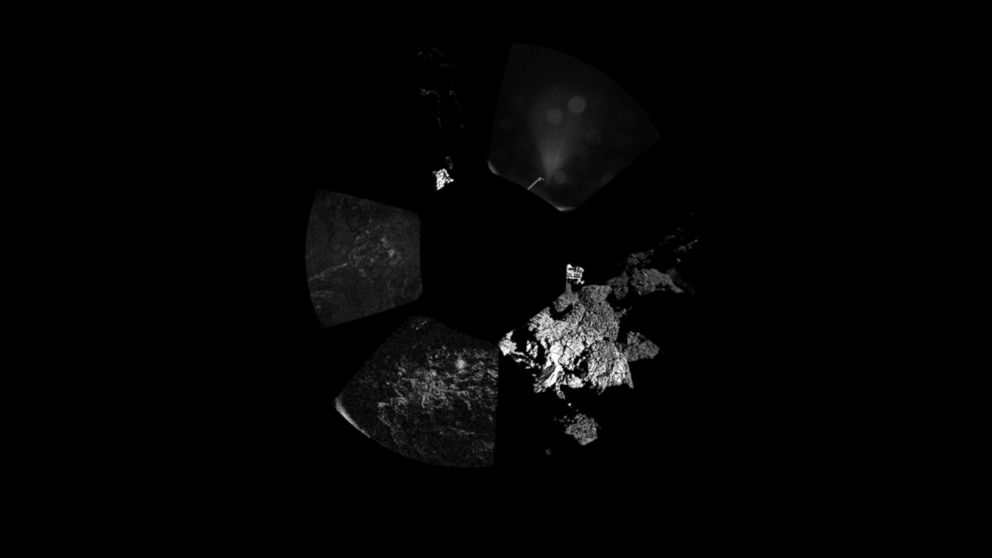
— -- Mission control reestablished contact with the Philae lander today after several tense hours in which the European Space Agency had tried to pinpoint its exact location.

Despite locating the lander -- which had three touchdowns before coming to rest on 67P/Churyumov-Gerasimenko on Wednesday after a 10-year, 4 billion-mile journey -- the battery issue remains an issue.

With just 1.5 hours of sunlight getting to Philae each day, mission controllers said they will have to carefully budget time for science experiments conducted off of the secondary battery.

Related Articles

SLIDESHOW: Take a Tour of the Comet Rosetta Spacecraft Visited

Related Articles

Rosetta Spacecraft Reaches Comet After 10-Year Chase

Related Articles

How to Wake Up Rosetta and Catch a Comet

The lander began work earlier today, drilling into the comet's surface with the goal of collecting samples and data that can be analyzed to learn more about the formation of the solar system nearly five billion years ago.

"It started to drill but then we lost contact again. ... We are not sure whether the batteries still have enough energy," said Stephan Ulamec, head of operations for the lander.

Even if Philae's battery runs out of power, the lander will remain in hibernation mode on the comet.

Ulamec said it's feasible Philae would be able to catch enough light to wake up again when the comet gets closer to the sun during its 6.5 year orbit.
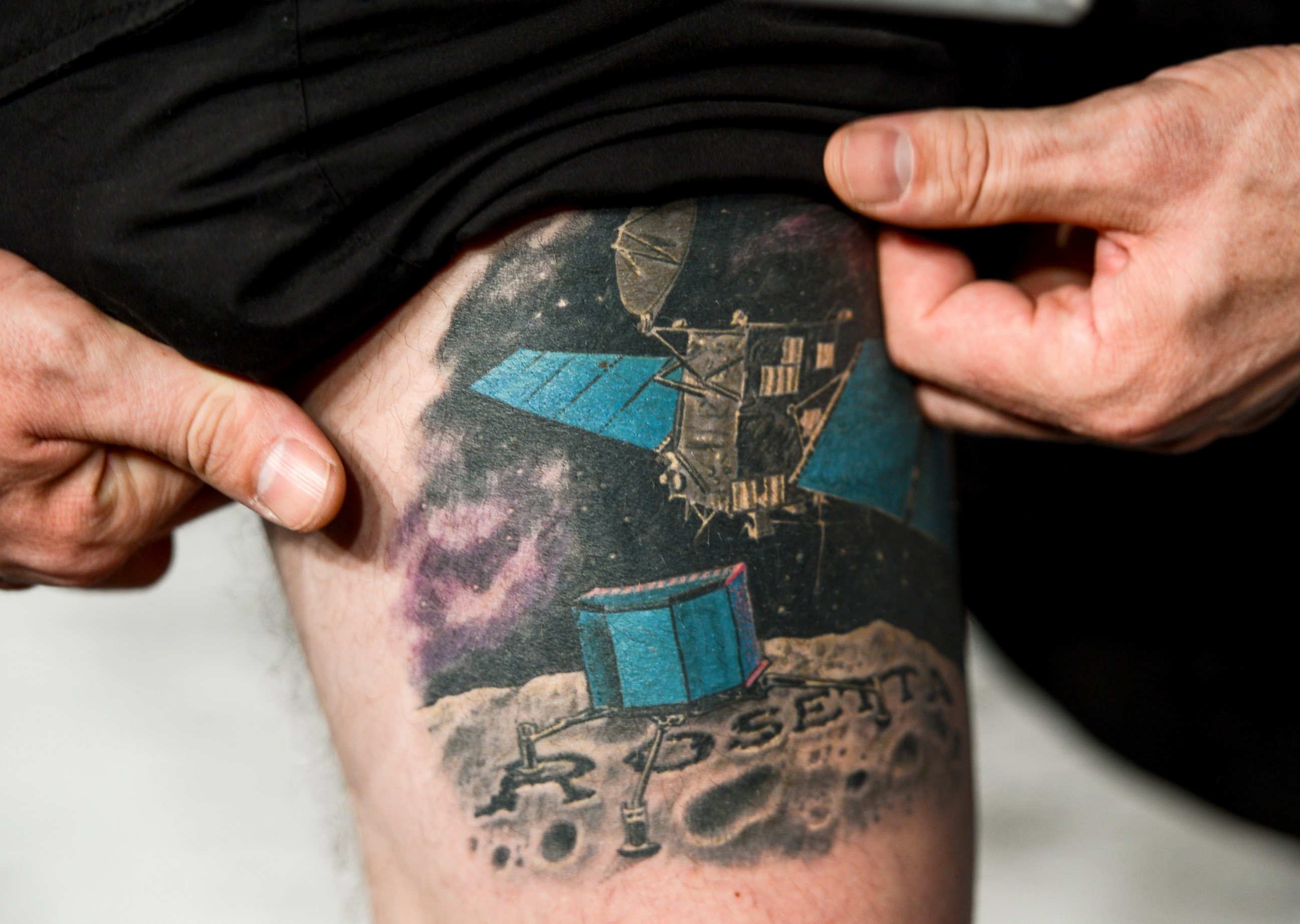
PHOTO: ESA physicist Matt Taylor shows his 'Rosetta' tattoo at the satellite control center of the European Space Agency (ESA) in Darmstadt, Germany, Nov. 12, 2014.
ESA physicist Matt Taylor shows his 'Rosetta' tattoo at the satellite control center of the European Space Agency (ESA) in Darmstadt, Germany, Nov. 12, 2014. British physicist Matt Taylor brimmed with excitement as the European Space Agency's Philae lander successfully separated from the Rosetta spacecraft.

The goal of the ambitious $1.6 billion mission is to glean new insights into comets and other celestial objects -- and answer questions about the origins of life on Earth.

Up Next in News—

Artemis II astronauts on their out-of-this-world mission: 'Adventure of a lifetime'

April 30, 2026

'Rogue' AI agent went haywire at tech company. The CEO is still 'bullish' on the technology

April 29, 2026

King Charles III gives toast at White House state dinner: Read his full speech

April 29, 2026

This San Francisco shop is run completely by an AI agent

April 23, 2026

Shop GMA Favorites

ABC will receive a commission for purchases made through these links.

Sponsored Content by Taboola

The latest lifestyle and entertainment news and inspiration for how to live your best life - all from Good Morning America.
  • Contests
  • Terms of Use
  • Privacy Policy
  • Do Not Sell My Info
  • Children’s Online Privacy Policy
  • Advertise with us
  • Your US State Privacy Rights
  • Interest-Based Ads
  • About Nielsen Measurement
  • Press
  • Feedback
  • Shop FAQs
  • ABC News
  • ABC
  • All Videos
  • All Topics
  • Sitemap

© 2026 ABC News
  • Privacy Policy— 
  • Your US State Privacy Rights— 
  • Children's Online Privacy Policy— 
  • Interest-Based Ads— 
  • Terms of Use— 
  • Do Not Sell My Info— 
  • Contact Us— 

© 2026 ABC News