Judge grills government over apparent lapses in Comey indictment
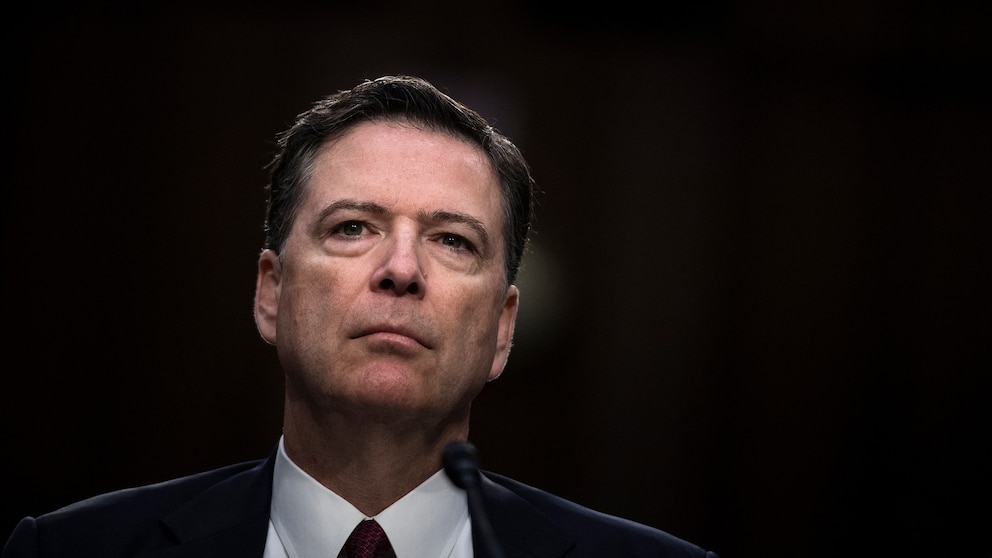
Lindsey Halligan, President Donald Trump's handpicked U.S. attorney who brought charges against former FBI Director James Comey, told a judge Wednesday that the full grand jury that indicted Comey did not see the final indictment -- only the foreperson and another grand juror did.
Halligan's testimony came in a hearing Monday in which Comey is seeking to have the indictment thrown out on the grounds that it's the product of a vindictive prosecution.
Halligan told U.S. District Judge Michael Nachmanoff that the full grand jury voted to indict Comey on two of the three counts submitted in the original indictment, but that the final revised indictment reflecting the two counts Comey was ultimately charged with was not reviewed by the full grand jury -- only by the jury foreperson and one other grand juror.
Comey's attorney, Michael Dreeben, argued that the issue with the grand jury indictment clearly required Judge Nachmanoff to throw out the case.
A Justice Department attorney also refused to answer whether a memo prepared by career prosecutors in the U.S. attorney's office prior to Halligan's appointment recommended against bringing charges against Comey.
Halligan sought the indictment of Comey after Trump forced out previous U.S. attorney Erik Siebert who sources said had resisted bringing cases against Comey and New York Attorney General Letitia James. Halligan, who had no experience as a prosecutor, sought the indictment after Trump, in a social media post, called on Attorney General Pam Bondi to act "NOW!!!" to prosecute Comey, James and Rep. Adam Schiff.
Comey pleaded not guilty in October to one count of false statements and one count of obstruction of a congressional proceeding related to his testimony before the Senate Judiciary Committee in 2020, amid what critics call Trump's campaign of retribution against his perceived political foes. Vice President JD Vance has said any such prosecutions are "driven by law and not by politics."
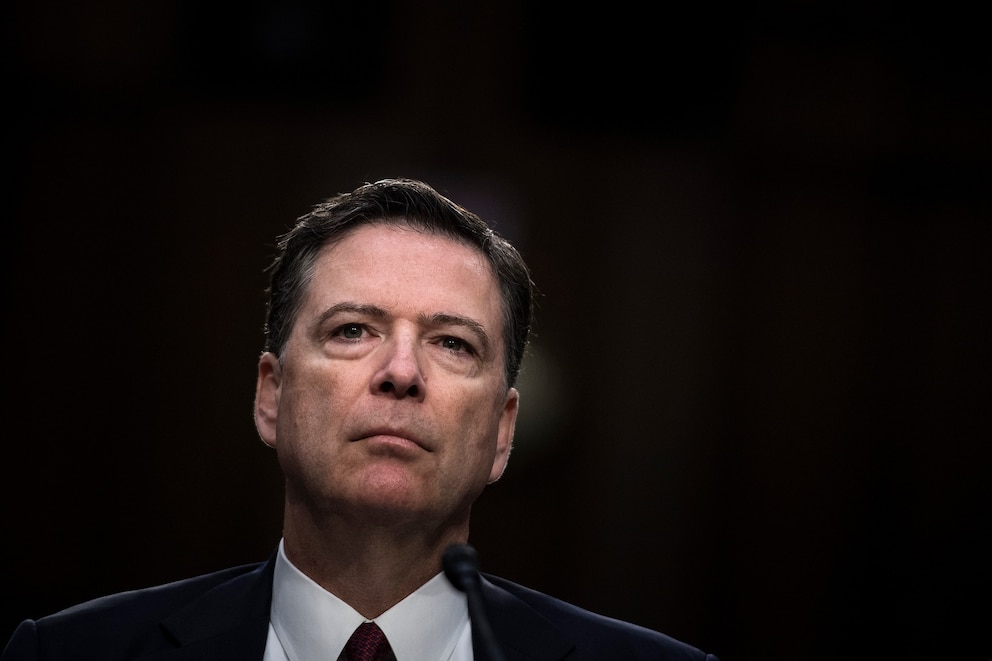
Comey's attorneys argued Wednesday that Trump's social media post was him using the justice system as a "cudgel to damage and intimidate his political opponents."
"It is effectively an admission that this is a political prosecution," Comey's attorney Michael Dreeben said. "The president is underscoring what he wants done here."
Dreeben argued that by replacing the prosecutor leading the U.S. attorney's office in Virginia with his former staffer and lawyer, Trump was "manipulating the machinery of prosecution" and committing an "egregious violation of bedrock constitutional values."
"This has to stop," Dreeben said about Trump's social media posts targeting Comey, arguing "a message needs to be sent to the executive branch."
Judge Nachmanoff pressed DOJ attorney Tyler Lemons about the existence of a memo recommending against bringing charges, asking, "Was there a declination memo?"
"I don't know the world of what documents exist," Lemons initially said, to which the judge asked, "You did not seek to find out whether there was a declination memo?"
Lemons finally told the court that he did seek to find out if a declination memo existed, but said he was under instruction from Deputy Attorney General Todd Blanche's office not to disclose the answer.
"What is it that the office of the deputy attorney general told you you cannot say?" Nachmanoff asked, to which Lemons only said he was aware of various draft memos.
The judge instructed both parties to provide briefings on a 1969 case decided by the Supreme Court in which a defendant's conviction was overturned due to a defective briefing before a grand jury -- and what bearings that decision could now have specifically on Comey's case.
In a court filing following the hearing, prosecutors argued that the 1969 case should not be considered relevant because in the current case the final copy of the indictment included identical language to the two counts that the grand jury ultimately approved.
"Given that the grand jury was presented with the two counts on which it voted to return an indictment and in fact voted upon those counts, Gaither [the 1969 case] does not require dismissal," the government argued. "Suggestion that Gaither requires a successive vote by a grand jury that has voted to return an indictment on at least one count but not others -- or that a grand jury is required to return an indictment reflecting a count on which the grand jury did not find probable cause to indict -- finds no support in either Rule 6 of the Federal Rules of Criminal Procedure or in Gaither itself."
"In this case, the grand jury was provided the proposed Indictment, deliberated, and determined that probable cause existed to believe that the defendant had committed the crimes charged in two counts," prosecutors said in their filing.
The two-count indictment against Comey claims that he lied to Congress when he testified that he never authorized other FBI officials to leak information to the press, despite allegedly directing a Columbia University professor to pass information to a New York Times reporter. Comey pleaded not guilty to the charges and denies ever authorizing anyone at the FBI to leak information on his behalf.
Comey's lawyers have argued that the prosecutors are engaging in an act of political retribution at the behest of President Trump, who they allege "expressly sought charges regardless of the facts" in order to punish Comey for his outspoken criticism of the president.
"Bedrock principles of due process and equal protection have long ensured that government officials may not use courts to punish and imprison their perceived personal and political enemies. But that is exactly what happened here," Comey's lawyers argued in court filings.
Amid an ongoing investigation into Russian meddling in the 2016 election, Trump abruptly fired Comey in 2017 and has repeatedly called for him to be criminally charged.
"Objective evidence establishes that President Trump directed the prosecution of Mr. Comey in retaliation for Mr. Comey's public criticisms and to punish Mr. Comey because of personal spite," Comey's attorneys argued, saying that the case should be thrown out because Trump has "genuine animus" for the former FBI director, and the case itself would likely not have been brought absent the intervention of the president himself.
"When no career prosecutor would carry out those orders, the President publicly forced the interim U.S. Attorney to resign and directed the Attorney General to effectuate 'justice' against Mr. Comey," Comey's lawyers argued.
Prosecutors argue that Comey's motion falls short of the high legal standard to prove a vindictive prosecution, claiming that he cannot prove the case was brought "solely to punish" him for his criticism of the president. Highlighting Comey's role leading the FBI, prosecutors argued that him making false statements "implicates societal interests of the highest order. "
"The Executive cannot be expected to ignore agency heads lying about official actions simply because they later become outspoken critics," prosecutors argued.
Prosecutors have also argued that Halligan, who made the unusual move to present Comey's indictment before a grand jury on her own, does not have animus for Comey, even if the president does.
Prosecutors also pushed back on the claim that Trump's social media posts prove that the prosecution is vindictive; instead, they argue that Trump's social media posts alleging Comey committed crimes create "a years-long record of legitimate" reasons to bring a case against the former FBI director.
"The defendant primarily cites the President's social-media posts. These posts reflect the President's view that the defendant has committed crimes that should be met with prosecution. They may even suggest that the President disfavors the defendant. But they are not direct evidence of a vindictive motive," prosecutors wrote.
Wednesday's hearing came as Halligan's actions are attracting scrutiny from a magistrate judge who expressed alarm that a "disturbing pattern of profound investigative missteps" may have irreparably harmed the case. In a scathing ruling on Monday, Judge William Fitzpatrick said he identified at least two instances when Halligan made "fundamental misstatements of the law" during her grand jury presentation as well as raised concerns that Comey's indictment may not have been fully presented to the grand jury.
"If this procedure did not take place, then the Court is in uncharted legal territory in that the indictment returned in open court was not the same charging document presented to and deliberated upon by the grand jury," Fitzpatrick said.
Fitzpatrick ordered prosecutors to hand over audio recordings of the grand jury proceedings to defense lawyers, though U.S. District Judge Michael Nachmanoff delayed that decision to hear objections from prosecutors.
Comey is currently set to go to trial on Jan. 5.