Congressional committees push back on Trump administration's proposed NOAA budget cuts
Lawmakers from both parties have so far rejected steep cuts to the National Oceanic and Atmospheric Administration (NOAA) proposed by the Trump administration and reiterated their support for a fully staffed National Weather Service (NWS) during recent committee meetings, which included key appropriations markup sessions.
While the House and Senate spending bills for fiscal year 2026 are still in the early stages of the legislative process, initial drafts indicate bipartisan pushback against the significant cuts outlined in the administration's budget proposal, released earlier this year.
For fiscal year 2026, which begins Oct. 1, the Trump administration proposed cutting NOAA's budget by roughly 25%, including the elimination of its research division, the Office of Oceanic and Atmospheric Research (OAR) and making major reductions to other key offices such as the National Centers for Environmental Information (NCEI), the world's largest provider of weather and climate data.
The budget proposal stated, "The FY 2026 budget eliminates all funding for climate, weather, and ocean Laboratories and Cooperative Institutes. It also does not fund Regional Climate Data and Information, Climate Competitive Research, the National Sea Grant College Program, Sea Grant Aquaculture Research, or the National Oceanographic Partnership Program."
The House Appropriations Subcommittee on Commerce, Justice, Science and Related Agencies advanced a spending bill with bipartisan support last week that would fund NOAA at levels mostly in line with budgets of previous years.
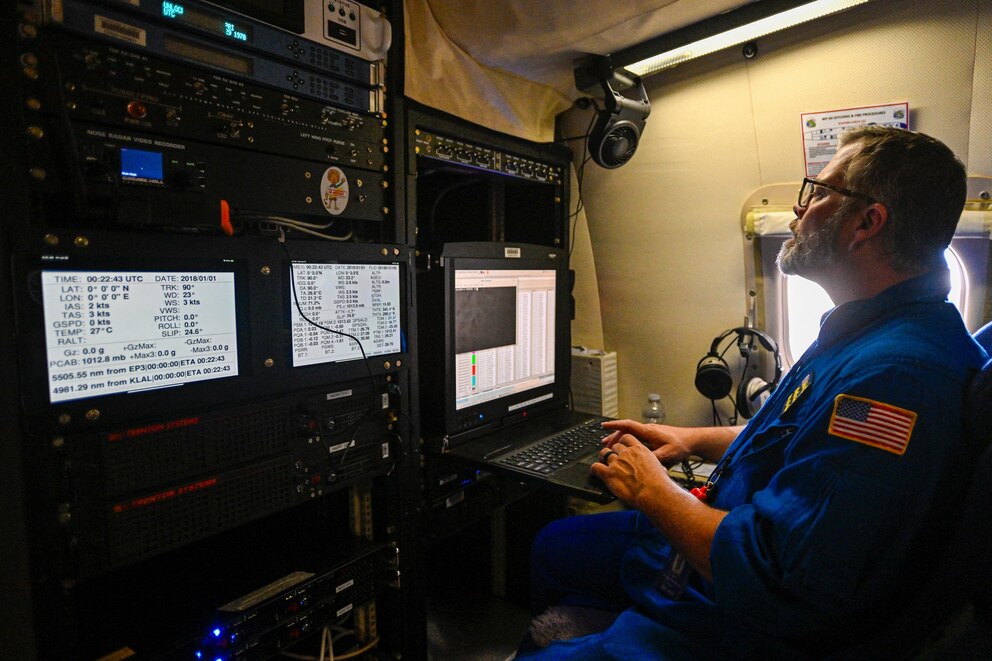
The fiscal year 2026 Commerce, Justice, Science appropriations bill provides roughly $5.8 billion to NOAA in 2026, a 6% decrease from the previous year. However, it restores a majority of funding for NOAA's Operations, Research and Facilities (ORF) account, which includes OAR. While specific spending details have not yet been released, this would likely spare many critical research labs and climate institutes from potential cuts.
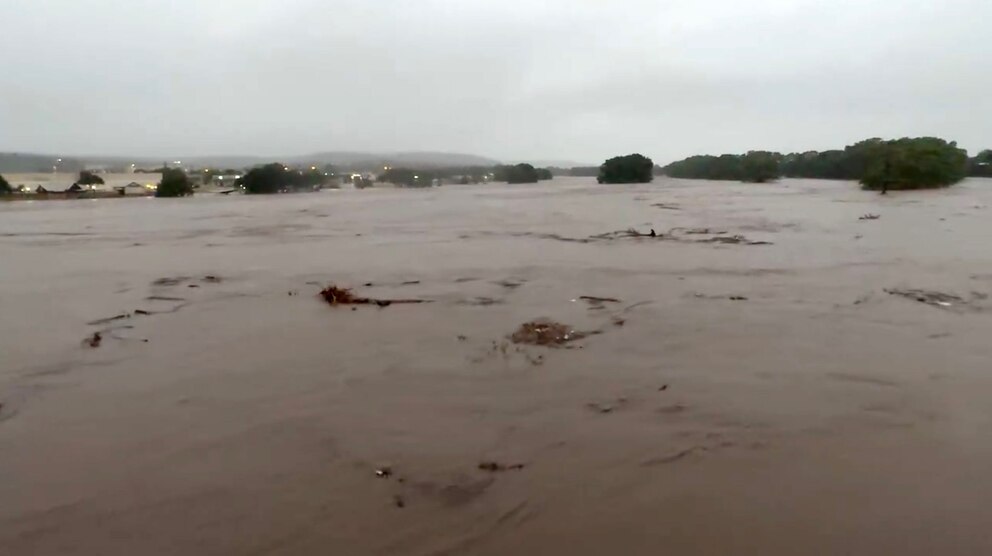
During the July 15 markup session, Subcommittee Chairman Hal Rogers, R-Ky., expressed his support for the National Weather Service, emphasizing the recent toll of devastating flooding hitting the country.
"Flooding has inflicted much pain on this nation over the last few months," he said. "From my district in Kentucky to Texas, now is the time to ensure the National Weather Service is equipped with the funding it needs to warn and protect our citizens."
At the start of the markup session, Rosa DeLauro, D-Conn., the subcommittee's ranking Democrat, voiced concerns over both the proposed NOAA budget and recent staffing and funding cuts at the National Weather Service.
"Weather forecasts are not waste, fraud and abuse," she said. "I ask my colleagues, did anyone come to your town halls and complain that the National Weather Service has too many meteorologists? Too many people issuing advisories, watches and warnings on severe storms?"
DeLauro also cited concerns from Bill Turner, Connecticut's state emergency management director, who said the situation is "a very fragile house of cards right now, and we need them to continue… It really could be catastrophic in a lot of ways for our state if they go down that path of stopping the National Weather Service and their functionality."
The bill now advances to the full committee for a markup on Thursday, July 24.
The Senate's version of the bill allocates approximately $6.14 billion to NOAA for fiscal year 2026, just below the $6.18 billion approved for 2025. While this represents a modest overall decrease, the Senate Committee on Appropriations voted to boost spending for the agency's Operations, Research and Facilities (ORF) account, adding $68.7 million. The increase means more available funding that could go to key offices such as OAR, NWS and NESDIS (National Environmental Satellite, Data, and Information Service).
The current Senate bill explicitly signals support for NOAA's mission, including weather and climate research.
"The Committee strongly supports Climate Laboratories and Cooperative Institutes for their critical role in delivering high-quality weather information and driving economic benefits across the United States," the bill states.
The bill also addresses staffing concerns at local NWS offices across the country and provides additional funding to ensure they become fully staffed.
The bill's authors write, "Insufficient staffing levels risk compromising public safety and the NWS's mission to protect lives and property. The Committee provides an additional $10,000,000 for Analyze, Forecast and Support and urges the NWS to prioritize recruitment, retention, and training initiatives to ensure all weather forecast offices (WFOs) are fully staffed."
While introducing the bill, Jerry Moran, R- Kan., chairman of the Senate Appropriations Subcommittee on Commerce, Science and Justice, said, "NOAA, and particularly the National Weather Service, is a hugely important component of what this bill funds, and this bill recognizes that importance." He added that the bill "fully funds the National Weather Service" and "eliminates any reduction in the workforce."
However, Brian Schatz, D-Hawaii, raised concerns that the bill still gave too much discretion to the Office of Management and Budget (OMB) to determine the staffing levels needed to fulfill the agency's mission and statutory obligation -- "the Office of Management and Budget which clearly made the judgment that the National Weather Service has too many human beings working," Schatz said.
He introduced an amendment that would have required the administration to maintain full-time staffing at levels in place as of Sept. 30, 2024, but it was rejected along party lines.
The Senate Committee on Appropriations approved the Fiscal Year 2026 Commerce, Justice, Science, and Related Agencies Appropriations Act on July 17 by a vote of 19-10.
What does the Trump Administration want to cut?
The administration's budget proposal calls for eliminating the Office of Oceanic and Atmospheric Research (OAR) as a NOAA Line Office, with several of its functions transferred to the National Weather Service and the National Ocean Service. OAR leads NOAA's weather and climate research and develops many of the forecasting tools meteorologists rely on to produce timely and accurate forecasts.
The proposed budget would include shutting down NOAA's nationwide network of research labs and cooperative institutes. Among them is the Global Systems Laboratory in Boulder, Colorado, where the High-Resolution Rapid Refresh (HRRR) model, a critical tool in modern weather forecasting, was first developed more than a decade ago. The HRRR model helps meteorologists track everything from severe thunderstorms to extreme rainfall to wildfire smoke.
The Global Monitoring Laboratory, also based in Boulder, oversees operations at Mauna Loa Observatory on Hawaii's Big Island. This observatory has maintained the world's longest continuous observation of atmospheric carbon dioxide and has been crucial to our understanding of how human-caused greenhouse gas emissions fuel global warming.
NOAA's Atlantic Oceanographic and Meteorological Laboratory (AOML) in Miami, Florida, plays a vital role in operational hurricane forecasting. The lab develops cutting-edge tropical weather models that have significantly improved forecast accuracy in recent decades. National Hurricane Center (NHC) forecasters set a record for forecast track accuracy in 2024, according to a NOAA report. NHC issued 347 official forecasts during the 2024 Atlantic hurricane season, and its track predictions set accuracy records at every forecast time period.
Who will lead NOAA next?
Earlier this month, during a confirmation hearing, Dr. Neil Jacobs, President Donald Trump's nominee to head NOAA, said he supports the administration's proposal to significantly cut the agency's budget arguing the reductions could be achieved by shifting work from research to operations without impacting "mission essential functions."
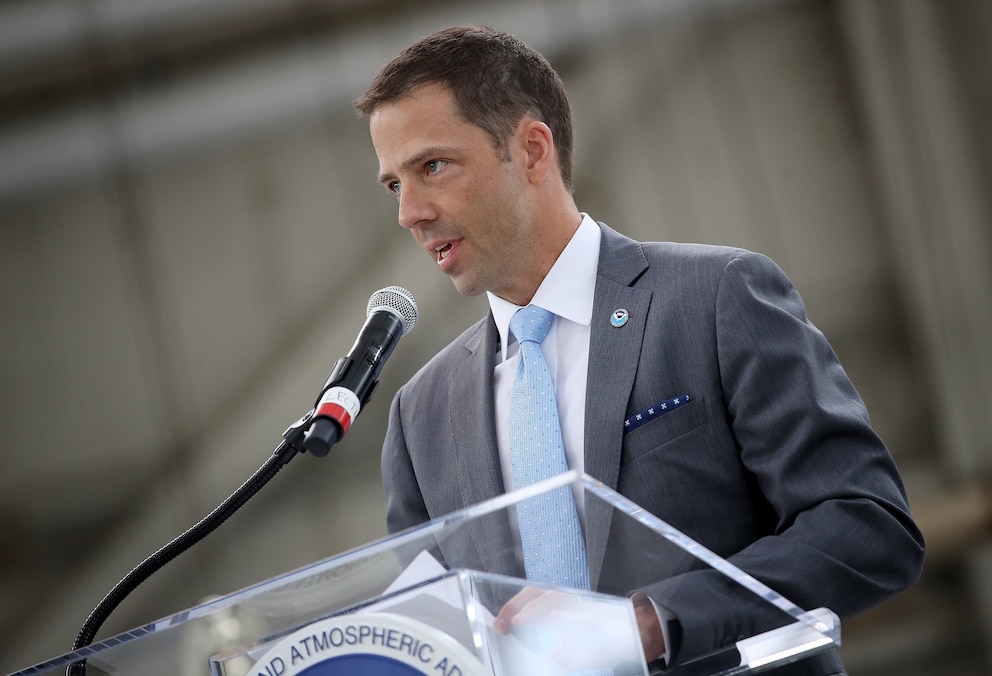
Jacobs also said if confirmed, he would "ensure that staffing the weather service offices is a top priority," adding that, "It's really important for the people to be there because they have relationships with the people in the local community. They're a trusted source."
NOAA's 2025 budget costs Americans less than $20 per person this year.
ABC News reached out to NOAA for comment, but did not immediately hear back.