'We're in a crisis': US to cut $1B to Afghanistan to prod leaders and move peace process forward
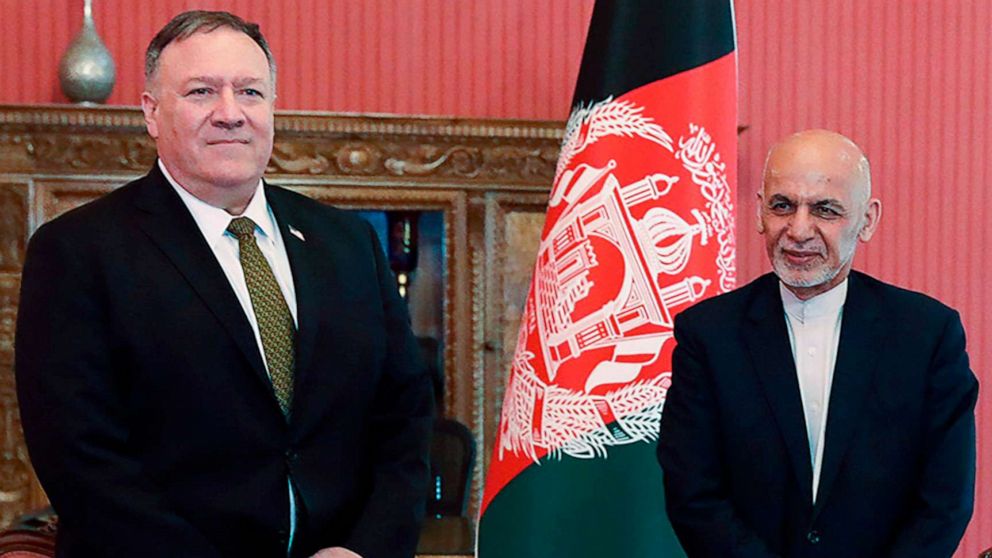
After weeks of political in-fighting have paralyzed the Afghan government and frozen the peace process between it and the Taliban, Secretary of State Mike Pompeo made a surprise trip to the country Monday to prod its leaders to end their dispute and form a government.
But after departing Kabul and meeting Taliban leaders in Doha, Qatar, the top U.S. diplomat announced that his efforts failed to bring together rival Afghan leaders and that the U.S. would cut $1 billion in assistance to the government and review further cuts unless they came together to advance the peace process, by freeing thousands of Taliban prisoners and naming a delegation to negotiate with the militant group.
That peace process was initiated by the U.S. and Taliban signing an agreement on Feb. 29, but nearly one month later, the militant group have increased their violent attacks on Afghan security forces and negotiations between the two sides have yet to happen, two weeks after their scheduled start date.
"We are in a crisis," a senior State Department official said Monday, briefing reporters who traveled with Pompeo. "Two inaugurations and two presidents. ... That difficulty, if it escalates and persists, produces a challenge -- or slows downs or risks the peace process."
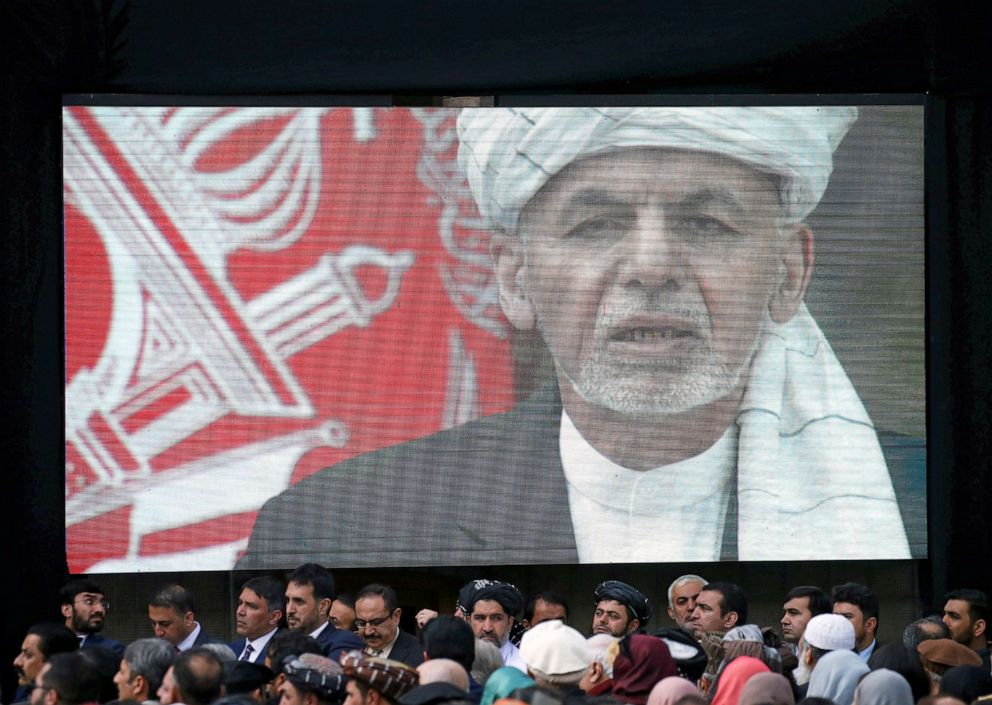
The difficulty has been brewing for months, after September's presidential election -- a rematch of 2014's bitter contest. Marred by irregularities and accusations of fraud, the 2014 election finally ended when the two leading candidates, Ashraf Ghani and Abdullah Abdullah, were forced to share power in a U.S.-brokered deal, with Ghani becoming president, but Abdullah becoming chief executive, a new position.
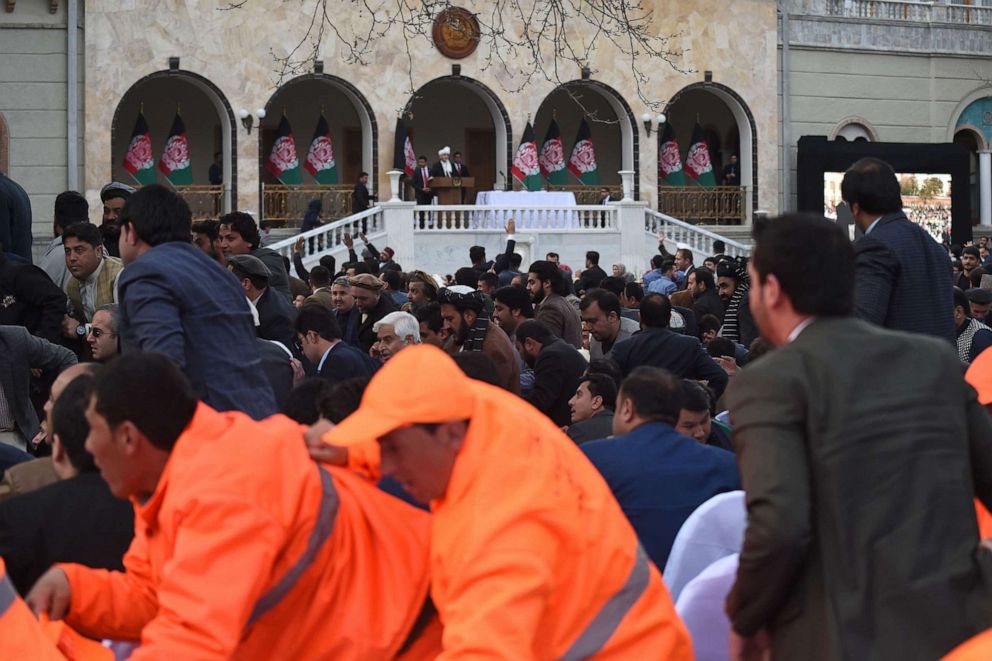
The 2019 vote has sparked a similar fight. After months of vote counting and some recounting, the country's independent election commission said on Feb. 18 that Ghani won a narrow majority for a second term. But Abdullah, who trailed by double digits, rejected those results and declared himself president, even holding his own inauguration.
For days, the U.S. did not weigh in, as Afghanistan's independent electoral complaints commission said there were irregularities that could narrow the gap between Ghani and Abdullah and put Ghani below the 50% threshold needed to win the presidency -- forcing a second round of voting.
Instead, the U.S. was focused on finalizing its agreement with the Taliban, which chief U.S. negotiator Zalmay Khalilzad and Taliban co-founder Abdul Ghani Baradar signed on Feb. 29 in Doha, Qatar, as Pompeo and other foreign ministers applauded.
In the deal, the U.S. agreed to immediately begin drawing down its troops and aim to withdraw all forces within 14 months, in exchange for the Taliban committing to prevent terrorists from using Afghan soil to attack the U.S. and to sit with a delegation of other Afghans for peace negotiations. That Afghan delegation would be chosen by the government and include members of it, but not be an official government delegation, as the Taliban still refuses to recognize the administration in Kabul.
But the political crisis over the presidency has halted any agreement on who makes up the Afghan delegation and delayed the start of negotiations, originally scheduled for March 10.
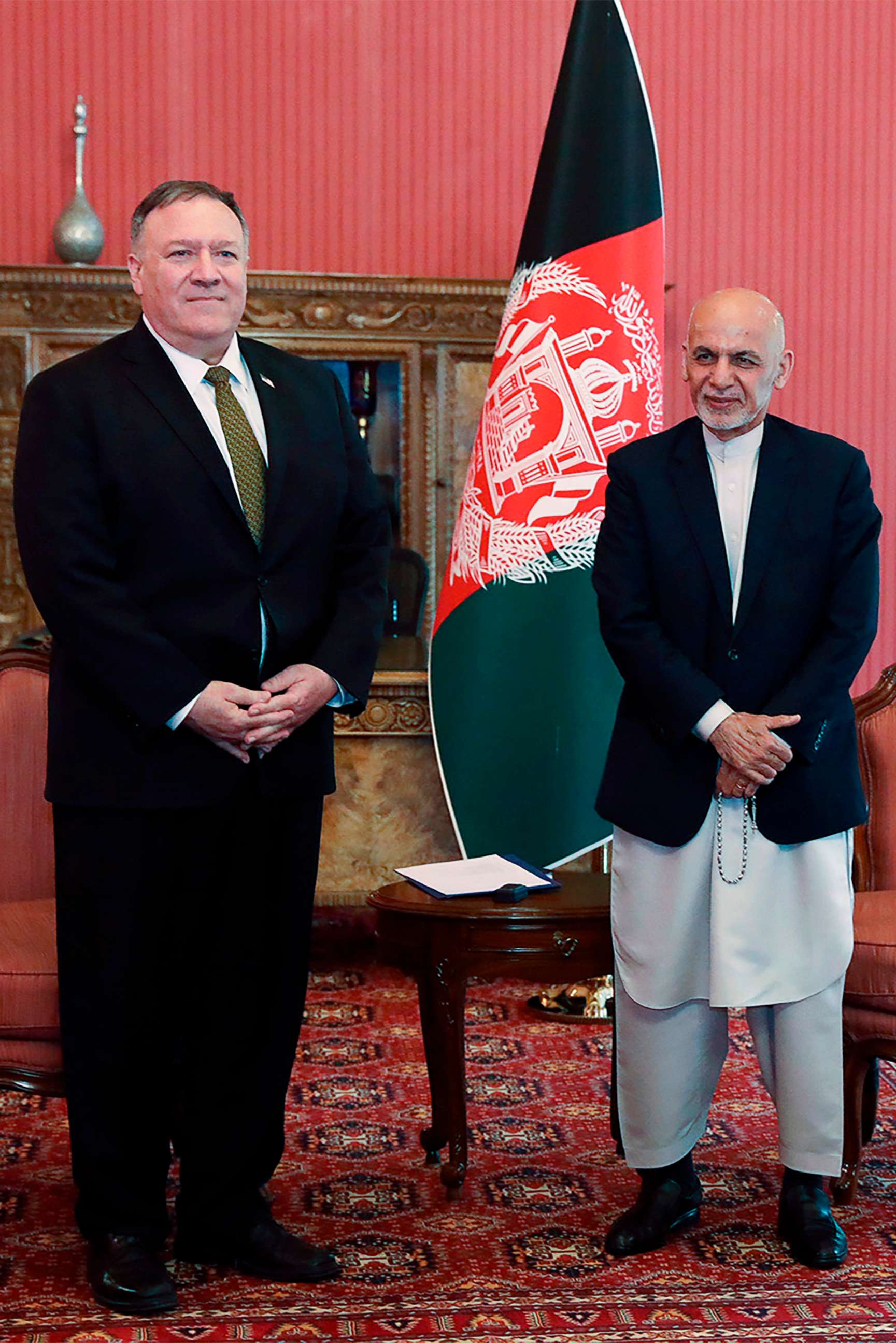
Khalilzad has spent weeks now trying to resolve the differences or at least name an Afghan delegation while the political crisis is worked on, but to no success. Pompeo's visit was a final warning to Ghani and Abdullah, but his meetings with them separately and together didn't bring their divide, he said in a blistering statement afterwards.
"The United States is disappointed in them and what their conduct means for Afghanistan and our shared interests. Their failure has harmed U.S.-Afghan relations and, sadly, dishonors those Afghan, Americans, and Coalition partners who have sacrificed their lives," he said, adding the $1 billion cut to assistance and a review of other cuts.
Despite that strong tone, Pompeo later told reporters he was "hopeful" that Ghani and Abdullah got the message and "will get their act together and we won't have to do" the cut, "but we're prepared to do that."
He declined to say where the money would come from or when, beyond that it wouldn't include assistance to Afghan security forces -- already besieged by the Taliban, which resumed attacks on the government after a one-week pause in hostilities before signing the deal with the U.S.
"They understand that the United States is going to do all we have in our power to get them to head down that path, and we will continue to cajole, to coach, and to incentivize them to have negotiations where all of the Afghans are sitting at the table," Pompeo added.
While a resolution between Ghani and Abdullah and any Afghan-Taliban negotiations still seem out of reach, the U.S. has upheld its commitment to the Taliban, starting to draw down from approximately 13,000 troops to 8,600 by July. The full U.S. withdrawal is not explicitly tied to Afghan negotiations happening, but the Trump administration faces international and domestic pressure to stand by the Afghan government and ensure that process gets underway.
The Taliban have said their delegation is ready to meet, but its fighters continue to attack Afghan government forces. Last Friday, they carried out their deadliest attack in weeks, killing 11 Afghan Army soldiers and six Afghan police in Zabul province. While they continue to abide by a ceasefire against U.S. troops, there has been a sharp spike in attacks on Afghan forces after holding their fire against them for one week before the Doha signing ceremony.
Ghani's government has protested that, but the U.S. has defended the Taliban leadership, with Pompeo saying Monday, "They committed to reducing violence, and they've largely done that."
Instead, he pushed both the Afghan government and the Taliban to meet a commitment the U.S. agreed to in its deal with the Taliban, but one Ghani said he never agreed to -- the government releasing up to 5,000 Taliban prisoners and the Taliban releasing 1,000 Afghans. The U.S.-Taliban deal said up to 5,000 "will be released" by March 10 when negotiations begin, but an accord signed by Ghani and Defense Secretary Mark Esper said only that Ghani's government would explore the "feasibility" of releasing a "significant" number of prisoners.
Khalilzad brought the two sides together via video teleconference on Sunday -- a small, but important step -- to discuss prisoner releases and commit to holding technical talks on how and when to do so. But afterwards, Ghani's spokesperson said they would not release any Taliban fighters, only prisoners at higher risk of the novel coronavirus.
Despite that, Pompeo sounded a note of optimism on that as well.
"I'm hopeful that the days ahead will begin this process, which will begin with the prisoner release and lead to getting an inclusive team together at the negotiating table," he said.