Critically endangered black rhino calf born in the wild in Kenya
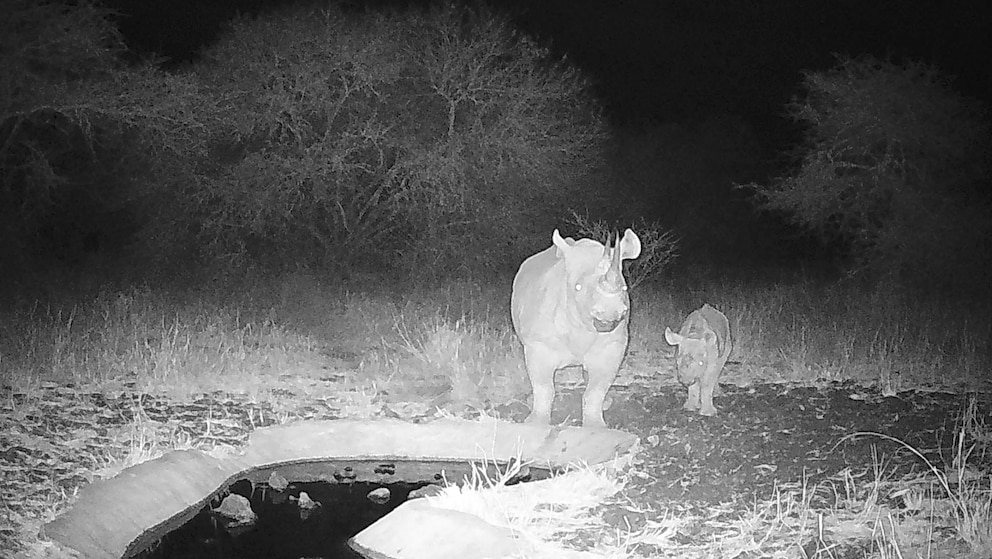
Wildlife researchers are celebrating the wild birth of a critically endangered eastern black rhino as a tiny subgroup in Kenya attempts to repopulate after nearly being wiped away from the region.
Rangers first suspected that a new calf may have been born after seeing "distinct" baby rhino tracks that appeared to be following in the footsteps of a mother rhino during this past spring, Amy Baird, deputy director of Big Life Foundation USA, a wildlife conservation nonprofit, told ABC News.
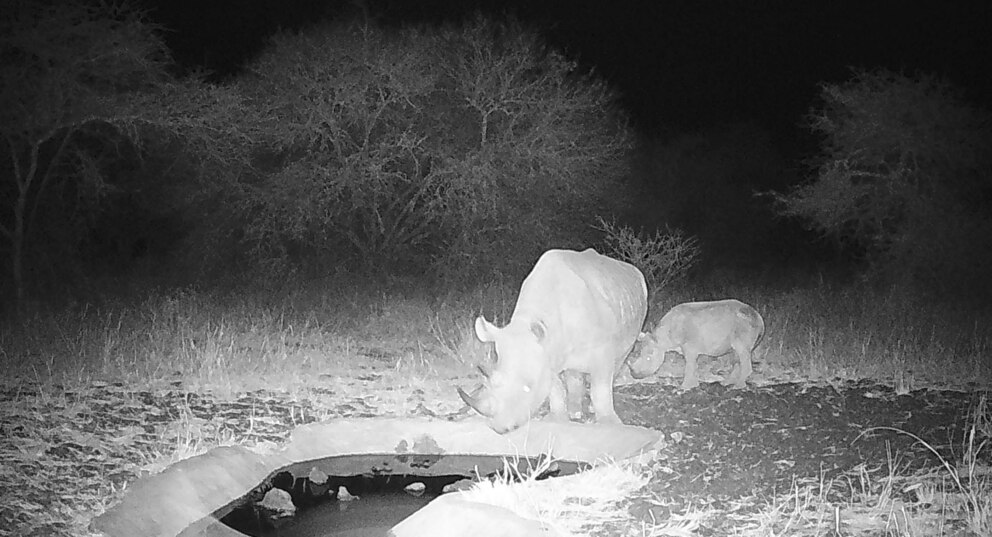
Several months later, their suspicions were confirmed when camera traps set up by the Big Life Foundation and the Kenya Wildlife Service caught glimpses of mama and baby rhino within remote areas of the Chyulu Hills, a mountain range in southeastern Kenya home to nationally protected land that includes rolling hills, river plains and ample wildlife.
The calf was born to a first-time mom named "Namunyak," which translates to "blessed" in Maa, a language spoken by communities in southern Kenya and northern Tanzania, according to the Big Life Foundation.
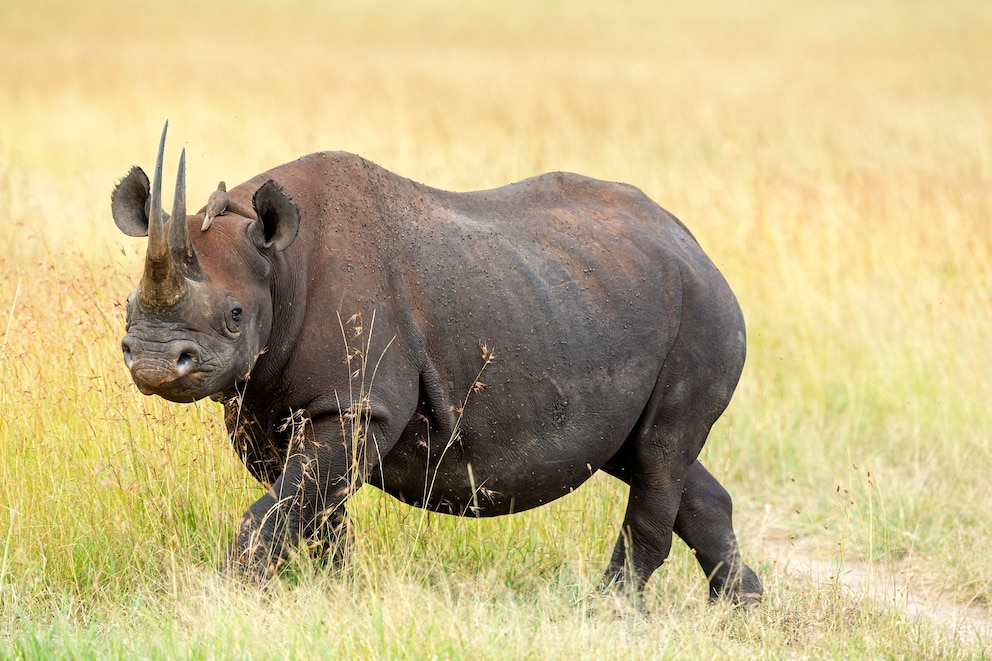
The new baby is likely about 6 months old, but researchers have yet to determine its sex.
"We haven't gotten good enough photos to confirm that," Baird said. "It's usually hiding behind its mom."
Rangers will name the calf over time, once they make sure it is thriving and survives, Baird said. Young rhino calfs are "very vulnerable" and susceptible to both natural and human-caused dangers, she added.
However, rangers have observed so far that the calf is healthy and will often exhibit adorable traits.
"Every time we see it, it's moving around and being joyful -- acting like you would think a cute little baby rhino would," she said.
The calf's birth brings the number of eastern black rhinos in the Chyulu population to nine, researchers said.
Eastern black rhinos were once abundant across the region, but poaching in the 1970s for their horns, which contain keratin, nearly eradicated the subspecies.
Wildlife experts actually thought the Chyulu population was extinct until the late 1990s, when rangers found a hidden population that managed to evade humans for years, Baird said.
The region is extremely difficult to monitor due to its topography, Baird said. Described as "The Green Hills of Africa" in Ernest Hemingway's 1935 nonfiction novel, the Chyulu Hills is a "distinct" mountain range that separates the Tsavo ecosystem from the Amboseli ecosystem, bringing with it several types of landscapes and hazards.
"It's heavily volcanic, razor-sharp lava, lots of thorny acacia trees, very steep terrain, and so it's a very difficult area to monitor and protect," Baird said.
This is the second birth the tiny population of black rhinos has experienced in the last two years. Another calf, born in late 2023, is now almost fully grown and will likely leave its mother soon, Baird said. In addition, its mother was recently documented on a camera trap with one of the male rhinos in the area, which means she could be going into her next cycle and another baby rhino could soon be on the way.
There may even be more existing eastern black rhinos in the Chyulu population, but rangers just haven't noticed them yet, Baird said.
The Chyulu population is of "critical value" to rhino conservation because the group is a genetically independent population and has not been mixed with other populations, according to Royal African Safaris. Bringing this population back from the brink of extinction could strengthen the entire black rhino gene pool, conservationists for the Kenya Rhino Project say.
The tiny Chyulu population is under constant surveillance by dozens of rangers as well as 48 camera traps, according to Royal African Safaris. An increase in anti-poaching efforts and monitoring may have contributed to the survival of the population as well, wildlife experts say.
The rare births represent a "hopeful milestone" for rhino conservation in the region, according to the Big Life Foundation.
"For such a small population, every calf and every new birth is a really big deal and something to be celebrated," Baird said.