Why cyclosporiasis testing is challenging as the intestinal disease spreads

Cases of cyclosporiasis are continuing to rise across the United States, with infections confirmed in at least 18 states.
As of Thursday, there have been 1,251 reported cases in Michigan and another 177 cases reported in Ohio.
Testing for Cyclospora -- the parasite that causes cyclosporiasis -- is not typically included in routine U.S. laboratory stool testing and must be specifically requested by a healthcare provider, according to the Centers for Disease Control and Prevention (CDC).
Because the parasite might not shed enough to be detected in one stool sample, individuals may need to submit several samples taken on different days, the CDC said.
“The most sensitive tests, meaning the tests that are most likely to detect an infection, are stool PCR tests, or you can use stool microscopy,” Dr. Jeanne Marrazzo, CEO of the Infectious Diseases Society of America, told ABC News.
Polymerase chain reaction (PCR) analysis involves identifying parasite DNA found within the stool sample.
Microscopy requires visualization under a microscope, a specific feature that is a characteristic of Cyclospora oocysts or eggs, according to the CDC.
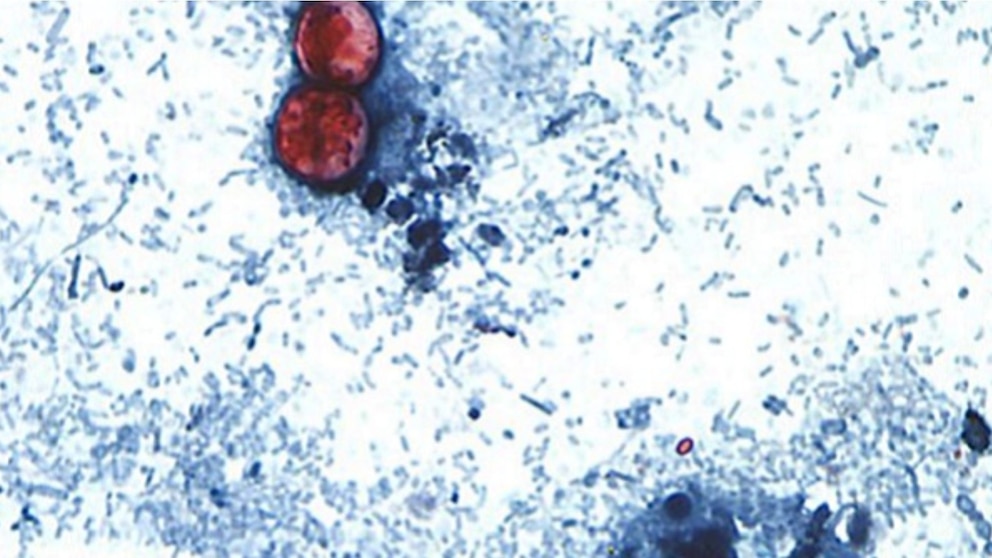
Symptoms of cyclosporiasis can include severe watery diarrhea, nausea, vomiting, abdominal pain or bloating, according to the CDC.
The time between becoming infected and becoming sick is typically about one week, but can range from two days to two weeks or more. The long incubation period can make it difficult to trace back what may have infected someone.
“Most people with diarrhea don’t go see a physician,” said Marrazzo. However, if symptoms persist, “that would be a good time to seek care,” she said.
Additionally, tracing back what infected someone can be a laborious process.
The Michigan Department of Health and Human Services told ABC News that when it receives a report that an individual has been tested for and determined to have cyclosporiasis, the local health department in the area where they live reaches out to them to interview them.
“We provide them a questionnaire that asks questions about when people started feeling sick, the number of days experiencing symptoms and the types of symptoms experienced,” a spokesperson told ABC News. “We also ask which restaurants and grocery stores persons visited or shopped at 12 days prior to becoming ill. We try to get specific dates, locations and food items/ingredients where possible.”
Srishti Goel, M.D., MPH, is a public health and general preventive medicine resident at the University of Texas at Tyler Program and a member of the ABC News Medical Unit.
ABC News' Mary Kekatos and Youri Benadjaoud contributed to the report.