A dazzling display of northern lights could be visible on Christmas Eve in these states

The magic of Christmas could soon manifest in the sky, with a northern lights display possible in several U.S. states.
Some of the states in the highest latitudes could catch a glimpse of auroras as they wait for Santa's arrival, according to the National Oceanic and Atmospheric Administration's Space Weather Prediction Center.
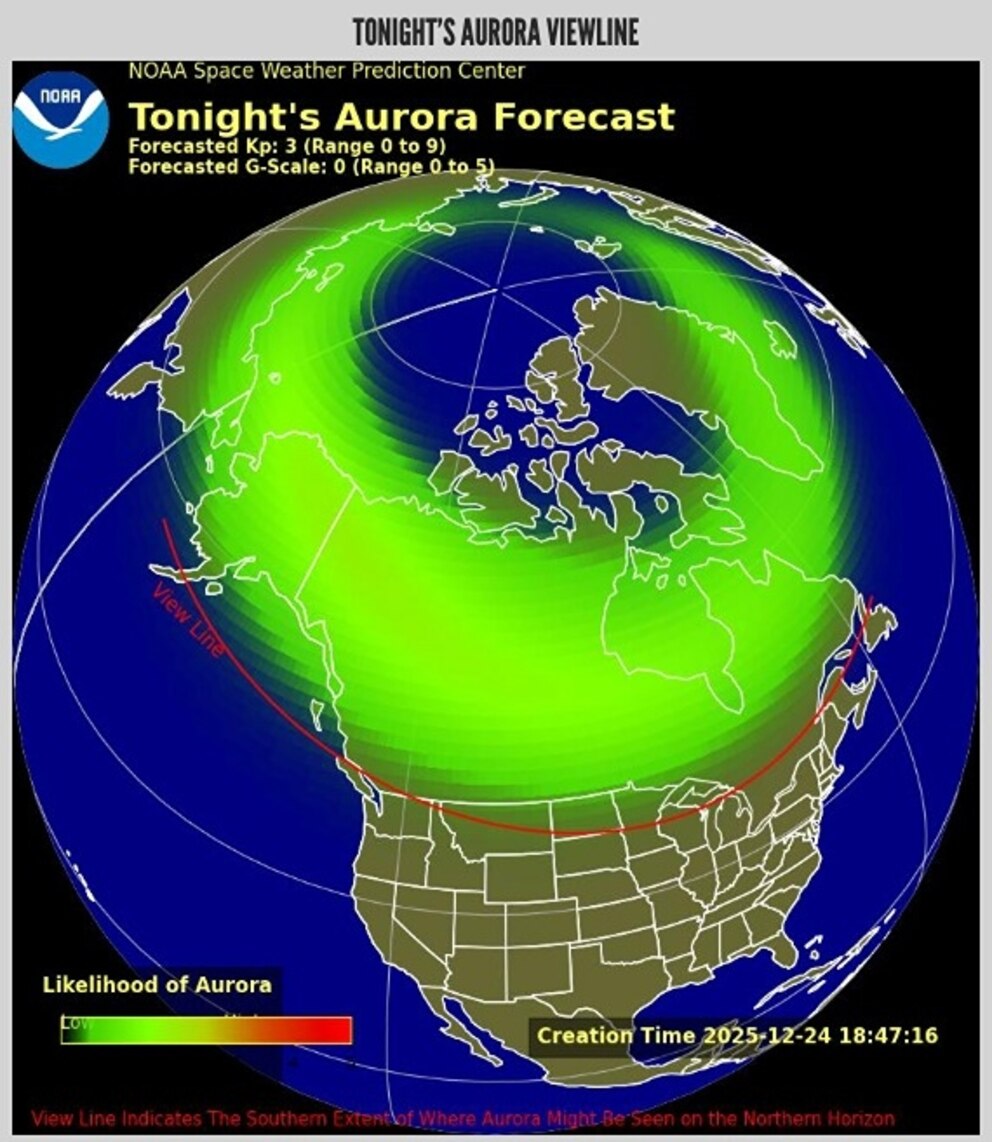
Stargazers on the northern edges of Alaska, Washington, Idaho, Montana, North Dakota, South Dakota, Minnesota, Wisconsin, Michigan and Maine could see the dazzling display, NOAA's aurora viewline map shows.
Faster-than-normal solar wind erupting from a large coronal hole on the sun is creating unsettled conditions that are raising the odds for northern lights displays, according to NOAA.
The solar wind conditions could persist into Thursday.
Northern light displays occur when a solar flare interacts with the atoms and molecules in Earth's atmosphere.
As the solar flare clashes with the upper atmosphere, it causes the atoms to emit a glow, creating a spectrum of light in the night sky.
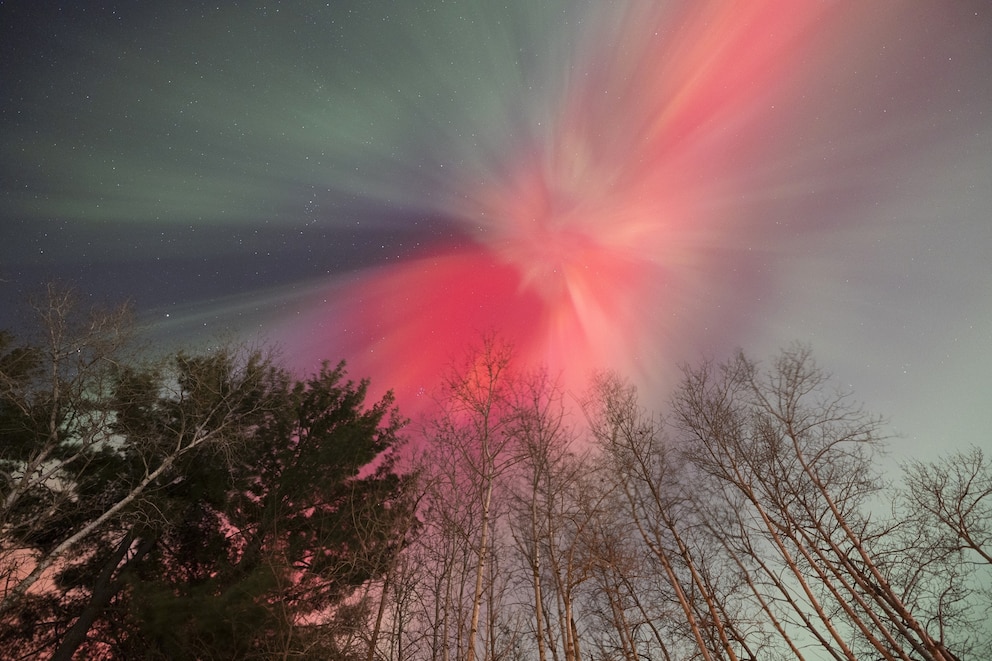
The sun's magnetic field reached its solar maximum phase of its 11-year cycle in October 2024, which has led to an increase in northern lights activity ever since, according to NASA.
The sun has continued to emit strong solar flares and geomagnetic storms, even after the solar maximum phase has ended.

Earlier this week, solar wind speeds peaked at about 500 miles per second, helping to drive G1 (or weak) geomagnetic storms that triggered auroras.
In addition, a coronal mass ejection -- a massive burst of solar material and magnetic field from the sun's outer atmosphere -- that occurred on Dec. 20 could pass close to Earth on Wednesday, enhancing chances for a northern lights display even more.
Intense magnetic activity caused by sunspots are expected to last through 2026, according to NOAA.
The best time to see the northern lights in the U.S. is generally between 10 p.m. and 4 a.m. local time, according to NOAA.

Traveling to the darkest location possible is recommended for the best viewing, according to the Space Weather Prediction Center.
Smartphones and digital cameras are more sensitive to the array of colors and may be able to capture images of the auroras, even if not visible to the naked eye, according to NASA.