Democratic socialist Zohran Mamdani could be New York City's next mayor. Here’s how it happened

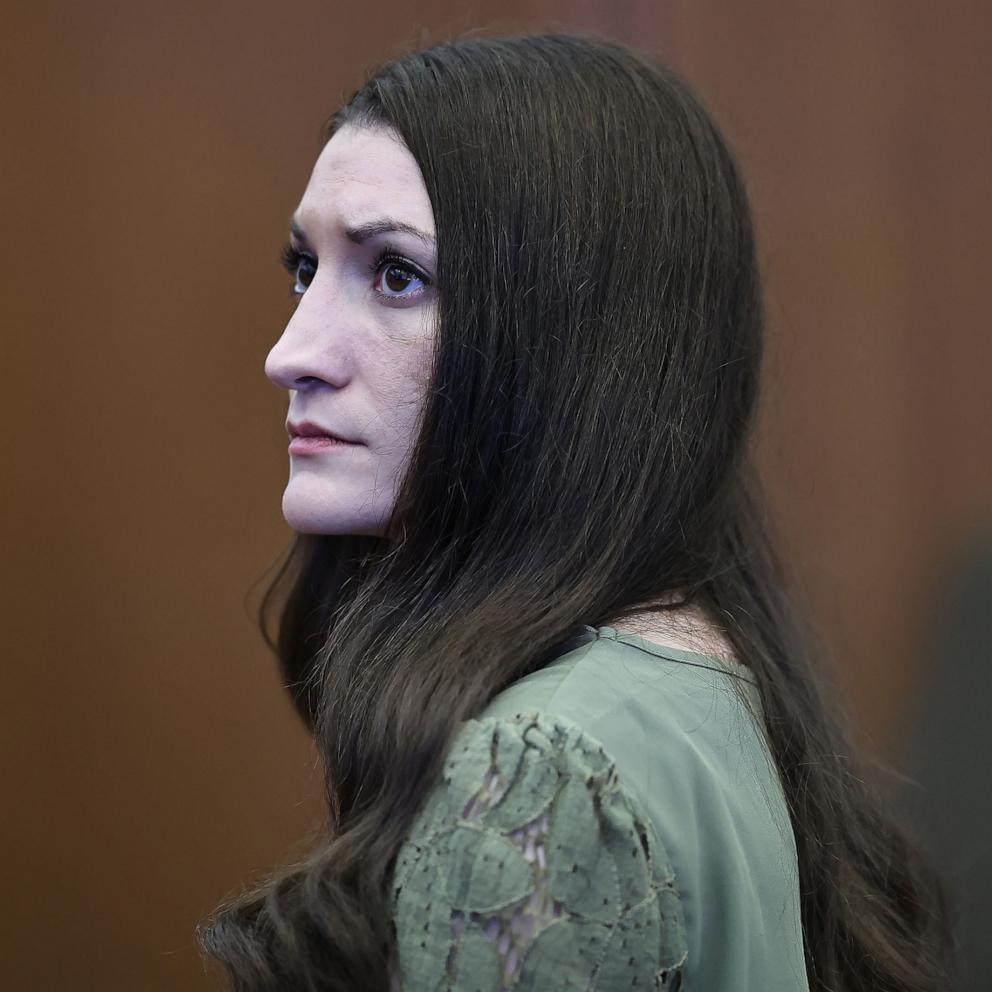
When Donald Trump defeated Hillary Clinton in the 2016 presidential election, Grace Mausser had just graduated from college.
"I was very much a part of the liberal establishment -- more on the progressive side -- but totally believed that Hillary Clinton was going to win," said the 31-year-old Houston native. "Like millions of other people, I was totally shocked and really dismayed."
Searching for a way to turn her disappointment into action, Mausser recalled the energy behind Bernie Sanders' presidential campaign that year -- and how he referred to himself as a democratic socialist on the campaign trail.
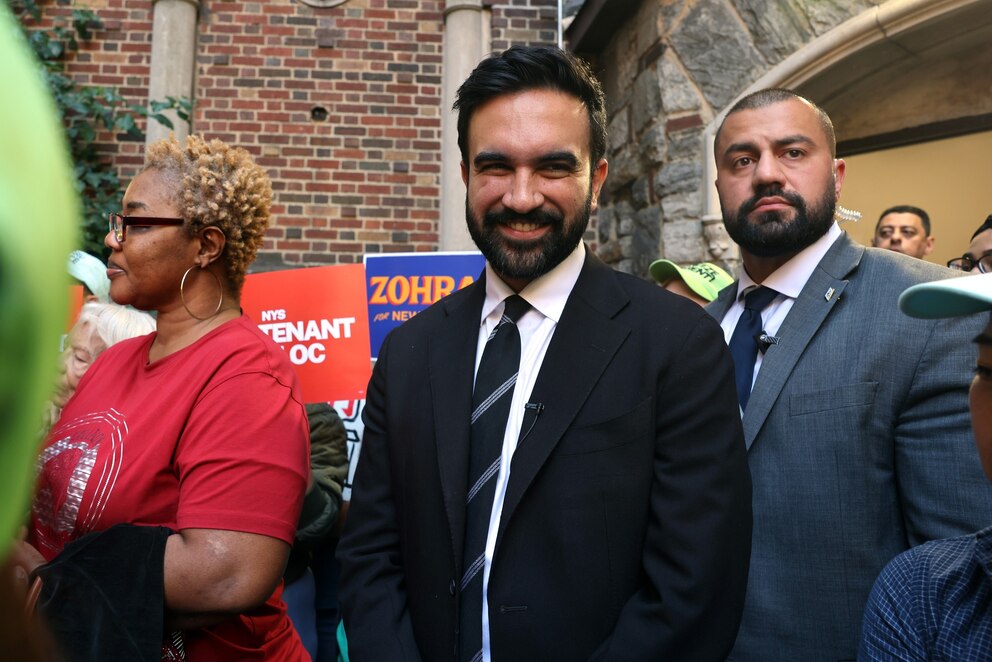
Mausser found the Democratic Socialists of America and became involved in her local New York City chapter, where she met then-New York State Assembly candidate Zohran Mamdani, who has been a member of DSA since 2017.
And while Mausser herself would go on to rise through the ranks of New York progressive politics, eventually becoming a co-chair of New York City DSA, Mamdani would become the Democratic nominee for mayor of New York City, bringing the organization that endorsed and supported his run further into the national spotlight.
Shortly after Mamdani won the primary in June, Trump took to social media to call the 33-year-old "a 100% Communist Lunatic." Trump and other Republicans have continued to refer to Mamdani as a "communist" throughout the election cycle.
Mamdani has emphasized that he is not a communist, including last Wednesday on ABC's "The View," where he told co-hosts that he was a democratic socialist.
Democratic socialism is a political movement that calls for the establishment of a decentralized socialist economic system within a democratically run political system. It differs from socialism, which is sometimes associated with communism and does not necessarily include a democratic form of governance.
Because of that, socialism is often used to describe the political and economic system of countries such as Cuba and Venezuela, and the term can politically alienate some voters due to its association with these countries.
However, a recent Gallup poll found that attitudes toward socialism may be changing among left-leaning Americans, with 66% of Democrats now having a positive view of socialism, up from 50% in 2010.
"I think people are stuck in a very old way of thinking. You know, Trump's in his 70s. Maybe he still thinks we're in the Cold War," said Mausser, referencing the Soviet Union's promotion of the socialist ideology in the years following World War II.
"There have been socialists in America since the term was invented," said Michael Kazin, a professor of history at Georgetown University and the author of the book, "What It Took to Win: A History of the Democratic Party." "Socialism during the Cold War, for most Americans, meant the Soviet Union, or China, or Cuba or North Korea. It meant a tyrannical, one-party state. And of course, most Americans didn't want any part of that."
Kazin says that socialists used to run under their own political party labels -- and for the most part, never expected to actually win any elections.
"It was an educational campaign," said Kazin. "You were trying to tell people what socialism was."
But in 1982, two socialist organizations merged to form the Democratic Socialists of America, under the leadership of Michael Harrington, who had a different vision for how anti-capitalists would engage in the American political system.
"Harrington's vision was that socialists would make their influence felt not operating as a separate party," said Maurice Isserman, a professor of history at Hamilton College and the author of the biography, "The Other American: The Life of Michael Harrington." "They would make their ideas more popular and their influence greater by working within the Democratic Party electorally."
Harrington's original vision for DSA -- perhaps best understood through his founding phrase, "the left wing of the possible" -- is still reflected in DSA today.
"DSA is using a strategy of pursuing the Democratic ballot line to show that socialists can govern," said Mausser. "We want to win elections. This is where we break with a group like the Green Party, that has its own ballot line, but has not mounted many successes."
Megan Romer, a co-chair of the national Democratic Socialists of America, said thoughts around socialism have changed.
"Sixty years ago, people heard socialism and thought Stalin, and I think that people hear socialism now and understand that it means something very different. And it can mean what they want it to mean because that's what democratic and collective control is," Romer said.
When DSA was founded at the onset of Ronald Reagan's presidency, left-wing groups were not in the political or cultural position to be able to mount successful electoral campaigns. But with the 21st century came the 2008 financial crisis -- as well as the Occupy Wall Street and Tea Party movements that emerged from it -- and Americans began questioning the economic establishment from both the right and the left.
"There was a sense -- looking back now, especially -- that politics was really cleaving over economic issues," said Greg Krieg, a Democratic strategist and media director of the New York-based political consulting firm, Slingshot Strategies.
According to Krieg, those on the right embraced the Tea Party movement -- which eventually paved the way for the success of Trump's 2016 campaign -- while those on the left set the stage for Sanders' political rise.
After the 2016 election, DSA's numbers skyrocketed -- and so did its political capacity. According to Mausser, 2016 was the year that New York City DSA developed the electoral strategy that would help lay the groundwork for Mamdani's mayoral race almost a decade later.
"[DSA] is well put together in New York. It's focused. It has clear ideas of what it wants to do and what it has the capacity to do," Krieg said. "I think that wasn't always the case, but that's changed over the years."
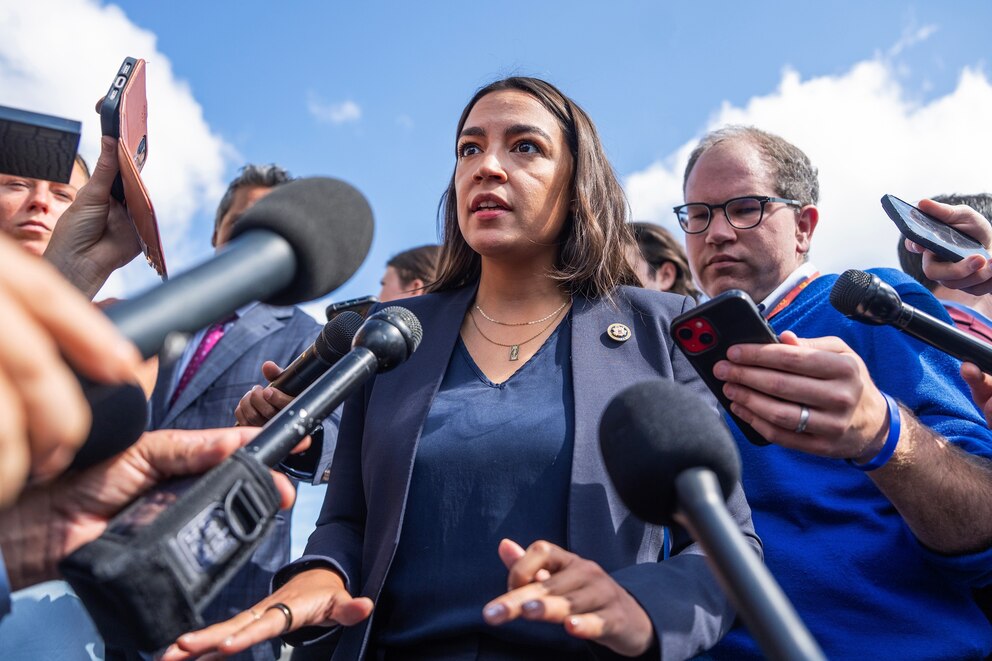
Then in 2018, the DSA-endorsed Alexandria Ocasio-Cortez was elected to the United States House of Representatives, proving how far a strong door-knocking operation can go in electing democratic socialist politicians.
But when the 2021 New York City mayoral election came along, DSA didn't endorse a candidate, despite the fact that the organization had amassed a large canvassing infrastructure in the years preceding it.
"I think the issue in 2021 was that there was no candidate like Zohran," Krieg said.
When New York City DSA decides whether or not to endorse a candidate, they consider how aligned the candidate is with their ideology and vision, as well as whether or not there is a path to victory, according to Mausser. In 2021, those factors weren't there, Mausser added.
"When we started talking with Zohran about running, though, that was a different proposition," Mausser said. "Someone who had collaborated with us closely, who we know very deeply both as an organizer and as an elected official, and who was committed to bringing democratic socialist values into the mayoral office."
After Mamdani's primary victory, he now works to try to secure his path to victory in the general election. It is a task that may have become more daunting since Mayor Eric Adams dropped his reelection bid, further narrowing the field of candidates that sit to the right of Mamdani on the political spectrum. In turn, Mamdani has distanced himself from the national DSA platform in recent months, telling reporters that his platform is the one that is on his website.
"Zohran has distanced himself a bit, and that is certainly a tactical choice he's made," Romer said. "But him disagreeing with some DSA stuff is, like, the most DSA thing he could do. Of course he disagrees with stuff -- we all do."
According to Romer, as a democratic organization, DSA members are not expected to agree on everything, but are instead encouraged to present and debate different ideas.
As Mamdani continues to lead in the polls, the conversation turns to governing, where the stakes could not be higher for fans who view his candidacy as one that could open the door for other democratic socialists.
Others don’t support Mamdani’s views. At a mayoral forum earlier this week, former New York Governor Andrew Cuomo -- Mamdani's opponent in the race who is running as an independent after losing to Mamdani in the Democratic primary -- criticized Mamdani's agenda and asserted that it would be harmful to New York City, telling the audience, "We are a regulated capitalist economy. We are not socialists."
"[Mamdani's] success or his failure as mayor will be fairly or unfairly used as a way of measuring the ability of democratic socialists and democratic socialist politicians to govern," Krieg said.
As for Mamdani's supporters, they are confident of a general election win and hopeful for a triumphant mayoralty -- for them, the future of the movement just might depend on it.