DHS study Trump touted on sunlight, heat killing virus preliminary, not peer-reviewed
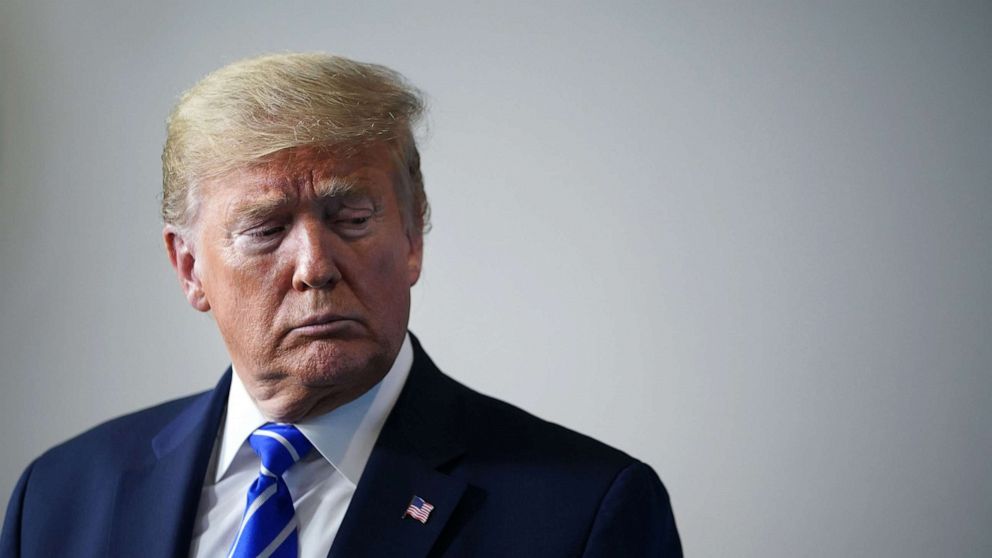
For months, President Donald Trump has repeatedly suggested that as warmer weather comes to the U.S., the deadly coronavirus might "disappear," as he memorably put it, "like a miracle."
“Now, the virus that we’re talking about having to do — you know, a lot of people think that goes away in April with the heat — as the heat comes in,” Trump said in February. "Typically, that will go away in April.”
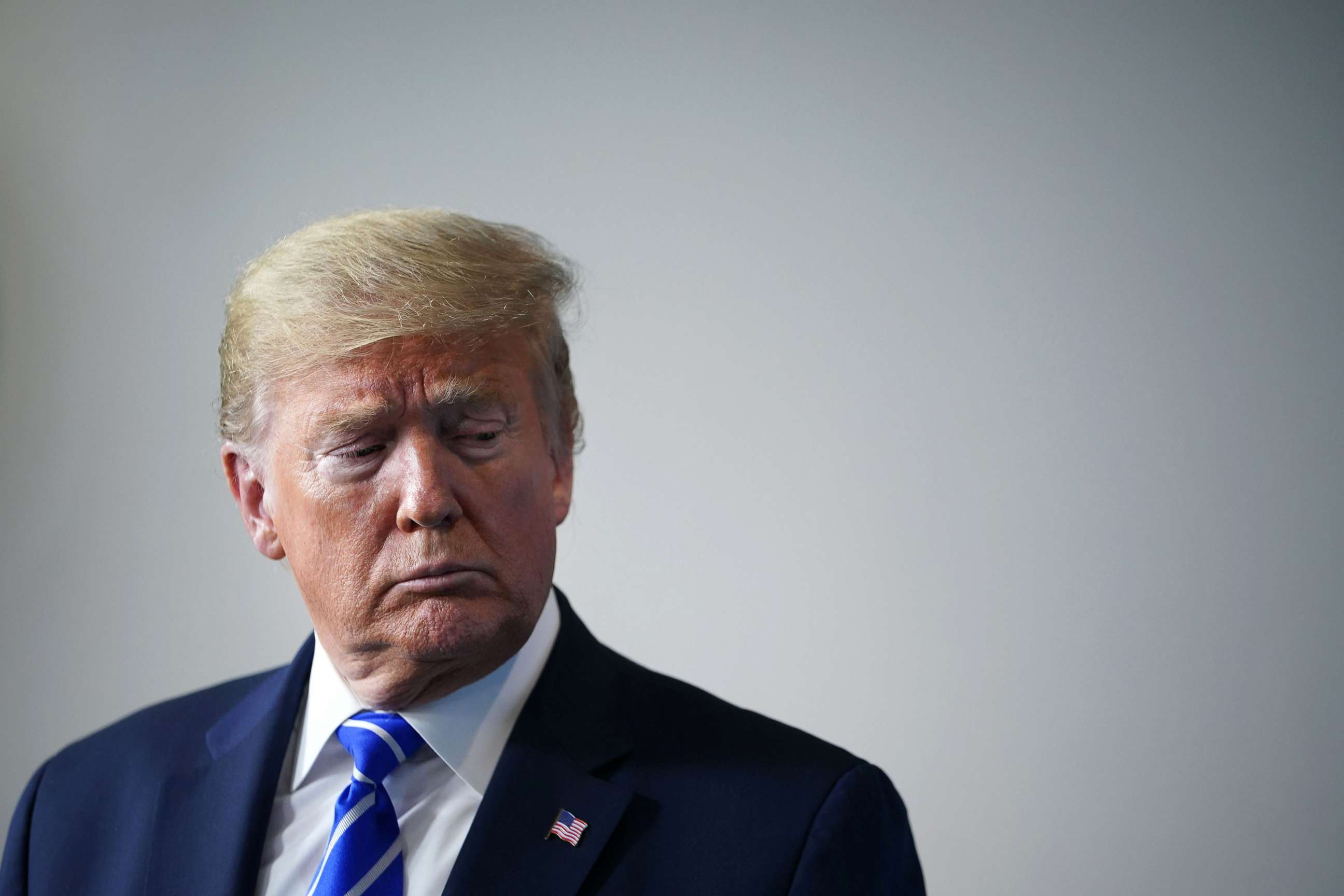
Now, as April nears an end and the virus continues to spread, the president is not letting go of his assertion that warm weather could bring the end of COVID-19, calling on the head of science and technology at the Department of Homeland Security to present findings on what were called "emerging trends" to support his claim.
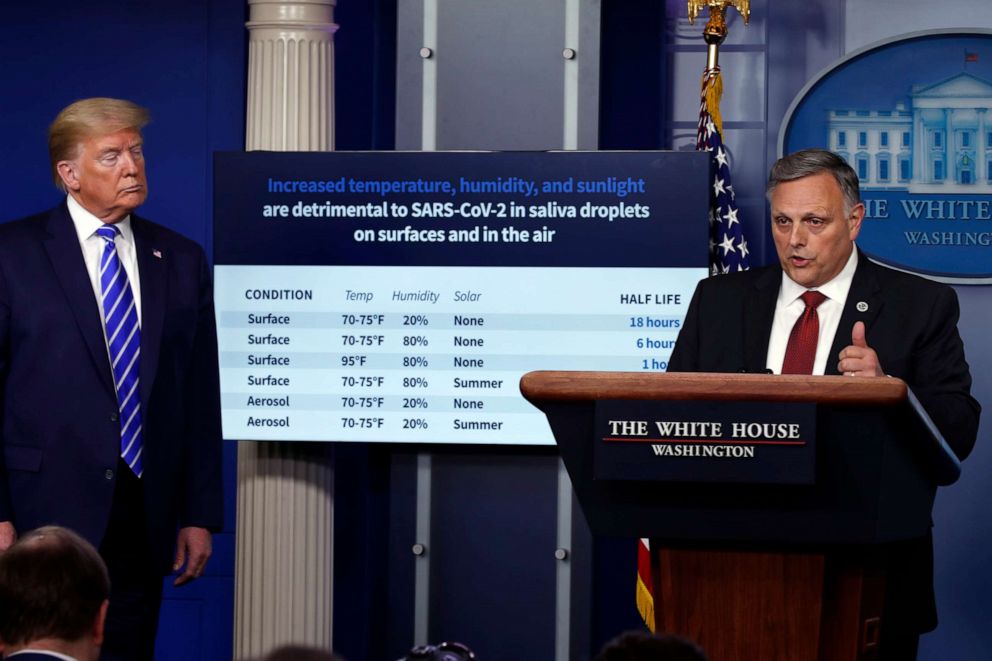
"There’s been a rumor that, you know -- a very nice rumor, that if you go outside in the sun or you have heat, and it does have an effect on other viruses but now we get it from one of the great laboratories of the world," Trump said at Thursday's White House briefing.
“Increasing the temperature and humidity … is generally less favorable to the virus,” William Bryan said, presenting charts summarizing DHS preliminary testing.
“If you look as the temperature increases, as the humidity increases, no sun involved, you can see how drastically the half-life goes down on the virus. So, it’s dying in a much more rapid pace [with] just exposure to higher temperatures and to humidity,” he said, as Trump looked on approvingly.
Tune into ABC at 1 p.m. ET and ABC News Live at 4 p.m. ET every weekday for special coverage of the novel coronavirus with the full ABC News team, including the latest news, context and analysis.
But although Trump gave the idea national prominence once again, this time with the appearance of scientific backing, a DHS spokesman told ABC News Friday that the findings are preliminary and yet to be peer reviewed and published.
"What was released last night were a kind of a summary of the emerging trends that we are finding as the studies are continuing, but we got to a point with confidence in those trends at this point that we said we need to start telling people about this," the spokesman said.
How and why did the DHS study happen?
Without the study being published, it is difficult for experts to weigh in on whether the findings -- and the test methods used -- are scientifically solid.
John Verrico, a spokesperson for the DHS Science & Technology Directorate said the department is preparing documents for the scientific peer review process and that the submission process is underway.
The DHS study began in February after a team put together a Master Question List about the virus and its impact, according to a DHS Science and Technology Directorate spokesman. The team looks at the breadth of scientific knowledge being produced by researchers around the world and then formulates a list of questions that need to be answered along with action items, the spokesman said.
“We started producing the master question list, we saw that there were these knowledge gaps in understanding the environmental impacts and the survivability of the virus, and so we began our studies along those lines,” the spokesman added.
As the master question list was being drawn up and throughout the ongoing study, the DHS team at the science and technology directorate has been in regular communication with the White House and the coronavirus task force, sharing the list and their preliminary findings, Verrico said.
“It was being sent directly to the Interagency Task Force and research partners,” he said.
DHS: Study began as Trump made claims but not at his direction
DHS didn't start the study at the president's direction, a spokesman said, but it came about the same time that the president began floating the idea of warm weather -- "heat" as he called it -- could have an impact on the virus.
“And by the way, the virus. … It looks like by April, you know in theory, when it gets a little warmer, it miraculously goes away — I hope that’s true,” Trump said at a campaign rally in New Hampshire Feb. 10.
During his briefing Thursday, Trump indicated that the so-called "emerging trends" DHS cited vindicated his view.
"I just threw it out as a suggestion, but it seems like that’s the case, because when it’s on a surface, that would last for a long time. When that surface is outside, it goes very quickly. It dies very quickly with the sun,” Trump said.
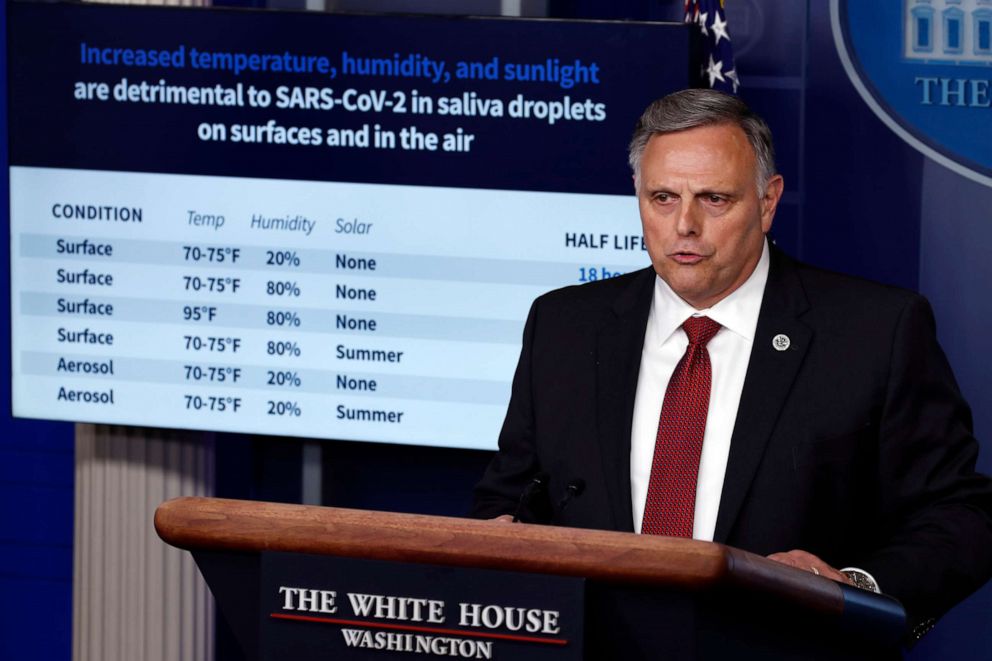
But Bryan pointedly warned that “it would be irresponsible for us to say that we feel the summer will totally kill the virus."
The DHS study also is not the first to suggest that weather might have an effect on coronavirus.
“There is some evidence to suggest that SARS-CoV-2 may transmit less efficiently in environments with higher ambient temperature and humidity,” a report published in April by the National Academy of Sciences stated. “However, given the lack of host immunity globally, this reduction in transmission efficiency may not lead to a significant reduction in disease spread without the concomitant adoption of major public health interventions,” such as social distancing.
Asked the day after Trump's briefing what message the public should take away from the DHS preliminary findings, Verrico emphasized that the "emerging trends" are “not indicative of a method for treatment nor a cure."
“These studies are looking at the virus itself, on surfaces and in the air,” Verrico said. “And people should still follow the direction of medical professionals and still practice social distancing, frequent hand washing and all those things. Our study results are not indicative of a method for treatment nor cure.”
What to know about coronavirus:
- How it started and how to protect yourself: coronavirus explained
- What to do if you have symptoms: coronavirus symptoms
- Tracking the spread in the US and Worldwide: coronavirus map