A diet of royal jelly isn't the only thing that makes a queen bee
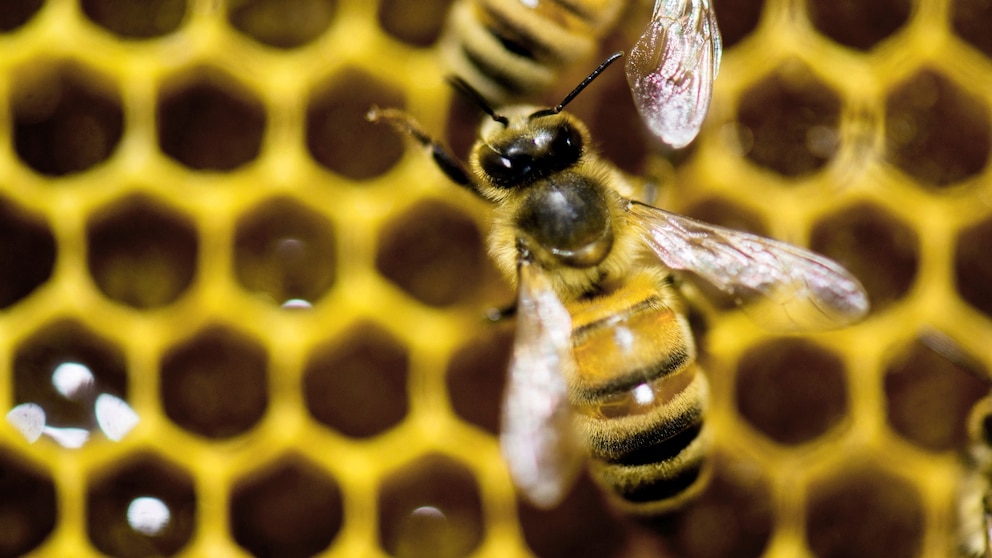
NEW YORK -- Scientists have identified a group of worker honeybees that are specially adapted to build their queen's waxy abode within the hive.
Worker bees perform a myriad of jobs to keep up the hive, including collecting food, nurturing young bees and caring for the queen, who lays all the eggs. New research reveals that the honeybees responsible for crafting the queen's home effectively run a fever to help melt and blend special chemicals into the wax.
“No one had ever thought that there might be a specialized group of workers that were building these queen cells,” said bee researcher Julia Bowsher with North Dakota State University, who had no role in the study.
These newly identified bees were younger and also had patterns of expression in their genes that made them uniquely suited to the task. The resulting peanut-shaped home was also distinct in its makeup, as it was made of softer wax with a higher melting point than the kind used to build worker bees' homes.
Queens are raised eating royal jelly secreted from the glands of worker bees and scientists have long believed diet was the main key to making a monarch. The new findings, published Wednesday in the journal Nature, suggest that the queen's environment might also play a role.
To test that theory, researchers raised baby queens in cups capped with either queen or worker wax. Despite eating royal jelly, the queens raised in worker wax were smaller and didn’t survive as well.
“For centuries, we believed ‘you are what you eat’ was the only rule for making a queen bee. Our study rewrites that rule to say ‘you are where you live, too,'" Kai Wang, a study co-author with the Chinese Academy of Agricultural Sciences, said in an email.
The findings offer a rare look inside the hive, but questions remain.
Honeybees pollinate and ensure the survival of crops such as blueberries, squash, watermelon and almonds. Further research is needed to learn more about the secret lives of queen cell-building bees and the exact combination of factors that produce the hive's head honcho.
“I would really like to know more about the specific chemical composition of this wax and which active ingredients are directly affecting the growth of the queens,” Bowsher said.
___
The Associated Press Health and Science Department receives support from the Howard Hughes Medical Institute’s Department of Science Education and the Robert Wood Johnson Foundation. The AP is solely responsible for all content.