Dolphin hunting season begins again in Japanese cove made famous by bloody documentary
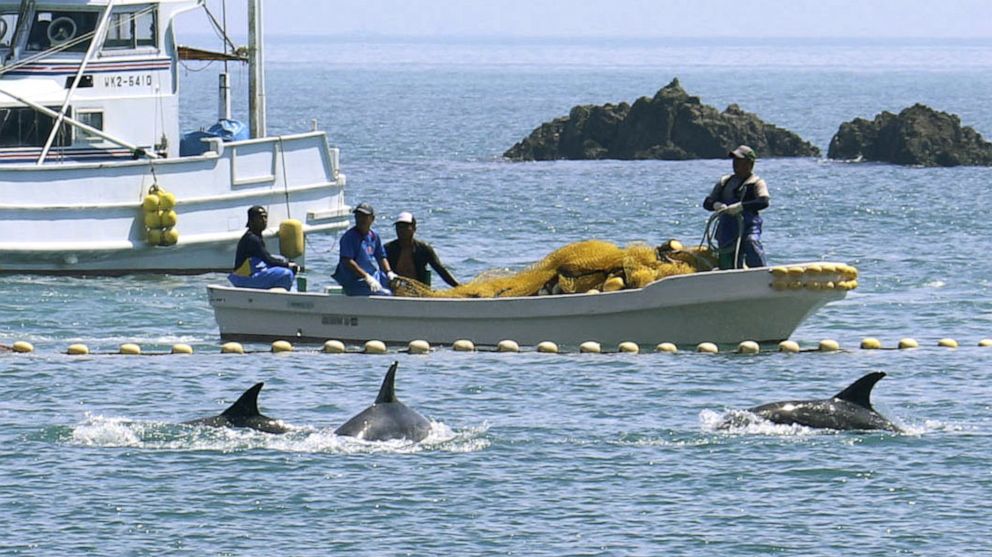
Dolphin hunting season has commenced in the small village of Taiji, Japan, with a quota to kill more than 1,400 dolphins and 300 whales in the coming months.
Made famous by the 2010 Academy Award-winning documentary “The Cove,” which filmed the slaughter of so many dolphins that it turned the waters of the cove red with blood, the annual hunting of dolphins is carried out by 26 fishermen who have been granted permits from the government, according to Dolphin Project, a non-profit organization dedicated to the welfare and protection of dolphins worldwide.
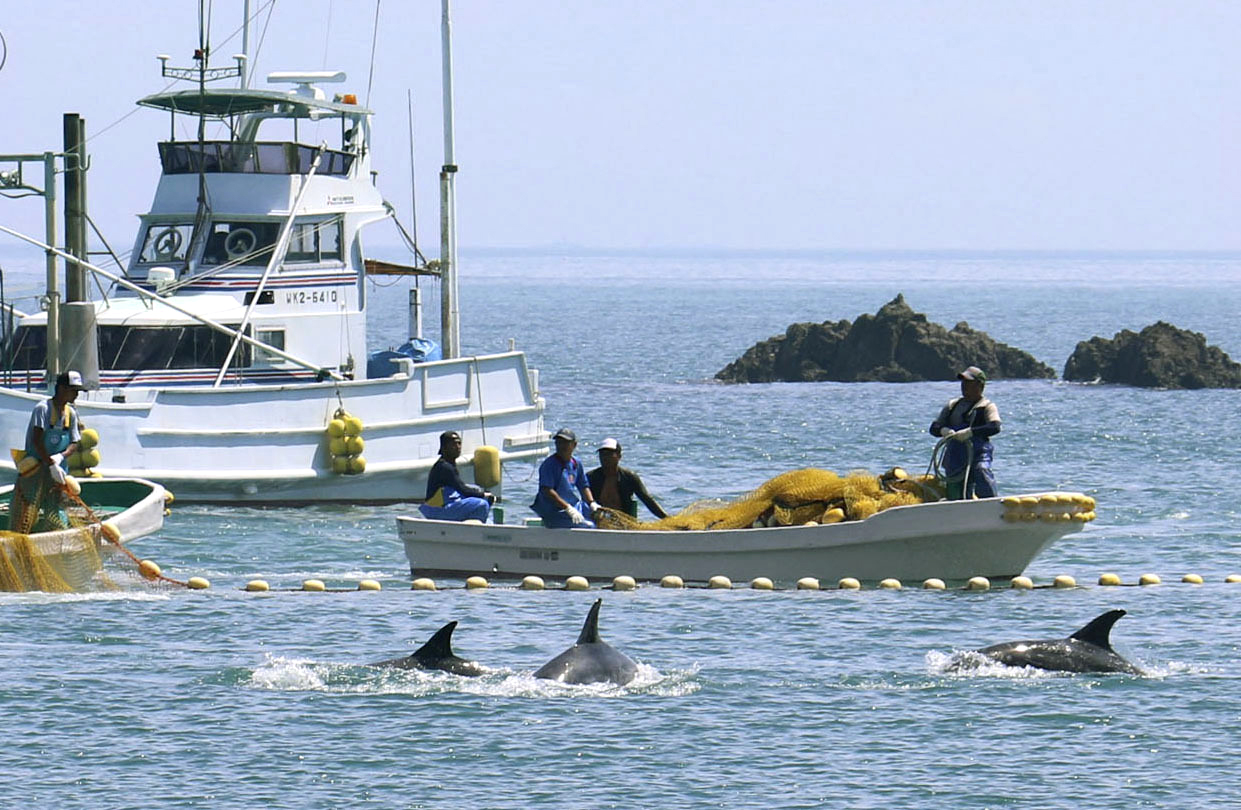
"The Cove" brought international outrage over the annual practice that previously involved killing the dolphins with long, sharp spears and dragging them onto boats where they would eventually die.
However, according to Dolphin Project, since the documentary, the practice of dolphin killing has now changed to be less visually dramatic -- but also arguably less humane – slaughter.
“The fishermen push a sharp metal spike into the dolphins’ necks just behind the blowholes, which is supposed to sever the spinal cord and produce an instant 'humane' death. The fishermen then push dowel-like wooden corks into the wounds to prevent their blood from spilling into the cove,” the Dolphin Project describes on its website.
The 2019/2020 hunting season in Taiji will aim to kill 1,749 of the cetaceans, including 6 species of dolphin and 3 species of whale.
Japan notified the U.S. on Dec. 26, 2018, that it had decided to withdraw from the International Whaling Commission in order to pursue commercial whaling. Their decision went into effect on June 29 of this year, according to a memorandum from the Embassy of Japan.
The official reason Japan has given for the annual hunt is to use the dolphins for meat, but Dolphin Project says there are other reasons as well.
“From the fishermen’s perspective, the dolphins eat too much fish, and the fishermen are simply killing the competition…It is about eradicating as many dolphins as possible in order to make the oceans’ fish available to themselves.”
The Japanese embassy did not immediately reply for ABC News' request for comment.