American doctor tests positive for Ebola in Democratic Republic of Congo outbreak

An American doctor working in the Democratic Republic of the Congo has tested positive for Ebola amid the outbreak, according to an international Christian missions organization.
Dr. Peter Stafford, a medical missionary with the missions organization Serge, was exposed while treating patients at Nyankunde Hospital, the group said Monday.
He sought testing "after presenting symptoms consistent with the virus," Serge said in a statement.
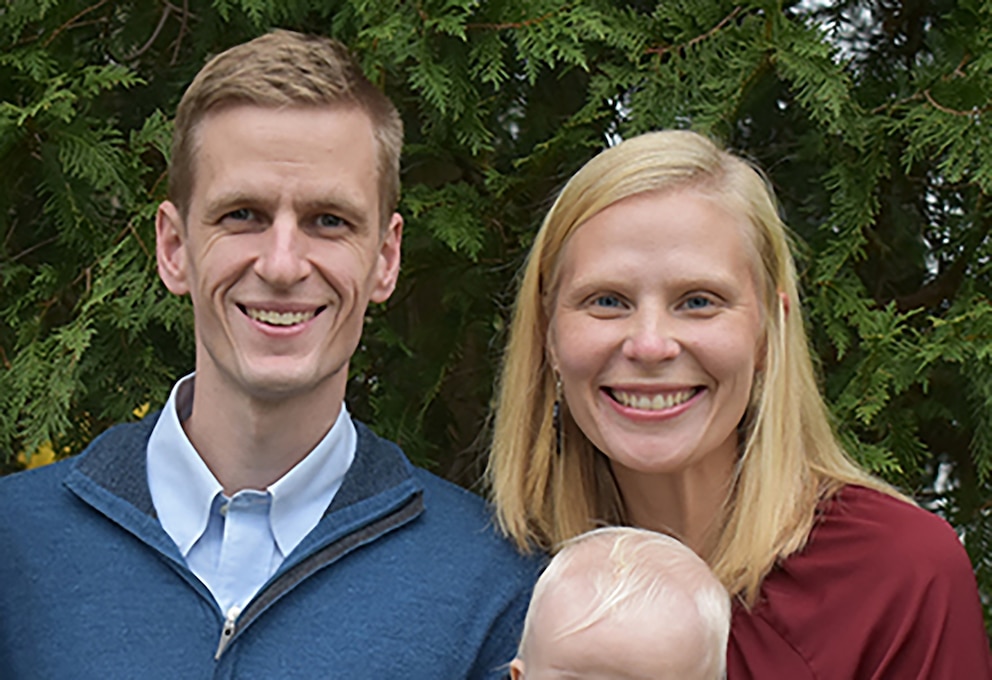
Stafford has served at Nyankunde Hospital with Serge since 2023, according to the organization. Two other Serge medical missionaries, including Stafford's wife, were treating patients in the region when the outbreak began and remain asymptomatic, Serge said Monday.
"Our medical teams labor in some of the most demanding settings in the world, serving vulnerable communities who have limited access to healthcare," Joel Hylton, Serge's senior director of mission, said in a statement. "We are profoundly grateful for their dedication to the people of the DRC, and we deeply lament the hardship they are enduring under this current threat. Our concern extends equally to our Congolese colleagues and friends in the region who face these same risks."
The Centers for Disease Control and Prevention (CDC) confirmed Monday that at least one American working in the Democratic Republic of the Congo has tested positive for Ebola, but did not identify that person.
Dr. Satish K. Pillai, incident manager for the CDC's Ebola response, told reporters that the individual developed symptoms over the weekend and tested positive late Sunday.
Pillai added that the patient and six other high-risk contacts are being moved to Germany for care and stressed that the risk to the U.S. general public remains low.
"Given the previous experience for caring for Ebola patients, coupled with the flight times being significantly shorter, this allows us to get these persons to points of care quickly," Pillai said.
Pillai said the CDC has activated its Emergency Operations Center through its country offices in the DRC and in Uganda, and is deploying technical experts that have been requested from Atlanta headquarters.
The CDC said earlier Monday that it is preparing to restrict entry for travelers arriving from parts of central Africa where an Ebola outbreak has been declared, in coordination with the Department of Homeland Security.
Non-U.S. passport holders will face entry restrictions if they have been in the Democratic Republic of the Congo, Uganda or South Sudan in the previous 21 days.
The move is being carried out under Title 42 of the Public Health Services Act, which allows the CDC director to suspend entry of individuals into the U.S. to protect public health.
The order will be in effect for 30 days and does not apply to U.S. citizens or lawful permanent residents.
The CDC said it is also coordinating with airlines, international partners and port-of-entry officials to identify and manage travelers with possible Ebola exposure as well as enhancing measures like contact tracing, laboratory testing capacity and hospital readiness nationwide.
On Sunday, the CDC said in a statement that a "small number of Americans" are directly affected by an Ebola outbreak occurring in the Democratic Republic of Congo.
"The CDC is working with other U.S. agencies to coordinate the safe withdrawal of the Americans," the CDC said. The agency did not confirm the number of people affected, the type of exposure or whether any individuals had experienced symptoms.
"We don't discuss or comment on individual dispositions," Pillai said Sunday. "It is a highly dynamic situation, and at this point, what I would say is, we continue to assess, we will continue to keep you posted as we learn more."
The State Department said Monday that its officials are working with the U.S. military and the CDC on "potential repatriation of affected Americans, based on assessed exposure and health needs."
U.S. embassies in the Democratic Republic of Congo, Rwanda, South Sudan and Uganda have started "monitoring groups" to track developments and communicate with Americans in the impacted areas, the State Department said. An initial $13 million in foreign aid has also been mobilized for "immediate response efforts," including "supporting surveillance, laboratory capacity, risk communication, safe burials, entry and exit screening, and clinical case management," it said.
Health Secretary Robert F. Kennedy Jr. told ABC News on Monday that his agency is "working on" the Ebola outbreak.
On Saturday, the World Health Organization said in a statement that the Ebola outbreak in the DRC and Uganda constituted a "public health emergency of international concern."
As of Sunday, there were 10 confirmed Ebola cases and 336 suspected cases in the DRC. There had been 88 suspected deaths in the DRC, as well as two confirmed cases and one confirmed death in Uganda from people who had traveled to the DRC.
Ebola virus spreads through direct contact with the bodily fluids of an infected person and does not spread through casual contact or air.
"CDC has extensive experience and expertise in responding to Ebola outbreaks," CDC acting director Dr. Jay Bhattacharya said on a call with reporters on Friday. "It is a large outbreak, and we were just informed yesterday about it."
He added, "We're absolutely committed to making sure that they can get resources as they need. We have helped with other Ebola outbreaks in the past ... we have lots of hard-earned lessons. The key thing here is to know that we are absolutely involved."
This is the DRC's 17th outbreak of Ebola since the disease emerged in the 1970s, according to the WHO.
This strain of Ebola is caused by Bundibugyo virus, for which there are no therapeutics or vaccines, the WHO said.
The WHO has declared international public health emergencies over previous Ebola outbreaks, as well as COVID-19 and mpox.