Earth Overshoot Day marks date planet has used up resources for the year

With 155 days left in 2021, humans have already surpassed what global resources can sustain in a single year, according to international sustainability organization Global Footprint Network.
Earth Overshoot Day marks the date when demand for Earth’s ecological resources exceeds what the planet can regenerate. This year, the date is July 29.
The Global Footprint Network, which calculates the date each year, said humans currently use 74% more than what the planet can remake.
Mathis Wackernagel, CEO and founder of Global Footprint Network, told ABC News Radio to think of the resource deficit like a bank account.
“How long can you use 70% more than Earth can renew?” Wackernagel asked. ”You can use more than your interest payment for some time, but it reduces the asset base. And what we see as a consequence, for example, is the accumulation of CO2 in the atmosphere or deforestation.”
The Global Footprint Network found that the total global ecological footprint increased by 6.6% compared to 2020, based on data from the International Energy Agency and the Global Carbon Project.
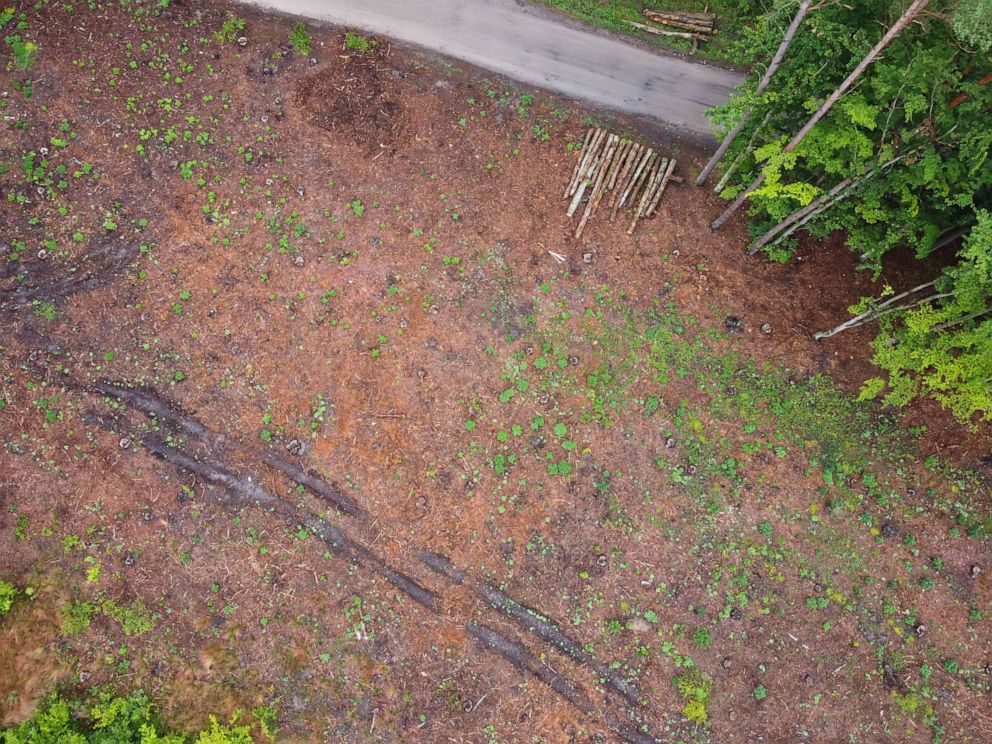
Last year, the global forest biocapacity -- the natural resources in forests -- decreased by 0.5%, mainly due to a large spike in deforestation in the Amazon rainforest. Forests are a key to slowing climate change because they can store carbon for long periods of time.
“Last year, we had the lockdown. The lockdown changed behaviors instantaneously, quite radically, but just changed behaviors for that time,” Wackernagel said. “It didn't change the system. So we're back to where we were before in terms of resource demand.”
The Global Footprint Network estimated carbon emissions in 2021 will be 4.8% higher than 2020, but it will still be below 2019 levels, when the overshoot date was July 26.
According to the organization, the world has been overshooting the planet's resources since the 1970s, when Earth Overshoot Day was late in December.
The date has since moved up five months, but the rate at which the date has moved up the calendar has decreased. In the 1970s, the day was moving up three days a year, now it moves less than one day a year on average over the past five years.
These are worldwide numbers, though -- if the rest of the world consumed resources the way the United States does, according to the organization, the overshoot day would have been March 14.

Wackernagel told ABC News overshoot will end someday.
“It's a question whether we do it by design or disaster,” Wackernagel said. “All of the global downturns are associated with disaster rather than design, like oil crises, financial crises, pandemic. They have pushed us down, and eventually, it will push us down if we don't do it ourselves. We can choose a comfortable path, or we will be hit by crises.”
There are ways to push Earth Overshoot Day back.
According to an analysis by the Global Footprint Network and Schneider Electric, retrofitting existing buildings to be more energy efficient and decarbonizing electricity could move the day back 21 days. If everyone in the world decreased their meat consumption by 50%, the date could be pushed back 17 days.
“If we moved Earth Overshoot Day out six days every year continuously, we'd be down to less than one planet before 2050,” Wackernagel said. “But given the huge climate debt, we may have to move faster.”