In El Salvador, the Murder Capital of the World, Gang Violence Becomes a Way of Life
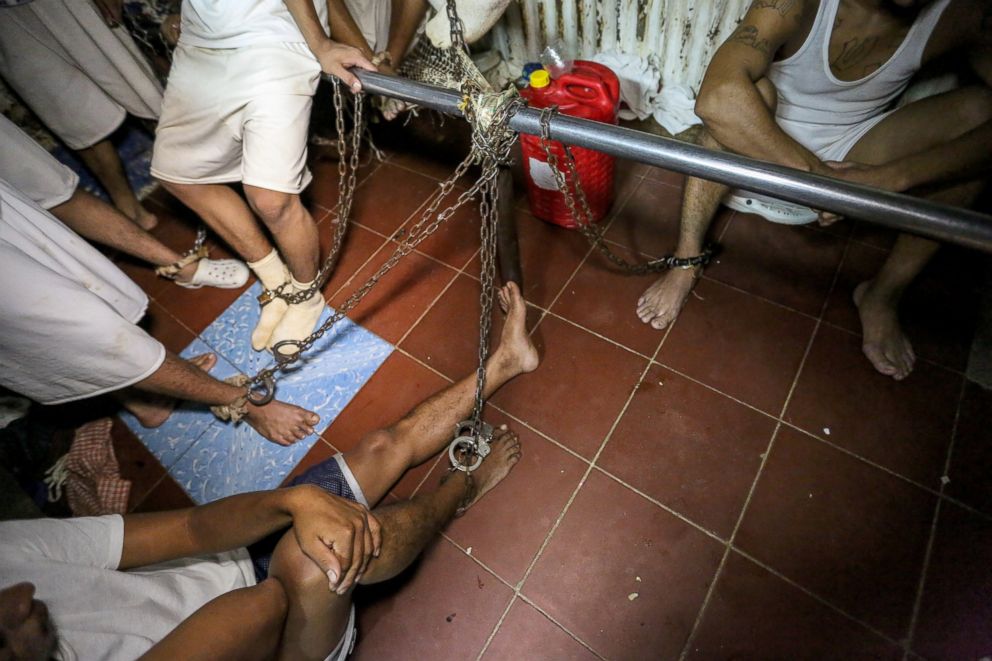
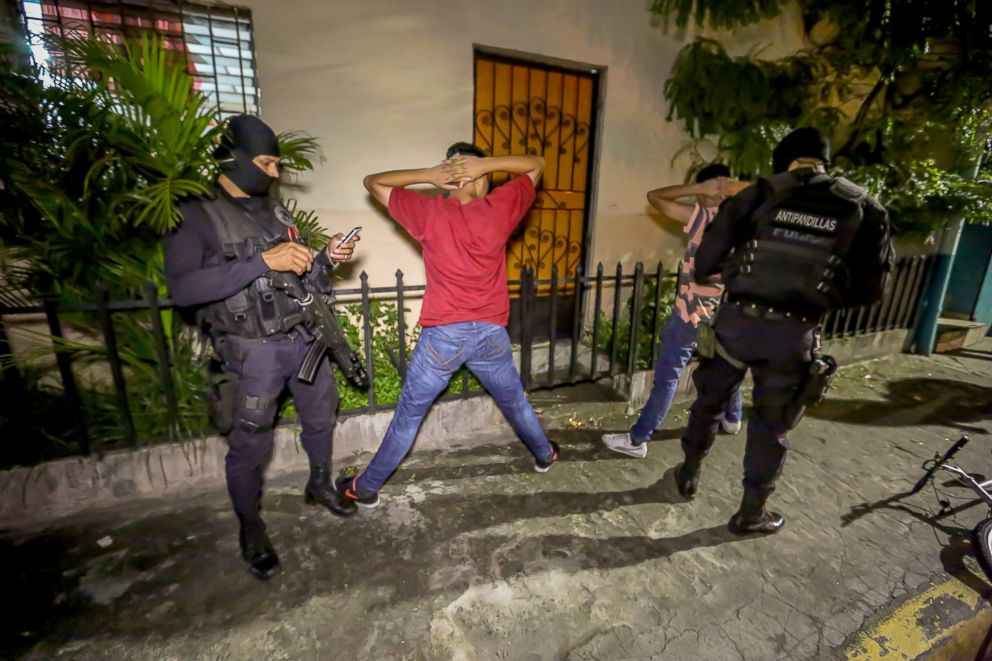
— -- It was the middle of the night in El Salvador and officers, armed with masks and body armor, were asking men they had arrested to remove their shirts before they brought them to a rundown police station in the country’s capital city.
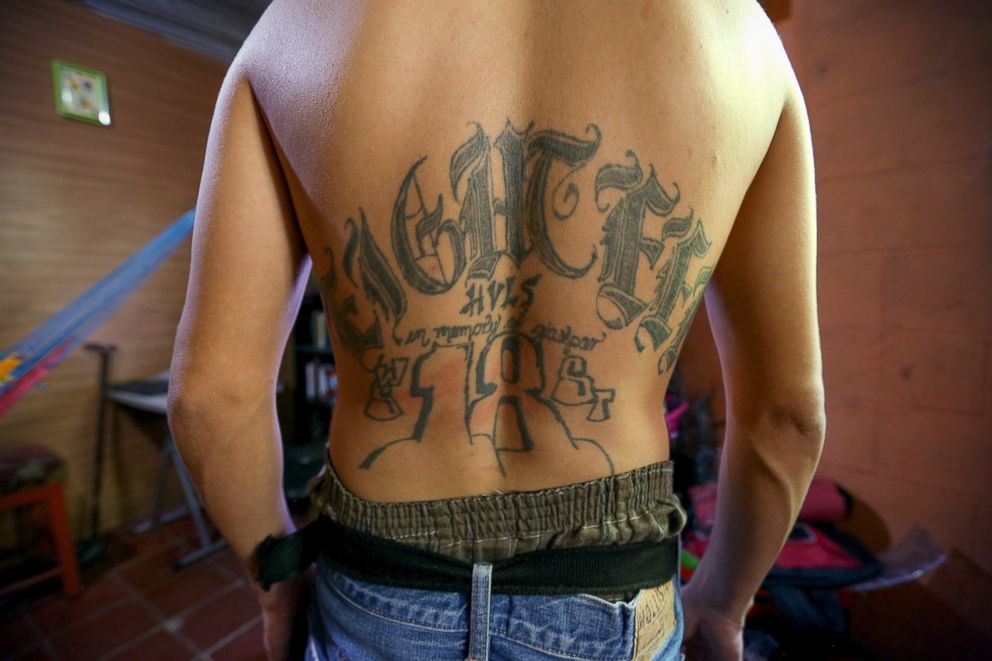
The officers were checking for tattoos that would reveal certain gang memberships.
One man among the 169 who were crammed into three cells in the tiny police station had a tattoo on his forehead. It said, “El Diablo.” Another had a tattoo that read "Revolucionario" or “Revolutionary” in Spanish.
“It’s a cause we’re starting ... to take care of each other,” the man said.
El Salvador's Violent Gangs: Inside the Murder Capital of the World
El Salvador's Violent Gangs: Inside the Murder Capital of the World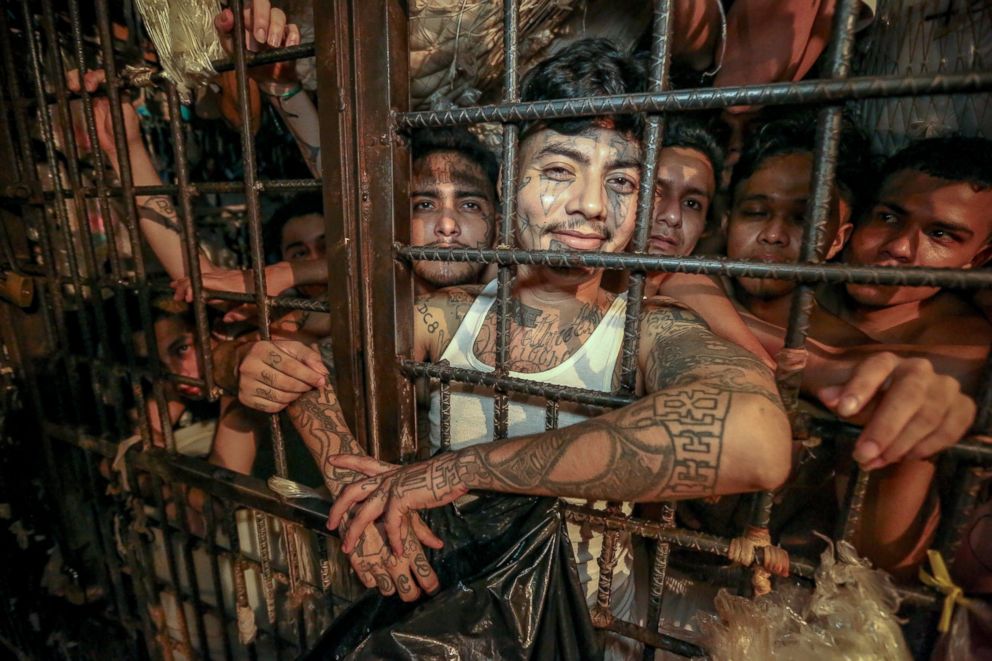
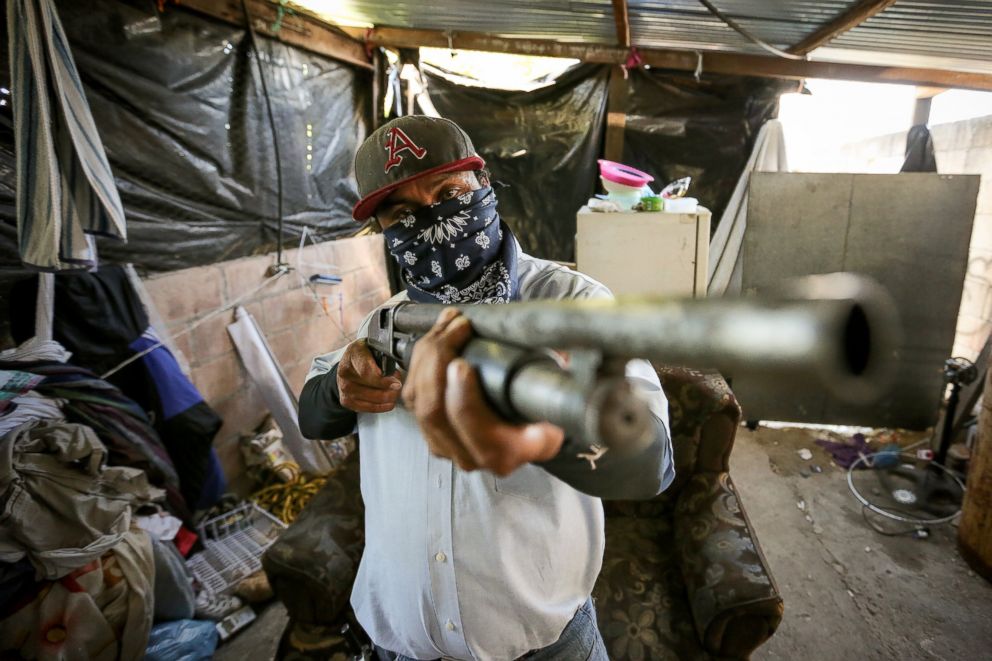
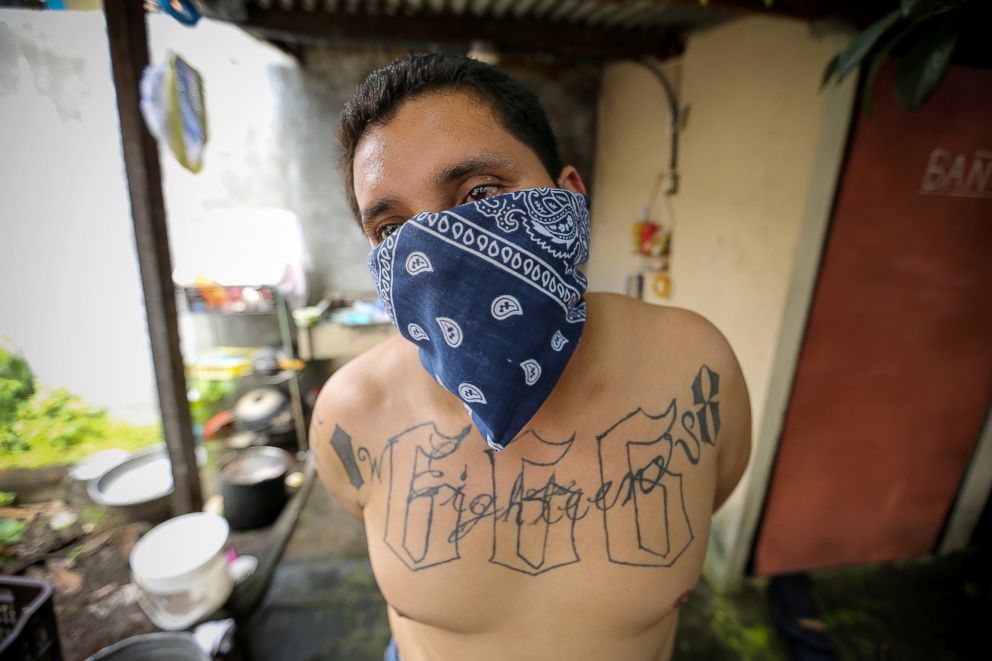
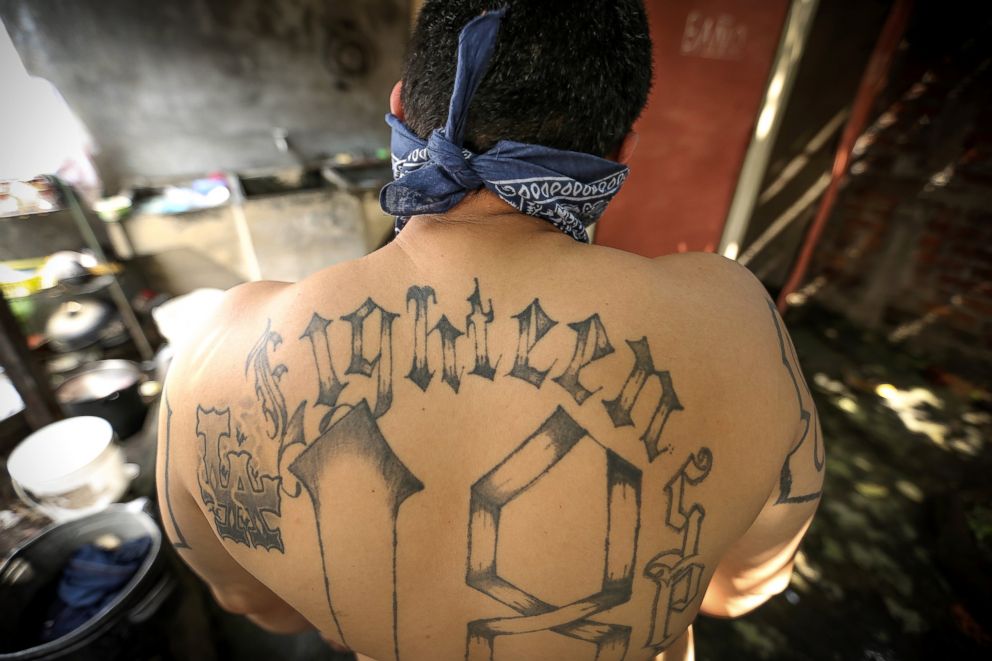
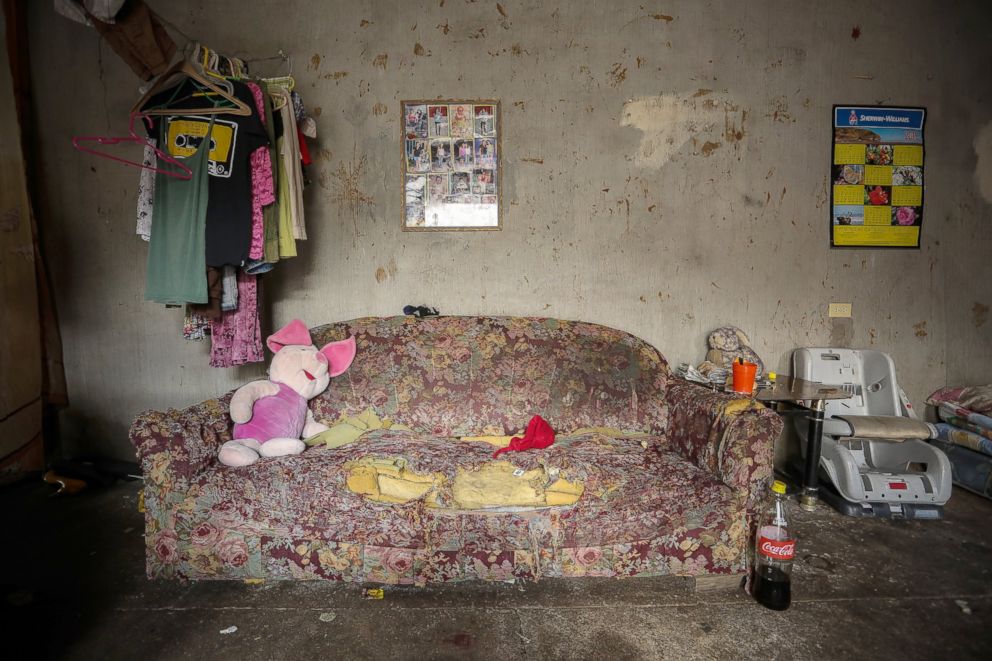
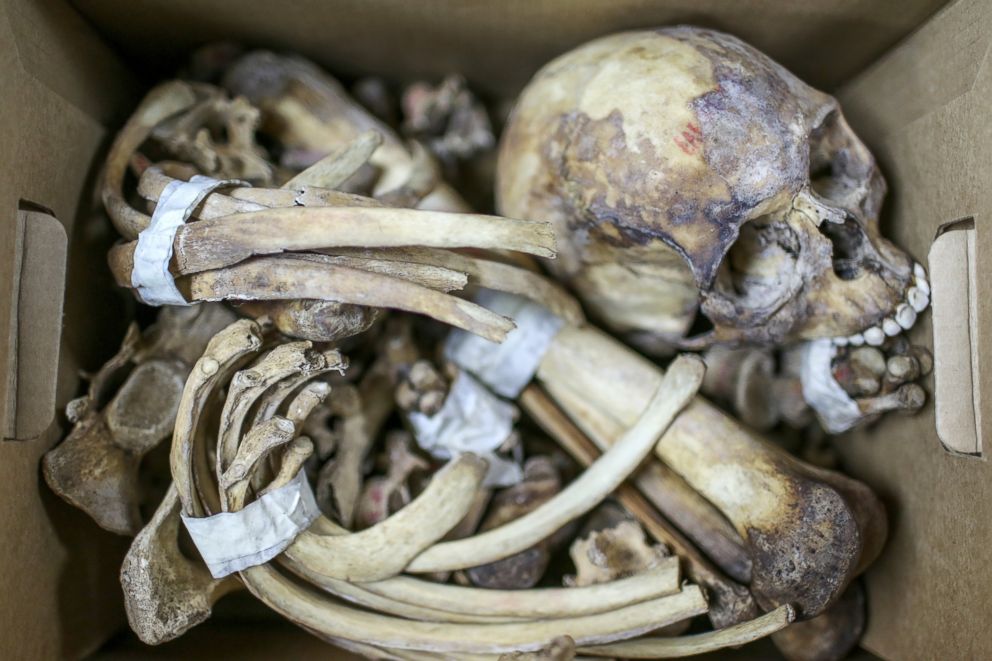
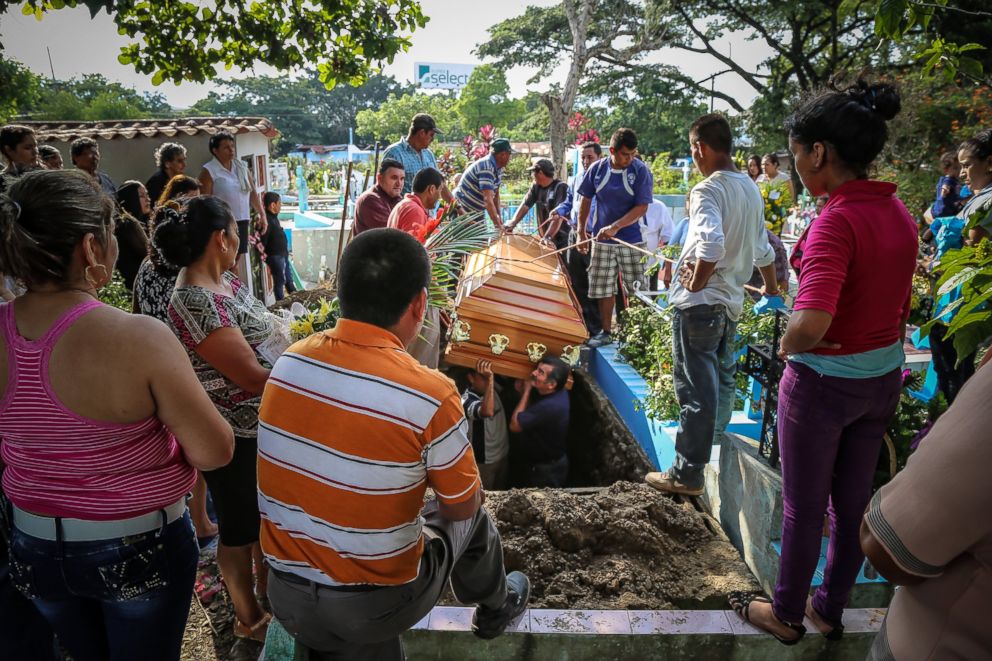
Gang violence has turned the small central American country of El Salvador, roughly 1,500 miles south of the United States border, into the murder capital of the world. On average, there was nearly one homicide per hour there in the first three months of 2016, according to El Salvador's government organization Instituto de Medicina Legal. The country has a murder rate 22 times that of the U.S., though these gangs have active members in 46 states, according to U.S. authorities, because of a revolving door of illegal immigrants and deportation cases going back and forth across the border.
“It’s extremely violent as evidenced by their motto, ‘mata, viola, controla,’ which translated means ‘kill, rape, control,’” said Carmen Ortiz, the U.S. Attorney for the District of Massachusetts.
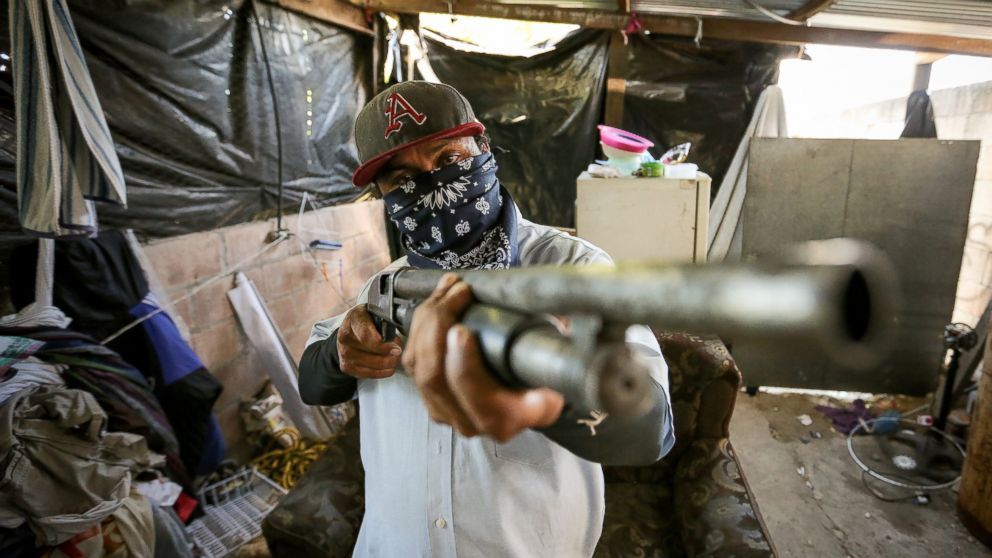
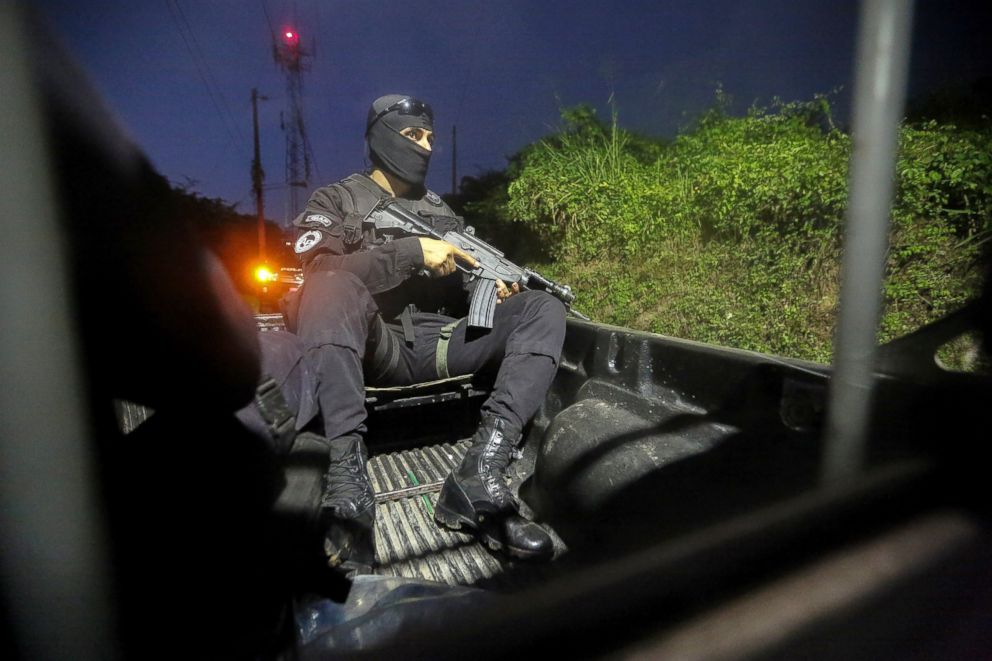
“Nightline” traveled to El Salvador and embedded with a special anti-gang unit or "Antipandillas" on night patrol as they looked for gang members, as well as spoke to dangerous gang leaders, to investigate why the violence there has become so grotesque and contagious.
Those in the anti-gang unit covered their faces with masks when out on patrol so the gangs wouldn’t recognize them. Even the translator who traveled with “Nightline” covered his face, he said, to protect himself and his family.
In the capital city San Salvador, the two main gangs, MS-13 and Barrio 18 (or 18th Street Gang), have carved up the city into warring factions.
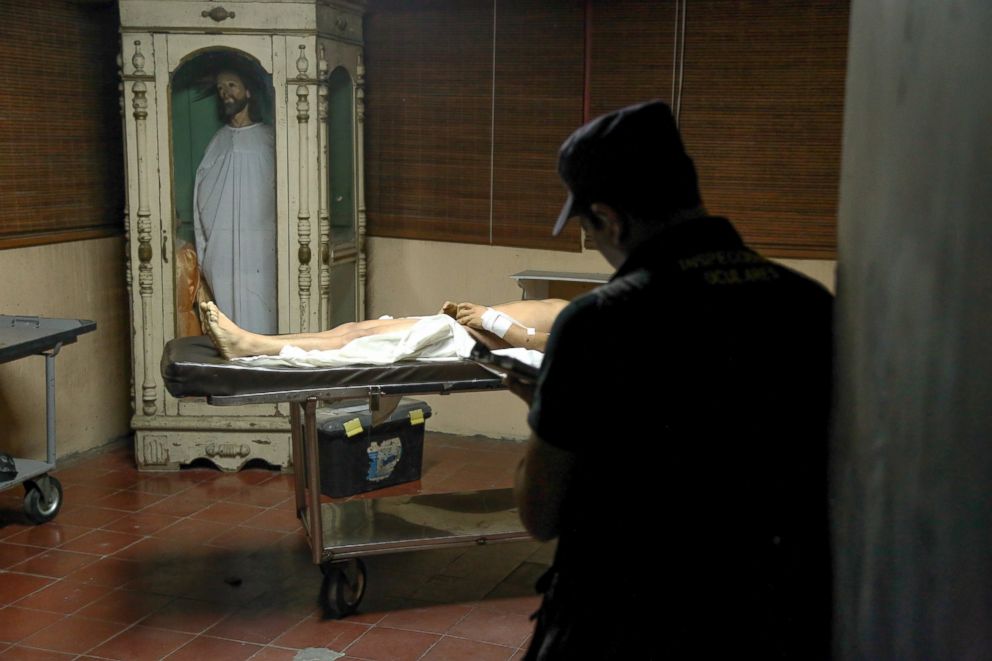
Every night, a forensic team from a local morgue heads out into the streets to collect dead bodies. When the bodies are brought back to the morgue, doctors take note of the person’s age and the trauma to the body.
One was a 23-year-old man named Carlos, who was shot and killed inside his home after ordering a pizza. His mother insisted that her son wasn’t even in a gang.
"He was everything for me. My only son," she said in Spanish. “They took him away from me. They left me alone."
Munisha Kailley, who is from Canada originally, is part of a team of archaeologists employed by the morgue to help identify victims found buried in unmarked graves, their bodies often dismembered.
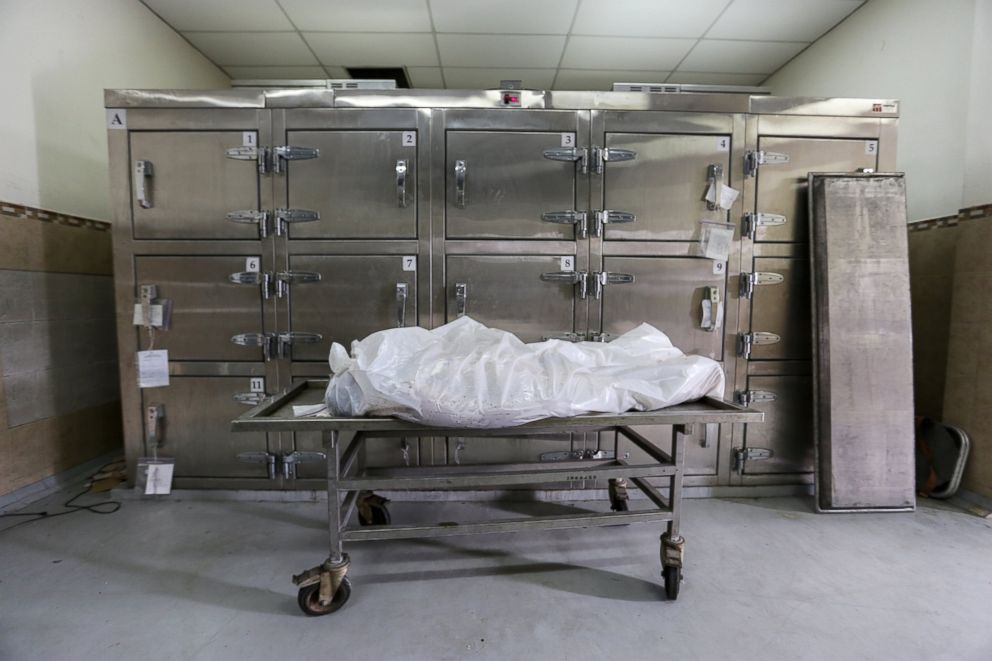
“The weapons that are mostly used here by gang members are pickaxes, machetes and guns,” Kailley said. “They’re cut at the knees, at the hips, at the elbows, the arms, the neck.
“You get desensitized,” she continued. “Especially working here in El Salvador, there’s death all around us. We’re used to this.”
Dozens of families come to the morgue every day to search for missing loved ones and identify the dead. A woman named Eriselda came to the morgue to claim the body of her 17-year-old son Alexis, who was killed by gangs the night before. She said another son, Roberto, was murdered just two months prior.
The loyalty among gang members is fierce. A man who goes by the name “Clavo,” which is Spanish for “Nail,” says he’s the clique leader for the 18th Street Gang in an area known as "La Fosa" or "The Graveyard." He said sometimes they have to resort to violence to protect their territory, and if he were to walk into a rival gang’s territory, he could be killed and vice versa.
“You have to respect your area,” he said in Spanish.
Clavo personifies the noxious symbiosis between the U.S. and El Salvador. As a boy, he moved to Virginia, where he joined a gang. Then he was deported back to El Salvador, where his gang career continued.
Now, he said he wants to sneak back into the States, in part to escape gang life, because he said he’s tired of taking orders from higher gang leaders, most of whom are in prison but can still make a phone call to have someone killed. Sometimes, Clavo said, he doesn’t even know why someone orders a hit on someone else.
The violence in El Salvador has provoked an enormous flood of illegal immigrants crossing over the border into the U.S., including tens of thousands of unaccompanied minors. But once here, they often find themselves targeted by the same gangs, according to U.S. authorities. MS-13 and Barrio 18 now have tentacles all over the States.
U.S. federal authorities say the gangs are incredibly sophisticated, engaging in drug dealing, gun running, human trafficking, prostitution, extortion, and then sending the proceeds back to their leaders in El Salvador.
The gangs started in Los Angeles after residents fled north to escape El Salvador's 12-year-long civil war began in the late 1980's, which left 75,000 people dead.
A 15-year-old boy named Francisco said he made the perilous journey to the U.S. alone at age 13, fleeing gang violence, and now lives in California. He recently learned that the gang that targeted him then attacked his mother Ana and his two siblings, Miguel and Isabel, back in El Salvador.
“They try to kill my family, my mother, my little brother, my sister,” he said.